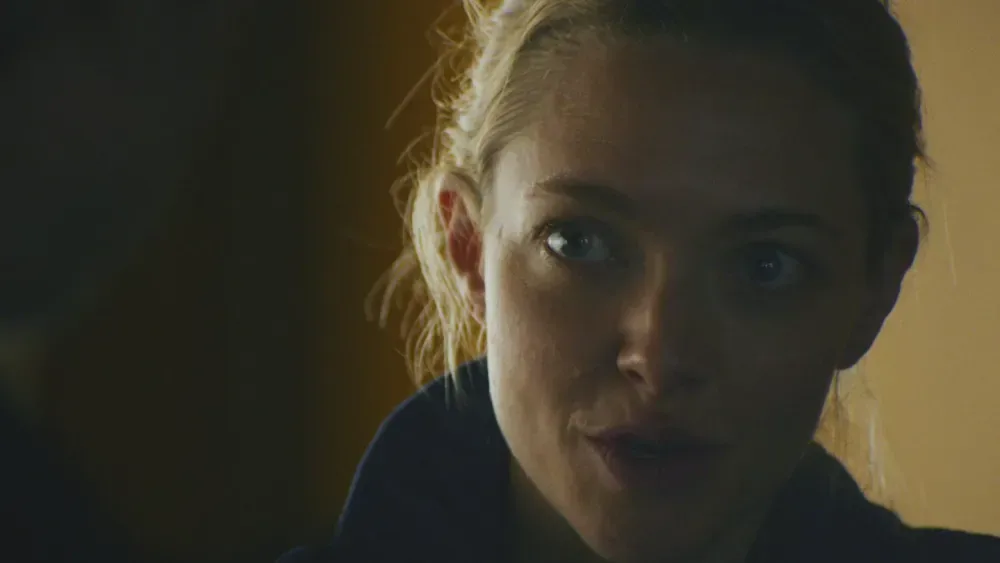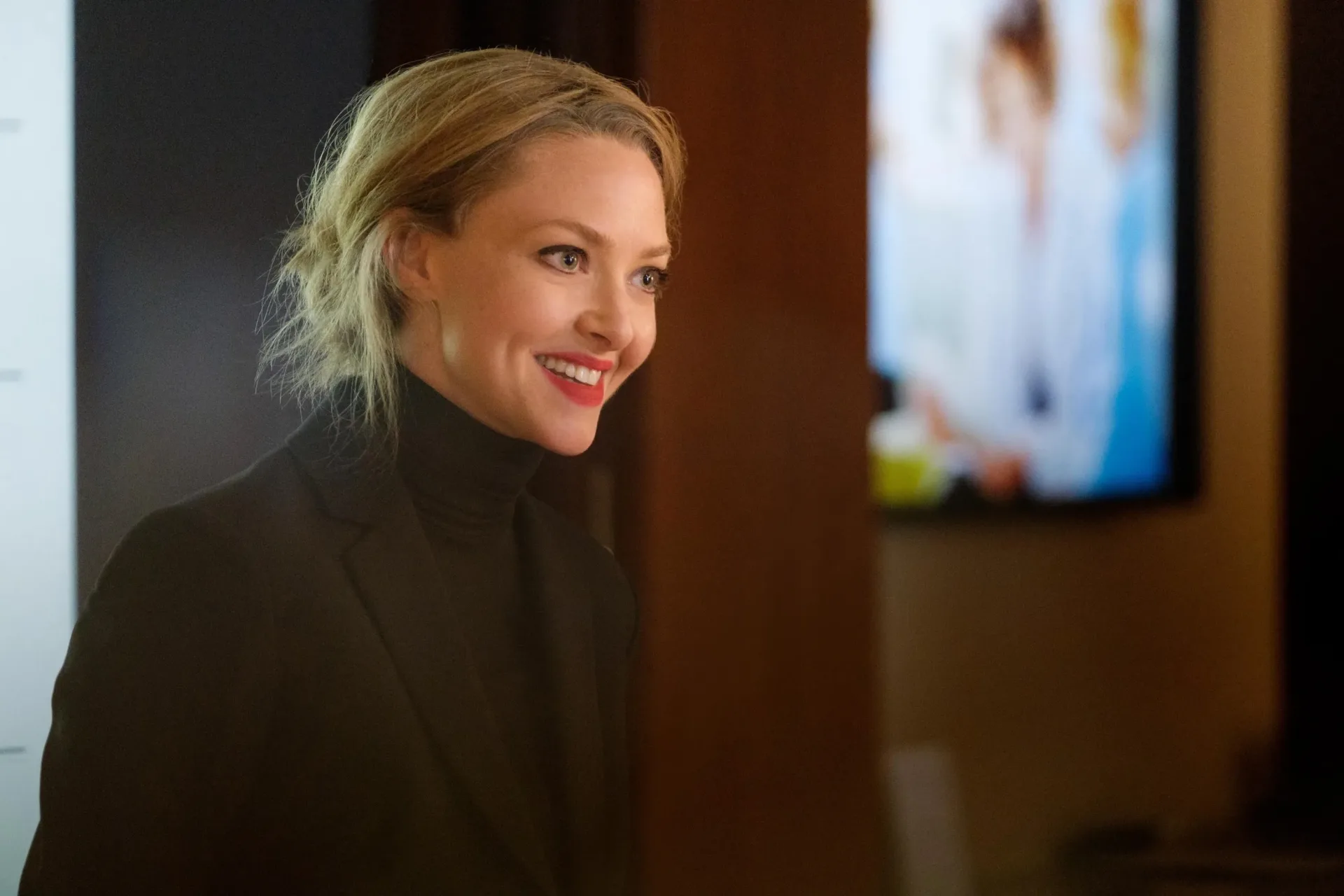
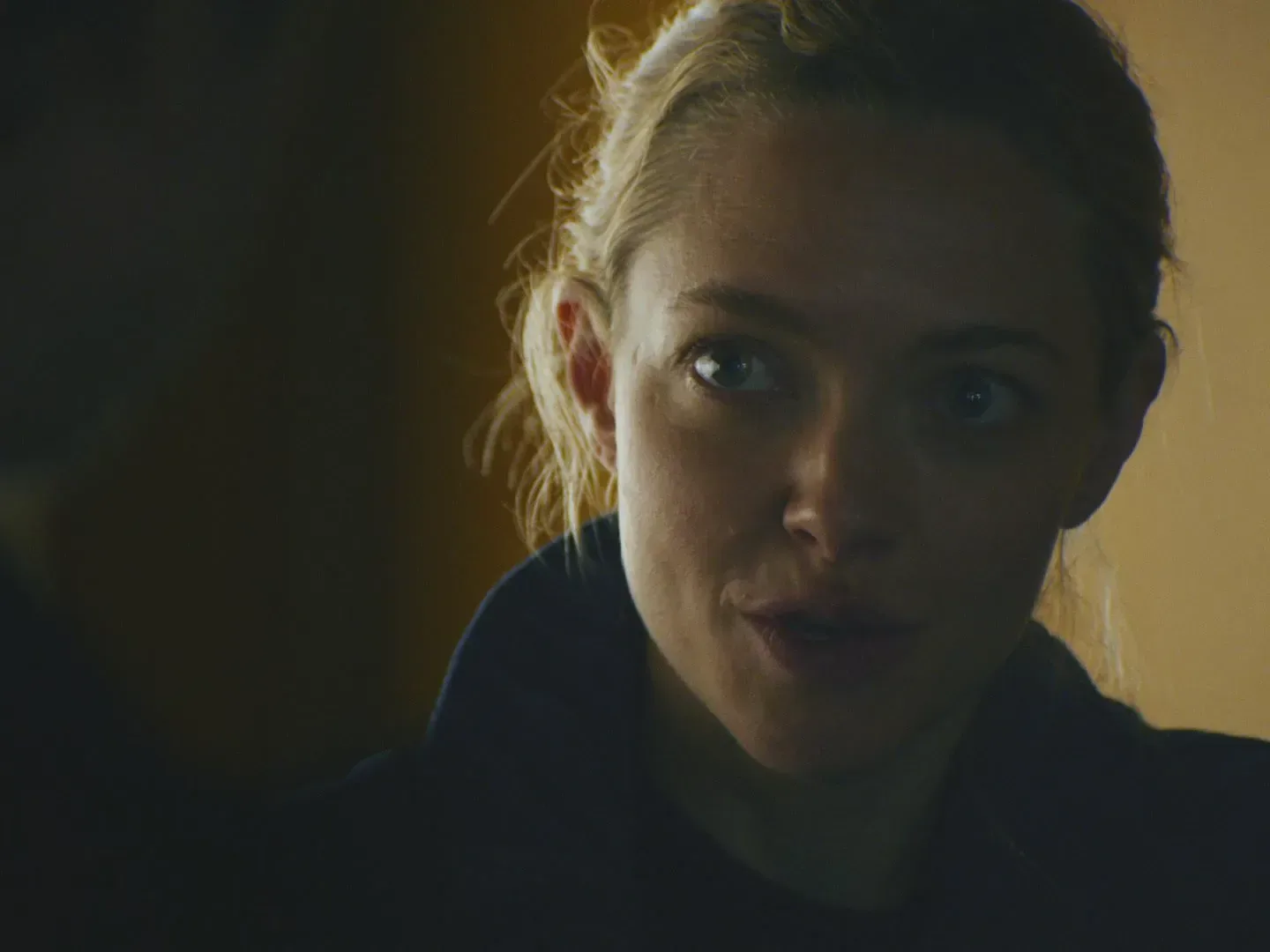
Amanda Seyfried has offered a revealing detail about the secrecy surrounding You Can See Everything, the Elizabeth Holmes documentary from Nathan Fielder and Lance Oppenheim. Speaking during an appearance on The Tonight Show, Seyfried said the production’s script access could be so tightly controlled that she would not know what was planned until she arrived to shoot.
“I didn’t know what the script would be until I got to set, or it would be, like, a five-factor authentication app where I could maybe read it the night before,” Seyfried said.
It is an unusually vivid description of a production protecting not simply a plot point, but the circumstances and shape of an evolving documentary. Seyfried appears in the film both as herself and in reenactments as Holmes. Her participation was initially kept out of coverage in order to preserve the surprise, and the guarded script process appears to have been one part of that wider effort.
A late addition that changed the film’s form
Seyfried explained that the filmmakers had already completed their documentary before she became involved. “At first, they had just done their whole documentary, and then I just jumped in kind of at the last-minute, and it turned into something else,” she said.
That comment matters because it frames her role as more than a conventional reenactment performer brought in at the outset of a planned production. The film’s eventual structure evidently developed after the original documentary was already made. Once Holmes was sent to prison, Fielder asked Seyfried to take her place in scenes as Holmes.
Reenactments are dramatized recreations of events or situations. In documentary work, they can be used to make an absence visible, present an interpretation of material that cannot be filmed directly, or deliberately call attention to the limits of what viewers can see. In this case, Seyfried’s role has an additional layer: she had previously played Holmes in the scripted series The Dropout, while You Can See Everything places her within a nonfiction project that also concerns Holmes.
That overlap gives the performance a built-in tension. Seyfried is not simply portraying a public figure from a distance; she is returning to a role associated with her earlier work while appearing as herself inside the documentary’s construction. Her own account suggests that the filmmakers preserved uncertainty for the actor as well as for the audience, limiting what she could learn in advance about individual scenes and the footage around them.
Why access to the material was limited
Holmes was, as Seyfried put it, “a very public-facing person,” which gave the actor extensive material to study. Yet Seyfried said the only present-day footage she had of Holmes, from the period when the filmmakers were living with her, was contained in the documentary itself. She could not watch that footage before she reached the set.
That restriction is significant. Public-facing material can include interviews and other appearances that establish a familiar image of a person. But it does not necessarily reveal the specific private or contemporary material a documentary has gathered. By keeping that footage unavailable until the shoot, the production separated Seyfried’s broader research from the particular scenes she was about to enter.
The result, at least in practical terms, is a workflow based on controlled disclosure. An actor normally receives a script in advance to prepare choices, learn dialogue, and understand the arc of a scene. Seyfried describes something far less fixed: sometimes learning the material only on set, and sometimes receiving a limited chance to read it the prior night. That does not mean there was no preparation; she specifically said there was abundant public research available. It means the most sensitive context was kept closely contained.
What “five-factor authentication” means here
Authentication is the process of verifying that a person is authorized to access an account, application, or file. The most familiar example is entering a password. Multi-factor authentication adds additional proofs of identity, such as a code sent to a device or a biometric check, so that a password alone is not enough.
Seyfried’s description of “five-factor authentication” communicates an extreme degree of protection, whether the exact setup was a formal technical configuration or a shorthand for an intensely locked-down system. The practical point is clear: access to the script was not casual, permanent, or broadly distributed. The project treated advance knowledge as material worth protecting.
For viewers, that kind of secrecy can have a clear storytelling purpose. A surprise performer can alter how a documentary is received, particularly when that performer has a well-known prior connection to its central subject. It can also protect the timing of a narrative turn, allowing the film to introduce its device on its own terms rather than having press coverage explain it first.
There are tradeoffs, too. Highly restricted scripts can make advance preparation more difficult, and they can prevent performers from seeing how their work will sit beside the rest of a project. Seyfried’s comments indicate that this uncertainty was part of the assignment. Rather than being given the whole map, she was asked to arrive with her research and respond within a tightly managed production environment.
Secrecy beyond the set
The effort to preserve Seyfried’s appearance extended beyond the production itself. Coverage of the film was asked not to reveal her involvement before audiences had the opportunity to encounter it in the movie. That makes the script safeguards easier to understand: a hidden contribution can be spoiled by any early disclosure, whether through a review, a promotional interview, or a widely circulated copy of the screenplay.
Since the surprise is now public, Seyfried has begun discussing the role. The conversation also arrives as You Can See Everything has become a major commercial outlier for nonfiction cinema, passing $100 million worldwide. The film’s reception has helped turn Seyfried into an awards contender, with discussion focused in part on the unusual possibility of a documentary performance receiving acting honors.
That possibility remains just that: an awards outcome cannot be assumed. But the attention underscores why the performance has become central to the conversation around the film. Seyfried’s earlier Holmes portrayal in The Dropout provides one reference point; the documentary’s self-aware use of her as both participant and reenactor provides another.
The broader entertainment question is not merely whether a celebrity cameo can remain secret. It is how much a production can withhold while still enabling a performer to do meaningful work. Seyfried’s account suggests You Can See Everything approached that balance by giving her enough public material to understand Holmes, while keeping the documentary’s most immediate footage and scene-specific context compartmentalized until the last possible moment.
For more coverage of actors navigating real-person stories, see our look at Finn Wittrock’s Milton Hershey biopic performance.