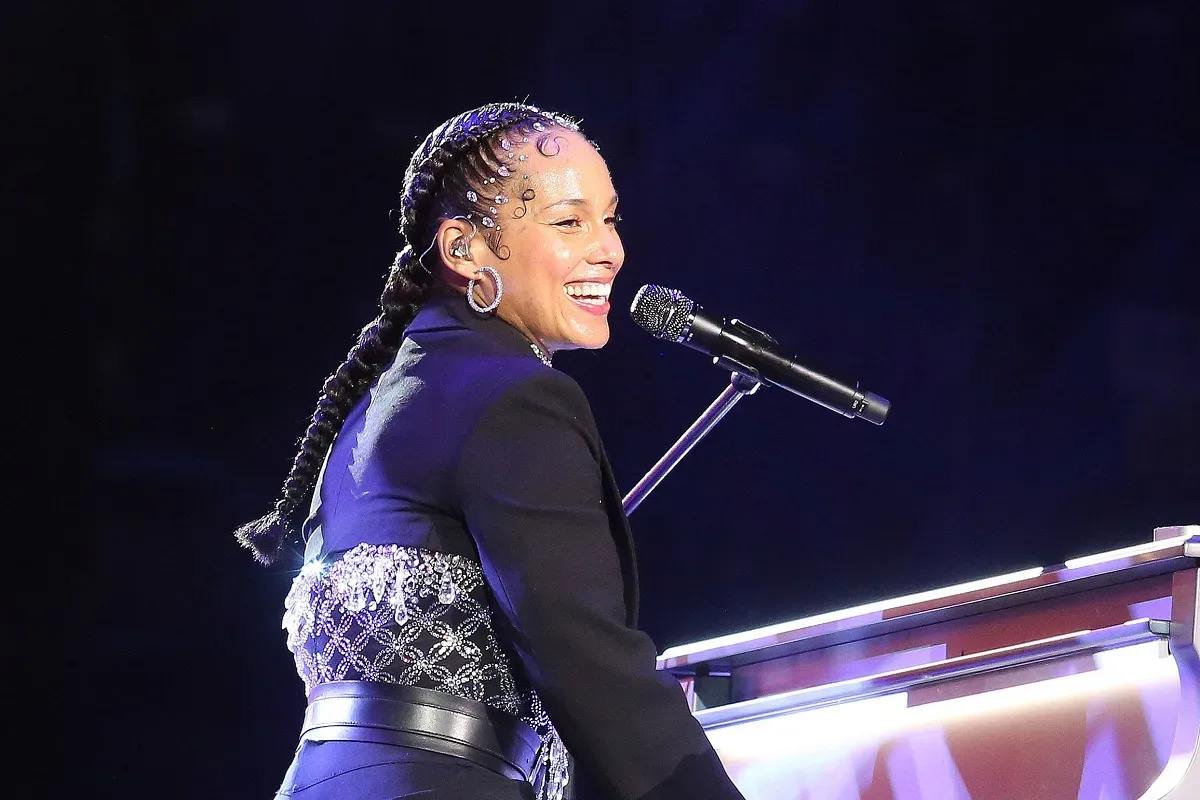
Alicia Keys’ Broadway musical Hell’s Kitchen has entered a new financial phase after its original production closed at a loss in February. Through a long-term partnership with Ovation Rights, the original Broadway production company has sold its share of future income from the show. The arrangement is intended to accelerate payments to the musical’s original investors, even though those investors are still projected to receive less than their full investment back.
The original Broadway production raised $22 million. Executive producer Aaron Lustbader told investors that their cumulative recovery is expected to land at roughly 90% of what they put in, a figure that includes payouts made before this agreement. The amount paid for the rights transaction has not been disclosed.
That distinction matters. The deal does not mean Hell’s Kitchen suddenly erased the loss on its Broadway run, nor does it indicate that the investors will receive 100 cents on every dollar invested. It changes when investors receive a portion of the show’s remaining value. Instead of waiting for revenue to arrive over an extended period from touring, recordings, merchandise and later productions, they are set to receive two lump-sum payments.
What Ovation Rights acquired
Ovation Rights acquired the original Broadway company’s revenue share from August 1 onward. The income streams covered by the sale include the cast album, merchandise, the North American tour, a Seoul production and future stagings. The exact division of rights, the value assigned to individual revenue streams and the purchase price were not made public.
In straightforward terms, a theatrical production can continue generating income after the originating Broadway company has ended its run. A tour may sell tickets in multiple cities; a cast recording can produce revenue; merchandise can continue to be sold; and productions in other territories can create additional licensing or participation income. Those proceeds may emerge gradually and may be uncertain. Ovation’s agreement shifts the original Broadway company’s share of that future income to Ovation under the partnership.
The transaction also includes partial payments for royalties that had been deferred during the Broadway run. Deferred royalties are royalty payments that are postponed rather than paid at the time they would ordinarily be due. Their inclusion gives the arrangement another immediate financial component beyond the estimated value of future tour and production revenue.
The practical tradeoff is clear: investors receive faster, more defined payments now, but the purchaser assumes the long-term uncertainty around the acquired income. If future productions, the tour, recordings and merchandise yield money over time, Ovation holds the acquired share of that revenue. The agreement’s value to original investors is liquidity—the ability to get paid without waiting through the full lifecycle of the underlying rights.
A different way to think about a Broadway investment
Broadway investing is not limited to the period during which a show plays New York. A show’s original production can have a life beyond its initial engagement, particularly when it has a touring future or international staging opportunities. But a future revenue stream is not the same thing as immediate cash. It may take years for income to arrive, and the eventual amount can depend on how subsequent productions perform.
Ovation’s founders framed the model as another potential exit route for theater investors—one that does not require them to wait for every later source of income to mature. In that sense, the deal is about timing as much as total value. The original backers are expected to recover about 90% overall, but the partnership turns part of a long tail of uncertain revenue into two scheduled lump-sum payments.
That could matter for investors who want to redirect capital into new productions. The deal’s advocates argue that faster payouts could make more money available for additional shows. It does not remove the possibility of a financial loss on a Broadway investment; Hell’s Kitchen itself closed at a loss and remains short of full recovery for its original investors. Rather, it offers a method of converting certain future interests into a nearer-term payment.
For creators and producers, the model raises a broader question: whether the future rights attached to a musical can be structured in a way that helps attract or recycle investment. Keys said the partnership could open doors for more artists bringing new work to Broadway. That is an ambition, not a guarantee. Still, the deal places rights management—and not only ticket sales—at the center of how a successful post-Broadway life might support the business of launching new work.
‘Hell’s Kitchen’ is continuing beyond Broadway
Hell’s Kitchen opened on Broadway in 2024. Keys wrote the musical’s music and lyrics, while Kristoffer Diaz wrote the book. In musical-theater terms, the book is the show’s script and dramatic structure: the dialogue, scenes and storytelling framework that connects the songs.
Although its Broadway production has closed, the musical’s next stage is already underway in other markets. It is playing a Toronto engagement at the Ed Mirvish Theatre through October 25, and its North American tour is scheduled to continue through August 2027. A Seoul production is among the ventures named in the rights deal, alongside unspecified future stagings.
Touring is particularly important to the agreement because it extends access beyond New York. Keys previously described the value of taking the musical on the road as reaching people unable to travel to Broadway. That audience-expansion goal now sits alongside the show’s changed financial structure: the original production company’s future participation in the covered income has been sold, while the show continues to find audiences elsewhere.
For fans, there is a useful separation to keep in mind. The business deal concerns the original Broadway company’s financial share; it does not, based on the details disclosed, announce changes to the listed Toronto run, the North American tour’s stated schedule or the creative credits. The visible result for audiences is a musical continuing into new places. The less visible result is that a different rights holder will receive the original Broadway company’s designated portion of the covered revenue from August 1 forward.
Ovation’s growing focus on theatrical rights
The Hell’s Kitchen agreement is not Ovation Rights’ first move involving major theatrical properties. In January 2025, the company announced that it had acquired Richard Stilgoe’s interests in works including The Phantom of the Opera and Starlight Express. That purchase was supported by a capital commitment from funds managed by BlackRock.
Its partnership with Keys therefore fits a wider interest in rights that can generate income over a lengthy period through various productions and uses. It also illustrates why a musical’s financial story can be more complicated than a simple hit-or-flop label. A Broadway run can close at a loss while a work still possesses commercial pathways through touring, recordings, merchandise and productions in other locations. Those paths are valuable enough that rights to a future share can be sold, but not necessarily valuable enough to make every initial backer whole.
For the original Hell’s Kitchen investors, the disclosed bottom line remains sobering but more immediate: approximately 90% total recovery rather than full repayment, delivered in part through two lump-sum payments rather than a potentially lengthy wait for later income. For Keys and Ovation, the deal is a bet that the musical’s life outside its original Broadway engagement will carry continuing value.
The arrangement also arrives in a music-and-theater landscape where the ownership of future earnings is increasingly part of the story around creative work. That conversation has parallels with other music-business changes, including platform-facing developments such as Apple Music’s icon update in an iOS beta, though the Hell’s Kitchen transaction is specifically about theatrical revenue rights—not a digital-platform release or a new production announcement.
What can be said with certainty is limited to the deal’s disclosed framework: future revenue participation has changed hands, the purchase price remains private, and original investors are expected to recover roughly 90% in total. The eventual performance of the North American tour, the Toronto engagement, the Seoul production, merchandise, the cast album and later stagings will determine how the long-term bet plays out for the new rights holder.