Movies about writers often face an awkward dramatic problem: putting words on a page is an internal activity, full of pauses, revisions, doubt and invisible decisions. Agata the Writer, the feature debut from Kuba Dorabialski, does not try to fake that process with tidy breakthroughs or grand declarations. Instead, it follows the uncertainty wherever it leads, including into dead ends, uneasy encounters and questions that remain stubbornly unresolved.
That choice makes this 95-minute Australian production a deliberately unusual prospect. It is at once a story about a novelist struggling to start the “serious” book she believes she should write, an account of a visitor navigating a city whose history she does not fully understand, and a quietly barbed examination of the difference between artistic curiosity and taking ownership of someone else’s trauma. Its narrative does not always behave conventionally, but the instability is central to its effect. The film is interested in a person who is not simply blocked, but fundamentally unsure of her footing.
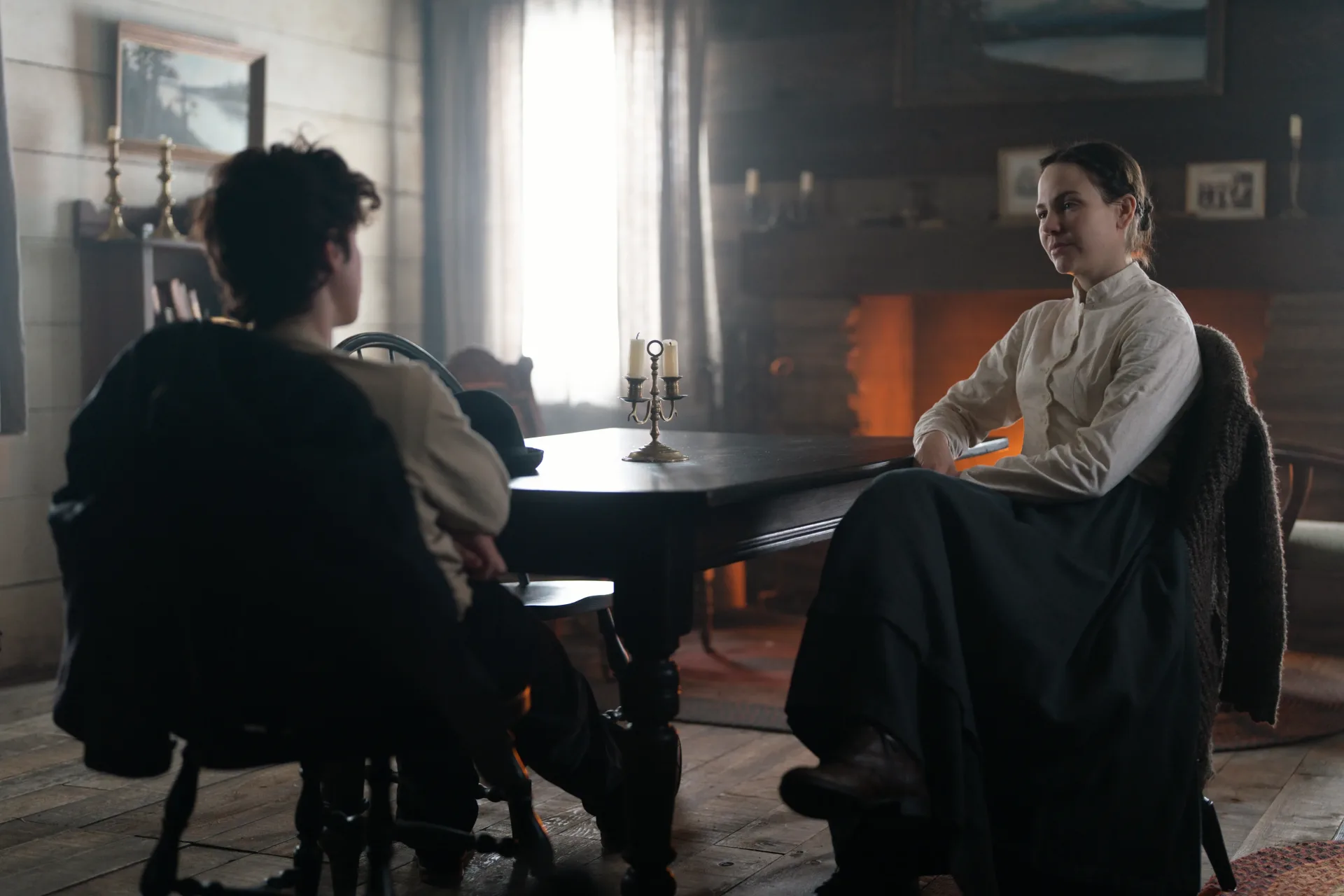
Mia Wasikowska plays Agata, a Polish-Australian author whose earlier satirical novels have brought her some success. She has arrived in Sarajevo for what is meant to be an extended research stay. Her intended project concerns a father and daughter during the Bosnian War, and she seems to hope that Polish ancestry will provide some meaningful bridge between herself and Bosnia. Yet the premise quickly exposes its own flaw: shared regional or linguistic associations do not make a person an authority on another community’s lived devastation.
The result is less a travelogue than a study in estrangement. Sarajevo is presented in wintry, muted tones, with wind becoming an ever-present piece of the film’s atmosphere. The city is not depicted as hostile to Agata so much as uninterested in smoothing out her discomfort. That distinction matters. Her unease is not a mystery the film asks the audience to solve on her behalf; it is a consequence of arriving with a project, an assumption and a need for material.
For more context, explore SKYROVER X1 Combo Is Listed at $449, Bringing Its 4K/60 Drone Kit and Three Batteries Down 27%.
A writer looking for a story, and finding resistance
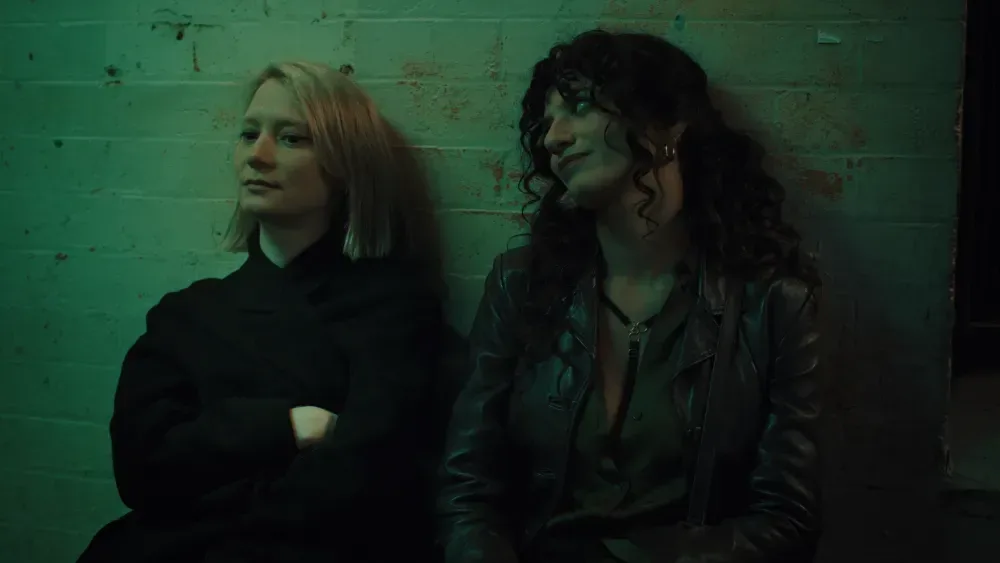
Agata’s central problem is not a lack of ideas. It is the growing realization that her chosen idea may be compromised from the outset. Her editor and friend Davina, played by Mia Morrissey, supports the work, while an encounter with local theatre director Jasmina, played by Vedrana Božinović, proves far more difficult. Jasmina’s conversational bluntness reveals how little Agata has considered the implications of her research.
One exchange lands with particular force when Agata asks whether Jasmina enjoyed the war years. Jasmina’s response makes plain the scale of Agata’s failure to grasp what she has asked: genocide is not a colourful episode available for an outsider’s creative mining. The moment is uncomfortable by design, and the film does not let Agata escape it through immediate eloquence or moral transformation. She remains a person thinking too slowly, speaking too vaguely and attempting to turn a painful history into a shape she can use.
Wasikowska is particularly well suited to this material. Her performance makes Agata watchable even when the character is misguided, because every hesitation registers as thought in motion. A murmured line, a guarded posture or an uncertain walk conveys the ongoing labour of self-editing. Agata seems to be revising herself in public without ever reaching a clean draft. There is dry humour in that perpetual recalculation, though it never removes the sting of what she gets wrong.
For readers interested in another perspective on the film’s uneasy creative territory, this discussion of creative doubt in Agata the Writer similarly underscores how the film treats uncertainty as more than a temporary obstacle.
Sarajevo as setting, sound and challenge
Dorabialski, previously known as a video artist, takes on an unusually broad set of roles here: director, screenwriter, cinematographer, editor and composer. That concentrated authorship can be felt in the film’s controlled but unsettled texture. The visual palette is cold and mineral-heavy, and the persistent wind works as more than environmental decoration. It gives the city an aural pressure that Agata cannot shut out.
Early scenes include a sound recordist attempting to capture that outdoor noise near an empty road. Dorabialski himself appears in the role, and the thread is held back for later rather than immediately explained. This is characteristic of the film’s structure. It introduces elements that might look like conventional plot signals, then declines to turn all of them into neat payoffs. A viewer expecting every character, object and incident to lock into a puzzle-box solution may find that resistance frustrating. The film’s method is more associative than mechanical.
An apparent series of thefts at the art-filled house where Agata is staying adds another layer of disorientation. The identity of the thief is not treated as the sole engine of the movie. Rather, the missing objects echo Agata’s increasingly uneasy relationship to ownership itself. If she is trying to construct a book from history she lacks the right to claim, what does it mean to call that act research, empathy or art? The theft plot may initially feel like a detour, but it rhymes with the larger anxiety running through the film.
A structural swerve that embraces incompleteness
The film’s boldest move comes when it suspends much of its established action and gives substantial space to Agata’s unfinished work in voiceover. This is not presented as a triumphant arrival at inspiration. The material sounds closer to a screenplay than a polished novel, sharpening the sense that Agata is still testing forms and borrowing confidence from imagined scenes. It also invites a playful question: is the movie about to fold into the text Agata is creating?
Dorabialski does not resolve that question with a slick, self-congratulatory trick. The narrative remains ragged by intention. Its diversions, pauses and partial connections reflect a creative process that is not linear, and perhaps cannot become linear while its author has not resolved the ethical problem at its center. That is a risky approach for a debut feature, particularly at a festival where viewers may arrive prepared to map every structural turn. But the risk is also what gives Agata the Writer its identity.
The film’s off-kilter construction complements its subject rather than merely illustrating it. Agata cannot proceed normally because the act of proceeding normally would mean ignoring what she has learned. Her research trip becomes an anti-quest: instead of gathering the details needed to complete a project, she acquires reasons to distrust the project and herself. In this sense, writer’s block is not framed as an unfortunate professional malfunction. It can be a moral alarm.
Why the film’s discomfort matters
Agata the Writer premiered in the Giornate degli Autori sidebar at the 2026 Venice Film Festival. It is likely to divide audiences, especially those looking for a firm narrative destination or clear emotional assurances. Yet its evasiveness is purposeful rather than casual. Dorabialski is building a film about people who want stories to offer access, meaning and perhaps redemption, only to discover that stories can also become a way of trespassing.
The supporting cast helps give that idea weight. Božinović brings a sharp, unsentimental presence to Jasmina, ensuring she is not reduced to a device for Agata’s education. Selma Alispahić also appears alongside Morrissey and Wasikowska. English and Bosnian dialogue coexist in a film where language is always bound up with proximity, distance and the limits of what one person can understand about another.
There is no easy verdict inside the movie about whether Agata should write her book. That ambiguity is more honest than a simple lesson would be. Art is not automatically invalid because it crosses borders, but neither is good intention a license to treat atrocity as raw material. Dorabialski lets the tension remain active. His film is wry without becoming glib, formally adventurous without insisting on a master key, and acutely aware that a writer’s solitude can be both an artistic condition and a means of avoiding accountability.
Above all, Wasikowska gives this slippery work its human center. Her Agata is not a heroic artist at the brink of revelation. She is a woman caught between ambition, embarrassment and uncertainty, unable to make the clean gesture that either a conventional drama or a self-flattering artist biography might demand. Agata the Writer finds its peculiar power in refusing to pretend that such uncertainty is easily solved.