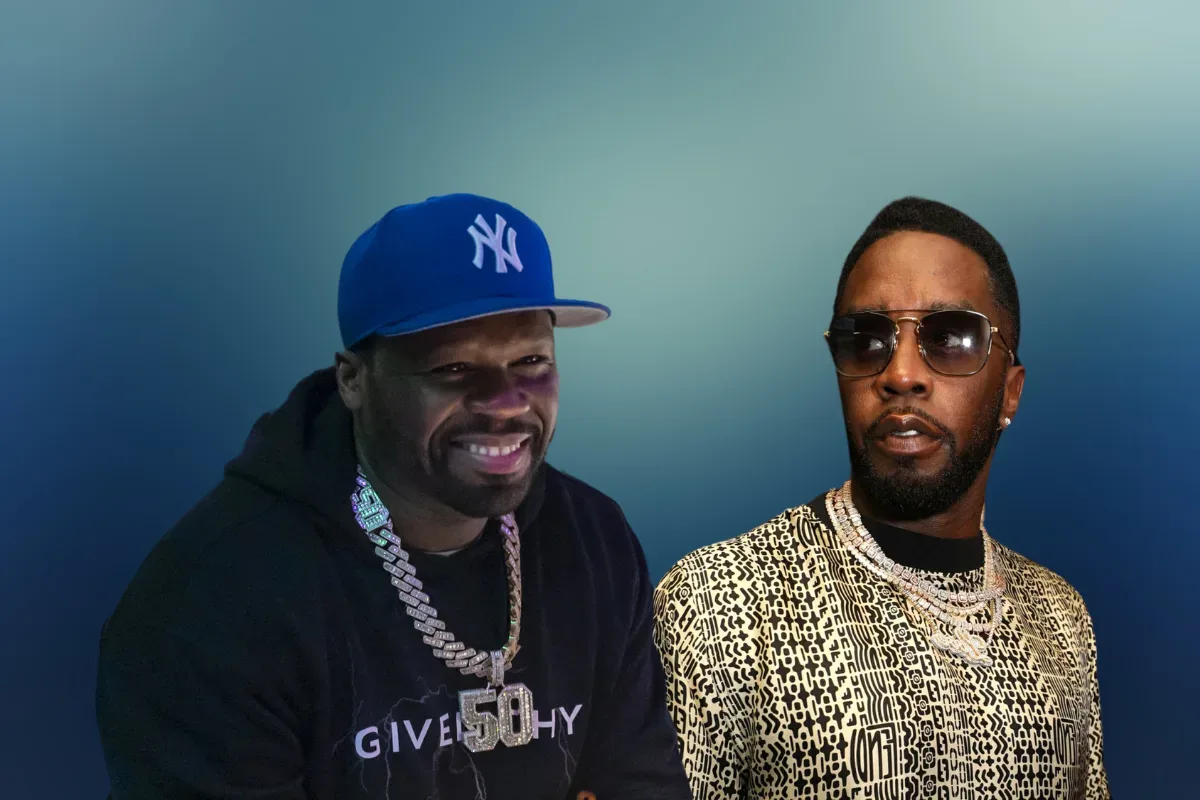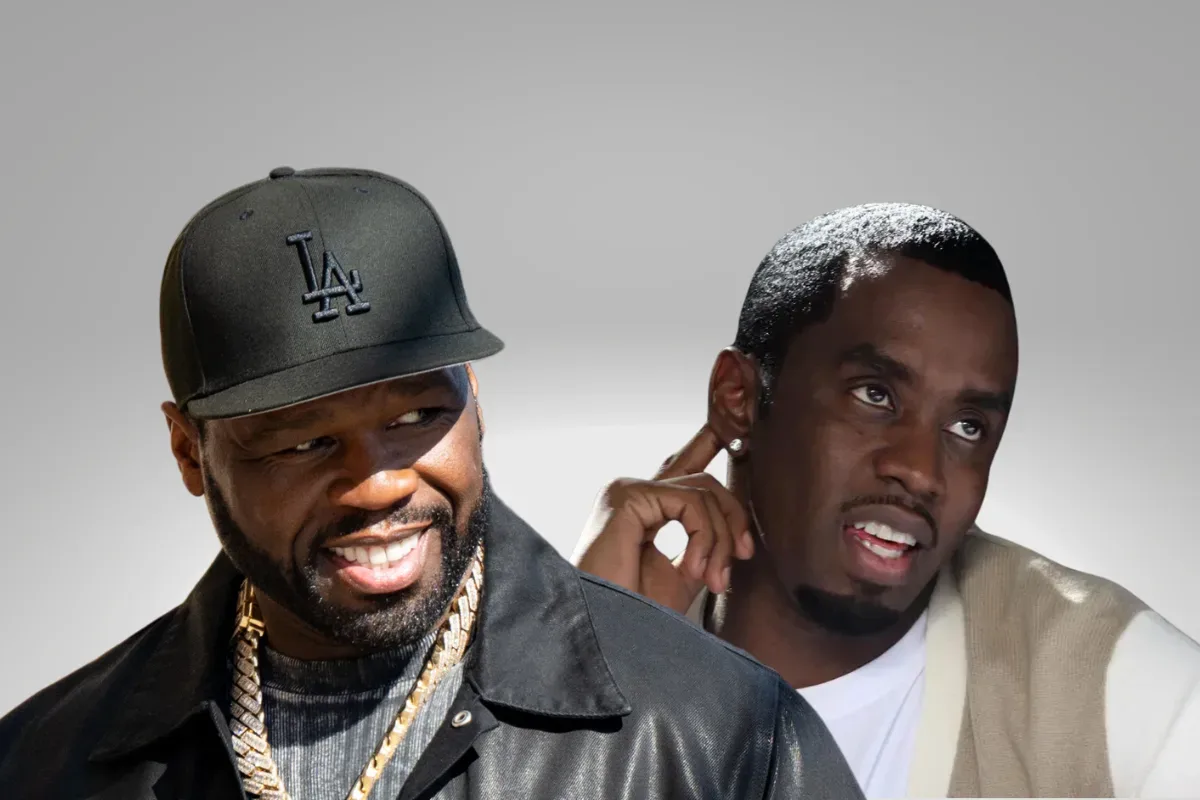
50 Cent has revived the argument around footage used in Netflix’s Sean Combs: The Reckoning, making a pointed joke during an appearance on Jimmy Kimmel Live. Discussing the four-part documentary series, for which he is an executive producer, he suggested that a cameraman had provided Sean Combs material after not being paid.
It was a clean late-night punchline, but it sits on top of a far messier dispute. A filmmaker who had been working on a separate project about Combs has denied that any payment or contract disagreement led to the footage changing hands. Meanwhile, the director of the Netflix series has said the production acquired the footage legally and had the required rights. Combs’s legal team, by contrast, has alleged in a civil matter that the footage was copied and sold without authorization.
The result is an unusually public collision between documentary filmmaking, control of recorded material, and a celebrity legal saga in which the provenance of video is nearly as debated as what the video shows.
The joke and the claim behind it
On the talk show, 50 Cent said, “When you get a RICO charge, you forget to pay the guy who had the camera.” He also said that he immediately recognized the footage’s potential for a compelling film when he saw it.
That framing implies a straightforward story: a creator or camera operator was unpaid, then supplied material to a competing documentary. But the people connected to the underlying footage have offered accounts that do not line up with that explanation.
Michael Oberlies, who had spent more than two years working on a film about Combs, previously said he did not provide the material himself. He attributed the disclosure to a freelancer who worked in his place for three days while Oberlies was out of state. Oberlies said the incident was not connected to a fee dispute or contract issue and argued that footage from his team’s project had been used without permission to tell a different story.
That distinction matters. A public joke can reduce a complicated chain of custody to one memorable motive. Oberlies’s statement instead described an alleged breach involving access to project material. Neither account, on the supplied record, resolves the broader ownership question.
Why the footage became central to the series
The disputed material reportedly includes Combs meeting with his legal team at a New York hotel in the days before his September 2024 arrest. It also depicts efforts to manage his public image while he was confronting lawsuits and a federal investigation.
For nonfiction filmmakers, footage recorded close to a consequential event can carry more weight than retrospective interviews. It gives viewers a contemporaneous scene rather than a reconstruction: the people involved, the immediate atmosphere, and the choices being made before later developments reshape public understanding.
That does not make every claim within a scene proven, and it does not settle the legal right to use it. It does help explain why the material became a focal point. The video is not merely background B-roll; it appears to offer a direct window into a critical period in Combs’s story.
The series was released in December 2025 and later won an Emmy for outstanding picture editing for a nonfiction program. The Television Academy credited the editing team for the episode titled Blink Again. That recognition speaks to the editing of the program, not to the merits of the competing claims about the footage’s ownership or acquisition.
Three accounts of how the material reached Netflix
The available accounts should be kept separate rather than blended into a single certainty.
- 50 Cent’s version: His remark suggested nonpayment to the person with the camera was the reason the footage surfaced.
- Oberlies’s version: He said he did not release the footage and blamed a freelancer who covered for him briefly. He rejected the idea that an unpaid-fee or contractual dispute caused the incident.
- The Netflix production’s version: Director Alexandria Stapleton said the material came to the filmmakers, that the production had obtained it legally, and that it held the necessary rights. She also said the identity of the supplier was protected.
There is also Combs’s legal team’s allegation, made in an ongoing civil dispute, that Rodney “Lil Rod” Jones took computer drives containing material owned by Combs, copied the contents without authorization, and sold the footage to Netflix. That is an allegation by Combs’s lawyers, not a finding described in the material provided here.
Jones is the freelancer Oberlies identified as having covered those three days. He has separately been involved in civil litigation against Combs. The supplied material says Jones’s initial lawsuit ultimately contributed to federal charges, but that procedural history does not by itself determine who owned the footage or whether Netflix’s use was lawful.
What “rights” and “chain of custody” mean in this dispute
Stapleton’s statement that the filmmakers had the necessary rights is significant, but it is also a specific kind of claim. In a documentary context, having rights generally means a producer believes it has a legal basis to include material in the finished work. Depending on the situation, that can involve permissions, licenses, assignments, releases, or other legal grounds for use. The exact basis was not detailed in the supplied information.
Ownership is a related but different question. A person may appear in footage without owning the copyright. A subject may commission or intend to use material without every question about authorship, possession, contracts, or copying being publicly settled. Conversely, possession of a file is not automatically the same as having the authority to sell or license it.
Chain of custody is a useful practical term here. It refers to the documented path by which material moved from one person or system to another. In a dispute involving video drives, a clear chain of custody can help establish who had access, when copies were made, what was transferred, and whether the recipient had reason to believe the transfer was authorized. The supplied accounts point to sharply different answers on those issues, but do not provide the contracts, communications, or court findings that would settle them.
That is why it would be premature to treat either the late-night explanation or the lawyers’ allegation as the final account. One is a provocative remark made to an entertainment audience; the other is a legal assertion from a side in an active civil conflict. Stapleton’s rights statement is a firm defense of the production’s position, but it does not disclose the underlying documentation.
Combs’s effort to block the release
Before the documentary arrived, Combs’s lawyers sent Netflix a cease-and-desist letter seeking to prevent the footage from airing. They warned that use of the material could amount to copyright infringement and indicated that Combs could pursue litigation.
A cease-and-desist letter is a demand to stop a stated action—in this case, airing footage—often paired with the sender’s view of the legal risk. It is not a court ruling. It places the recipient on notice of the complaint, but it does not itself prove ownership, infringement, or wrongdoing.
The series nevertheless launched, with its director publicly stating that the production legally obtained the material and possessed the necessary rights. The competing positions make the footage dispute an unresolved issue of claims rather than a question answered by the documentary’s release.
For audiences, that distinction is important. A documentary can contain material that is dramatically powerful and editorially relevant while the provenance of that material remains contested outside the screen. The footage can be authentic in the ordinary sense of depicting a real meeting and still be the subject of disagreement about who controlled it, who provided it, and whether its inclusion was authorized.
The criminal case is separate from the footage fight
The footage dispute should not be confused with the outcome of Combs’s criminal case. Jurors acquitted Combs of racketeering conspiracy and sex trafficking in July 2025. He was convicted on two counts of transportation to engage in prostitution and received a 50-month sentence.
Those results concern the criminal charges and do not decide a possible copyright or ownership dispute around the documentary footage. Similarly, the legal argument about video does not alter the stated criminal verdicts and sentence. Keeping the matters separate is especially important when a documentary’s narrative includes investigations, civil lawsuits, public-relations strategy, and courtroom outcomes in the same overall timeline.
There remains continuing public attention around Combs’s legal circumstances, including a separate report concerning an alleged injury in prison. That report concerns a claimed prison incident and is distinct from the documentary footage dispute.
What viewers can reasonably take from the latest exchange
50 Cent’s comment succeeds as a headline because it gives the story a simple villain-and-camera narrative. The record described here is more complicated. Oberlies disputes the premise of a fee-based handoff. The Netflix director says the production acted legally and has the needed rights. Combs’s lawyers allege unauthorized copying and sale. And the precise legal and factual support behind each position is not laid out in the available material.
The practical takeaway is therefore not that the ownership issue has been resolved by a talk-show joke, a cease-and-desist letter, or an Emmy win. It has not. Rather, the exchange demonstrates why access to behind-the-scenes material is often just one part of the documentary story. Questions about access can become their own contested narrative when the subject, filmmakers, freelancers, and producers claim incompatible rights over the same recordings.
For now, the series remains notable both for the footage it contains and for the unresolved debate surrounding how that footage entered the production. 50 Cent has added a memorable line to the argument; it has not reconciled the accounts behind it.