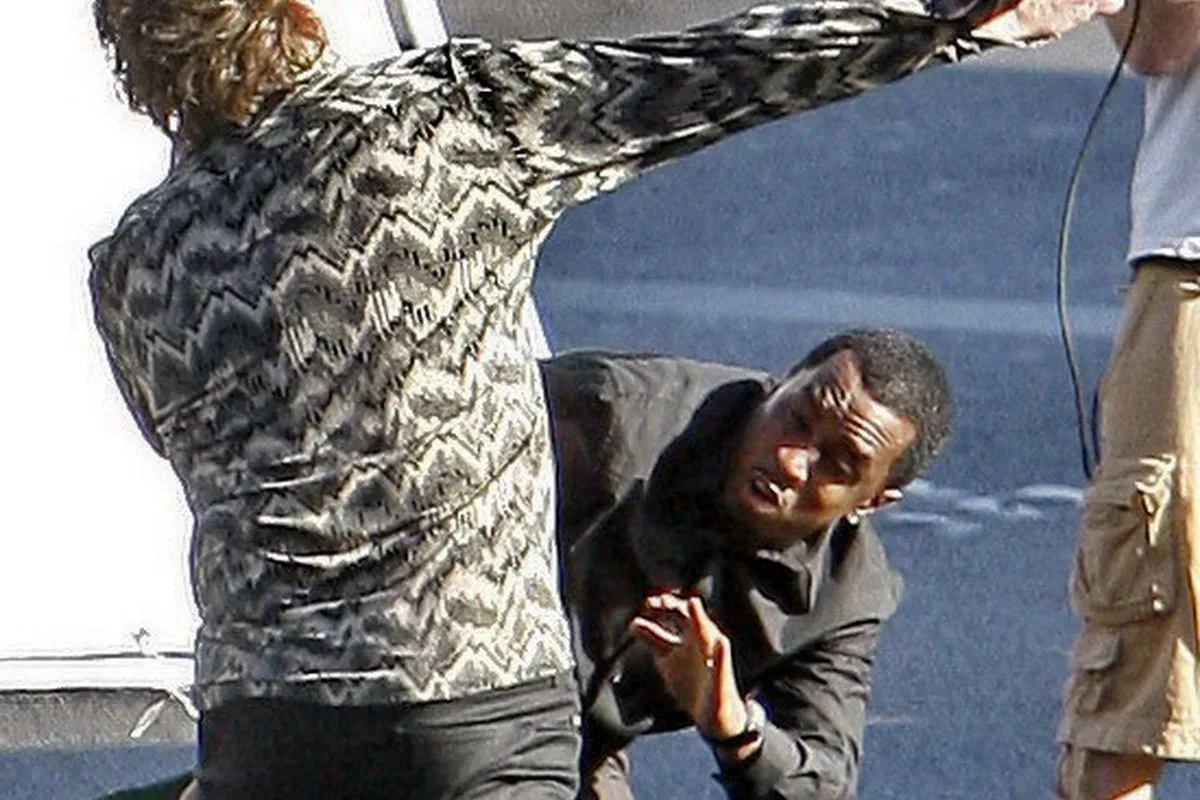
Reports about Sean “Diddy” Combs’ head injury at the federal prison in Fort Dix, New Jersey, have taken a sharper and more complicated turn. A new account, citing multiple people inside the facility, alleges that Combs was hurt during an October 9 confrontation with Christopher “Dudus” Coke, the former leader of Jamaica’s Shower Posse organization.
That allegation has not been publicly confirmed by prison officials. It also conflicts with an earlier explanation from an unnamed person who said Combs struck his head on the bunk above him. The two versions describe fundamentally different events, and the available information does not establish which account is accurate.
What is known from the reports is limited: Combs was taken for medical care on October 10, one day after the alleged confrontation. A representative for Combs said on October 12 that they were aware of the reports and were trying to confirm the circumstances. The prison declined to discuss Combs’ medical condition or housing assignment, pointing to privacy, safety and security concerns.
What the new allegation says happened
The latest account places the alleged incident at Fort Dix on October 9. It claims that Coke and Combs were involved in a physical clash connected to tensions over banned mobile phones inside the prison.
People cited in that report said Coke allegedly held Combs responsible for unwanted attention following televised coverage concerning alleged special treatment for Combs. They further claimed that prison officials conducted at least two searches and seized phones from incarcerated people, including Coke. Those claims, including the alleged motive for an altercation, remain unverified.
The account also says both men were placed in the Special Housing Unit for two weeks after the reported fight. A Special Housing Unit, often shortened to SHU, is a segregated prison setting. It can be used for disciplinary reasons, security management, protective separation or investigative purposes; being housed there does not by itself prove the underlying allegation or establish fault.
In this version of events, Combs was already in the unit and the encounter allegedly occurred while he was outside for daily recreation time. No public statement from the prison confirms that account, the alleged disciplinary placements, or the reason for them.
A separate account points to a bunk-bed injury
The central reporting issue is the direct conflict between the newly reported fight narrative and the prior bunk-bed explanation. The earlier account, published October 13 and attributed to an unnamed individual, said Combs had hit his head on the upper bunk in his cell.
Neither explanation has been accompanied by a public incident report, medical details, video, a statement from prison officials or a detailed on-the-record account from either Combs or Coke. That means it would be premature to present either version as settled fact.
The distinction matters beyond a headline. An accidental cell injury and an injury connected to a reported confrontation can lead to very different questions about housing conditions, supervision, discipline and medical response. But absent official confirmation, the responsible description is that there are competing accounts of how the injury occurred.
Who is Christopher “Dudus” Coke?
Coke’s name carries substantial weight because of his documented history before his incarceration. He formerly led the Shower Posse, also known as the Presidential Click, and controlled Tivoli Gardens in Kingston, Jamaica, before his arrest.
Prosecutors described an organization involved in cocaine, crack cocaine and marijuana trafficking in Jamaica and the United States. Their case said organization members sent Coke proceeds from drug sales and firearms bought in the United States, while he provided protection and resolved disputes connected to drug activity.
The organization’s influence was alleged to have extended into U.S. cities including New York and Miami. The federal case referenced a May 2007 agreement to attack a Bronx drug dealer over an unpaid debt, an allegation used to illustrate the cross-border reach of the enterprise.
Coke pleaded guilty in August 2011 to racketeering-conspiracy charges and to conspiring to commit assault with a dangerous weapon in support of the criminal enterprise. In June 2012, Judge Robert P. Patterson sentenced him to 23 years in prison, followed by four years of supervised release. The sentence also included $1.5 million in forfeiture.
His arrest followed a long-running effort to apprehend him. Coke took over leadership of the gang and control of Tivoli Gardens after his father died in 1992. In 2010, efforts to capture him led to attacks on police stations by gunmen, drawing both Jamaica’s police and military into the response. Coke was captured that June and transferred to New York.
That background explains why the reported identification of Coke has attracted attention. Still, his past convictions do not independently verify the claim that he was involved in the alleged October 9 confrontation with Combs.
Combs’ sentence and the limits of what has been confirmed
Combs is serving a 50-month sentence after being convicted on two counts of transportation to engage in prostitution. Jurors acquitted him on racketeering-conspiracy and sex-trafficking charges.
The reported medical trip is the firmest part of the present timeline: Combs was reportedly removed for medical care on October 10. The cause of the head injury remains disputed. Prison authorities have not made a public statement resolving the difference between the bunk-bed account and the account alleging a fight.
That lack of confirmation is particularly important in stories about a correctional facility. Institutions commonly restrict disclosure around health care, safety procedures and inmate placement. In practice, that can leave reporting dependent on unnamed people and partial accounts, which may emerge before a complete official record becomes public—if one is released at all.
For readers following celebrity legal news, this situation is a useful reminder to separate confirmed case outcomes from newly circulating claims. Combs’ conviction, sentence and the fact that he was reportedly taken for medical care are distinct from the unconfirmed explanation for his injury. Likewise, Coke’s criminal case and past leadership role are established background, but they should not be treated as proof of the alleged incident at Fort Dix.
What to watch for next
Any clearer picture would likely require an on-the-record response from prison officials, a statement from representatives for the people involved, or records that corroborate one of the competing narratives. Until then, the reported fight, the alleged phone-related motive and the claimed SHU placements should all be understood as allegations rather than established facts.
The development also lands amid sustained public attention on the legal aftermath surrounding Combs. For another entertainment-industry legal dispute involving family allegations, see this report on Diamond Brown’s child-support claims involving Chris Brown.
For now, the available record supports a narrow conclusion: Combs reportedly required medical care after suffering a head injury, while public accounts disagree about whether it resulted from an accident or a reported prison confrontation. Without confirmation from the facility or other substantiated evidence, the precise circumstances remain unresolved.