Xbox is reportedly asking players to weigh a question that has shaped every console generation: would they value a platform more if its biggest games could be played only there? The reported questionnaire explores a hypothetical in which future releases from Xbox-developed franchises would be console-exclusive to Xbox and PC, with Call of Duty identified as the exception.
That wording matters. A survey is not a product announcement, a publishing plan, or a promise that a particular game will change platforms. It is a way to test responses to possible strategies. Still, the scenarios being presented are notable because they directly probe whether exclusivity would affect where people play, whether they would change hardware, and whether losing access would lead them to skip a game entirely.
The reported questions appear to cover both the broad portfolio and individual franchises. Fallout, for example, is used in one scenario involving exclusivity on Xbox consoles and PC. Another asks respondents to imagine nearly all future Xbox-developed releases becoming console-exclusive, outside of Call of Duty.
There is no indication that the survey’s hypothetical outcomes have been adopted. That distinction is essential: companies can research options that never move beyond internal planning. But the questions reveal which trade-offs Xbox may want to understand before making future publishing decisions.
What “console-exclusive to Xbox and PC” means in this scenario
Console exclusivity means a game would be available on one console ecosystem rather than competing console platforms. In the scenario described by the survey, PC remains included. So the proposal is not a simple “Xbox hardware only” approach; it is an Xbox-and-PC release model that would leave PlayStation and Nintendo consoles outside the supported console audience for future titles.
That is an important practical difference for players. Someone who uses a PC would not be affected in the same way as someone whose library is centered on PlayStation or Nintendo hardware. For the latter group, a game’s platform status can determine whether access requires another device, or whether the game is missed altogether.
The survey reportedly asks respondents about precisely those behaviors: whether exclusivity matters to them, whether it could motivate a hardware switch, and whether they would abandon a release that was no longer available on their preferred platform. Those are different questions with different implications.
- Preference: A player may like the idea of exclusive games without intending to buy more hardware.
- Hardware migration: A player may say a game is compelling enough to consider moving to Xbox or PC.
- Lost sales: A player may simply decide not to play a newly exclusive title.
For a publisher, these responses can help frame the central tension of exclusivity. Restricting a release can make a particular platform more distinct, but it can also narrow the immediate console audience for the game. The report does not provide survey results, sample size, or a timetable for any decision, so it cannot show which outcome respondents preferred.
Related coverage includes Xbox Reportedly Asks Players About Bringing Most First-Party Games Back to Exclusivity.
The Minecraft hypothetical is more consequential than a new-release question
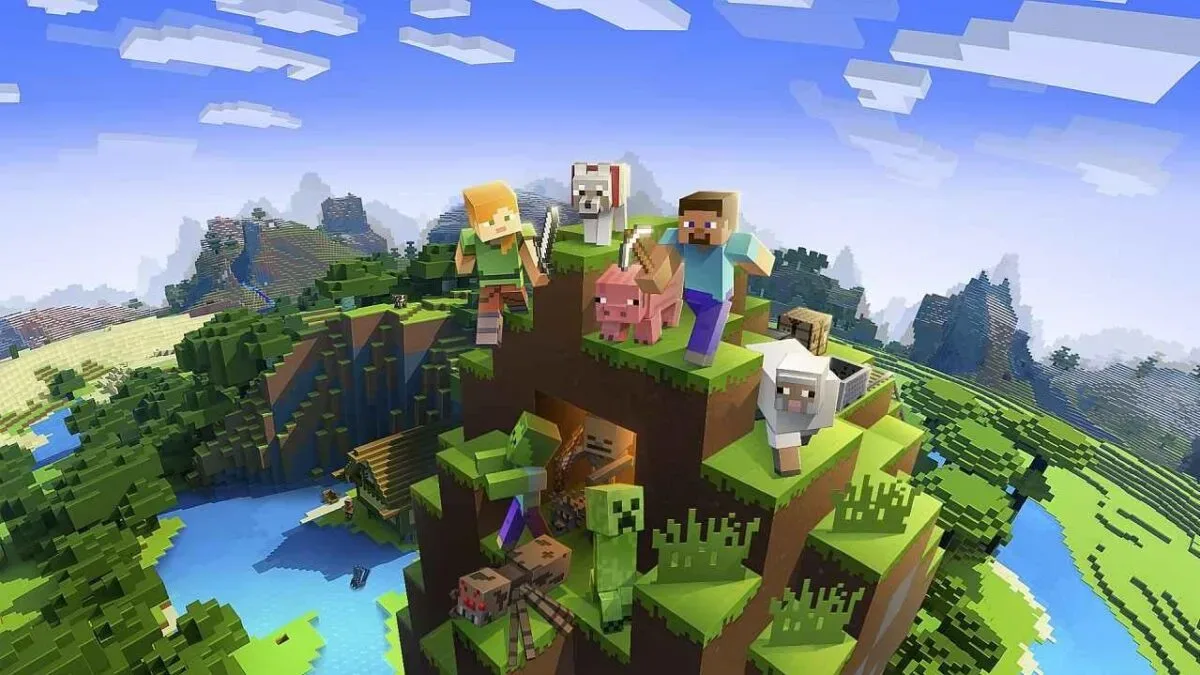
One reported scenario goes further than asking where an upcoming game launches. It imagines Minecraft no longer being sold on PlayStation or Nintendo consoles. Under that scenario, people who already own existing Minecraft titles and content would retain them, while those existing titles would receive no further content updates on those platforms.
That is a distinctly different proposition from making a future game exclusive. It involves a live, existing game on platforms where players may already have purchases, worlds, routines, and communities. The hypothetical reportedly says ownership would not be revoked, which addresses access to what has already been bought. However, the lack of new content updates would create a separate concern: continued support.
In gaming, an update can mean a patch, new content, or other post-launch changes delivered after purchase. The survey language specifically concerns no further content updates for existing Minecraft titles on the affected consoles. It should not be read as confirmation that this will happen; it is part of a scenario respondents were asked to assess. Yet its inclusion suggests Xbox is measuring reactions not only to future access, but to the maintenance of games already in players’ libraries.
That distinction is likely to matter deeply to affected players. A new exclusive release asks consumers to decide whether to follow a game to another platform. Ending sales and future content updates for an established version raises questions about the ongoing value of the version people already use. The hypothetical reportedly preserves existing ownership, but preservation and active support are not identical.
Why Call of Duty is treated separately
Call of Duty is explicitly excluded from the imagined all-in exclusivity model. The survey’s exception means the proposal is not described as a blanket rule for every Xbox-developed franchise. It instead tests a structure in which Call of Duty remains apart while most future first-party releases become Xbox-and-PC console exclusives.
The report also says Xbox has reversed course on day-one Game Pass availability for Call of Duty. Day one refers to a game’s release date: putting a title into a subscription catalog on day one lets eligible subscribers access it when it launches rather than waiting for a later addition. The reported change therefore concerns release timing within the subscription service, not whether Call of Duty exists as a franchise or whether it is the named exception in the survey’s exclusivity scenario.
Those are separate policy levers. A company can decide where a game is sold, whether it launches in a subscription catalog, and how long it supports a version on a given platform. The survey appears to put more than one of those levers into view, which helps explain why its hypotheticals may draw strong reactions even without representing a confirmed roadmap.
Existing signals point in more than one direction
The reported survey arrives alongside a mixed set of platform signals. Earlier this summer, Xbox said that Gears of War: E-Day and Clockwork Revolution would remain exclusive to Xbox and PC. At the same time, Forza Horizon 6 and Fable are still expected to come to PS5.
That split is why it would be premature to interpret a survey question as a settled company-wide reversal. Some games have stated long-term Xbox-and-PC exclusivity, while other high-profile releases remain set for PlayStation. The future status of a major project such as The Elder Scrolls 6 has not been clarified in the material behind this report.
In other words, the survey’s broad hypothetical should not be used to overwrite the platform plans already described for individual games. A franchise-by-franchise approach can coexist with research into a much broader exclusive model. Until Xbox sets out a formal policy or identifies additional games, the questionnaire is evidence of consideration rather than final direction.
The business question behind the player question
The report places the survey in a difficult period for Xbox and says the company is examining its financial position and player expectations. It also says Xbox CEO Asha Sharma reportedly argued in a recent meeting that Game Pass had reduced the incentive for players to purchase major releases, including Call of Duty, on release day.
That reported discussion is relevant because exclusivity and subscriptions can pull attention toward different measures of success. An exclusive game may be intended to make a hardware ecosystem more attractive. A subscription service is intended to give players recurring access to a catalog. Traditional sales, meanwhile, involve a player buying a particular release. The supplied information does not establish which approach is more valuable to Xbox, nor does it establish a causal relationship between any one policy and the company’s performance. It does show that the company is reportedly reconsidering how these parts fit together.
There are also reported rumors of further changes to day-one offerings in 2027. Rumors, survey hypotheticals, and announced platform plans should be kept in separate categories. They can indicate areas under discussion, but only announced plans tell players what they will actually be able to buy or play.
What players should watch for next
The immediate takeaway is not that Xbox has confirmed a sweeping exclusivity shift. It has not done so in the information available here. The meaningful development is that reported survey questions are testing the limits of player tolerance for such a shift, including an unusually specific Minecraft support scenario.
Players evaluating the issue can focus on a few practical points:
- Future releases versus current libraries: A new game being unavailable on a console is different from an existing game becoming unavailable for purchase or losing future updates.
- Platform-specific commitments: Confirmed plans for Gears of War: E-Day, Clockwork Revolution, Forza Horizon 6, and Fable should be assessed individually rather than treated as one uniform policy.
- PC remains part of the described model: The reported all-franchise scenario keeps PC unchanged, even as it limits console availability.
- Survey language is exploratory: The questionnaire may influence decision-making, but it does not announce a decision.
For the broader PC side of the market, platform policies and player purchasing habits continue to be closely connected; games such as Wardogs illustrate how PC-focused conversations can center on player choice even when the subject is much smaller than first-party publishing strategy.
For now, Xbox’s reported survey provides a clearer view of the questions on the table than it does of the answers. Whether players prioritize a stronger exclusive lineup, wider access across console platforms, or a balance that varies by series is exactly what the company appears to be trying to measure.