Xbox is putting a single name and leadership structure behind a strategy that has been spreading across its biggest properties for years: games may start the relationship, but they are no longer intended to be the only place fans meet a franchise. The new division is called XP—a reference to “experience points,” naturally—and it will oversee Xbox’s efforts across screen adaptations, consumer products, commercial partnerships, and real-world events and attractions.
Kayleen Walters will lead XP. Walters moves from Mojang, where she was most recently president and also served as an executive producer on A Minecraft Movie. Her background also includes Lucasfilm, an especially relevant credential for a role built around translating major fictional worlds into experiences beyond their original medium.
XP is not described as an in-house studio that will directly make every movie, series, toy, event or attraction itself. Instead, Xbox says the unit is meant to find and work with the appropriate partners. That distinction matters. Making a film, manufacturing licensed products, staging an arena event, and operating a theme-park attraction are radically different businesses. XP’s job appears to be maintaining a franchise-wide plan while relying on specialist partners to execute the individual projects.
For the basic announcement and its immediate implications, see our related coverage of Xbox’s XP division and its push beyond games.
What Xbox XP is responsible for
Xbox has divided XP into four named investment areas. The labels are straightforward, but together they describe a much broader operation than a conventional game publisher’s licensing desk.
- Xbox Pictures: Film and television adaptations.
- Xbox Products: Licensing and merchandise.
- Xbox Partnerships: Sponsors and brand collaborations.
- Xbox Places: Broadcast events, in-person events, theme parks, and other location-based experiences.
“Location-based experiences” is industry language for entertainment that people physically visit rather than watch or download. A theme-park installation is the clearest example, but the term can also cover events and other branded destinations. Xbox has said that a Minecraft theme park is expected to open next year, placing a very concrete project inside the new Places remit.
The structure also groups together activities that can reinforce each other. A television season can bring a property to a much wider audience; merchandise gives those viewers a way to show affiliation; a brand partnership can put it in front of another audience; and a live event can make fandom feel communal rather than solitary. XP’s wager is that those pieces should be coordinated around the same franchises rather than treated as unrelated side businesses.
That coordination will be important because “more” is not automatically “better.” An adaptation or product line has to preserve enough of the game’s identity to satisfy existing fans while also being understandable to people who have never picked up a controller. Walters framed the opportunity in exactly those terms: fans do not merely play these series; they watch, wear, attend, celebrate and connect through them.
Related coverage includes Xbox Launches XP Division to Expand Its Biggest Franchises Into Film, TV, Events and Merchandise.
Minecraft and Fallout provide the immediate proof points
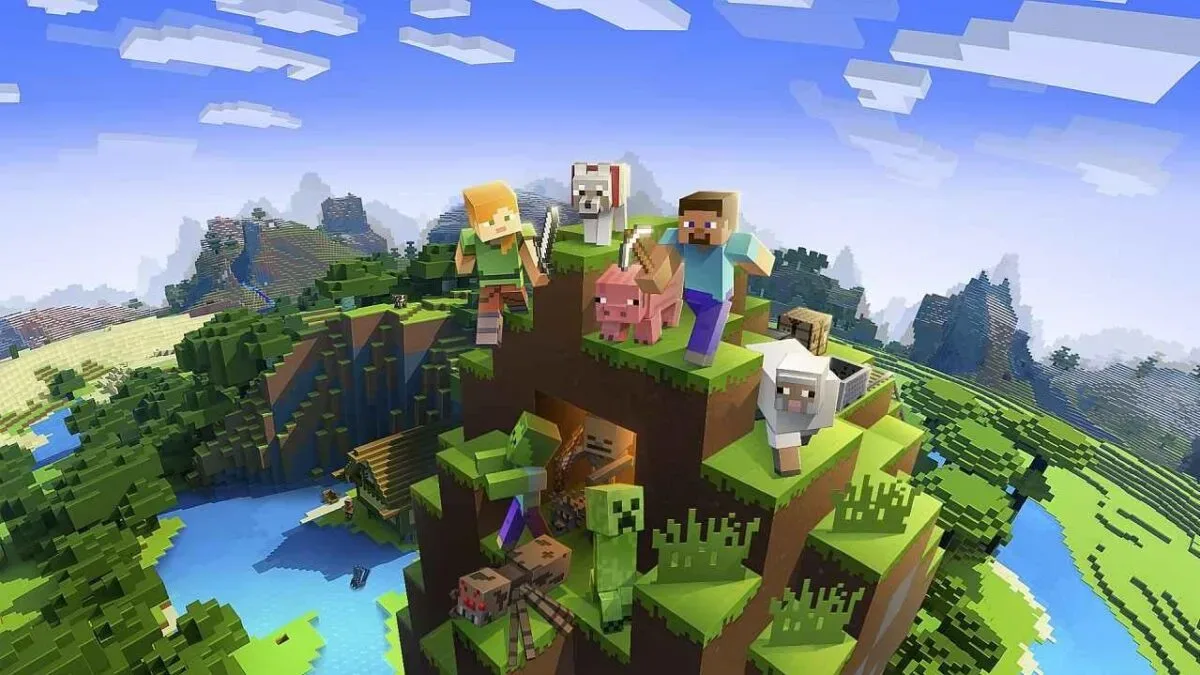
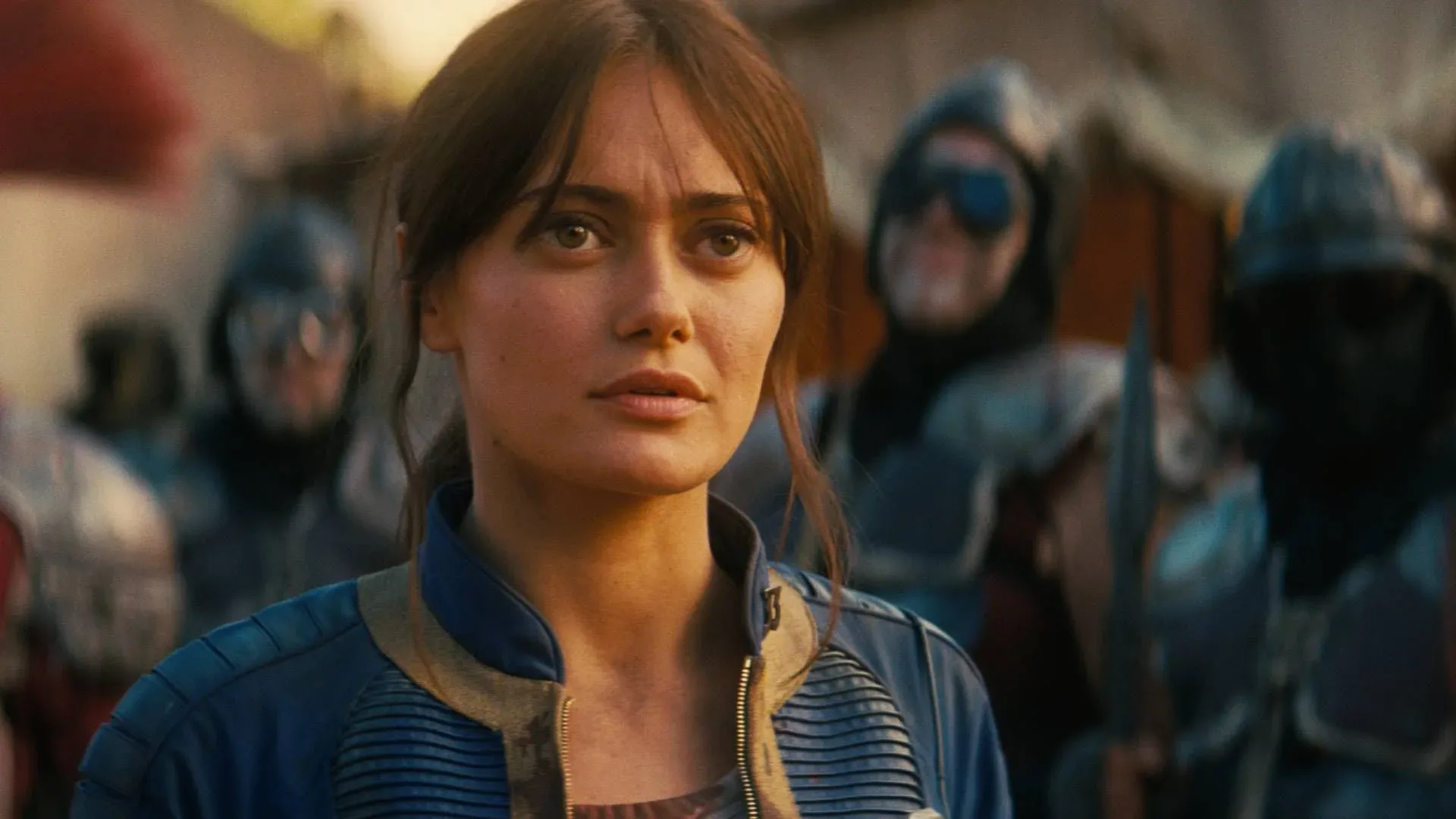
Microsoft has numbers to show why it wants a more formal organization. A Minecraft Movie broke box-office records, while the Fallout television show set records for Prime Video. Their value to Xbox is not limited to ticket sales or streaming attention. Microsoft says Fallout titles on Game Pass saw hours played rise fivefold during the first season of the show.
Game Pass is Xbox’s subscription service, and “hours played” measures time spent with games by its users. A fivefold increase does not, on its own, disclose the number of players involved or identify which individual Fallout games gained the most. It does, however, show the commercial logic of cross-media exposure: a successful show can make a game catalog feel newly relevant, even when those games were not newly released.
Minecraft shows a related pattern at a much larger overall scale. Microsoft said Minecraft’s weekly active users were up more than 75% year over year as of April 30, 2026, following the movie’s release. Weekly active users is a measure of how many people use a product in a given week; it is not the same thing as copies sold. But it is useful for a game like Minecraft, whose continuing community activity is central to its long life.
Minecraft is already the best-selling game of all time, with more than 425 million copies sold. Microsoft also says its merchandising business has reached the global top 20. In other words, it is not a theoretical candidate for a bigger entertainment strategy. It is already operating across games, film, products, broadcasts and an upcoming physical destination. XP gives that sprawling work a designated home.
A packed adaptation slate, with one important caveat
The projects identified as upcoming give a sense of the franchises likely to sit near the center of XP’s plans. They include Minecraft Squared, a sequel film; Fallout Season 3; a Call of Duty movie involving Peter Berg and Taylor Sheridan; and a Netflix animated series based on Diablo.
Microsoft’s agreement around Hideo Kojima’s Physint, described as a Metal Gear Solid spiritual successor, also includes film and television rights. That means an adaptation is possible down the road, but it should not be mistaken for a confirmed screen project. Owning or securing rights is groundwork, not a release date, cast list or production start.
The slate illustrates why XP is broader than a movie label. Minecraft is suited to family-scale consumer products and attractions as well as a film. Fallout has demonstrated a path from television interest back to game engagement. Call of Duty brings one of gaming’s most recognizable names to a new format. Diablo enters animation. These are distinct audience and format choices, even when the goal is shared: make an Xbox-owned franchise a cultural presence outside a game library.
Events, collaborations and furniture are all part of the plan
XP’s event assignment is not incidental. Blizzard’s BlizzCon recently drew 35,000 people in Anaheim, California, alongside 12.5 million viewers watching from home. Minecraft Live reached more than 144 million people, and included the reveal of Minecraft’s first new dimension in 14 years. Those figures show why a company would treat broadcasts and fan gatherings as major franchise moments rather than mere marketing add-ons.
Live events serve a different purpose from a trailer or a social-media post. They concentrate community attention into a particular moment, create a shared discussion, and can host meaningful game news. The size of Minecraft Live’s audience also explains why XP’s Places category includes marquee broadcasts in addition to physical venues. “Place,” in this context, is not solely a building; it can be an organized destination for attention.
Xbox also pointed to Gears of War’s WWE takeover and its Ikea furniture range as examples of the partnership and product sides of the strategy. They may sound like wildly different pitches in a brainstorming session—the Locust Horde versus flat-pack living-room storage—but that is the point of the umbrella. A franchise can be present in sports-entertainment promotion, home furnishings, apparel, collectibles and events without each initiative needing to be managed as an isolated novelty.
The practical test for fans will be whether the additions feel connected to the games rather than stamped with a logo and launched into the wild. Xbox chief executive Asha Sharma said Walters knows how to build experiences with industry partners without losing the qualities that made people care about a franchise. That is the standard XP now needs to meet, particularly as it moves between very different kinds of partners.
This is Xbox’s second attempt at a dedicated entertainment push
The XP announcement has an obvious historical comparison. In 2012, during the Xbox 360 era, Microsoft launched Xbox Entertainment Studios. That initiative was designed to produce shows for Xbox consoles and disclosed plans connected to Gears of War, Fable, Forza, and State of Decay. It also encompassed an early version of the Halo television plan announced at E3, with Stephen Spielberg set to executive produce, plus an unscripted street-soccer drama titled Every Street United.
Xbox Entertainment Studios lasted two years before it was shut down. Its lifespan was tied to the difficult response to the Xbox One’s “all in one” positioning after the console’s 2013 reveal. XP is therefore not the company’s first attempt to extend Xbox into entertainment, but it is configured differently.
The key contrast is that XP is explicitly not presented as a production company or as an effort to make the Xbox console the exclusive home for programming. It is a franchise-expansion unit built around external partners and several forms of entertainment. Microsoft now also enters this effort with the demonstrated screen success of Minecraft and Fallout, large live audiences, established merchandising, and active partnerships already in place. That does not guarantee every future adaptation or attraction will land, but it gives the strategy evidence that did not exist in the same form in 2012.
Mojang gets new leadership as Walters moves to XP
Walters’ new post creates a leadership change at Mojang. Maria Angelidou-Smith joins Xbox as Mojang’s CEO. Her previous experience includes nearly a decade at Meta working on Facebook Groups, followed by roles at Personio and Reddit, where she served as chief product officer.
Sharma described Angelidou-Smith as a leader who has worked on products used by billions and guided product and engineering organizations through periods of growth and change. Her stated first priority at Mojang is to learn from the teams and communities that make Minecraft what it is.
That emphasis is notable because Minecraft’s scale is inseparable from its community. Its screen and merchandise opportunities may be immense, but the game remains the foundation. A stronger movie, event or product strategy can send new and returning players toward that foundation; it cannot replace the sustained work of maintaining the game and listening to the people who play it.
The announcement also arrives amid Sharma’s ongoing “Reset” of the gaming business, during which nearly 2,000 staff have been cut so far this financial year. Against that backdrop, XP signals a clear allocation of attention toward franchises with demonstrated reach across multiple forms of entertainment. For players, the immediate promise is not that every Xbox game will become a show, theme-park zone or furniture collection. It is that the company is establishing a dedicated team to decide when such an expansion makes sense—and to manage it when it does.