Playground Games has publicly acknowledged that Forza Horizon 6 players want more communication around the game’s post-launch direction. In a message addressed to the Horizon community, the studio said it has been reading feedback, recognized that it has not talked with players as much as it could, and is considering changes both to in-game content and to how it communicates.
That is a relatively brief response to a larger, long-running complaint. The issue is not simply that players want more cars or more patches. A vocal part of the community says it has struggled to understand what the live-service racing game is building toward, which player feedback is being considered, and when meaningful answers might arrive. The update does not commit to specific features, a timetable, or a roadmap. It does, however, move the conversation from prolonged silence to an explicit admission that the studio needs to communicate more clearly.
What Playground Games said
In its social-media post, Playground said it is continuing to deliver regular content and fixes, while emphasizing that it has heard feedback concerning post-launch updates. The studio’s wording is important for what it does and does not promise: it says future changes are being explored, rather than confirming a set of changes already scheduled for release.
For players, that distinction matters. A post-launch roadmap is a forward-looking plan that typically explains the cadence and broad shape of upcoming support, such as updates, events, feature work, or fixes. The community’s frustration appears to be less about demanding every detail at once and more about the lack of that dependable frame of reference. Without it, each playlist refresh or patch can feel disconnected from players’ larger concerns.
The game launched to strong critical reception, but good reviews do not erase the different expectations that come with a game designed to keep evolving after release. A live-service title relies on an ongoing relationship between developers and players. Regular content is one part of that relationship; explaining priorities and responding to recurring issues is another.
The concerns go beyond a single missing feature
Creators including STEVIO2175, AR12Gaming, HokiHoshi, and Ericship 111 have discussed a cluster of complaints rather than one isolated problem. At the center is the perception that community engagement has been nearly nonexistent. Players have also pointed to features present in earlier Forza games that they believe are absent from Horizon 6.
One recurring criticism concerns the Horizon Festival playlists and access to newly added cars. Some players feel pressured to spend time in those playlists in order to earn new vehicles, including vehicles they see as returning from earlier Horizon entries, instead of spending their time in modes they personally prefer.
That is an issue of player agency: the degree to which someone can choose their own goals and activities while still making desired progress. Time-limited or playlist-tied rewards can create an active weekly rhythm, but they can also make a player feel as though the game is dictating their routine. In a series associated with open driving and broad freedom of play, that tension becomes particularly noticeable.
Related coverage includes Playground Games Responds as Forza Horizon 6 Players Demand Better Communication.
The complaint is not necessarily that playlists should not exist. Rather, it is that the reward path may feel too narrow for people who want to race, drive socially, experiment with cars, or otherwise engage with the festival on their own terms. If new-car rewards are perceived as the reason to log in, then the way those rewards are distributed becomes a core design question instead of a minor administrative detail.
Social play is at the heart of the debate
Players have also highlighted the lack of in-game voice chat. This has drawn extra attention because 2023’s Forza Motorsport still includes voice chat. Community discussion has framed the omission as more than a convenience problem: for players who want to cruise, organize activities, meet other drivers, or simply react together in the moment, voice communication can make a shared world feel substantially more social.
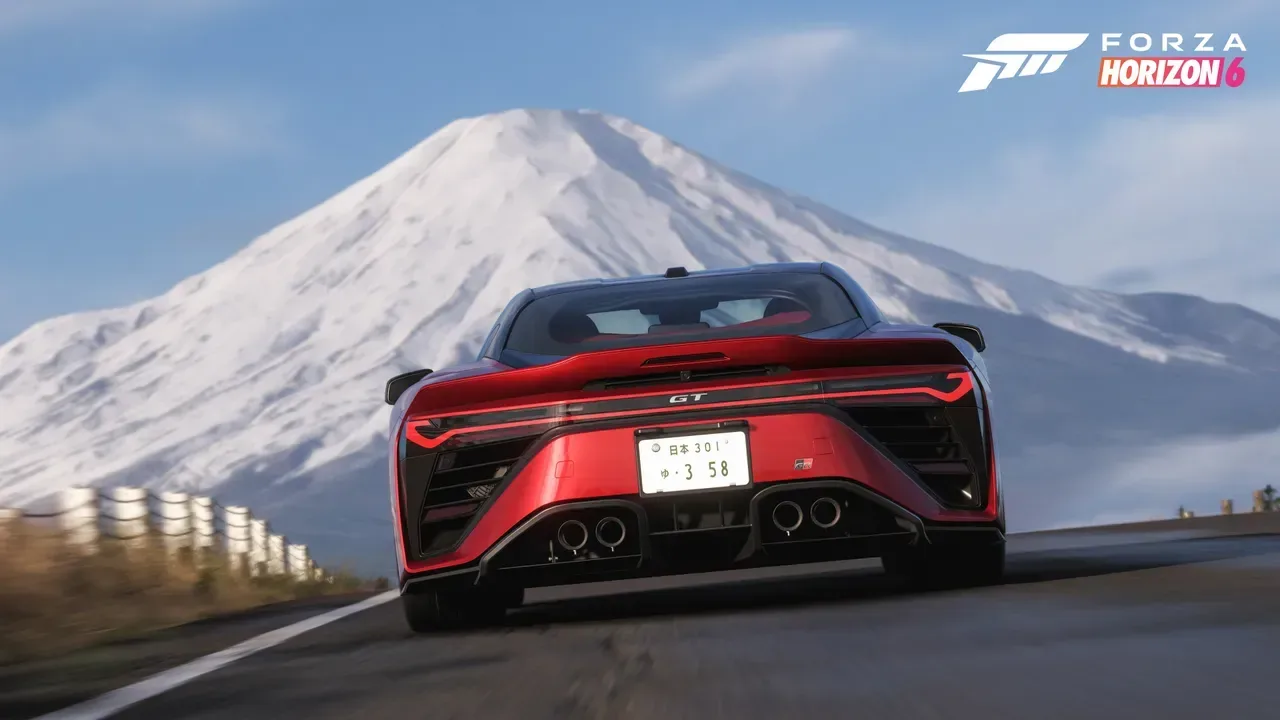
Voice chat is not a universal benefit without trade-offs. It requires moderation considerations and players often want clear controls over when, where, and with whom they communicate. But the community argument is that a well-managed voice option could make Horizon 6’s Japan setting feel more alive by helping spontaneous interaction emerge between people already occupying the same online spaces.
That connects to a broader concern about replayability beyond the single-player experience. Replayability does not only mean having a large number of races. It can also mean having reasons for players to return because the social environment produces new interactions, shared routines, and activities that do not play out exactly the same way twice. Some players believe Horizon 6 needs stronger social and community features if it is to retain interest over time.
Whether voice chat is the answer, or only one piece of the answer, is unresolved. Playground’s message did not identify any specific social feature under consideration. Still, the response creates a chance for the studio to explain which concerns are technically feasible, which may need more time, and which do not fit its plans. A clear no is often more useful to a community than no answer at all.
Forza Monthly’s absence has left an information gap
Another focal point is the absence of Forza Monthly, the show used to directly interface with the community. Its disappearance has left players without a familiar place for developer context, news, and acknowledgment of ongoing discussions.
Some members of the Forza community have wondered whether corporate restructuring and layoffs could be related. That is speculation, not an established explanation. The available information does not confirm that resources have been moved away from Horizon 6 or that the absent show has a particular internal cause.
It is known that Playground has a second team in the final stretch of work on the Fable reboot, due February 23, 2027 on Xbox, PC, and PlayStation 5. It is reasonable for players to ask how a studio balances two high-profile projects, but it would be a leap to treat that question as proof that Fable is responsible for Horizon 6’s communication issues. The studio has not drawn that connection.
The wider Xbox backdrop is also an understandable source of anxiety for players watching studio support closely. Xbox’s stated reset and the prospect of further layoffs have made resource questions harder to ignore across the organization. But public uncertainty should not be filled with confident claims about teams, staffing, or feature decisions where no confirmation exists.
Why the response is meaningful, even without details
There is no confirmed feature list in Playground’s post, so it would be premature to call this a turnaround. It is better understood as an opening. The studio has accepted the premise that communication has fallen short and has said that changes to communication are being considered alongside potential content changes.
The next meaningful step will be specificity. Players are likely to look for practical answers to questions such as:
- Will there be a regular official channel for updates, similar in purpose to Forza Monthly?
- How will feedback about playlist-based rewards influence future events or car access?
- Are social features, including voice chat, actively being evaluated?
- Which missing features from past Forza games are possible to address, and which are not?
- What should players expect from the next phase of updates?
Not every answer needs to be a promise. Development has constraints, and a racing game’s content, online systems, and moderation tools cannot necessarily be changed quickly. The community’s concern, however, has been intensified precisely because there has been so little visibility into those constraints. A recurring update format could explain decisions and trade-offs without committing the team to every requested feature.
That would also help separate three things that can otherwise blur together: bugs being fixed, routine content being added, and bigger changes to the game’s structure or social systems. All are “updates” in the broadest sense, but they have very different effects on how players experience a live-service game.
The PlayStation 5 question remains unanswered
Microsoft and Playground previously said that a PlayStation 5 version of Forza Horizon 6 would arrive this year, but no release date has been announced as October progresses. The lack of a date does not itself confirm a delay, but it leaves the stated release window increasingly uncertain.
For prospective PS5 players, the current debate matters even before a platform launch. A new audience would arrive not only to the roads and cars of Horizon 6, but to the game’s existing post-launch systems and community environment. Better clarity on content, rewards, social tools, and support plans would therefore benefit current players and anyone waiting to join on another platform.
For now, the concrete development is limited but notable: Playground has said it hears the feedback and is looking into future changes. Players have made clear that they will judge the response by what follows—whether that means more transparent updates, a revived community dialogue, changes to content structure, or steps toward a more social Horizon experience.