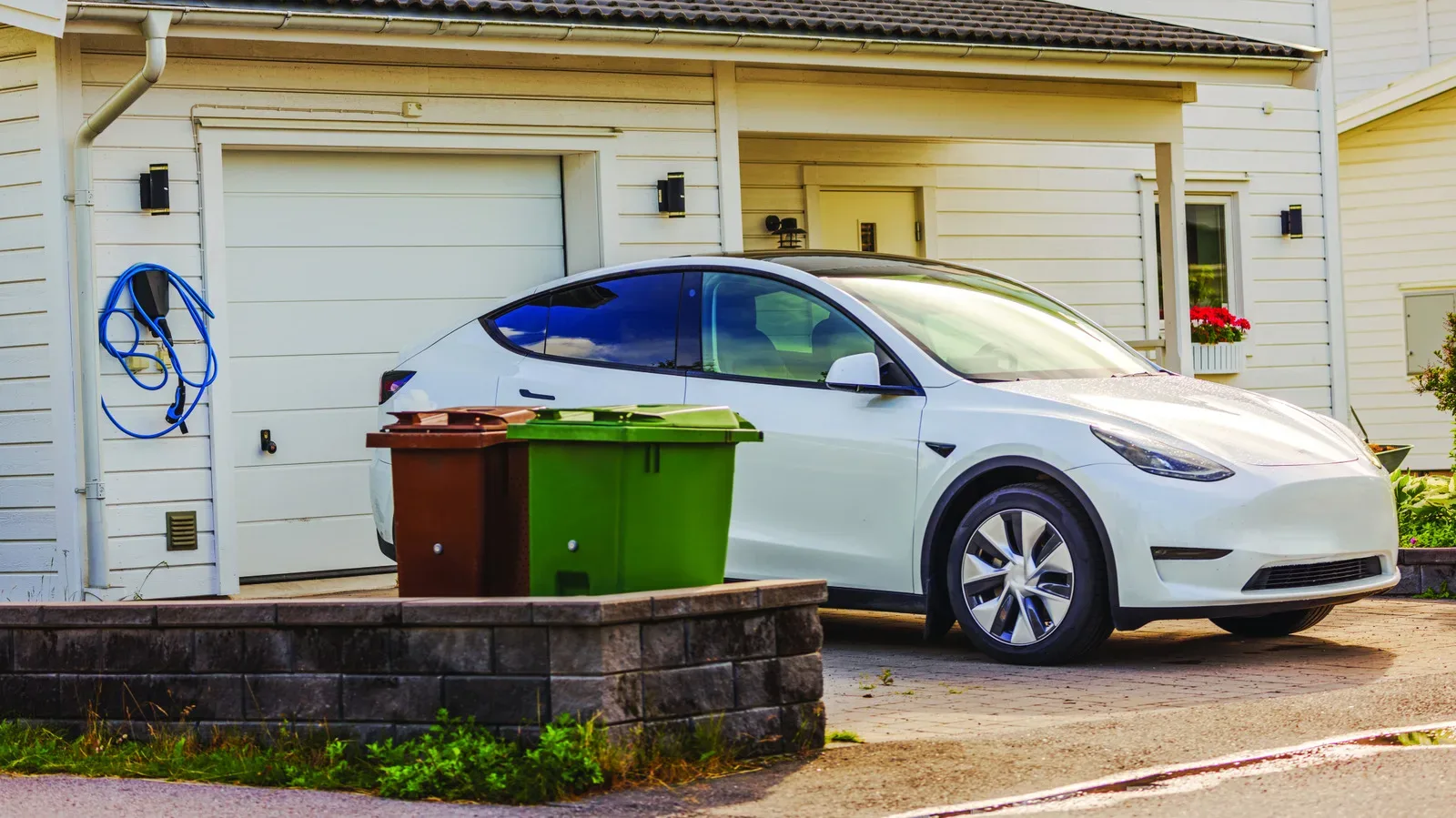
Parking an electric vehicle does not always mean putting every one of its electrical systems into a deep, power-free sleep. An EV can show a lower battery percentage after sitting for days, even though it has not travelled anywhere, and that can be especially unwelcome after leaving a car at an airport or other long-stay parking area.
The important distinction is between a small, natural loss within the battery itself and the energy used by the vehicle’s systems while it is parked. The first exists, but the second is generally the more meaningful explanation for a noticeable drop. A vehicle that is checking its battery, sustaining its electronics, responding to connected requests, cooling the cabin or monitoring its surroundings still needs electricity. It is parked, not necessarily dormant.
For a brief stop or a normal weekend, this usually is not a major concern. The calculation changes when an EV remains unplugged for a couple of weeks or longer, particularly with power-hungry optional features enabled. Settings, temperature, vehicle design, battery size and the way an owner interacts with the car remotely can all affect the result.
Battery self-discharge is real, but it is not the whole story
Like other lithium-ion batteries, the pack in an EV can gradually lose stored energy through a process known as self-discharge. Within the cells, chemical reactions including electrolyte oxidation and reduction can occur even when the vehicle is not being driven. That is a normal battery characteristic rather than proof that something is wrong.
For more context, explore Burna Boy and Davido Shake Hands at Zlatan Ibile’s Lagos Bachelor Party.
In practical parked-car terms, however, self-discharge is described as negligible compared with the energy an EV uses while driving. The more relevant question is what the vehicle continues to do after its doors are locked.
A modern EV has a battery management system, often shortened to BMS. This is the system responsible for periodically checking battery conditions and handling necessary battery maintenance. Those checks are part of why locking an EV does not equate to cutting every electrical connection. The car has to retain enough awareness to manage its battery and its essential functions.
There is also a second electrical layer to consider. The traction battery is the large, high-voltage pack used to propel the vehicle. But locks, computers and other electronics rely on smaller low-voltage batteries. A parked EV may use energy from its high-voltage battery to replenish that low-voltage supply. The Tesla Model 3 routinely conducts parked system checks and required battery maintenance, while Rivian has confirmed that the R1T uses its high-voltage battery to maintain its 12V battery.
That arrangement is useful: it helps the basic electronics remain available while the vehicle is parked. It also means that a stable-looking, motionless car can still draw from the main pack in small increments.
Connected convenience can keep the vehicle awake
Many of the features that make an EV convenient depend on the car being able to receive or process requests while parked. Owners may check vehicle status, prepare the cabin before a journey or start climate control from an app. Tesla identifies app requests, climate functions and infotainment among the sources of power use when a vehicle is parked.
These uses are not identical. Checking a status screen is not the same task as conditioning a cabin. But they share a practical implication: remote interaction can prevent a vehicle from staying in its most energy-conservative state. This is often described as waking the car. In plain terms, a vehicle that would otherwise be sleeping is brought back into an active state to communicate or carry out a command.
Third-party applications deserve particular attention. An app that repeatedly requests data can repeatedly wake a sleeping vehicle, adding to its parked energy use over time. The issue is less about a single look at the battery percentage than a pattern of frequent automated or manual checks. For an owner planning an extended trip, minimizing unnecessary requests is a sensible way to reduce avoidable background consumption.
Cabin cooling is another straightforward example. In hot conditions, maintaining a cooler interior requires energy; the comfort benefit does not arrive without a battery cost. A vehicle with fewer connected functions could theoretically have fewer systems to operate while parked. Slate’s stripped-back electric pickup may offer that sort of advantage, although its real-world parked drain has not been established.
Security monitoring has a clear trade-off
Surveillance modes can be valuable when an EV is parked somewhere unfamiliar. Tesla’s Sentry Mode uses cameras and sensors to watch for suspicious activity. Rivian offers Gear Guard Motion Cam, which can record activity around a parked vehicle. Both reflect a reasonable security trade-off: an electronic lookout can provide additional awareness, but cameras and sensors need power to stay on duty.
That makes these modes worth considering before a long parking period. An airport lot or unknown location may feel like a case for keeping them active. Parking at home for an extended time may call for a different balance. There is no single setting that is right for every situation, because the owner is weighing security needs against the desire to conserve charge.
What matters is intentionality. Leaving a monitoring feature on because it is useful is different from forgetting that it is on and being surprised by a larger-than-expected battery drop. The same principle applies to climate settings and connected services.
Why reported battery-loss figures can vary so widely
It is tempting to seek one universal daily percentage, but the available figures show why that can be misleading. Tesla’s Model 3 manual says the battery can lose about 1% per day, depending on conditions and settings. Separately, sleeping Teslas have been reported to lose roughly 0.1% to 0.3% per day, while vehicles using energy-intensive features may lose several percent daily.
Those numbers should not be treated as competing promises. They describe different operating conditions. A vehicle sleeping successfully, with limited demands placed upon it, can behave very differently from one frequently awakened by apps, running climate-related functions or maintaining a surveillance mode. The useful lesson is not that every EV will follow one number; it is that settings and circumstances can move parked consumption from minor to meaningful.
Battery capacity changes how visible a given loss becomes. A 0.5 kWh loss equals about 1.2% of a 42 kWh battery, but about 0.6% of an 80 kWh battery. The energy used is the same in this example, yet the smaller pack shows twice the percentage change. That means owners of smaller city-oriented EVs may notice identical background consumption more sharply than owners of vehicles with larger batteries.
Kilowatt-hours, or kWh, measure energy stored or used. Battery percentage is easier to read at a glance, but it can hide this capacity difference. Looking at kWh helps explain why a percentage change cannot automatically be compared across every EV.
Cold weather can make the display harder to interpret
Temperature adds another layer. In cold weather, an EV’s indicated range can fall as battery temperature changes, even when the battery has not expended an equivalent amount of electricity. In other words, a changing range estimate is not always a direct record of parked energy drain.
This matters because range is an estimate, not merely a battery gauge. If the estimated range moves after a cold night, it may reflect the battery’s temperature-related condition as well as actual consumption. Treating every lost projected mile as a fixed quantity of energy spent can lead to the wrong diagnosis.
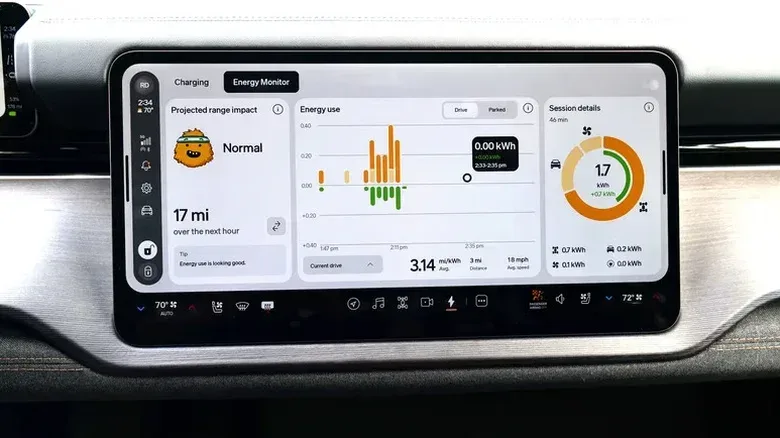
For Model 3 owners, the Energy app’s Park tab offers a more useful way to inspect how much energy the vehicle consumed while parked. That is more informative than watching the range display alone, particularly when temperatures are changing. It helps separate the practical question—how much energy did the car use?—from the related but different question of what range the car currently estimates.
A practical checklist before leaving an EV for a while
Extended parking does not require assuming the worst, but it rewards a quick settings check. The goal is to retain the functions that matter while avoiding unnecessary loads.
- Start with enough charge for the return trip. Do not plan around the assumption that a parked battery percentage will remain perfectly unchanged.
- Turn off surveillance functions that are not needed. Camera- and sensor-based monitoring can be useful, but it draws power while active.
- Review climate and cabin-cooling settings. Keeping a cabin comfortable while nobody is in it has an energy cost.
- Limit repetitive app activity. Avoid third-party services or check-in habits that repeatedly wake the vehicle during a long absence.
- Use the vehicle’s own energy information where available. Model 3 owners can check the Park view in the Energy app rather than relying only on changing range estimates.
- Account for weather and pack size. Cold conditions can affect the range display, and a given kWh loss is a larger percentage of a smaller battery.
If the car will be unused for several weeks, plugging it in is the clearest precaution where that is possible. Tesla recommends keeping the Model 3 connected when it is not in use, especially for multi-week periods, and keeping it at around 50% charge for long-term storage. That guidance recognizes the basic reality of an EV at rest: even if the car is not travelling, some battery management and low-voltage support may still be taking place.
The larger takeaway is that parked battery loss is best understood as a systems question, not simply a battery question. The chemistry contributes a small background effect, but the meaningful variables are often the features the car is supporting. Security monitoring, climate control, connected services, app activity, periodic management checks and low-voltage maintenance each have a purpose. Understanding which ones are active gives owners a better chance of returning to the charge level they expected.
For further reading on the parked-EV question, see this overview of EV battery loss while parked.