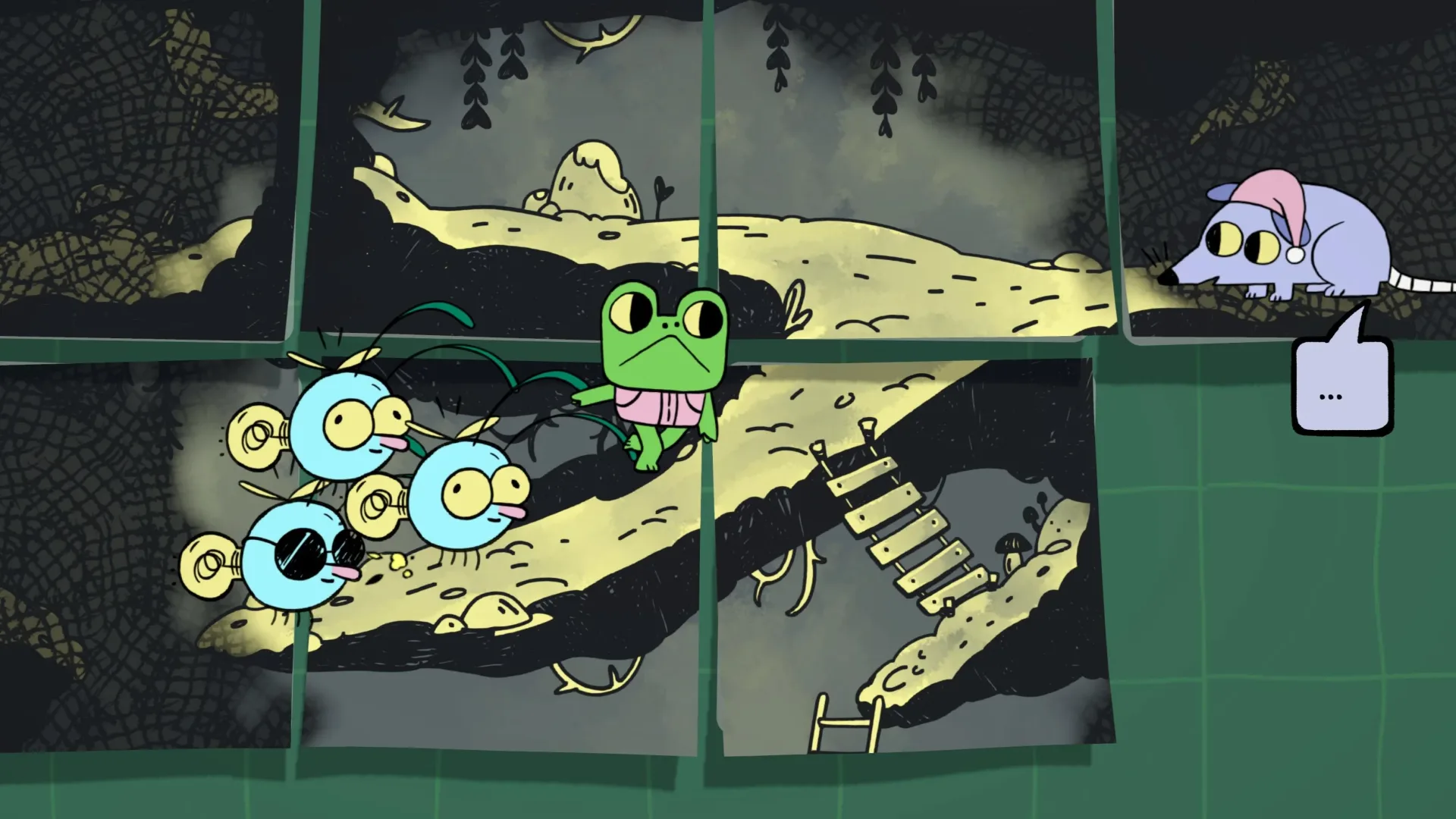
Walk The Frog is now available on Nintendo Switch, iOS and Android as of October 14, 2026. The hand-drawn puzzle adventure follows Froggo, a small frog attempting to make it home to Buddy before the Froggapalooza festival begins.
Its central idea is pleasingly tangible: players do not simply steer Froggo around a conventional map. Instead, they drag, drop and rearrange illustrated sticky notes to make routes, deal with obstructions and move the journey forward. The release brings the game’s existing PC adventure to Nintendo’s handheld-friendly hardware and to mobile devices, where the touch-focused concept has an especially natural fit.
Developed by the German indie team Walk The Frog in partnership with Bright Gambit, the game is built around a cozy storybook look, animal characters and puzzles without timers. That last detail matters. It signals a design that asks players to consider a solution at their own pace rather than react under a clock.
A journey made from movable notes
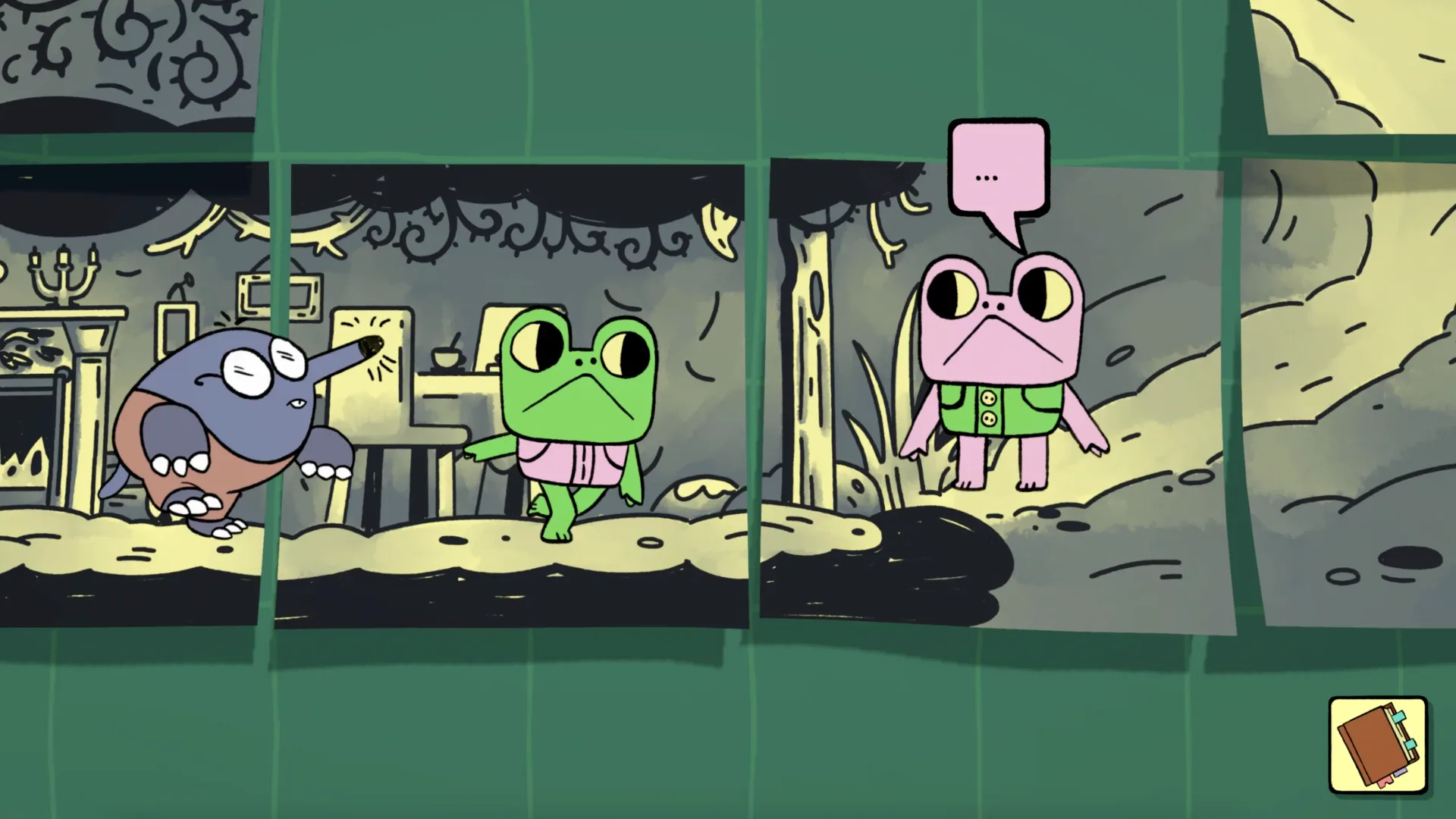
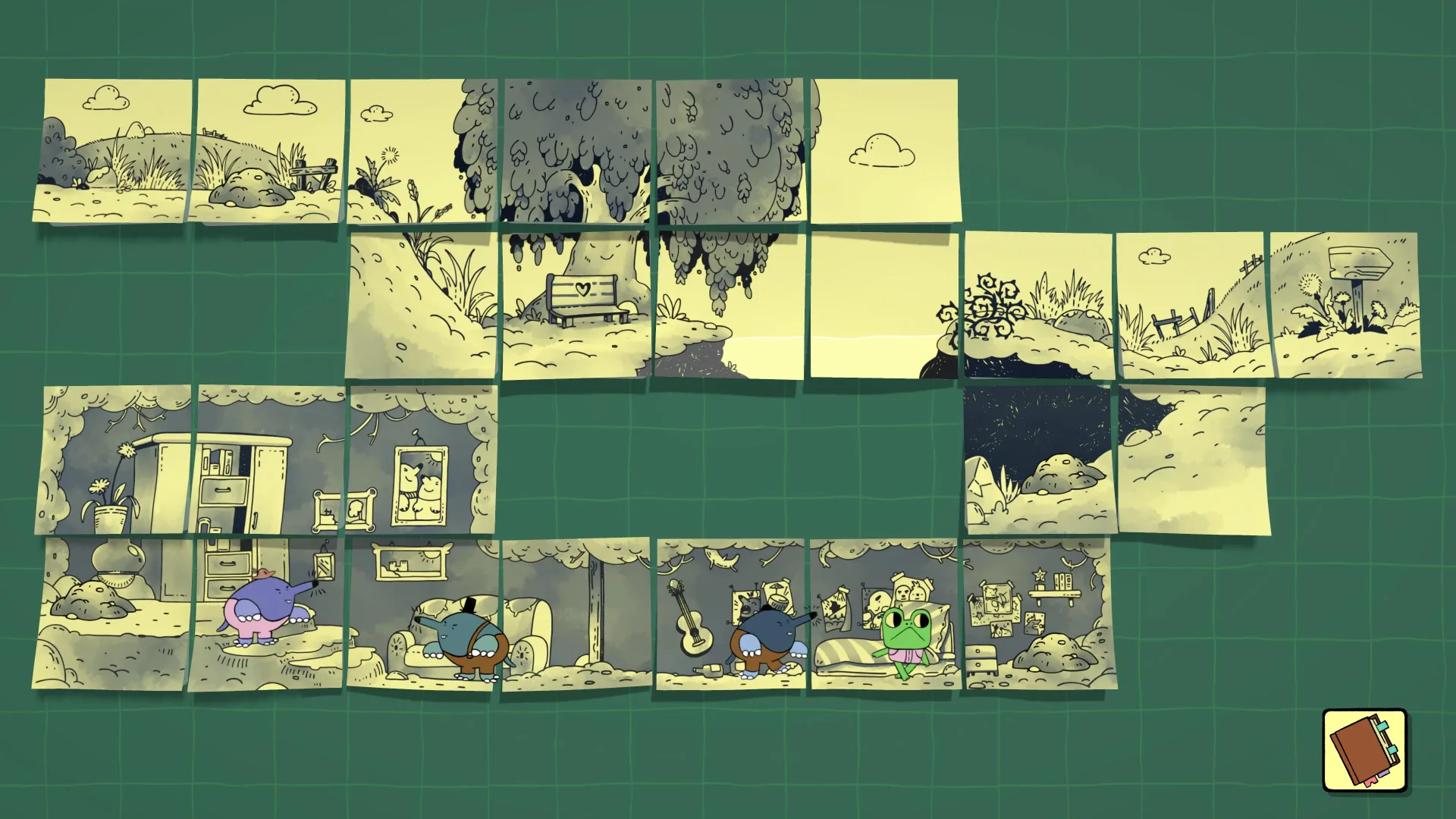
The sticky-note system is the defining feature of Walk The Frog. Rather than treating the art as a static backdrop, the game makes its illustrated pieces part of the puzzle. Players manipulate those pieces to assemble a usable path for Froggo.
For more context, explore Nick Cannon’s ‘Nick Cannon @ Night’ Moves From Podcast Format to BET for 10 Episodes.
In practical terms, drag-and-drop means selecting an on-screen item, moving it across the display and releasing it in a new position. It is a familiar interaction on phones and tablets, but it can also translate clearly to a handheld system: the player is directly arranging visual information rather than navigating a dense sequence of buttons or rapid commands.
The supplied details do not spell out every individual obstacle or rule, so it would be premature to assume how any one level is structured. What is clear is the broader puzzle loop: observe the illustrated layout, decide how its movable notes can connect or alter the route, rearrange them, and progress when Froggo can continue. That places the emphasis on spatial reasoning and experimentation.
It also gives the game a visual explanation for its mechanics. If a player is literally moving scraps of an illustrated page, the act of building a path can be read immediately from the screen. For a puzzle adventure intended for both mobile and portable play, that clarity is significant: a short session benefits from mechanics that communicate their purpose without demanding an elaborate control vocabulary.
No timers changes the mood, not necessarily the challenge
Walk The Frog is described as having no timers. A timer is a rule that requires an action or puzzle to be completed within a fixed period; its absence means the game removes that particular source of pressure.
That should not be confused with a promise that every puzzle will be effortless. A level can still ask players to notice a route, understand an obstacle or rethink a placement. The difference is that a wrong idea need not become a race against an on-screen countdown. Players can pause over the board, test a new arrangement and take in the small details of the scene.
This approach fits the game’s stated cozy, low-pressure tone. It also aligns with the platform choice. Switch, iOS and Android are all suited to interrupted play: a puzzle can be considered during a brief break, then returned to later. At the same time, the game is positioned for longer sessions as well, so the format is not limited to quick diversions.
There is a useful distinction here between accessible controls and reduced depth. Accessible controls refer to an input method that is readily understandable and easy to perform. In Walk The Frog, dragging and placing illustrated notes is accessible because it maps the intended action directly to a visible object. Whether a particular arrangement is the right answer remains the puzzle. The controls aim to get out of the way of the decision.
Three chapters and 18 levels of frog-sized travel
The adventure contains 18 levels across three chapters. Its settings move through lush forests, a bustling insect city, and fields and meadows. That structure gives Froggo’s trip a progression beyond a single visual theme: natural landscapes sit alongside a more populated insect settlement, while the overall hand-drawn presentation ties the destinations together.
Froggo’s reason for travelling is equally straightforward: getting back to Buddy in time for Froggapalooza. A simple objective can be a useful fit for this sort of puzzle adventure. It supplies a clear destination while leaving space for the game’s smaller encounters, animal characters and visual surprises to provide the personality along the route.
The mention of quirky animal inhabitants and feel-good moments points to an adventure designed around warmth rather than danger. That does not establish details about the cast or plot turns, but it does set expectations for the tone. Players looking for a gentle puzzle game with a defined destination, rather than a combat-led action game or an endlessly generated challenge, have a much clearer idea of what is on offer.
The 18-level count is also useful context for prospective players. It identifies Walk The Frog as a contained, chapter-based journey rather than an open-ended puzzle platform. How long an individual player spends with it will naturally depend on puzzle-solving pace and how often they revisit scenes, but the published structure is specific: three chapters, eighteen levels, and a trip across several illustrated environments.
Why the handheld and mobile versions make sense
Walk The Frog’s arrival on Switch, iOS and Android is not merely a change of storefront. The game’s basic interaction is explicitly tailored to touch and handheld play. Directly repositioning art elements is the kind of action touchscreens communicate well, since the player’s finger movement resembles moving a physical note across a page.
On Nintendo Switch, the portable format complements the same intimate scale even when a player chooses not to use touch input. The game is presented as suitable for both brief and extended sessions, and that flexibility is a sensible match for a device that can be played in handheld form. Mobile devices extend the same proposition to iOS and Android users who want a puzzle adventure built around simple, visual interaction.
There is also a thematic match between the presentation and the platforms. A storybook visual style invites the player to look closely, while the note-based mechanic turns the screen into something akin to a rearrangeable illustrated page. The art is not only decorative; it supports the central act of playing by making the puzzle pieces visually prominent.
For those keeping track of the launch, the Switch, iOS and Android release is dated October 14, 2026. The game previously appeared on PC, and these versions retain its hand-drawn art, puzzle-focused design and cozy character.
What players can reasonably expect
- Platforms: Nintendo Switch, iOS and Android.
- Release date: October 14, 2026.
- Premise: Help Froggo return to Buddy before Froggapalooza.
- Core mechanic: Rearrange illustrated sticky notes to create paths and overcome obstacles.
- Structure: 18 levels divided among three chapters.
- Locations: Forests, an insect city, and fields and meadows.
- Play style: Relaxed, timer-free puzzles designed for short or longer sessions.
The most important expectation to set is one of pace. Walk The Frog is framed as a deliberate puzzle adventure with a warm visual identity, not as a score-chasing or speed-driven game. Its mobile and handheld release puts the central sticky-note idea in formats that suit direct, approachable play, while Froggo’s festival-bound trip supplies a compact story thread from chapter to chapter.