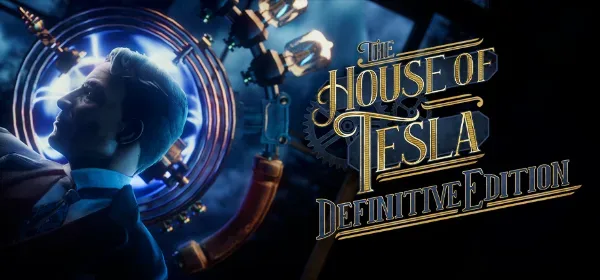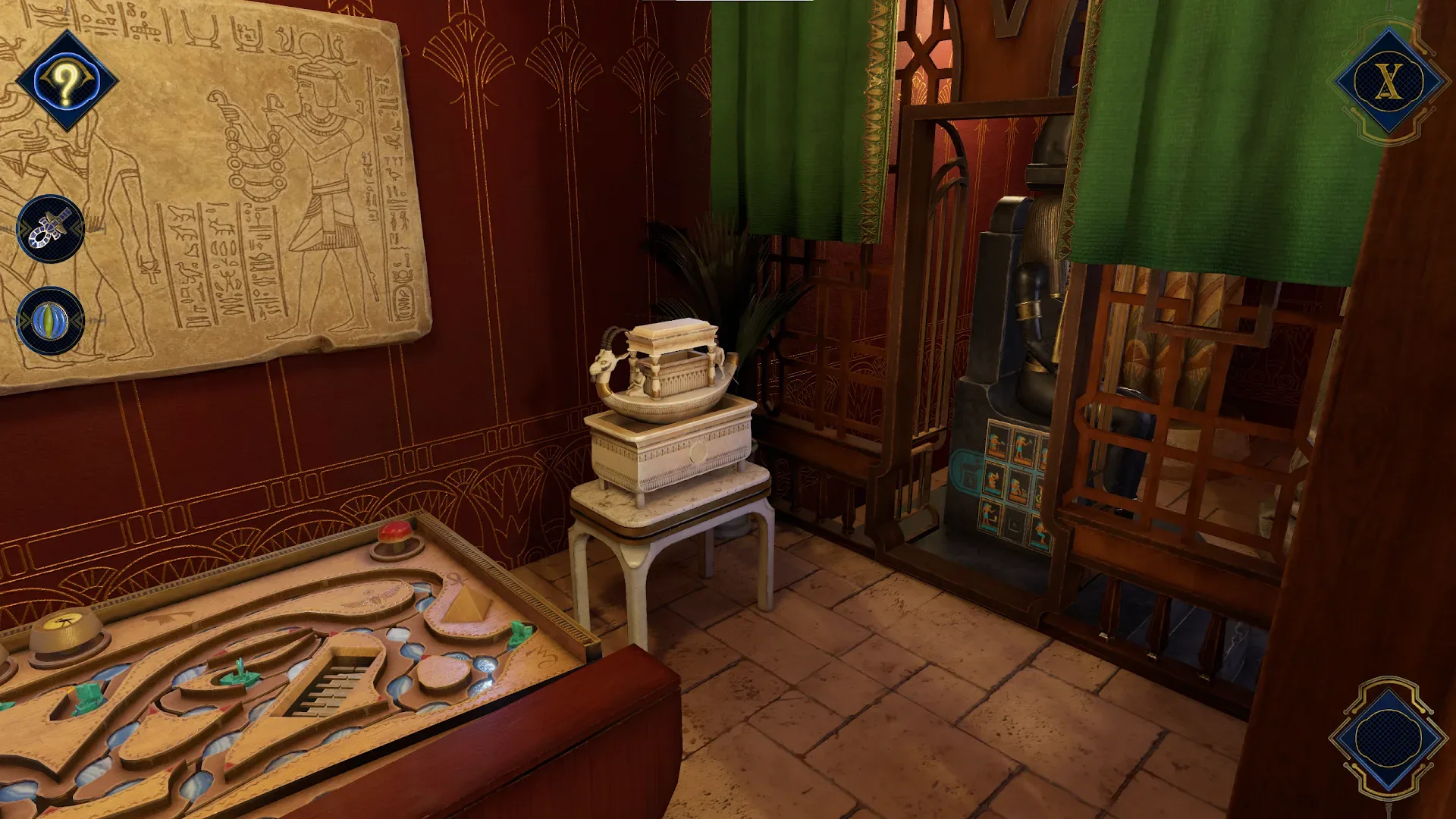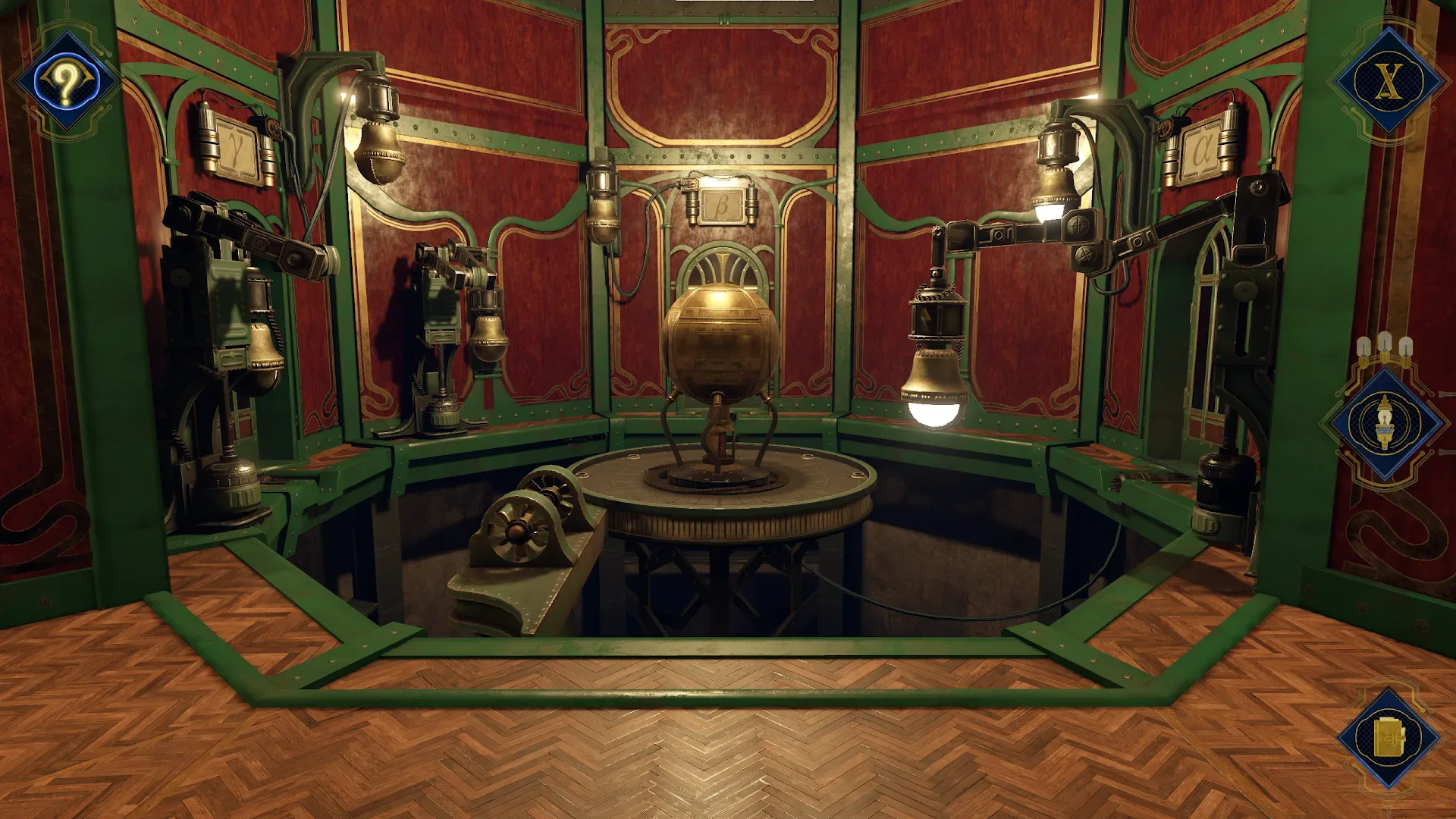
The House of Tesla: Definitive Edition is scheduled to release for iOS and Android on October 20, 2026, giving mobile puzzle-adventure players a trip through an abandoned version of Nikola Tesla’s Wardenclyffe facility. Blue Brain Games has set the price at $6.99 / €6.99 / £6.99. Pre-orders are currently open through Apple’s App Store, while the Google Play edition is due to become available on launch day.
This is a deliberately contained mystery rather than a broad action game. The player explores a deserted research site, examines machinery and follows the remnants of Tesla’s wireless-electricity work. The central question is simple enough to make a fine hook for an adventure game: what happened at Wardenclyffe? Reaching an answer means moving through five chapters of environments inspired by real places and Tesla’s plans, using observation and experimentation rather than reflexes.
A historical setting, used as a puzzle box
Wardenclyffe is not merely a decorative backdrop in the game’s premise. It is the place where its mysteries, machines and electrical systems converge. The setting is described as an abandoned facility, so the environmental exploration has a clear narrative purpose: empty rooms and inactive equipment are clues as well as scenery. Players are not only looking for the next door or mechanism, but assembling an understanding of the work that was left behind.
The game’s five-chapter structure should also be useful for players who prefer a puzzle adventure with defined progression. A chapter is generally a discrete portion of an adventure, often grouping locations and puzzles around a shared objective. Here, the announced structure suggests a journey through distinct stages of Wardenclyffe and its underlying secrets, rather than an endlessly expanding open world.
That distinction matters on mobile. Puzzle adventures can suit shorter sessions when they offer a strong sense of place, a few problems to consider, and a clear thread to pick up again later. Nothing in the available details promises a particular length, hint system, save format or difficulty level, so those are questions prospective players will need to leave open. What has been established is the broad loop: explore, inspect the machinery, test electrical systems and use the game’s dedicated device to alter the environment.
The prototype is the key mechanic
The House of Tesla’s defining interactive tool is a handheld prototype that lets players see and influence the flow of electricity. In practical terms, electrical flow is the route electricity takes through connected equipment. The game turns that idea into a puzzle language: changing a flow can activate a machine, reveal a previously hidden challenge or open a route that was unavailable before.
That makes the prototype more than a fictional gadget for flavor. It is the link between the game’s scientific theme and its puzzle design. Rather than presenting electricity solely through written notes or scenery, the adventure asks players to engage with systems directly. A player may need to study how parts of a machine relate to one another, make an experimental change and then interpret the result.
Importantly, “experimenting” does not necessarily mean random trial and error. Good machinery-based puzzles tend to reward forming a hypothesis from visible information: identify a blocked route, notice an inactive device, consider where power might need to go, then make a change and observe the consequence. The announced mechanics point toward that type of interaction, with the facility’s equipment serving as both the obstacle and the means of overcoming it.
The game also says that the prototype can reveal puzzles hidden among the machines. That phrasing suggests players should pay attention to spaces that initially appear solved or purely decorative. In an exploration-focused adventure, visual detail can carry mechanical importance. The difference between a locked door and a puzzle clue may be what the player can detect after using the right tool in the right place.
What “touch-optimised” means here
The Definitive Edition is specifically optimised for touch, and its newly highlighted puzzles are designed with touch interaction in mind. Touch optimisation generally means an interface and interactions have been adapted to direct taps, drags and gestures rather than relying on a mouse-and-keyboard setup. For a game centered on inspecting rooms and manipulating equipment, that can be a meaningful fit: players interact with objects by reaching toward them on the screen rather than moving an indirect pointer.
Still, “optimised for touch” should be read for what it confirms, not stretched into a promise of every possible mobile feature. It establishes that this edition has been tailored to touch devices and includes touch-optimised puzzles. It does not specify controller support, offline functionality, accessibility options, device requirements or performance targets. Those details have not been provided.
The focus on touch is particularly relevant because the game’s appeal appears to rest on close inspection. Puzzle adventures live or die on whether players can comfortably examine a room, identify points of interest and make sense of their tools. A mobile-specific version has the opportunity to make that interaction immediate, especially where the player is tracing connections between components of an electrical system.
One Apple purchase across three device types
On Apple platforms, one purchase will cover iPhone, iPad and Mac. That is a useful practical point for anyone who switches between a phone, tablet and computer, since the game is not being sold as three separate Apple purchases. The announcement does not explain how progress carries between those devices, however, so buyers should not assume cross-device saves or any particular syncing behavior until that information is confirmed.
The Android version is planned for Google Play on the same October 20 release date. The current pre-order detail applies to the App Store. In other words, Apple users can pre-order now, while Android users are being pointed to the release-day availability of the Google Play edition.
At $6.99 / €6.99 / £6.99, the listed price puts the game in the premium paid-app category rather than establishing a free entry point. The provided details do not describe additional purchases, subscriptions, downloadable content or advertising, so it would be wrong to infer any of those models from the price alone. What is clear is the upfront price and the single-purchase coverage across Apple’s iPhone, iPad and Mac platforms.
Why the premise fits the mobile puzzle-adventure space
There is a neat thematic unity to the project. The story concerns a site associated with ambitious electrical experiments; the main tool visualises and manipulates electrical flow; and advancement comes from understanding the machinery around the player. Those elements make the puzzles feel rooted in the fiction rather than bolted onto a historical setting.
That does not make the game a simulation of electrical engineering. The available description calls it a puzzle adventure, and its systems are presented as approachable game mechanics tied to exploration. The relevant skill is likely to be attentive reasoning: reading the environment, recognizing relationships between devices and trying a logical intervention. “Wireless electricity experiments” provides the story’s scientific framing; the prototype provides the player-facing way to engage with that framing.
The abandoned-facility angle adds another layer. A functioning laboratory might tell its story through people and active work. A deserted one must communicate through its remains: rooms, equipment, paths and unanswered questions. That can make every restored circuit or newly opened route feel like another piece of a past experiment coming into view.
Players looking for another mystery built around technology-mediated investigation can also see how a different premise approaches hidden signals in Radiotext’s old-airwave cyberpunk mystery. The House of Tesla, by contrast, places its investigative focus inside a historical-inspired scientific facility and builds its interactions around electricity.
What is confirmed before launch
- Release date: October 20, 2026.
- Platforms: iOS, Android, iPhone, iPad and Mac.
- Apple purchase model: One purchase works across iPhone, iPad and Mac.
- Price: $6.99 / €6.99 / £6.99.
- Pre-orders: Available now on the App Store.
- Android availability: The Google Play version is planned for release day.
- Format: A five-chapter puzzle adventure set at an abandoned Wardenclyffe facility.
- Core interaction: A handheld prototype used to see and influence electrical flow.
- Mobile focus: Touch-optimised play and touch-optimised puzzles.
The important caveat is equally straightforward: the current information outlines the game’s setting, core mechanics, price and platform plan, but not its full technical feature list. For now, The House of Tesla: Definitive Edition looks aimed at players who enjoy environmental mysteries where the act of learning how a place works is inseparable from finding a way out of it.