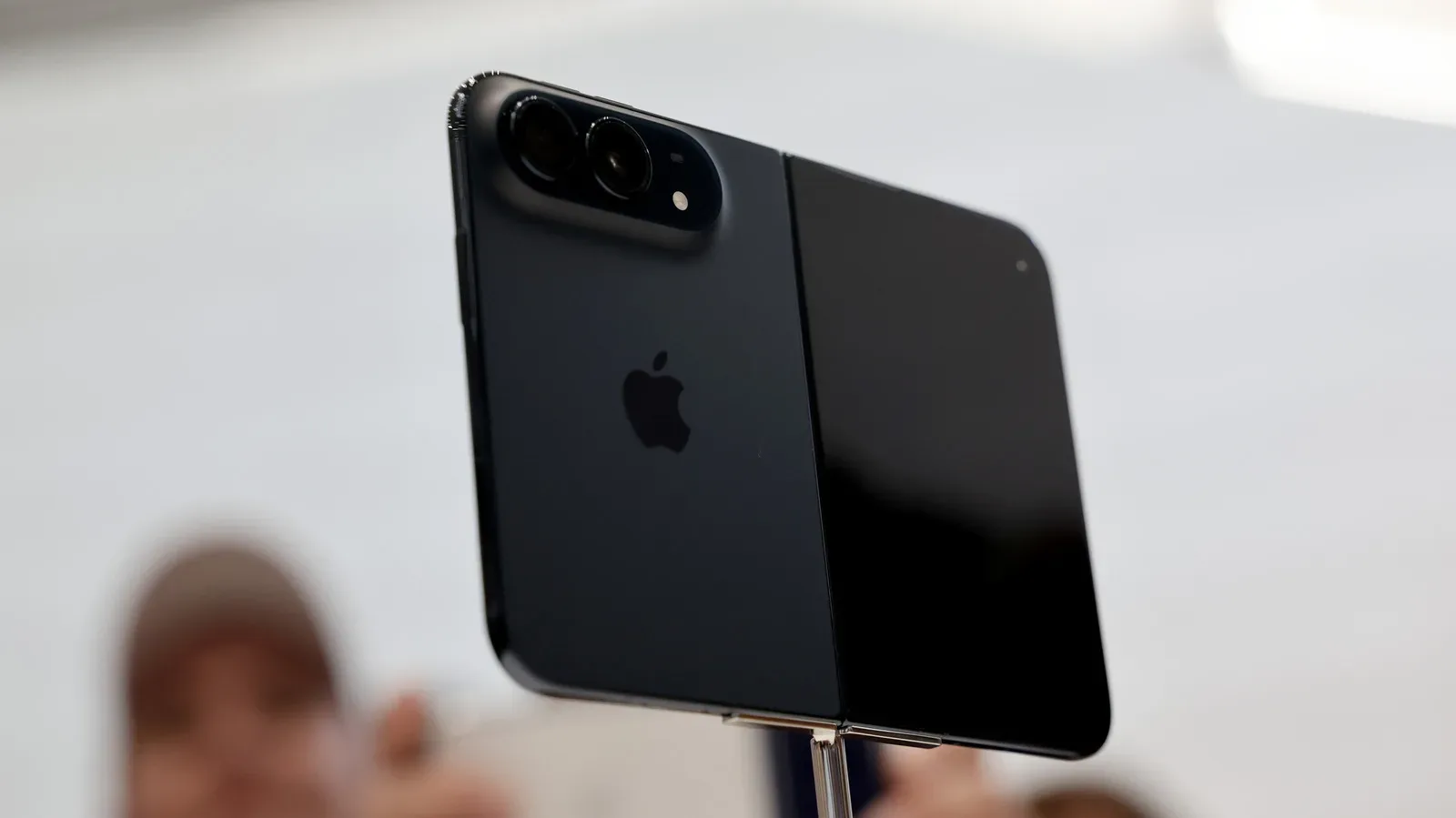
Foldable phones share a party trick—screens that bend—but the iPhone Duo and Motorola Razr Ultra make that trick serve entirely different purposes. Motorola’s 2026 flagship Razr Ultra is a clamshell built around compactness. Apple’s iPhone Duo is a book-style device that begins as a conventional phone and opens into a much larger workspace.
That distinction matters more than the usual spec-sheet duel. The Razr Ultra starts at $1,500, while the iPhone Duo starts at $2,000—a substantial $500 divide before storage upgrades enter the picture. The Duo can reach $3,200 in its highest-storage configuration. Neither is an impulse buy, so prospective owners should begin with what they expect the hinge and second display to accomplish in daily life, rather than assuming every foldable delivers the same experience.
Two foldable formats, two priorities
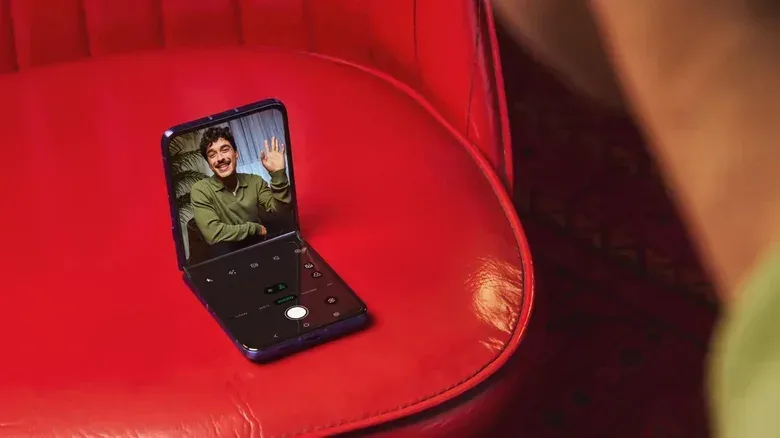
When opened, the Razr Ultra follows a familiar phone-shaped—or “candybar”—layout with a 7-inch display. Its chief appeal is physical convenience: folding it shut makes for a device intended to occupy less room in a pocket or handbag. A clamshell foldable is therefore an answer for someone who wants a large phone screen while using a smaller footprint during transport.
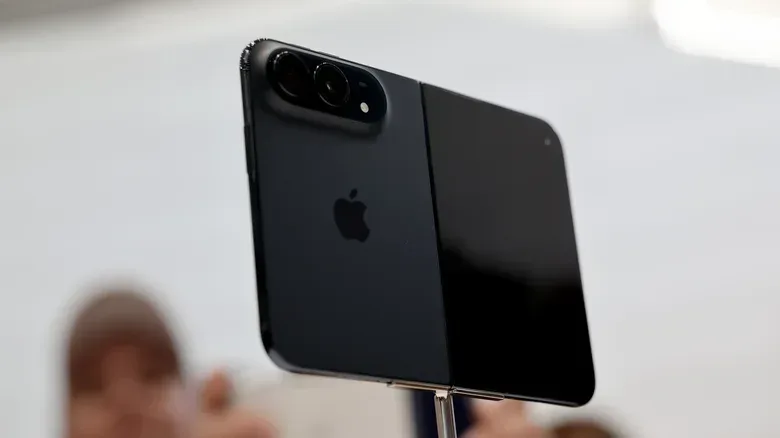
The iPhone Duo takes the other route. Closed, it works as a regular iPhone. Open, its passport-like design reveals a matte 7.6-inch internal display with an iPad-like canvas. That does not mean it runs iPad apps. Instead, compatible iPhone software can make use of the expanded space, including split-screen multitasking in some cases.
Multitasking means displaying and using more than one app at once, rather than repeatedly switching between full-screen apps. It is a potentially meaningful advantage for tasks such as keeping a message thread or notes visible while checking another compatible app. The value is not simply that the Duo’s display is 0.6 inches larger diagonally than the Ultra’s; it is the more tablet-like shape that gives two apps room to coexist.
The Razr’s design should not be judged as a lesser version of that idea. It is optimized for a different job. Its compact folded profile will likely be the deciding feature for shoppers who find a larger book-style phone impractical to carry. Conversely, buyers seeking a device to do more screen-intensive work will find the Duo’s layout inherently more accommodating.
Do not mistake a foldable for a laptop replacement
There is a temptation to treat the Duo as a phone-and-tablet purchase bundled into one expensive object. Its larger internal panel makes that argument more credible than it would be for a clamshell. Still, the source material draws an important boundary: it remains an iPhone software experience, not literal iPad app support.
That makes the phrase “productivity device” worth unpacking. A larger screen can improve the comfort of reading, viewing documents, managing a calendar and arranging two compatible apps side by side. It does not automatically turn a phone into the most efficient tool for long writing sessions or intensive work. For buyers whose primary goal is getting more done, an iPhone 18 Pro paired with a MacBook Neo may cost less than an iPhone Duo while offering a more conventional computer setup.
Related coverage includes iPhone Duo vs. Motorola Razr Ultra: Which Foldable Fits Your Needs?.
This is not a universal recommendation; portability, one-device convenience and personal workflow all matter. It is, however, a useful test before spending $2,000 or more. The Duo’s premium makes the most sense when its unfolded screen will be used frequently, not merely admired during the first few weeks of ownership.
Performance: likely close for ordinary use
The Razr Ultra uses Qualcomm’s Snapdragon 8 Elite processor and includes 16GB of RAM. RAM, or random-access memory, is the short-term working memory that helps a device keep apps and processes available while they are active. The iPhone Duo uses Apple’s A20 Pro chip and may ultimately prove faster through that newer hardware and iOS optimization.
There is a major caveat: no Duo benchmarks are available before its October 23 shipping date. A benchmark is a standardized performance test used to compare devices under controlled conditions. Without those results, firm numerical rankings would be premature.
More importantly, the expectation is that ordinary apps will not expose a dramatic gap between these phones. That reframes the comparison. Shoppers should not choose either device solely because they expect one to feel radically quicker in mainstream daily tasks. Platform preference, preferred shape and the price gap are likely to carry more weight.
Camera hardware tells only part of the story
On paper, both phones have two rear cameras: a wide camera and an ultra-wide camera. Apple rates the iPhone Duo’s rear cameras at 48 megapixels, while Motorola rates the Razr Ultra’s at 50 megapixels. A megapixel count describes image resolution, not every aspect of photographic quality. Image processing and camera engineering can have a substantial effect on the final photograph, which is why matching or near-matching megapixel figures do not settle a camera comparison.
The Duo may benefit from Apple’s generally highly regarded camera results, while the Razr Ultra is described as having known shortcomings against rivals such as Google’s Pixel line. That said, the iPhone Duo has not yet been tested here, so it would be wrong to declare a definitive winner before real comparative results exist.
The front-camera situation is more direct. Motorola gives the Razr Ultra a 50-megapixel front camera. Apple lists a 12-megapixel front camera on the Duo, plus an under-screen internal camera aimed principally at FaceTime calls; Apple has not provided a megapixel count for that internal camera. Buyers who prioritize selfies may prefer using the Duo’s rear cameras by unfolding and flipping the handset, rather than relying on its front-facing options.
In other words, photography-focused shoppers should avoid reducing the decision to “48 versus 50.” They should separately consider rear-camera expectations, front-camera resolution and the extra physical step involved in using the Duo’s stronger rear sensors for self-portraits.
Battery life and the practical meaning of IP ratings
The Razr Ultra achieved 31 hours in video-based battery testing. Apple claims comparable battery life for the Duo when its internal display is being used. The sensible takeaway is that both are expected to make it through a full day of mixed use, rather than that their endurance has been proven identical under every pattern of ownership.
Durability creates a clearer technical split. Both handsets use hardened ceramic glass over their exposed front displays. The iPhone Duo has an IP68 dust-and-water-resistance rating, while the Razr Ultra is rated IP48.
IP ratings are ingress-protection classifications. The first digit concerns protection from solid particles such as dust; the second concerns water. In this case, both devices are described as capable of surviving short submersion in fresh water, but the Duo’s IP68 rating provides stronger dust protection. The Ultra’s IP48 rating can leave it more exposed to dust particles smaller than one millimeter.
Neither rating is permission to treat a foldable carelessly. But for a person regularly around fine dust, the Duo’s IP68 rating is a meaningful practical advantage. For many owners who do not routinely place a phone in especially dusty environments, that difference may be less important than the form factor or platform.
The platform decision is still the platform decision
Foldable hardware does not erase the familiar divide between iOS and Android. The Duo fits Apple’s ecosystem, while the Razr Ultra is an Android device. A person already content with one of those platforms has little reason to switch solely because one phone folds differently.
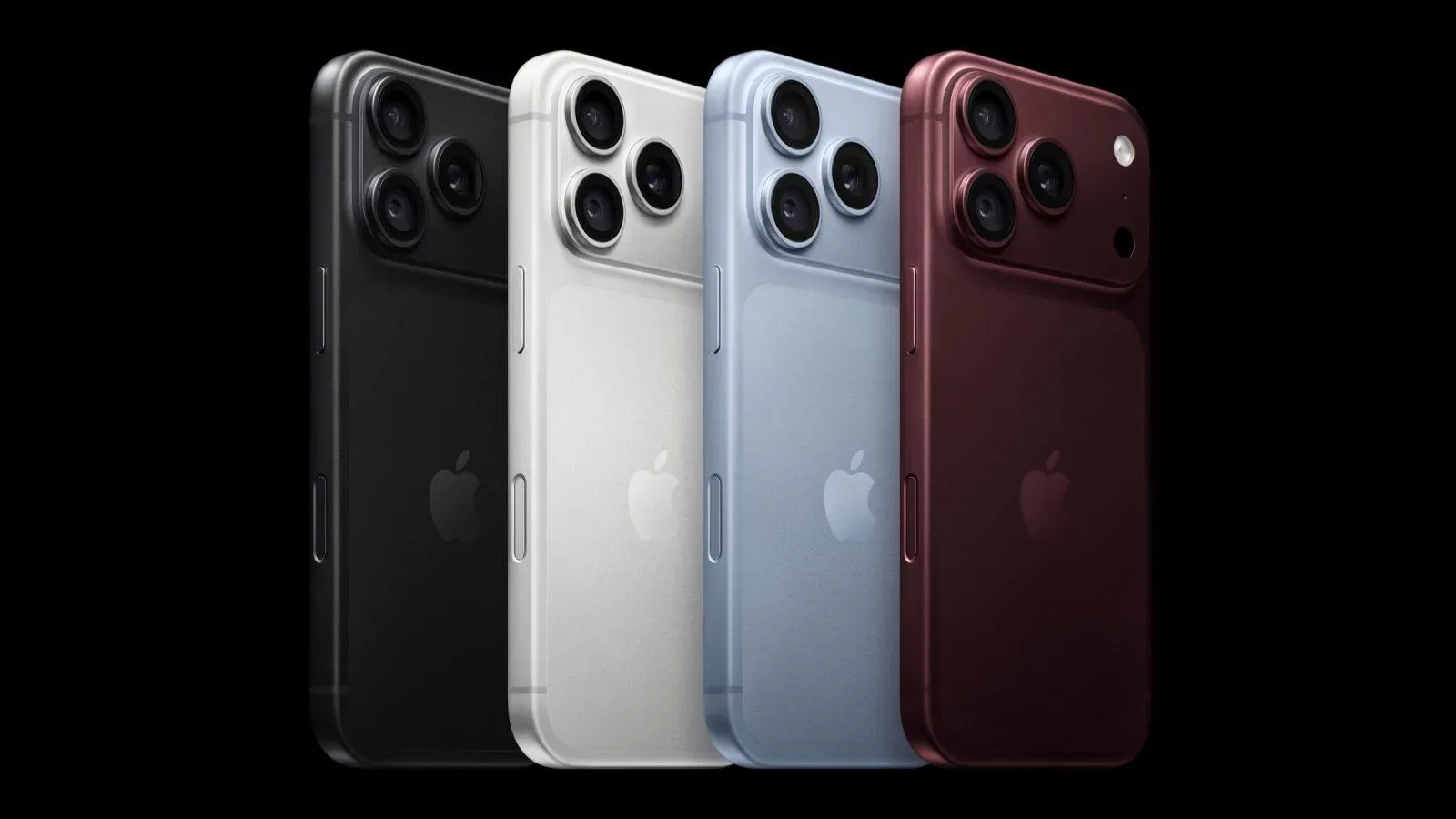
Android shoppers also have alternatives in the larger, book-style category. Motorola’s Razr Fold costs $1,900, undercutting the Duo, while the Google Pixel 11 Pro Fold and Samsung Galaxy Z Fold 8 are additional options. The Galaxy model shares the Duo’s passport-style concept. On the Apple side, the iPhone 18 Pro remains a lower-cost non-folding option for those who want an iPhone without the foldable premium.
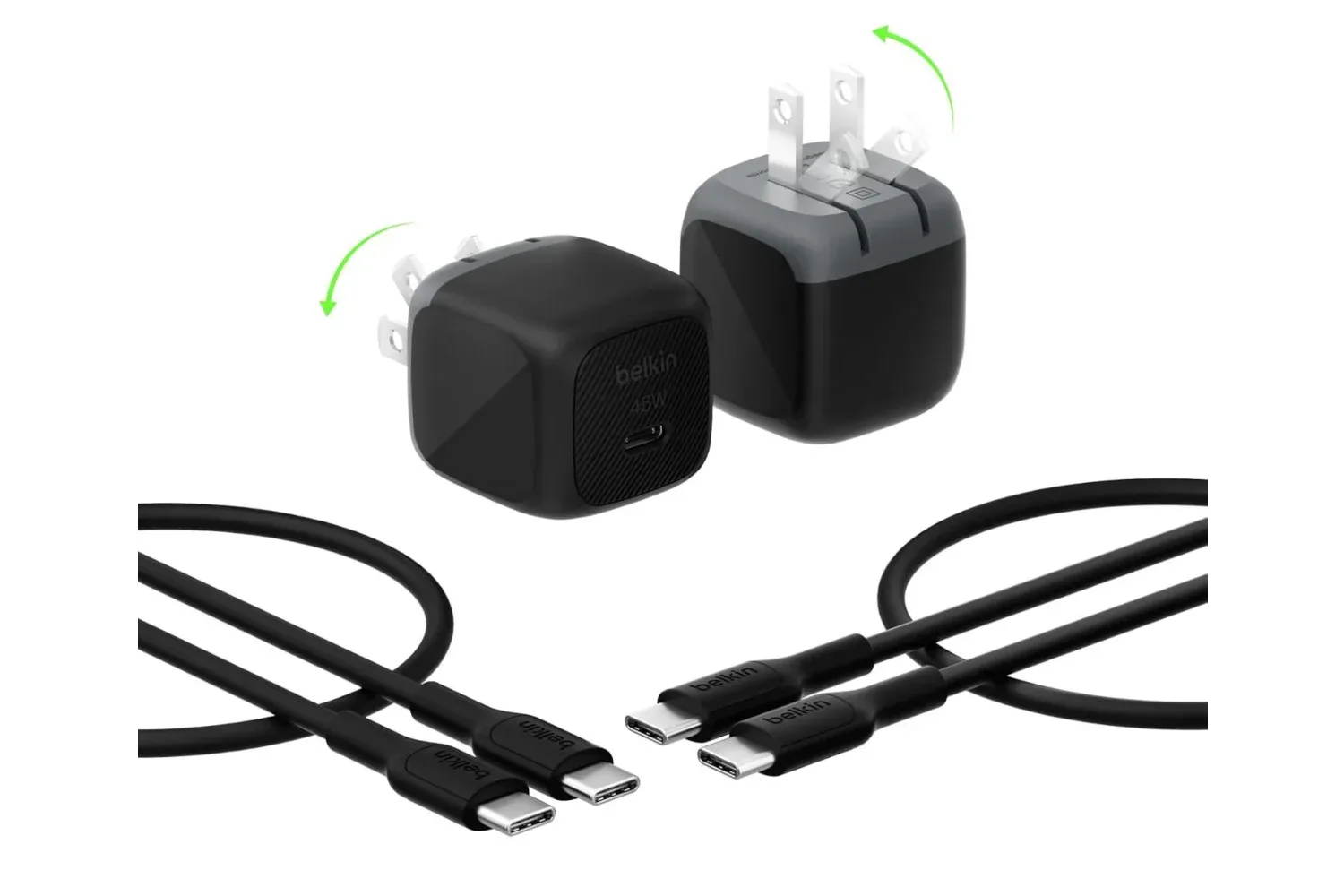
Accessory costs should also be considered as part of a premium-phone purchase. A compatible USB-C charging option may be a more modest addition than a new handset; for example, a Belkin 45W USB-C charger two-pack is listed at $26 for Prime members. It is not a reason to pick one foldable over another, but it is a reminder to separate core-device value from the surrounding kit.
Which buyer fits each phone?
- Choose the Razr Ultra’s approach if compact carrying is the central reason for buying a foldable, Android is already your preferred platform, and the $500 lower starting price is consequential.
- Choose the iPhone Duo’s approach if you want iOS and expect to use a 7.6-inch unfolded display for compatible apps and occasional split-screen multitasking.
- Pause before choosing either if the fold is mostly a novelty. A conventional phone may offer more value, and a phone-plus-laptop arrangement may better satisfy serious work needs.
The iPhone Duo and Razr Ultra are not merely competing interpretations of the same premium gadget. One sells smallness when closed; the other sells room when opened. Once that is clear, the decision becomes considerably less about minor specification differences and much more about whether the buyer needs a compact clamshell, a tablet-like phone, or no foldable at all.