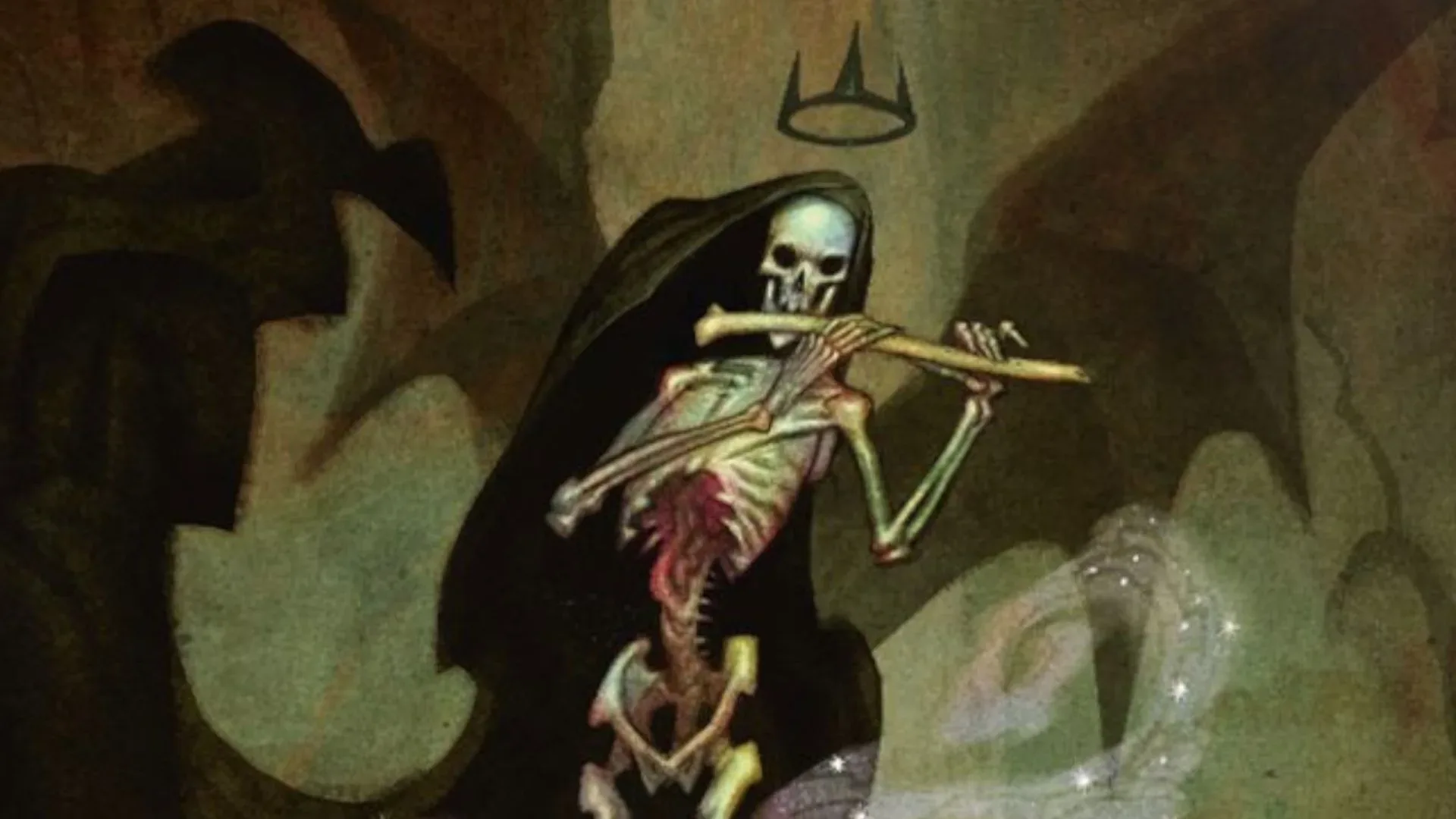
Vaesen: Death of Songs is the next major campaign book for the gothic horror tabletop role-playing game Vaesen. It is available to pre-order now, with a physical release planned for early Q1 2027. Pre-orders include immediate access to the PDF edition, giving groups the option to begin planning—or playing—before the printed book arrives.
The book is written by the lead writer of the original Vaesen tabletop RPG and contains four new mysteries set in its fantastical take on 19th-century Europe. Its central promise is notably larger than a disconnected anthology of investigations: Death of Songs is framed as an epic campaign whose consequences affect both humans and vaesen across the continent, while its core enigma reaches into the Society’s own history.
That is an especially potent setup for a game built around hidden knowledge. In Vaesen, folklore is not merely a collection of stories. The creatures of those stories exist, stalk the edges of civilization, and are generally invisible to ordinary people. Player characters possess the Sight, the rare ability that lets them perceive these beings, and belong to the Society, an organization that studies and hunts them. A campaign that turns the investigative lens back toward that organization creates a natural source of tension: the institution that equips characters to confront the supernatural may itself be withholding something important.
Four mysteries, one wider campaign
The confirmed structure is four mysteries, with material intended to connect them into a broader campaign. In tabletop RPG language, a mystery is usually an investigation-led scenario: the group follows leads, interprets strange events, meets witnesses or suspects, and eventually decides how to deal with the supernatural problem at its center. It need not mean that there is only one correct path through the story. The format is well suited to Vaesen because folklore-driven horror can make a clue, custom, grievance, or old tale matter as much as a direct confrontation.
For more context, explore SGBC FPGA Console Targets Game Boy, Color and Advance Cartridges on Modern TVs.
What differentiates Death of Songs from a purely episodic release is its stated scale and connective tissue. The campaign is positioned as a story that can shape the lives of vaesen and humanity, not simply four cases solved in isolation. The Society’s past is part of that throughline, and the book also continues the plot introduced in The Dance of Dreams, the adventure in the core rulebook.
That continuation is meaningful, but it is not presented as a requirement. Death of Songs appears to stand as its own product while offering added resonance for groups that have played, read, or want to revisit The Dance of Dreams. For game masters, that leaves room to decide how much existing campaign history to foreground. A group familiar with the earlier adventure can treat the connection as a returning thread; a new group can introduce it as a revelation that develops over the campaign.
Upsala becomes a campaign base
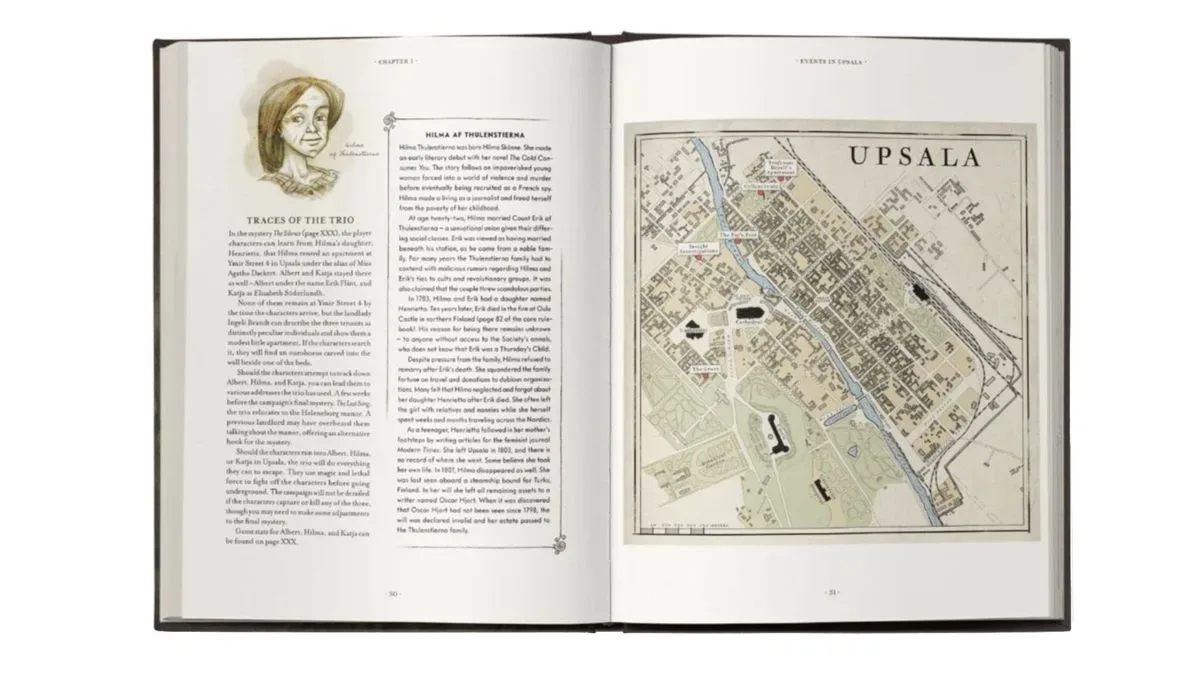
Alongside the mysteries, the book includes a section dedicated to campaign play in the Swedish city of Upsala. A campaign setting section generally supplies a framework for sustaining play between and around individual adventures: a place where characters can return, build relationships, pursue leads, and feel the fallout of their choices. In an investigation game, that sort of recurring location can be as valuable as a new monster or a new plot hook.
Related coverage includes Vaesen: Death of Songs Brings a Society-Shaking Horror Campaign to 19th-Century Europe.
The practical appeal is continuity. A case can begin with an unsettling report, but its consequences do not have to disappear after the immediate danger passes. Allies can become unreliable, rumors can travel, and questions arising in one mystery can provide texture for the next. With the Society itself tied to the campaign’s secrets, a dedicated city framework could also help make the organization feel less like a distant mission dispenser and more like a presence in the characters’ daily lives.
None of that requires the campaign to abandon the eerie, case-based rhythm people may expect from Vaesen. Rather, the available details suggest an attempt to join two useful tabletop structures: the satisfaction of self-contained mysteries and the accumulating pressure of a long-form conspiracy. A group can resolve immediate supernatural problems while gradually discovering that the larger danger is closer to home than it first appeared.
What “vaesen” means in this setting
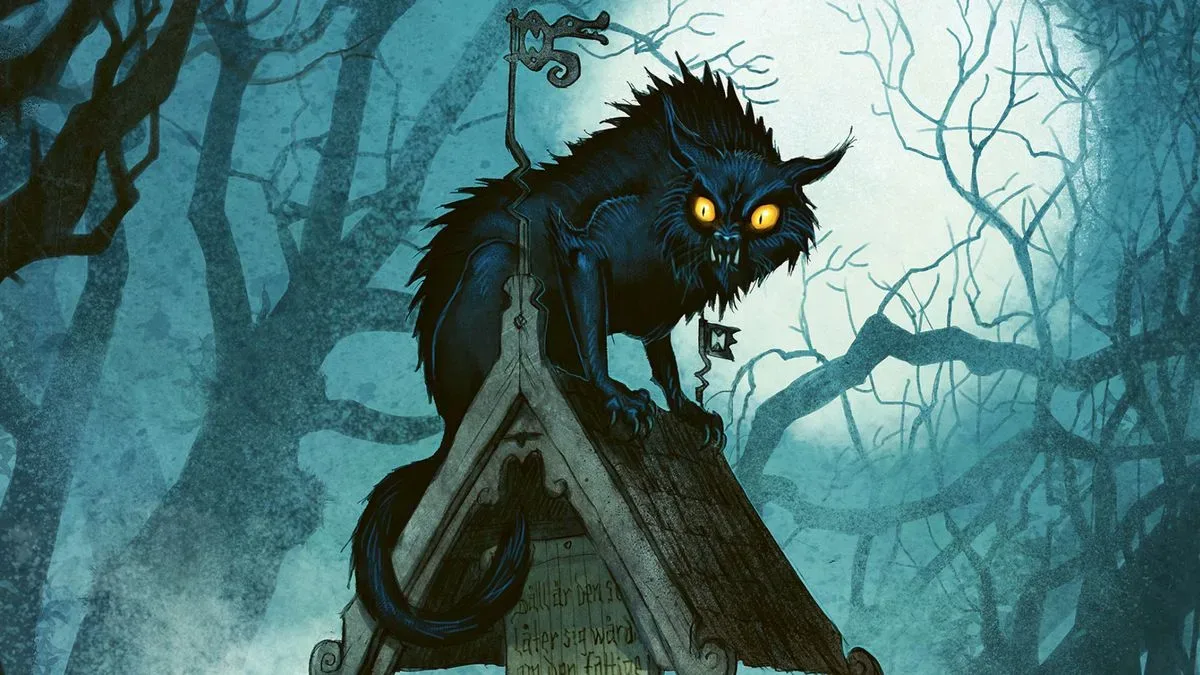
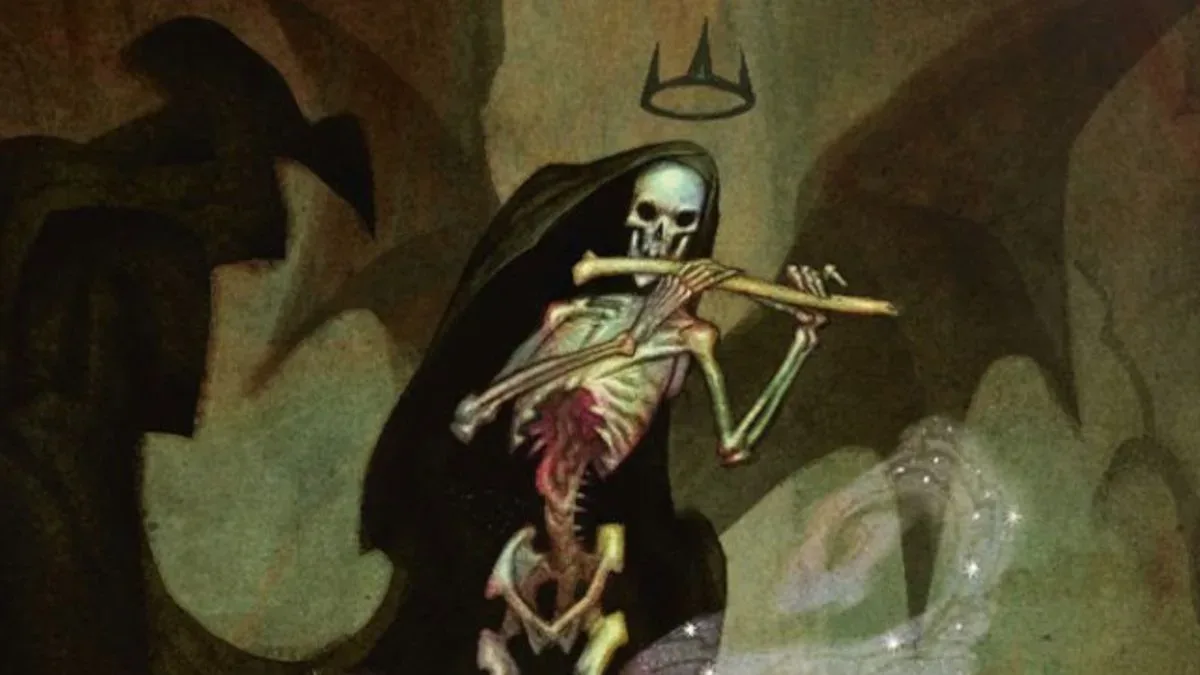
The term vaesen refers to the folkloric beings at the heart of the game’s supernatural world. The supplied details emphasize a broad range of creatures rather than a single flavor of cosmic or undead horror. A troublesome trickster imp can matter alongside a troll. That variety matters because it changes the texture of an investigation: not every threat has to be a simple monster to destroy, and not every encounter needs to be approached in the same way.
Folklore horror also makes room for cases where the central question is not just “what is attacking?” but “what has been disturbed?” A supernatural creature may have motives, rules, territory, or an old relationship with the surrounding community. Players with the Sight are therefore investigators, protectors, and hunters, but potentially negotiators as well. The exact content of the four mysteries has not been detailed, so it would be premature to assume how each scenario resolves. Still, the game’s premise supports a more varied kind of horror than a campaign concerned only with combat.
The setting’s alternate-history premise intensifies that contrast. Civilization continues as normal for most people, while another world of folk beliefs and dangerous beings operates alongside it. The Sight turns the player characters into exceptions: they can recognize things others cannot. That gift is useful, but it also isolates the characters and gives them responsibility for dangers that much of society cannot even name.
Why the Society angle raises the stakes
Death of Songs describes its central mystery as having roots in the Society’s history. That is a strong narrative fit for campaign play because it makes prior assumptions part of the investigation. The Society is the structure that brings the player characters together and gives their supernatural work purpose. If its history contains dark secrets, the group’s relationship with their own mission can change over time.
For a game master, this kind of premise can offer several useful pressures without needing to dictate a single outcome. Characters may need to determine whom within the organization they trust. Old records, traditions, and unfinished business can become leads rather than decorative lore. Decisions may carry emotional weight because they affect not only an anonymous victim or distant village, but the Society to which the characters belong.
For players, the appeal is the opportunity to inhabit investigators who are not outside the story’s central power structure. They have a stake in what is uncovered. The organization is both a source of belonging and a possible source of danger. That tension can make discoveries feel personal while preserving the fundamental supernatural-investigation premise.
Who can start with Death of Songs?
The book is likely most immediately useful to established Vaesen groups, especially those interested in a longer arc and in the connection to The Dance of Dreams. Yet the description of the product as standalone means it may also be a viable entry point for groups that have the core rules and want a ready-made campaign rather than isolated adventures.
Newcomers should distinguish between a campaign book and an introductory box. A campaign book provides scenarios and a longer story structure; it is not necessarily designed to teach every part of a role-playing game from scratch. The Vaesen Starter Set remains the more explicitly beginner-friendly route, and it has been listed for under $30 in the US. Groups that want to learn the game’s basic rhythm before taking on a continent-spanning storyline may find that route more comfortable.
Conversely, a group that already knows how tabletop role-playing sessions work may prefer to begin with the larger premise. The immediate PDF access attached to pre-orders is useful for organizers who need time to read mysteries, prepare clues, or coordinate a campaign schedule ahead of the physical release. It does not change the early-Q1 2027 timing for the printed edition, but it gives digital-first groups a clear option.
A larger story for Vaesen’s particular kind of horror
Vaesen first launched in 2020, and its blend of gothic mood, atmospheric art, European folklore, and an unseen supernatural world has helped set it apart in a crowded horror-RPG field. Its most distinctive strength is not merely that monsters are real, but that the game’s creatures can span the strange, the mundane, and the terrifying. That breadth is fertile ground for investigations with different emotional tones.
Death of Songs now applies that foundation to a campaign about institutional memory, supernatural stakes, and the possible cost of uncovering truth. Four mysteries, an Upsala campaign section, and an explicit link to the core book’s adventure give it a defined purpose beyond another collection of spooky cases. The remaining question is how those pieces will unfold at the table, but the stated premise makes the book one to watch for groups seeking folklore horror with a larger conspiracy at its center.
Shop the products
Check current price, model and availability at the retailer.