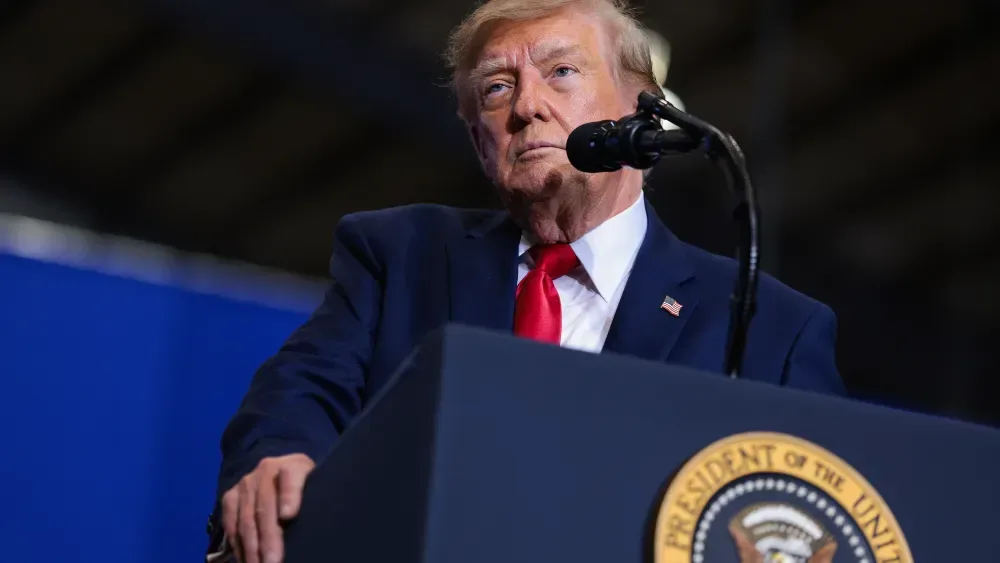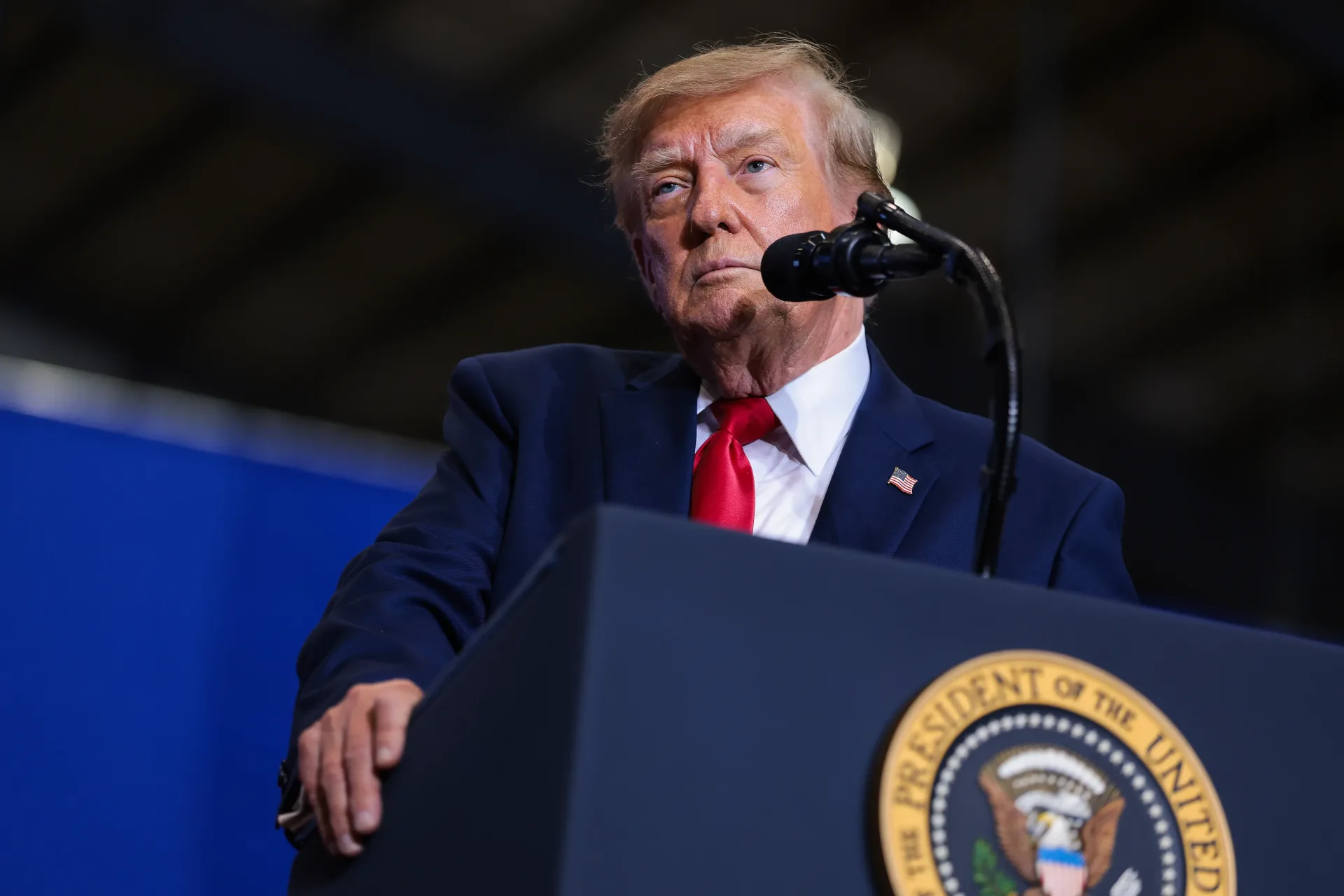
President Donald Trump says he considered pursuing a new name for the Atlantic Ocean, only to abandon the idea after a conversation he described with Alphabet and Google CEO Sundar Pichai.
Speaking at a rally at Clemson University in South Carolina, Trump framed the possible change as part of a broader run of waterway renamings. He said the United States already had “a lake” and “a gulf,” then suggested that a river and an ocean would complete the set. Trump said the Atlantic and Pacific were the only oceans he would consider renaming after either Trump or America.
The Atlantic proposal, however, apparently went no further. Trump said he had seriously considered the idea and called Pichai to ask whether Google Maps could accommodate it. In Trump’s retelling, Pichai declined, arguing that an ocean is materially different from a gulf or lake because it covers a vast area shared by many countries. Trump said he would probably pass on attempting an Atlantic rename following that conversation.
“Oceans are different,” Trump recalled Pichai saying. “They cover really a lot of countries.”
Google had not provided a response on the reported conversation at the time of publication. That matters: Pichai’s remarks are presented here as Trump’s account of the exchange, rather than an independently confirmed statement from Google or its CEO.
Two earlier name changes are central to the discussion
Trump’s remarks refer to two prior directives involving waterways. Last year, he declared that the Gulf of Mexico would be called the “Gulf of America.” In August, during a trade dispute with Canada, he ordered Lake Ontario to be called “Lake America.”
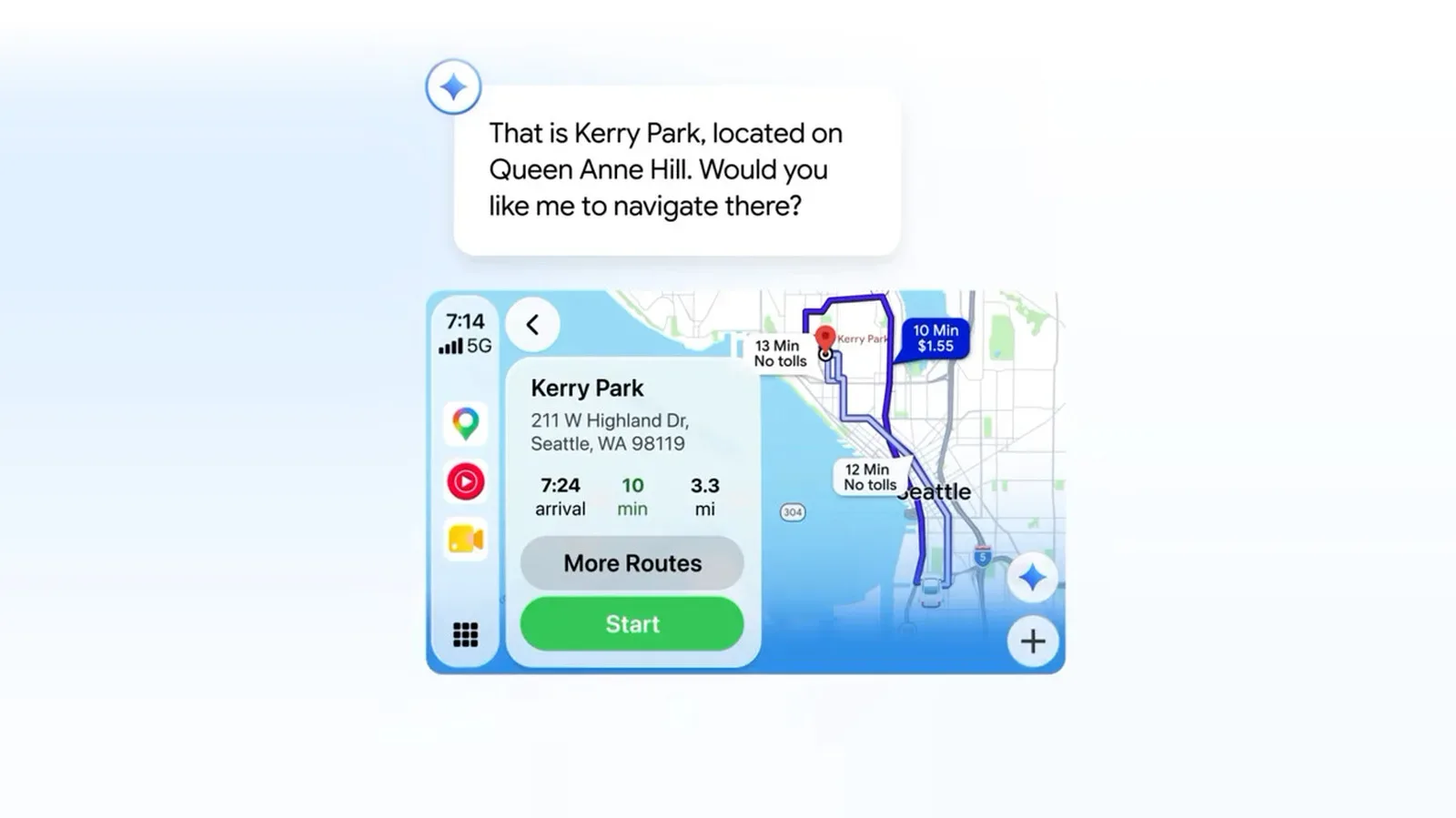
Those actions are not simply a question of what an American official calls a place in a speech or document. Modern digital maps are interfaces used by people in different places, speaking different languages and relying on varied local, national and international naming conventions. A label displayed on a map is therefore both a search term and a piece of geographic context.
In the United States, Google Maps displays the Trump-designated names for both the Gulf of Mexico and Lake Ontario, while retaining the widely known names in parentheses in search results. That presentation is significant because it does not erase the alternate terms from the user experience. Instead, it gives users a way to recognize both the new U.S. designation and the familiar name associated with the same body of water.
Related coverage includes Trump Says Google CEO Declined Atlantic Ocean Rename Request.
Why an ocean presents a larger mapping question
Trump’s account of Pichai’s objection points to the practical issue at the center of this story: geographic names are not merely decorative labels. They help people search, navigate, share locations and understand the relationship between a place and the countries around it.
An official designation is the name a government chooses to use in its own materials. A map label, by contrast, is the word or words a mapping service displays to a specific user. The two can overlap, but they are not automatically identical. A digital mapping platform must decide how to show a name in a particular country, in a particular language, and in situations where users may recognize more than one term.
This distinction helps explain the reported reluctance around the Atlantic Ocean. The gulf and lake examples already involve cross-border recognition, but an ocean is an even broader shared feature. Trump himself said Pichai characterized oceans as covering many countries. Any effort to rename one on a global service would raise the question of whether a U.S. designation should appear outside the U.S., whether multiple names should be shown, and how the service would maintain clear searches for people using the long-established term.
Nothing in Trump’s comments establishes that Google was formally asked to make a product change, that Google made a final policy decision, or that any government process for renaming the Atlantic began. The clearest reported outcome is narrower: Trump said he considered it, described a discouraging conversation with Google’s CEO, and said he was likely to let the idea go.
What Google Maps users can take from this
For U.S. users, the immediate, observable point is the current treatment of the Gulf of Mexico and Lake Ontario in Google Maps search results: the newly designated names are shown alongside the established names in parentheses. That approach is useful because place-name changes can otherwise create confusion in directions, travel plans, education, news coverage and everyday searches.
Parenthetical naming is not a technical solution to a political disagreement, but it can be a functional way to reduce ambiguity. Someone searching with the older name can still identify the location, while someone encountering the newer U.S. term receives a clear connection between the two. In plain terms, it tells the user that the labels refer to the same waterway.
The Atlantic discussion also shows why people should be cautious when interpreting a screenshot or a single map result. Labels can be presented differently based on the country where a person is using the service, and search results may provide extra wording that a map view does not. The supplied information confirms the U.S. search-result treatment for the gulf and Lake Ontario; it does not support a broader claim about every region, language, device or mapping product.
A political proposal meets a platform’s global role
There is a simple political dimension to Trump’s remarks: he described an interest in attaching “Trump” or “America” to one of the two oceans he said he likes. But the conversation, as he told it, also highlights the role large consumer technology platforms play when official naming efforts collide with globally recognized geography.
A company such as Google does not just publish a static atlas. Its mapping products are used for discovery and routing, and its labels must remain legible to a large audience. That creates practical pressure to preserve recognizable terms, particularly when the geographic feature extends across national boundaries.
It is also why a headline about an ocean rename should not be mistaken for a completed change. There is no reported Atlantic Ocean relabeling in Google Maps here. There is no reported confirmation from Google of Pichai’s conversation with Trump. And Trump indicated that he would probably not move ahead.
The episode does, however, leave behind a useful illustration of the difference between a proposed political name and a name that becomes broadly usable across digital mapping. The former can begin with a directive or a public statement. The latter depends on how a service handles geography, local usage, recognition and the needs of people trying to find the same place with different words.
For readers watching technology companies navigate public-policy disputes, the key development is not that Google has introduced another revised geographic label. It has not, based on the available information. The key development is that Trump says the possibility was raised, Pichai resisted it on the grounds of the Atlantic’s international scale, and Trump consequently said he would likely abandon the proposal.
The next practical check is straightforward: distinguish between a government’s preferred terminology, a politician’s proposed terminology and what a mapping service actually displays. In this case, Google Maps’ U.S. treatment of the Gulf of Mexico and Lake Ontario provides the concrete current example, while the Atlantic Ocean remains a floated idea that Trump says he is unlikely to pursue.
Technology policy can often look abstract until it appears in a search bar. As coverage of major platforms increasingly intersects with public decisions, readers may also be tracking issues such as PC access and hardware costs; recent PC shipment and component-cost pressures offer a separate example of how industry conditions can shape the tools people rely on every day.