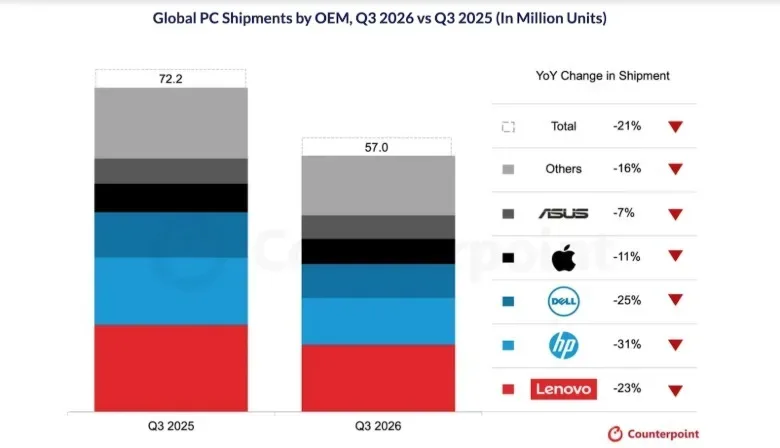
The global PC market took a substantial step backward in the third quarter of 2026. Industry shipment estimates put worldwide PC deliveries at roughly 57 million units, down 21% year over year from more than 70 million in the comparable period a year earlier. The decline was also steep against the prior quarter, with shipments falling 13.8%.
Those figures matter well beyond a quarterly scoreboard for laptop and desktop brands. A shipment is generally a computer sent through the supply chain for sale, rather than a direct count of every machine ultimately bought and used by an individual. It is therefore not a perfect measurement of consumer demand. But when shipments contract this sharply, it is a strong sign that manufacturers and retailers expect fewer systems to move, and that replacement buying has slowed.
The central pressure point is affordability. Memory and other PC components have become more expensive, while tariffs add another cost challenge. Higher input costs can feed into higher system prices, leaving shoppers with a simple calculation: keep an existing computer going a little longer, or commit to a replacement that now costs more than expected.
A fast-moving downturn after earlier demand
The 21% year-over-year comparison is severe on its own, but the 13.8% quarter-over-quarter drop suggests the market is not merely coasting down from a single unusually strong period. The decline accelerated within 2026.
There is important context behind the comparison. PC shipments were strong in 2025 and during the early part of 2026, as buyers moved ahead of anticipated price increases. That earlier activity likely pulled some purchases forward: someone who bought a laptop before costs rose is less likely to need another one in the immediate future. In practical terms, the industry may now be dealing with both pricier new hardware and a pool of consumers who already made their planned upgrade.
That does not mean every buyer has disappeared. PCs remain essential for work, education, creative projects and games. But a functioning machine can be difficult to replace when budgets are tight. Unlike a low-cost accessory, a new desktop or laptop is a large, infrequent purchase for many households. Even modest component-cost increases can change the final decision.
Memory is especially worth clarifying here. RAM, short for random-access memory, is the fast working space a computer uses while applications and games are running. It is not the same thing as long-term storage. When RAM costs rise, PC makers face more pressure in configuring systems at a given price point. The broader component issue also extends beyond one part: a complete machine combines many inputs, and higher costs across that mix can make a competitively priced product harder to offer.
Why AI demand is part of the conversation
The market analysis ties the pressure on memory pricing in part to AI-related demand. This does not mean an ordinary home PC suddenly needs to be an AI server. Rather, the growth of AI computing has increased attention on memory supply and demand across the technology business. That strain can reach consumer hardware through the component supply chain.
For shoppers, the immediate result is less about the technical mechanics of that supply chain than the number on a product page or store shelf. If comparable systems cost more, the most common response is often to wait. That delay can lower shipments even when consumers still want or eventually need a replacement machine.
Tariffs are a separate factor with a similar consumer-facing effect: they can increase costs around bringing products or components to market. With both component pricing and trade-related costs exerting pressure, manufacturers have fewer easy ways to preserve low prices without making compromises elsewhere.
“The global PC market is facing mounting pressure as rising memory and component costs push system prices higher and force consumers to delay replacement purchases,” said analyst Minsoo Kang.
The key word is delay. This is not necessarily evidence that PCs have become irrelevant; it is evidence that a sizable portion of potential customers can postpone buying one. That distinction will matter when interpreting any eventual recovery. A return in shipments could come when prices ease, but the available outlook does not point to a near-term reset.
Q4 and 2027 outlook remain difficult
The projection for the fourth quarter is even harsher: a year-over-year shipment decline of around 27%. Forecasts are estimates rather than guarantees, and market trackers can revise them as new sales and supply-chain information appears. Still, a projected fall of that size indicates little expectation of a quick late-year rescue.
The longer view is also discouraging. The same research expects 2027 to continue in a similar vein. That is particularly meaningful for anyone waiting for a simple seasonal rebound. A new year does not, by itself, resolve expensive memory or other component costs, tariffs, or the fact that earlier buyers may have already completed their upgrades.
Another industry tracking group has reported comparable third-quarter figures, lending additional support to the broad picture of a weakening PC market. The precise estimates can differ between research firms because of their methods and definitions, but the direction is consistent: PC shipments are under significant pressure.
Not every major vendor fell equally
The downturn is market-wide, but the vendor results show that its effects are uneven. Lenovo remained the leading PC vendor, despite a 23% year-over-year decline in shipments. That is worse than the overall market’s 21% fall.
HP saw the largest decline among the named major vendors, at 31%, while Dell shipments fell 25%. Those numbers underline how hard it is for even established brands to sustain volume when customers defer replacements.
- Lenovo: down 23% year over year, while remaining the market leader.
- HP: down 31% year over year.
- Dell: down 25% year over year.
- Apple: down 11% year over year, a smaller decline that increased its overall market share.
- ASUS: down 7% year over year, the smallest decrease among the top vendors referenced.
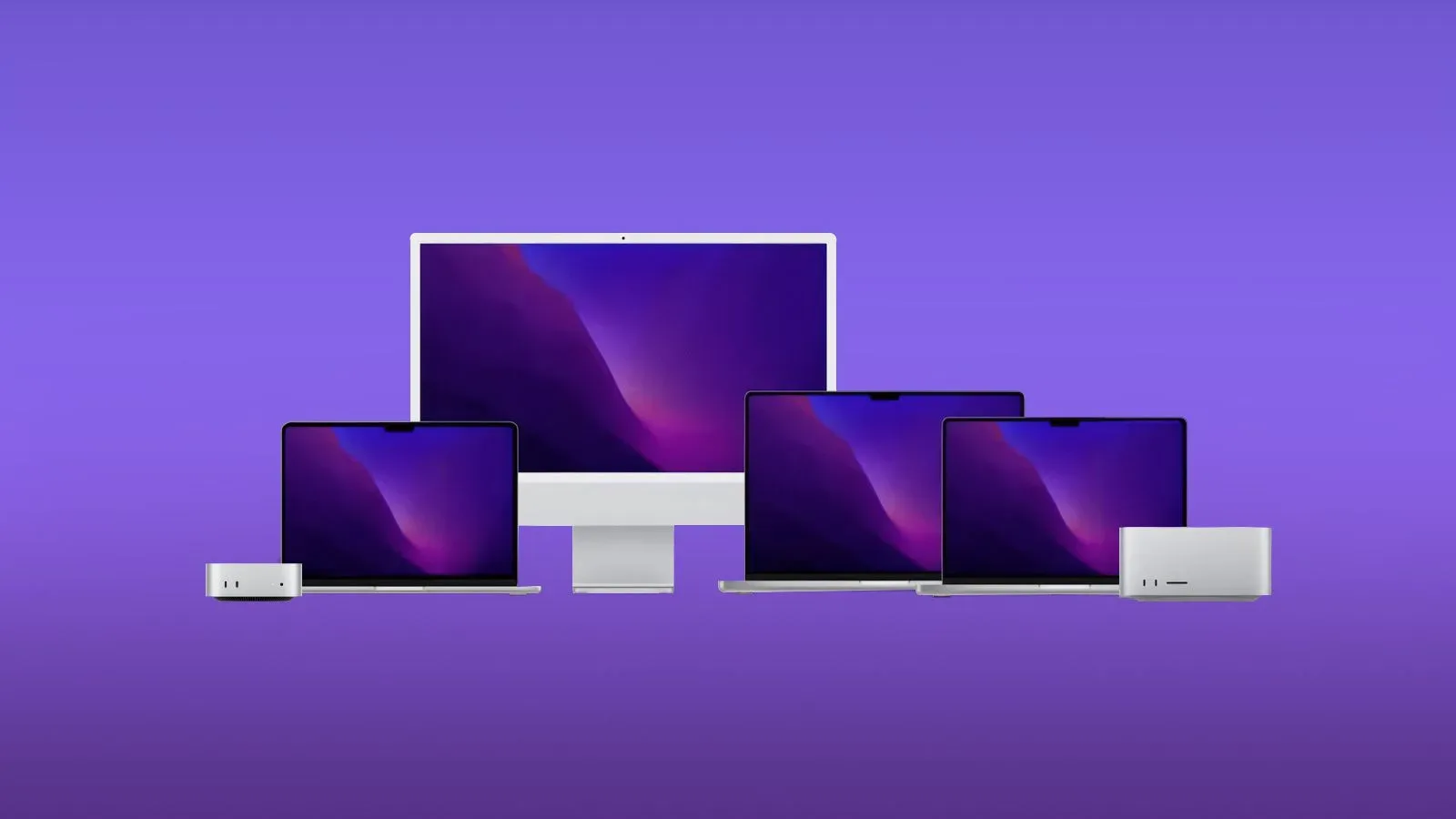
Apple’s 11% decline is still a decline, but it outperformed the wider market on this measure and therefore gained share. The research points to the budget-oriented MacBook Neo as a likely contributor. ASUS, meanwhile, recorded the smallest drop among these leading vendors at 7%.
Market share deserves its own caution label. A company can gain share while shipping fewer machines than it did the year before, if competitors decline faster. Apple’s result is a clear example: a smaller fall relative to the market can improve its percentage of total shipments without signaling absolute shipment growth.
What this means for PC buyers and gaming hardware
For people considering a new PC, the data describes a market condition rather than a universal instruction to buy immediately or hold off. Individual needs still come first. A failed system, a school requirement or a workload that an old machine cannot manage may make replacement unavoidable. But for buyers with a usable computer, the shipment slump supports the idea that many people are choosing to wait rather than accept higher prices.
Gamers may feel the effect indirectly even when they are not shopping for a complete prebuilt computer. A PC is an ecosystem of components, and RAM is part of the baseline hardware discussion alongside a processor, graphics hardware and storage. Rising costs can make it harder for system builders to hold a familiar price point or can alter the component balance available in a given configuration.
That does not turn every PC-related product into the same market story. Accessories and controllers occupy a different category from a full computer, even where they share the PC gaming audience. For example, Nacon’s Revolution Pro X Special Edition for Xbox and PC is a peripheral story, not evidence about desktop and laptop shipment volumes. The distinction is useful: fewer PC shipments do not automatically tell us how every adjacent gaming product is performing.
The more immediate takeaway is that the replacement cycle is stretching. Buyers are being more selective, manufacturers are facing cost pressure, and even the biggest brands are absorbing double-digit declines. The market’s earlier strength, driven in part by people buying before expected price increases, has given way to the less cheerful aftermath: fewer new PCs leaving the channel, and no sign yet that component affordability will quickly improve.