Collecting in 2026 had two speeds: the durable pull of all-time favorites and the sudden, very loud rush around a moment nobody wanted to miss. Marketplace search data for the year places Pokémon and LEGO in the top three most-searched collectibles, with Michael Jordan fourth. That lineup captures a hobby where evergreen franchises and defining athletes can sit beside each other without either feeling remotely out of place.
It also makes a useful point about what a search trend is—and what it is not. Search activity measures attention: people looking to learn a price, hunt for a particular item, compare listings, follow a player’s rise, or simply see what exists. It is not a complete count of sales, and a dramatic percentage increase does not automatically establish a lasting value change. Still, when searches, notable completed sales, and real-world events align, the data offers a revealing look at what collectors were watching.
Pokémon, LEGO and Jordan: broad appeal still wins
Pokémon and LEGO taking three of the top spots reinforces the extraordinary range of modern collecting. Pokémon spans trading cards, character fandom, Japanese and international releases, promotional items, and the pursuit of condition-sensitive classics. LEGO likewise touches collectors through sets, themes, minifigures, and nostalgia. Michael Jordan’s fourth-place showing demonstrates that a single athlete can command comparable attention over decades.
Monster High entered the top 10, while Hot Wheels fell out of it. LEGO Star Wars and football cards remained among the established names. The movement matters because a top-search list is not restricted to one format: it puts cards, toys, memorabilia, and entertainment properties into direct competition for collector attention.
For trading-card collectors, Pokémon’s position is particularly notable because it was not driven by just one creature or one territory. Charizard, Pikachu, Gengar, Mew, Umbreon, Rayquaza, Mewtwo, and Moltres all appeared prominently in country-level search results. Charizard led searches in the United States, United Kingdom, Italy, and France, and was listed as Glurak in Germany. Pikachu’s strength was just as clear across markets.
That does not mean every card featuring those characters behaves the same way. A character search can lead to countless products from radically different eras, languages, conditions, rarities, and print runs. But it does show the enduring advantage of recognizable character collecting: fans can enter at many levels, while specialists can chase highly specific versions.
A record Pikachu sale raised the ceiling
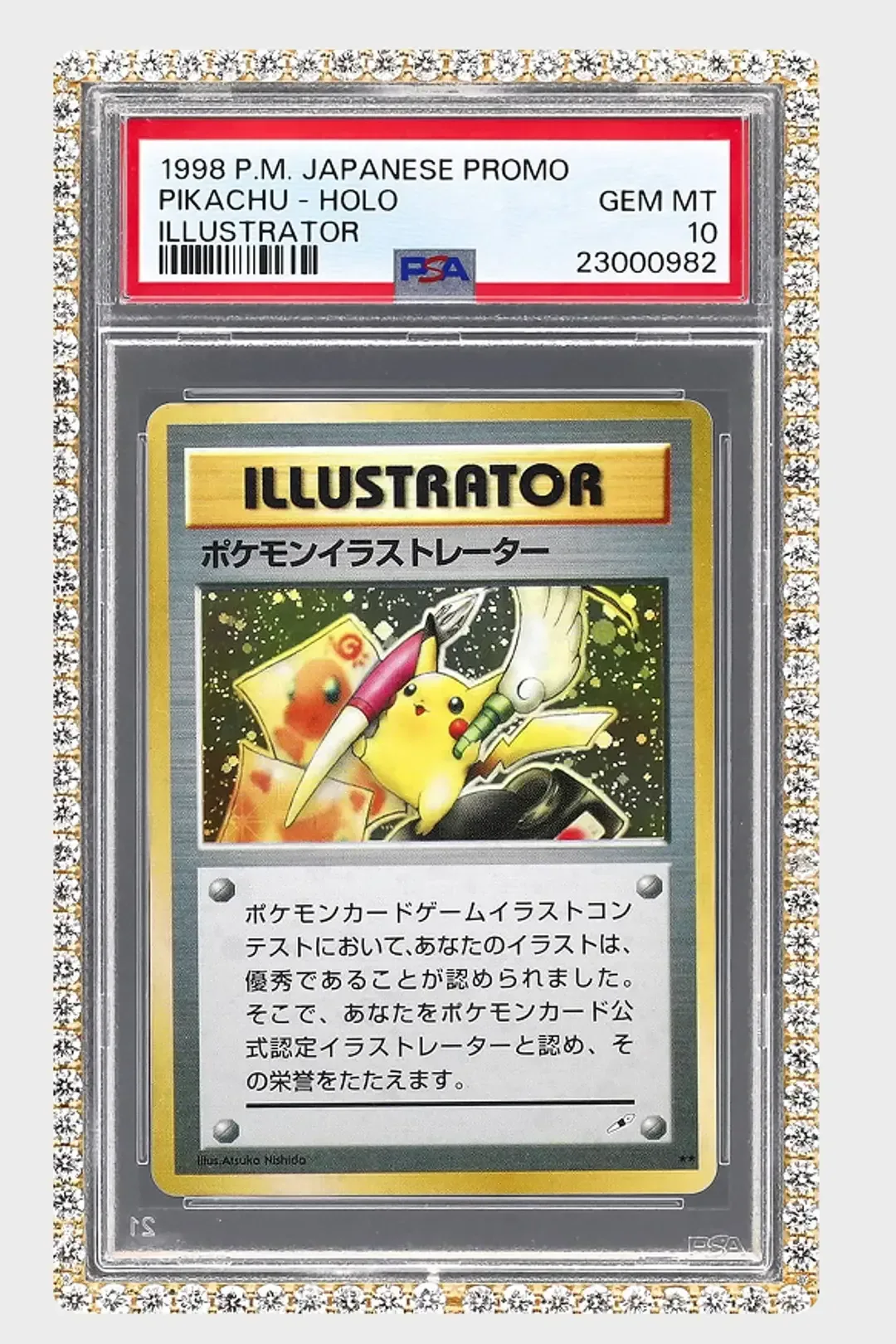
The year’s headline Pokémon transaction was a PSA 10 1998 Japanese Promo Pikachu Illustrator, which sold for $16.492 million in February through Goldin. The sale set an auction record for any trading card.
Two technical terms in that description carry significant weight. PSA 10 is a top grade from Professional Sports Authenticator, indicating a card assessed at the highest point on that company’s stated scale. Promo refers to a card distributed outside the ordinary route of a regular retail set; in this case, the card is a Japanese promotional issue. Those labels do not by themselves make every card valuable, but they explain why collectors distinguish a specific item from similarly named cards.
Related coverage includes eBay’s 2026 Search Trends Show Michael Jordan, Pokémon and Big Event Spikes Driving the Hobby.
The record should be read as an extreme, highly specific result rather than a price guide for Pokémon as a whole. It demonstrates that the very top of the hobby can attract historic spending. It does not say that every Pikachu, every Japanese card, or every graded card shares that market. The more practical takeaway is that precise identification matters. A card’s character, release, language, promotional status, grade, and individual condition can all be central to what a listing actually represents.
Sports searches balanced established legends with new names
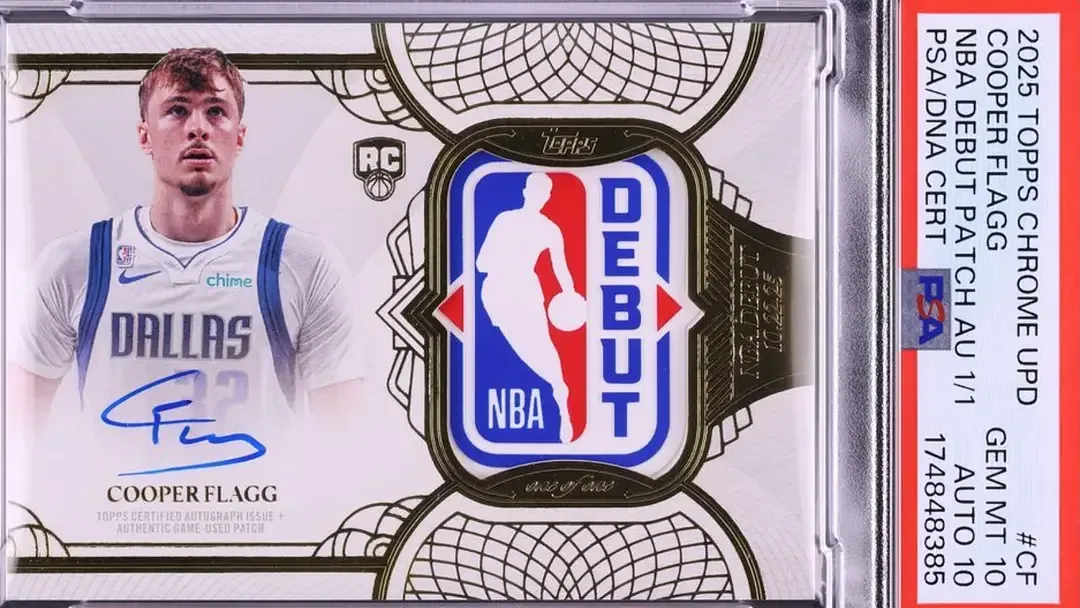
Basketball supplied half of the top 10 athlete searches, led again by Jordan. Victor Wembanyama, Cooper Flagg, Kobe Bryant, and LeBron James rounded out the leading NBA names. Flagg’s arrival on the list was a major newcomer story, but the larger pattern was continuity: Jordan, Bryant, and James remained central points of interest alongside active and emerging players.
The same blend carried across leagues:
- NFL: Drake Maye, Caleb Williams, Tom Brady, Jaxson Dart, and Patrick Mahomes.
- MLB: Shohei Ohtani, Ken Griffey Jr., Mickey Mantle, Aaron Judge, and Roman Anthony.
- NHL: Macklin Celebrini, Matthew Schaefer, Wayne Gretzky, Connor Bedard, and Sidney Crosby.
- Soccer: Lamine Yamal, Lionel Messi, Cristiano Ronaldo, Erling Haaland, and Kylian Mbappé.
- WNBA: Caitlin Clark, Paige Bueckers, Sophie Cunningham, Cameron Brink, and Sonia Citron.
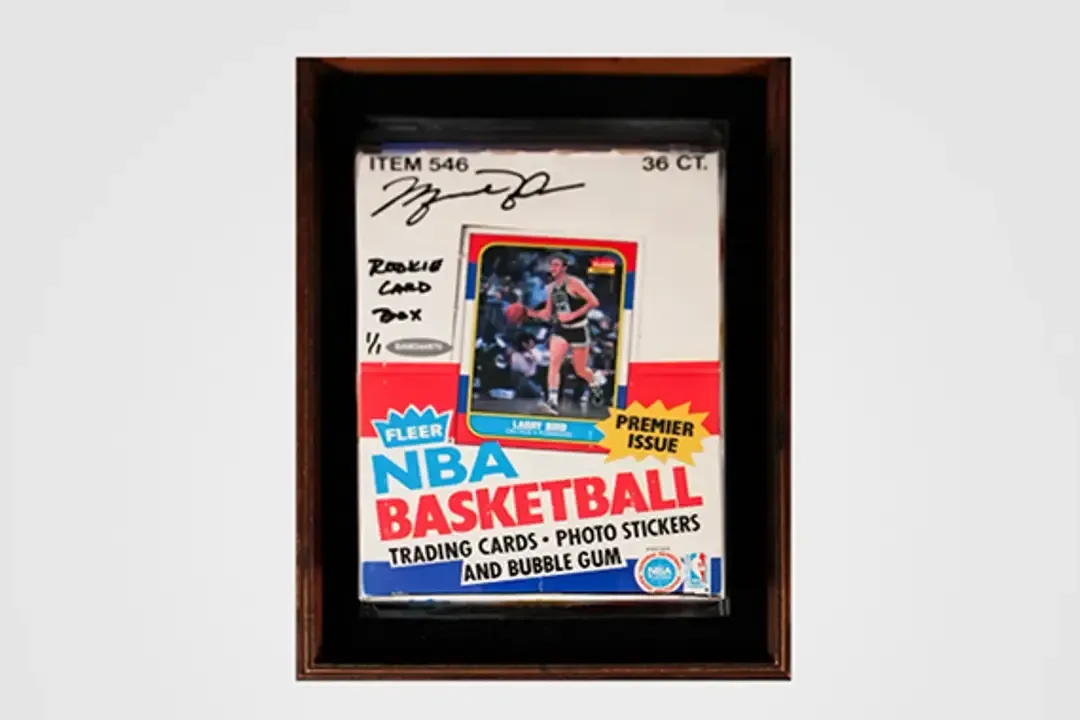
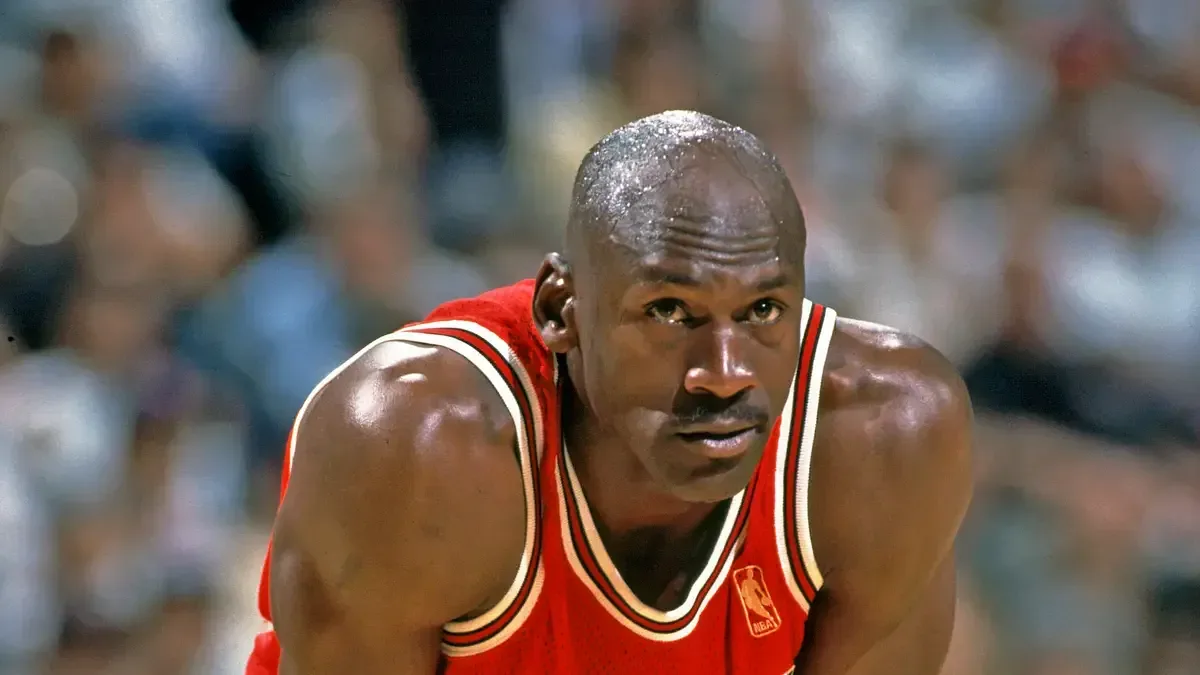
Jordan’s continued prominence was accompanied by one of 2026’s striking memorabilia results: a one-of-one signed and inscribed 1986-87 Fleer Michael Jordan box sold for $900,100 in August. “One-of-one” means the item is presented as a unique example, a description that matters enormously in a collecting market built on scarcity. Its autograph and inscription add further distinctions beyond the sealed product itself.
Other major card sales showed how grading and scarcity affect the high end. A signed 2018 Bowman Chrome Red Refractor Shohei Ohtani rookie card, numbered 2/5 and graded BGS 9.5, sold for $2.44 million in September. A refractor is a card treatment associated with a reflective finish, while “2/5” identifies it as the second of five numbered copies. BGS 9.5 is a near-top grade assigned by Beckett Grading Services. Each descriptor narrows the item far beyond “an Ohtani rookie card.”
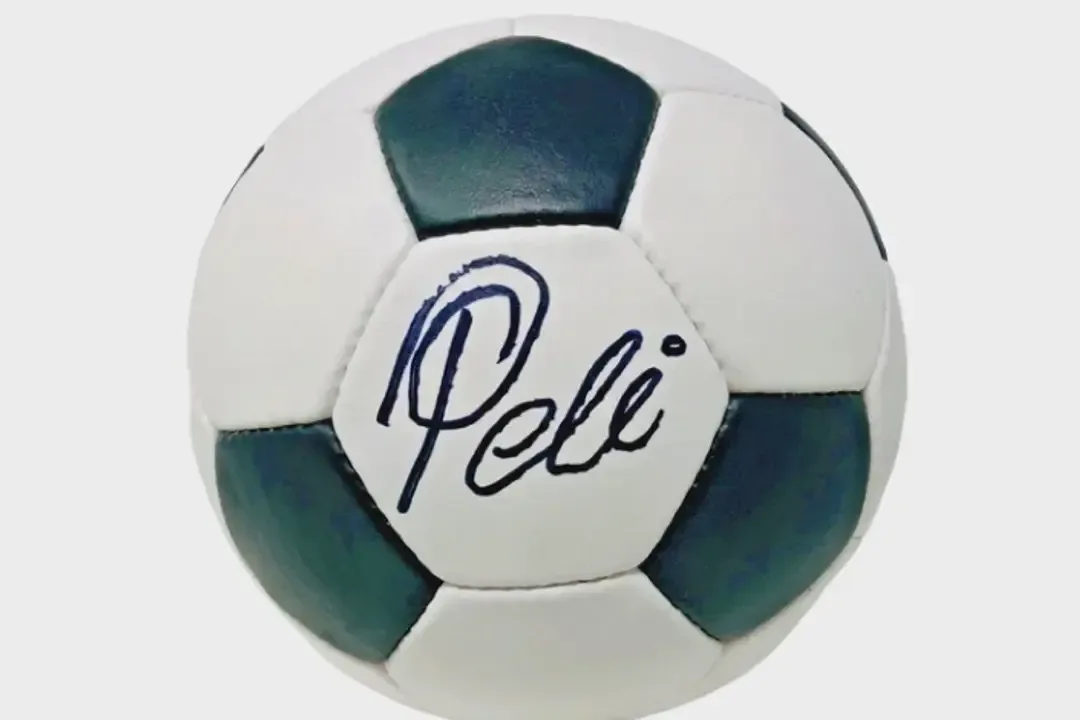
Vintage cards remained potent, too. A PSA 8 1958 Editora Aquarela Pelé rookie card sold for $671,000 in September. In February, a PSA 1 1909-11 T206 White Border Honus Wagner from the Shields Family Collection sold for $5.124 million, a record for that grade. That result is a useful reminder that low numerical grade does not make an item unimportant. With iconic, scarce historic material, authenticity, survival, provenance, and the card’s place in the hobby can sustain intense demand even when condition is heavily worn.
Big games created immediate collecting heat
The sharpest search jumps came when sports provided a fresh narrative. Global searches for “soccer” averaged more than 3,300 per hour from January through September, up over 20% year over year. The average sale price for match-worn soccer jerseys globally rose more than 220% from $143 in February to $466 in March.
Match-worn means an item is described as having been worn in competition, a category distinct from standard fan merchandise. For collectors, that distinction makes documentation and exact item description especially important. The reported average-price increase signals heightened activity in that category during the period, but averages can be affected by the particular mix of items sold, so it should not be treated as a universal valuation for every jersey.
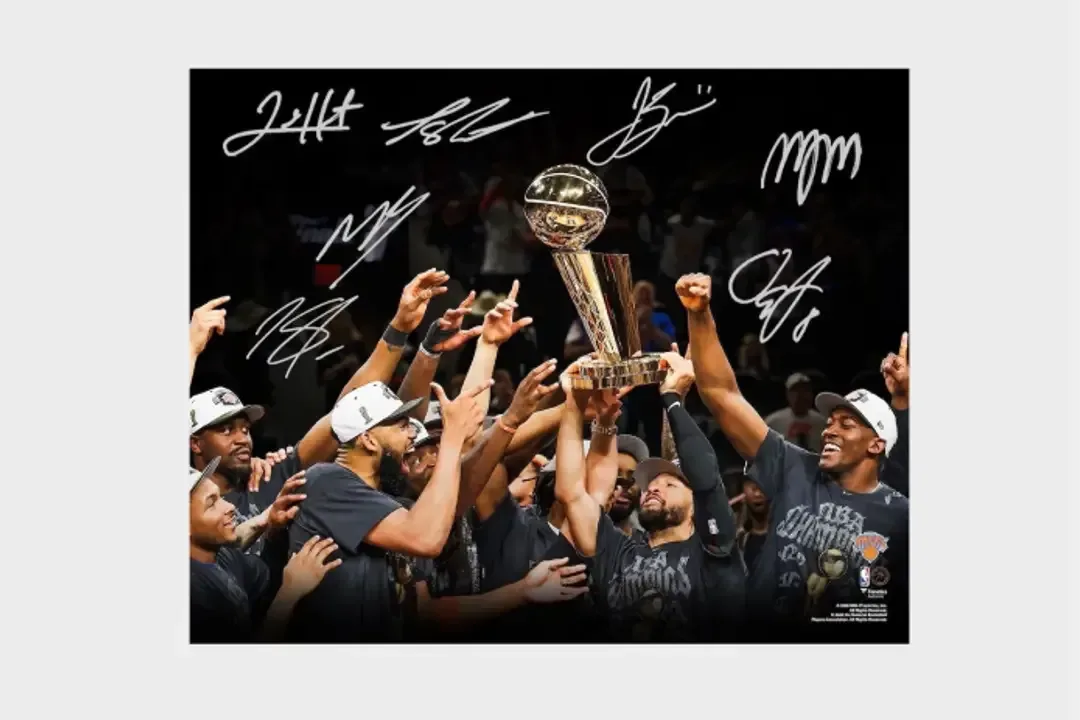
After the World Cup in July, searches within the collectibles category rose more than 350% for Jude Bellingham and more than 190% for Erling Haaland versus June. The New York Knicks’ playoff run produced a comparable burst: searches for “New York Knicks” climbed more than 440% on May 26, when the team reached the NBA Finals, compared with the average day in the May 12-18 week. Searches for OG Anunoby were more than 16 times higher on June 11, the day after his tip-in finished a 29-point comeback, than the day before the game.
These movements underline a practical collecting reality: the market reacts to stories at speed. A championship push, a decisive play, or a global tournament can put a player, team, card, autograph, or piece of memorabilia in front of far more eyes overnight. That attention can create competition, but it can also make it harder to separate emotional urgency from an item’s longer-term appeal. Collectors looking during a spike benefit from knowing exactly what they want before the search bar catches fire.
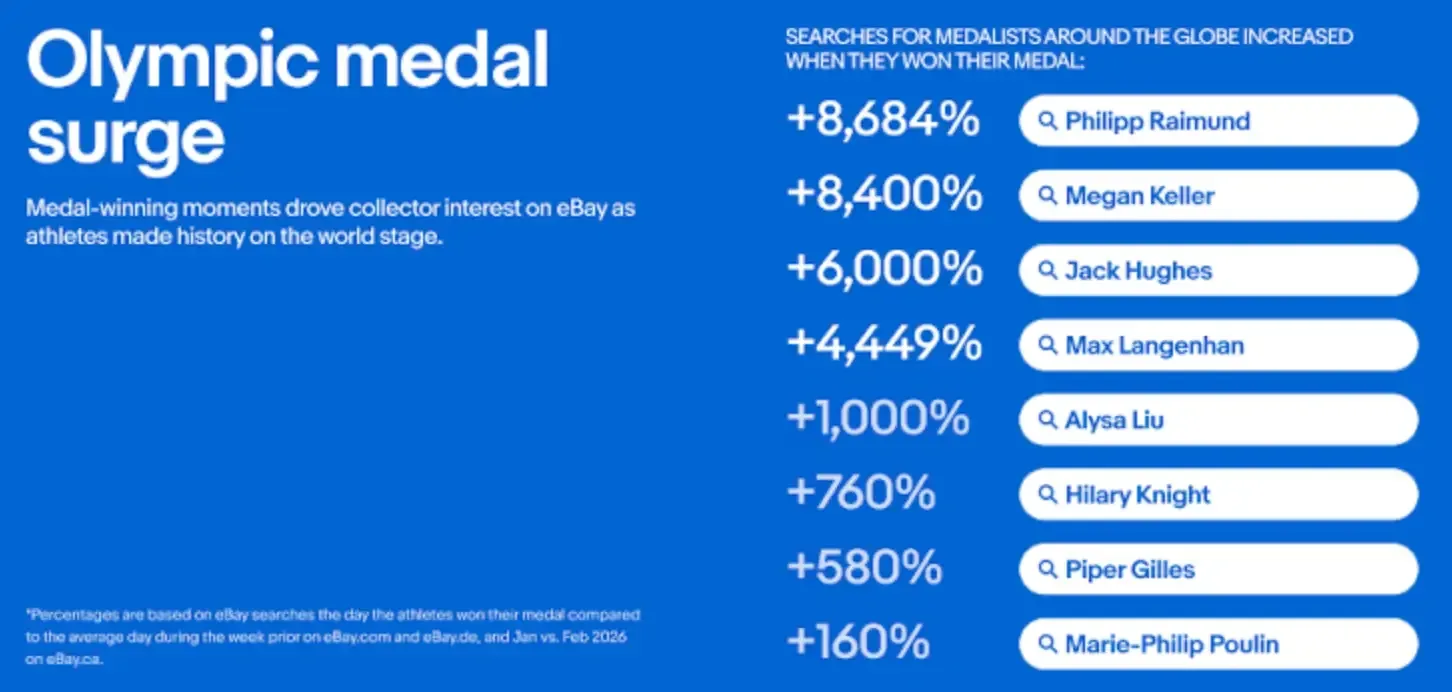
The same connection between a major event and demand also appeared around the Winter Olympics, which brought all-time highs in searches and sales for many athletes. The broader lesson is not that every event produces a permanent market shift. It is that collecting interest follows culture in real time. That relationship is also visible beyond physical collectibles; a major summer movie was also linked to a sales boost for Assassin’s Creed Odyssey, showing how a screen moment can redirect attention toward an existing property.
Entertainment releases turned attention into searches
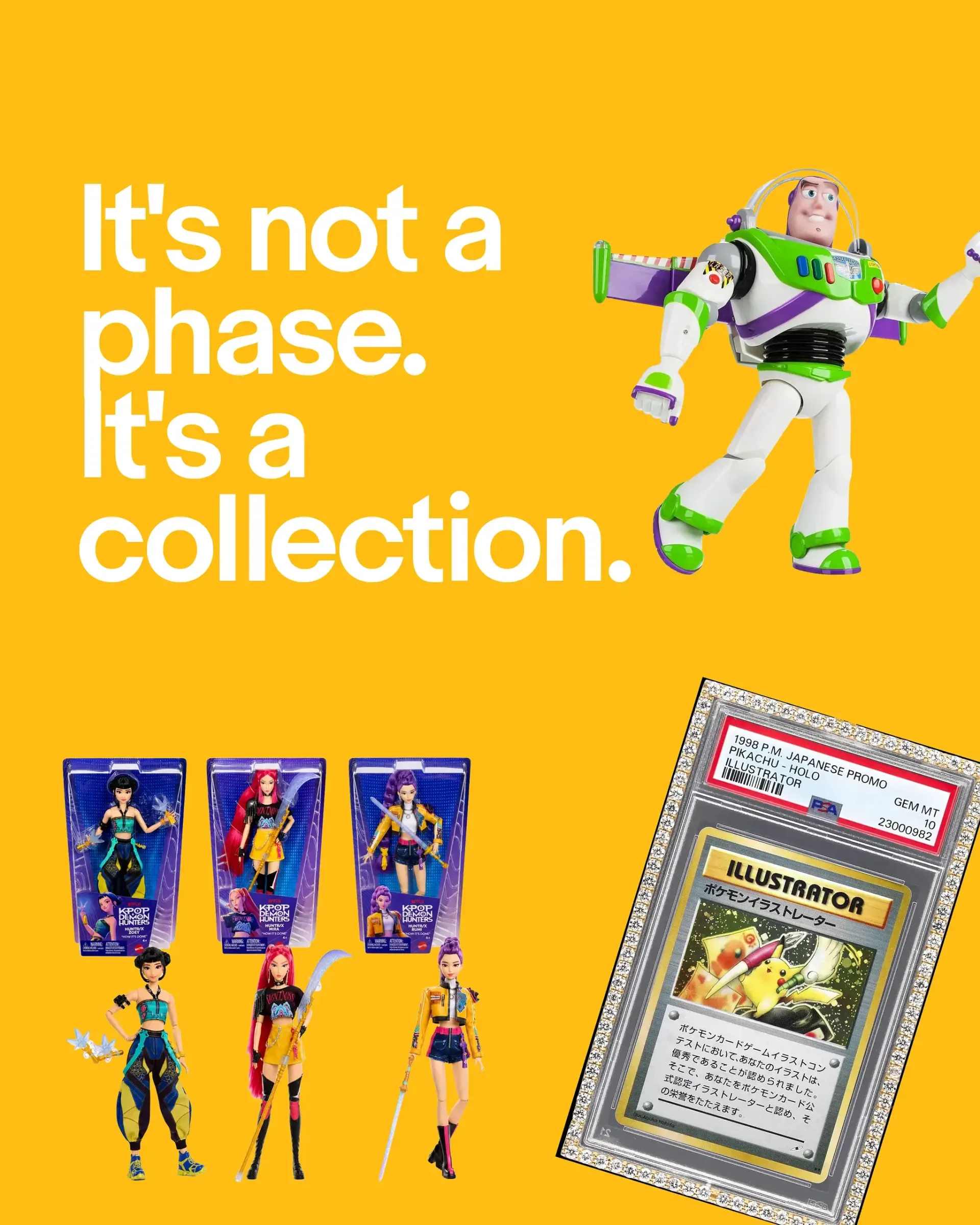
Film, comics, anime, and fast-food collaborations also produced notable surges. In June, global searches increased by more than 150% for Woody, more than 140% for Buzz Lightyear, and more than 120% for Jessie following the release of Toy Story 5. Search interest in “Revoltech symbiote Spider-Man” rose more than 350%, while “Spider-Man Brand New Day” was up more than 240%.
A production-made flight helmet and associated gear linked to Val Kilmer’s Iceman character in Top Gun sold for $106,250 in October. Searches for “KPop Demon Hunters McDonald’s” rose by more than 900% in April, “Spider-Man popcorn bucket” increased by more than 900% in July, and “Dodgers One Piece” climbed by more than 920% after the team-and-anime collaboration. Doctor Doom searches were up more than 170% year over year, while Absolute Batman, Amazing Spider-Man, X-Men, Invincible, and Spawn were among the other prominent searches.
For collectors, these examples distinguish two kinds of demand. One is the long-running base of character and franchise recognition—Pokémon, LEGO, Jordan, Spider-Man. The other is a catalyst: a movie, an event, a collaboration, a game result. A catalyst can introduce new buyers and revive interest in overlooked items, but its intensity may be temporary. The underlying property is what gives the interest somewhere to settle after the headline has passed.
What the 2026 search picture can—and cannot—tell collectors
The year’s data points to a fragmented hobby united by attention rather than a single product type. A record-setting Pikachu, a century-old Wagner, an Ohtani refractor, match-worn jerseys, movie props, toys, and pop-culture collaborations all drew interest for different reasons. Rarity mattered. Condition mattered. A recognizable name mattered. And, repeatedly, the current moment mattered.
Search data is most useful as a starting signal. It can identify which players, characters, teams, and categories are attracting curiosity. It cannot replace checking exact listing details, comparing actual sold items, or understanding the difference between a broad search term and a particular collectible. A search for Charizard or Michael Jordan contains many very different products; a single record sale contains even less information about ordinary examples.
Still, the central pattern is hard to miss. Collectors kept returning to foundational names while making room for the next star, the next big match, and the next entertainment event. In 2026, the hobby’s attention was both deeply nostalgic and intensely present-tense—and the search bar recorded every sudden detour.