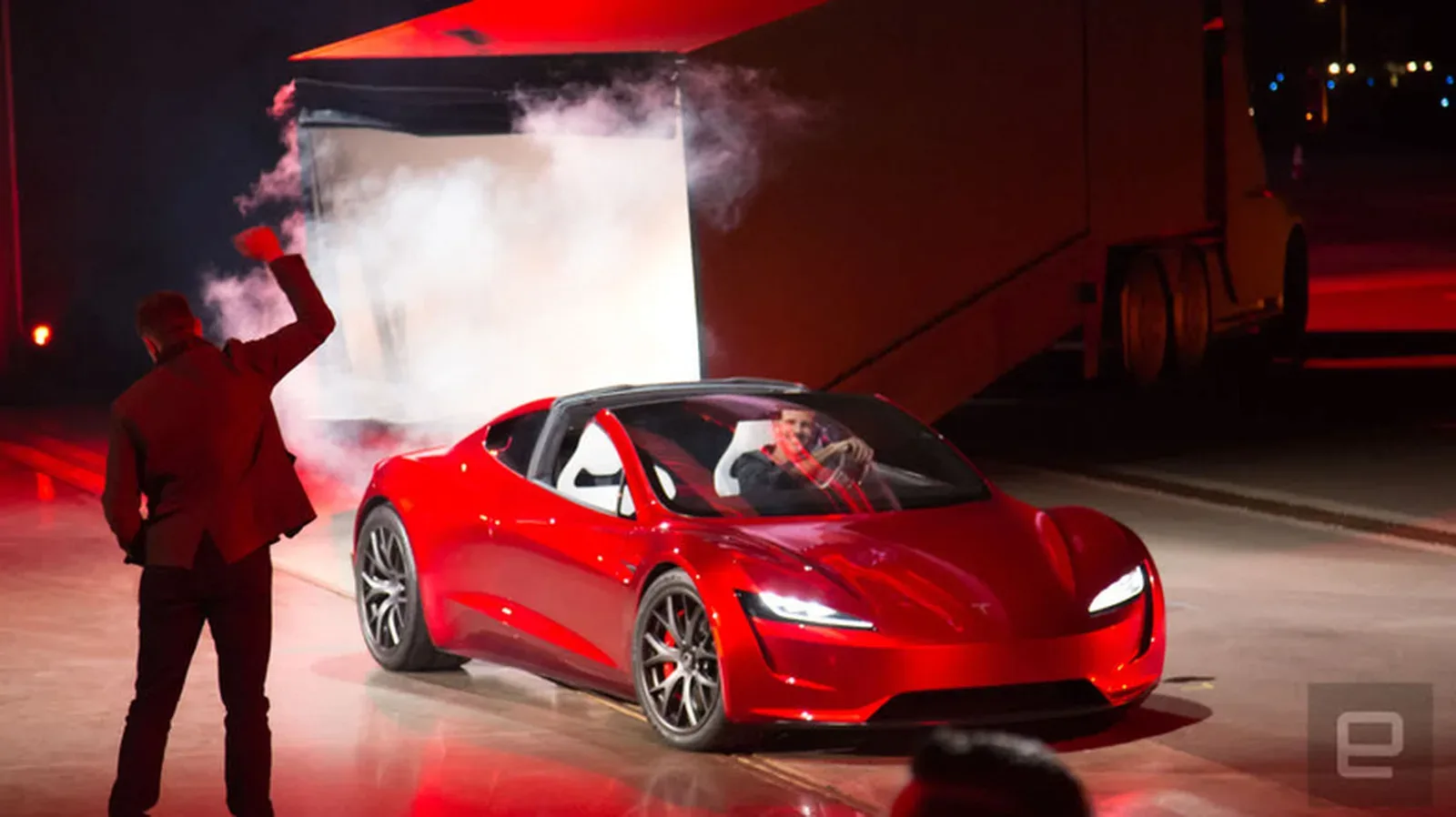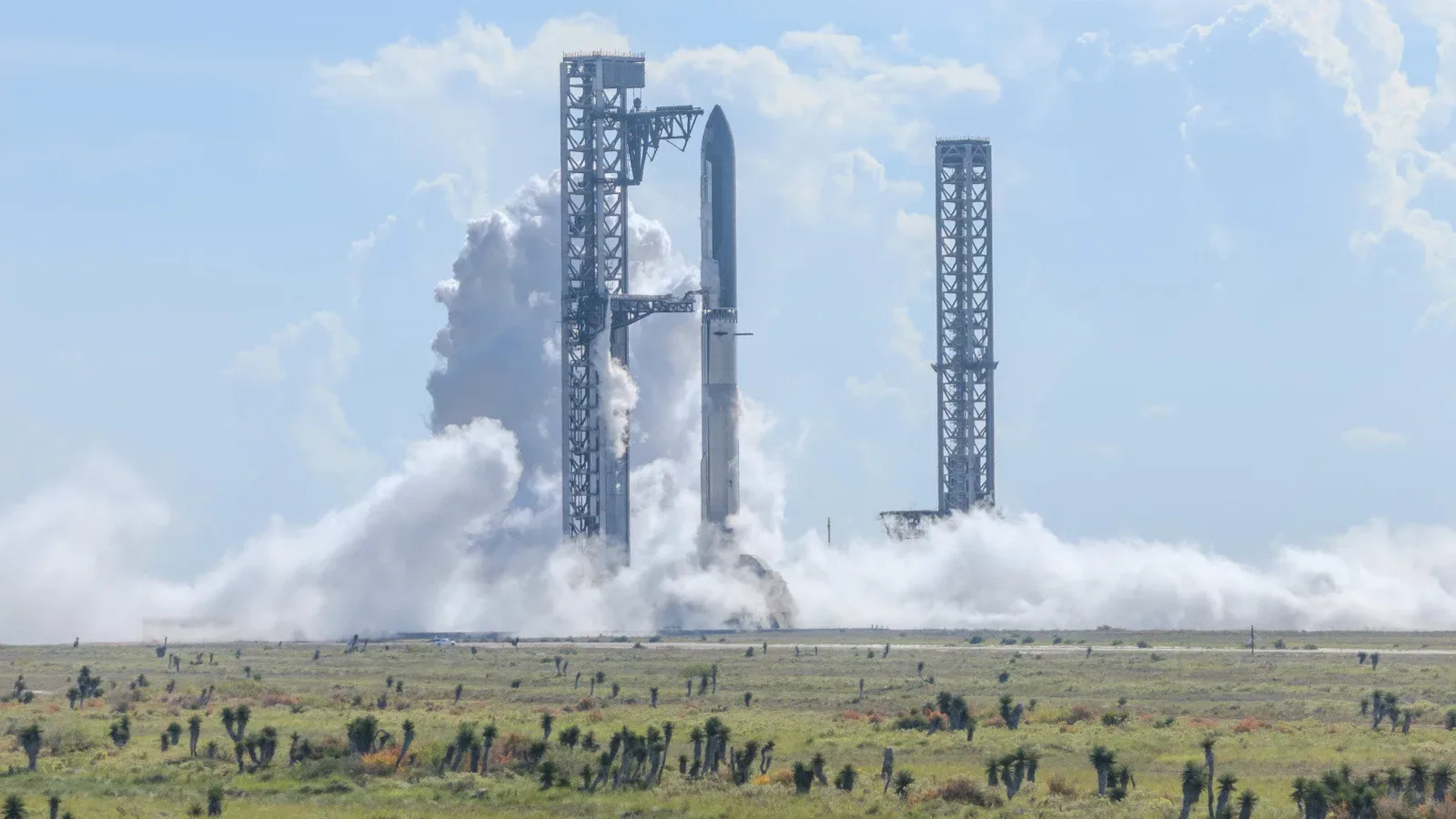
Tesla has presented a Roadster prototype built for the sort of trailer moment that normally comes with a controller prompt: drive up a steep surface, cling upside down, launch into open air, rotate, and settle back onto the ground. The display took place outside a SpaceX test facility in Texas, before a live audience, with Elon Musk framing the vehicle as a result of Tesla and SpaceX working together.
It is an undeniably striking piece of showmanship. It is also a demonstration with far more unanswered questions than settled ones. Tesla’s claimed 2028 production target, the vehicle’s stated use of SpaceX-derived thrusters, Musk’s own warning that it is not “necessarily a safety-optimized car,” and the initial choice to operate it remotely all make clear that this should be understood as an early, extraordinary prototype display—not evidence that a street-ready flying car is around the corner.
For gaming audiences, the immediate comparison practically wrote itself. Clips and reactions have likened the stunt to Rocket League: a wheeled vehicle behaving as though traction, orientation and mid-air correction are resources to be managed rather than hard limits. That comparison describes the visual appeal well. But outside a game arena, every part of that fantasy has to coexist with safety systems, legal rules and ordinary people sharing the road.
What Tesla showed
The Roadster was initially remotely piloted, with Musk saying that decision was made to avoid hurting anyone. Its run began on a steep ramp. The vehicle reportedly used suction to travel up the surface and park upside down, then accelerated up the ramp, left it, used rockets to rotate into the proper orientation, and landed safely.
That sequence combines several distinct capabilities. Suction, in this context, means using force to hold the vehicle against a surface, enabling the upside-down portion of the stunt. Thrusters are devices that create force by expelling material; Musk described units at the rear and underside of the vehicle that would let it “basically fly like a rocket.” And remote piloting means the demonstration vehicle was being controlled without a human seated behind its wheel.
Each of those ideas is easy to appreciate in the brief, spectacular form of a demonstration. Together, they can make a car look less like a car and more like a stunt machine from a futuristic racing game. Yet the distinction between a controlled show and a consumer product is the crucial one. A demonstration can be designed around a defined ramp, a prepared area and deliberate operating conditions. A manually driven road car must work around pedestrians, other vehicles, changing road surfaces, weather, parking spaces and failures that cannot be scheduled.
“We need an audience to prove it’s not AI or SI, so you guys can tell people you saw it with your eyes,” Musk told the audience.
The presence of viewers may have answered one narrow question about whether the event was physically staged, but it does not resolve the much larger questions raised by the stunt. The event showed that a prototype performed the presented routine; it did not establish the parameters required for regular ownership, road use or broad deployment.
Why the Rocket League comparisons make sense
Rocket League has made automotive acrobatics familiar to millions of players. Cars boost into the air, turn in impossible directions, recover from awkward rotations and land ready to chase the next play. Tesla’s Roadster stunt has the visual grammar of that kind of game: a ramp, a launch, an aerial correction and a clean recovery.
There is an important difference, however, between a comparison and a promise. The game analogy explains why the footage travels so well online; it should not be treated as a technical explanation of how a production car would operate. In a game, aerial control is an intended core mechanic and the consequences are limited to the match. In real transport, a powerful system capable of changing a vehicle’s direction or attitude raises fundamental questions about when it may be activated, who controls it, how nearby people are protected and what happens if it fails.
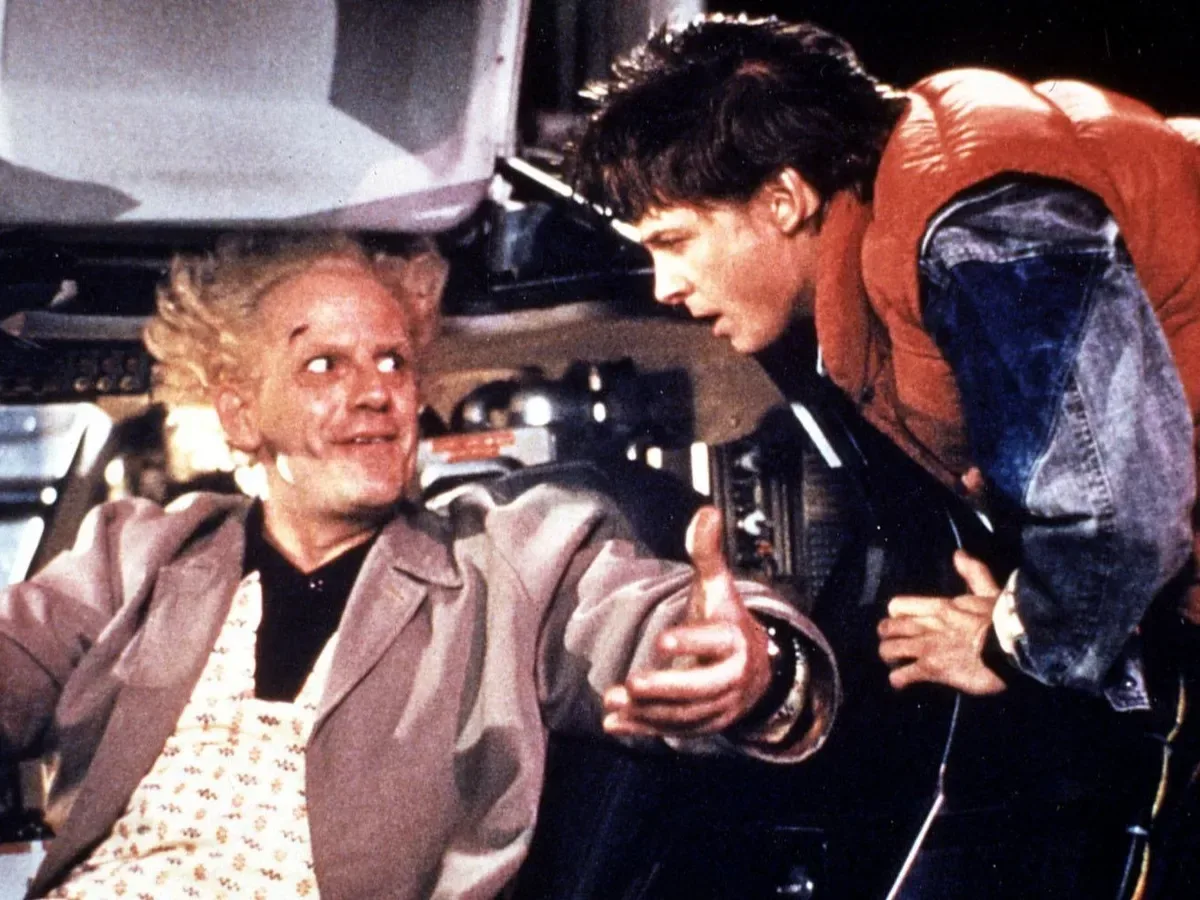
That tension is part of why the reveal has attracted such a mixed response. Christopher Lloyd, known for playing Doc Brown in the Back to the Future films, celebrated the moment online with “Finally...flying cars.” Others circulated stunt highlights or leaned into the gaming comparison. The enthusiasm is understandable: the Roadster presentation delivered a recognizable piece of science-fiction imagery in a live setting.
But excitement about a prototype is not the same as confidence in a product plan. A suitably cautious reading of the event is that Tesla has shown a memorable concept demonstration. Whether that concept becomes a car people can buy, insure, register and safely operate is still unknown.
The safety issue is already part of the pitch
Musk’s acknowledgement that the vehicle is not necessarily optimized for safety is unusually direct, and it should remain central to any discussion of the Roadster. The remotely piloted opening of the demo reinforces that the company itself treated the stunt as carrying meaningful risk.
Safety optimization is broader than preventing a crash during a planned jump. For a consumer vehicle, it would concern predictable controls, safe operation around others, repeatable behavior, and the ways the car responds when conditions are imperfect. The source material does not establish how Tesla intends to address those topics, whether the thruster system would be available in a road-going version, or what limits would apply to it. Those unknowns are more important than the footage when judging the Roadster as a prospective consumer machine.
Musk also described it as potentially being Tesla’s only manually driven car in the long term. That statement adds another layer to the reveal. A manually driven vehicle with unusual physical capabilities would place a major emphasis on driver input and driver responsibility—exactly the areas that need the clearest answers before a vehicle can plausibly move beyond a controlled event.
For a useful comparison in how impressive-looking consumer technology can still arrive with caveats and open practical questions, see this look at Apple’s HomeView and its unresolved questions. The products are very different, but the underlying lesson applies: a polished unveiling is the beginning of scrutiny, not the end of it.
Production in 2028 is a claim, not a completed milestone
Tesla’s stated timeline places Roadster production in 2028. At present, that is a target rather than a demonstrated delivery milestone. The prototype’s stunt performance does not by itself answer whether the eventual vehicle would retain the same capabilities, under what conditions they could be used, or whether it could be legally driven in most places.
Those distinctions matter because “production” can mean different things to audiences. It may evoke a fully established consumer rollout, but the information available here does not provide a production volume, market list, regulatory pathway, operating limitations, price, or customer delivery schedule. It also does not specify whether the launch-and-recovery demonstration represents a feature intended for ordinary owners or a display of what a prototype can do.
That uncertainty is precisely why prominent reactions split so sharply. Technology commentator MKBHD questioned the plausibility of claims involving a newly designed vehicle weighing more than 4,000 pounds, flips, speeds beyond 380 mph, and a 2028 shipping target. NASA administrator Jared Isaacman called it a wild product unveiling and praised the introduction while questioning how readily drivers would actually be leaping over traffic. Neither response requires dismissing the demo outright. Both recognize the gap between an impressive event and the conditions of real-world use.
What to watch next
The most meaningful future developments will not be more spectacular clips on their own. They will be details that turn the concept into something assessable: clearer information about the thruster setup, the role of suction, the limits of any airborne maneuvering, how a human driver would interact with the system, and whether the vehicle can meet the rules that govern normal road use.
It will also matter whether Tesla repeats the capability in a way that clarifies its reliability and intended purpose. The Texas display established a powerful image—the Roadster as a machine that can invert itself, jump, self-correct and land. It has not established how that image translates into a vehicle used outside a staged environment.
For now, the right response is room for both reactions already visible online. The demonstration is genuinely eye-catching, and it is reasonable to be fascinated by a car presented with rocket-like control hardware. It is equally reasonable to ask whether such a vehicle can be made safe, legal and practical enough for customers. Until Tesla supplies answers and reaches its claimed production milestone, the Roadster is best viewed as a startling prototype with video-game spectacle, not a confirmed new reality of everyday driving.