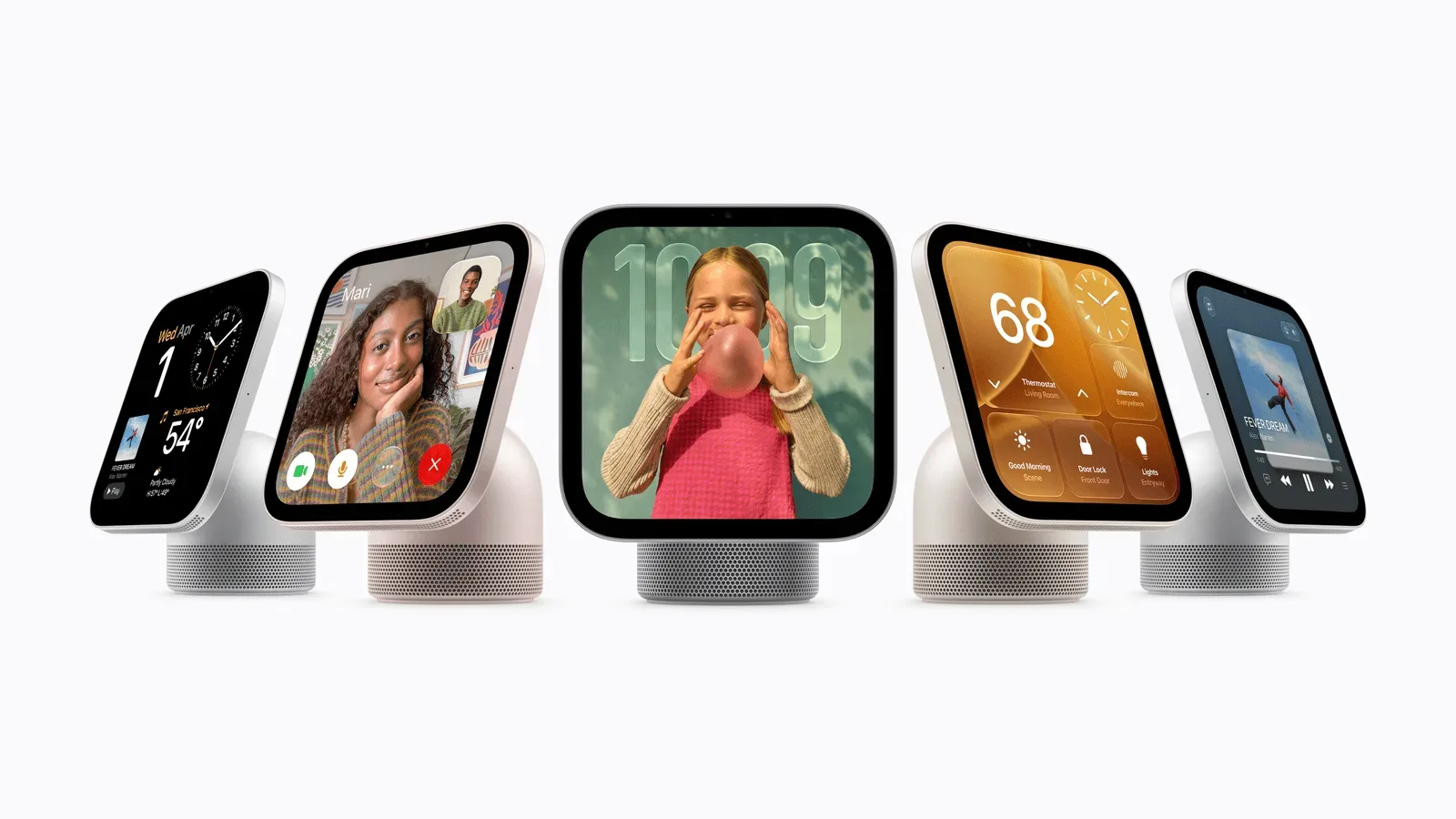
Apple’s newly announced HomeView hub, HomePod mini 2 and Apple TV 4K outline a fairly clear vision: put a shared screen in the home, connect it tightly to personal Apple devices, and make the television and speakers more capable household infrastructure. The catch is that this vision is arriving with a sizable bill, some important dependency on iPhones and iPads, and a central question that no glossy product video can entirely answer: how many people actually need another screen on the counter or wall?
That does not mean HomeView lacks sensible uses. A fixed display for smart-home controls, timers, music, photos and cooking instructions could be genuinely useful in a busy household. But Apple’s pitch appears strongest for people replacing an existing smart display or a wall-mounted tablet—not necessarily people who have successfully avoided both until now.
HomeView’s best case is a shared household screen
HomeView is designed to be more than a static control panel. Its display can show photographs and customizable faces, dim to 0.3 nits in dark surroundings, and alter its interface as a person comes closer. A nit is a measurement of display brightness; in practical terms, a very low figure matters when a screen is meant to sit in a bedroom, kitchen or hallway without becoming an uninvited nighttime lamp.
The kitchen is arguably the product’s clearest setting. HomeView can turn recipe webpages into step-by-step guidance, while voice-controlled timers remain available during cooking. That solves a familiar small irritation: phones are useful recipe devices until hands are wet, flour-covered or otherwise ill-equipped for touchscreen diplomacy. A shared screen can keep instructions visible without requiring someone to unlock a phone, find a browser tab and repeatedly wake the display.
That is also the difference between HomeView and an iPhone, iPad or Apple Watch. The value is not that it can duplicate every action those devices already perform. It is that it can become a stable, glanceable household surface that stays where everyone expects it to be. A timer in the kitchen is not especially revolutionary, but a timer that remains visible to everyone making dinner might be more useful than one trapped on a single person’s wrist.
Still, duplication is an unavoidable concern. Someone already wearing an Apple Watch can set timers without reaching for a counter display. Someone with an iPhone in a pocket can send a message without typing on a communal screen. These are not fatal flaws, but they expose the product’s challenge: HomeView needs to earn its place by being the best device for shared, ambient tasks, not by trying to out-phone a phone.
Personal profiles and privacy are central to the pitch
Apple says HomeView can recognize up to six people and shift to their apps and personal information. That capability matters because a household screen becomes less appealing if every calendar entry, message or personal suggestion is presented to whoever happens to walk by.
The stated protection is that personal material normally appears only when the relevant person is recognized and their paired device is nearby and has been unlocked recently. This creates a deliberate balance between convenience and restraint: the display can become personal when conditions suggest its owner is present, but it is not supposed to behave as though a kitchen counter is a private office.
There is an important technical distinction in the product’s Siri setup, too. Siri AI can handle general questions without requiring an Apple Intelligence-compatible device. Personal requests, however, still need one. In other words, HomeView may be able to answer a broad question on its own terms, while requests tied to a person’s private information or device ecosystem remain conditional on compatible hardware. Buyers should treat that difference as more than fine print, because it affects whether the hub feels independently useful or like an extension of a newer phone, tablet or computer.
No App Store means HomeView is not an iPad substitute
Perhaps the most defining limitation is the absence of an App Store. Compatible third-party audio and video services can appear on HomeView through a connected iPhone or iPad using a system compared to CarPlay. CarPlay, in this context, means the device is presenting an interface supplied through another Apple device rather than operating like a fully independent app platform.
That approach could keep the HomeView experience controlled and consistent, but it also means buyers should not assume the flexibility of a tablet. Spotify and Audible are examples of services that would rely on a connected iPhone or iPad instead of being installed directly on HomeView. A household that wants a dedicated, standalone screen for a long list of apps may find that restriction significant.
It also changes the answer to the obvious comparison with a wall-mounted iPad. HomeView may be tidier and purpose-built for the job, with household-aware controls and profile handling. But an iPad is a general-purpose device with direct app installation. HomeView appears to trade that breadth for a more focused smart-home role. Whether that feels refreshingly simple or frustratingly limited will depend on what the screen is expected to do between timers, recipes and home controls.
For entertainment-minded households, a screen’s usefulness often comes down to how seamlessly it fits into routines rather than its raw feature list. That same tension between focused experiences and sprawling libraries sits behind broader game-industry discussions, including the growing discovery problem created by an enormous release slate on Steam. HomeView takes the opposite route: fewer pathways, more curation, and a heavy reliance on devices already in the room.
The price of putting a screen in every room
HomeView starts at $299. The wall-mounted model costs the same despite giving up the tabletop version’s speaker base, woofer and passive radiators. A woofer handles lower-frequency sound, while passive radiators are speaker components that help reinforce bass response without being separately powered. Their omission matters because it means the fixed installation does not simply offer the same hardware in a different shape.
Mounts begin at $59.95, and the package does not include a power adapter or cable. That makes the cost of a wall installation meaningfully higher than the listed device price. A single, carefully chosen location may be easy enough to justify. Outfitting several rooms is a different proposition once each display, mount, power accessory and installation decision enters the equation.
This is where HomeView’s appeal is most likely to divide. A person already using a mounted tablet may see a more elegant replacement with a sharper smart-home identity. A person starting from nothing has to decide whether the convenience of a shared display justifies $299 before accessories. Apple has supplied several thoughtful details, but the product may not yet provide an equally obvious answer for households that have never wanted an Echo Show, Nest Hub or tablet on the wall.
HomePod mini 2: smarter, but much pricier than the original
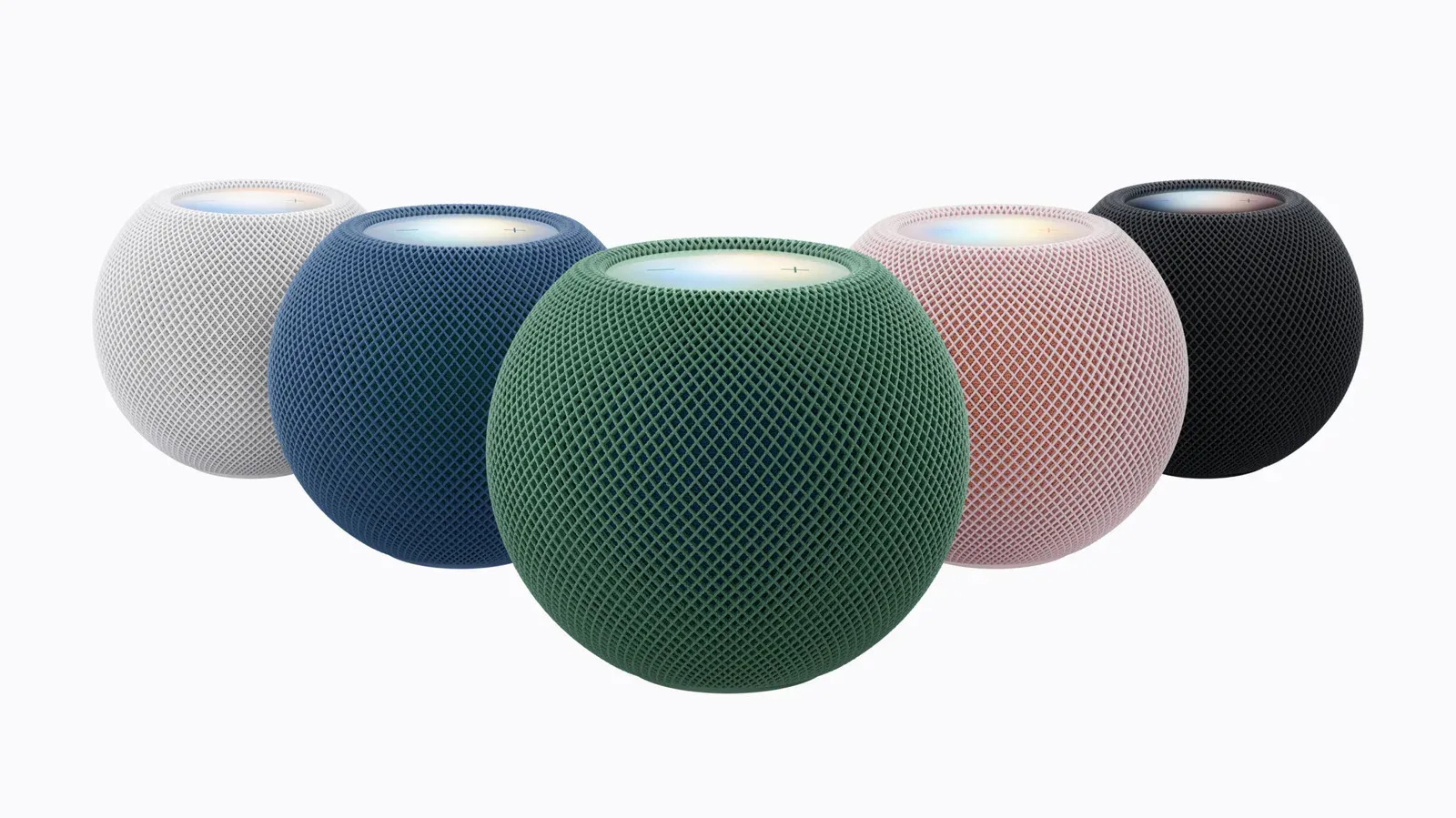
The HomePod mini 2 arrives six years after the original model with an S10 chip, Sound Glow lighting and Siri AI support. It retains the same basic speaker hardware, making its intelligence and interface changes the more consequential parts of the refresh.
Its price is $149, roughly 50% above the original HomePod mini’s $99 launch price. The earlier model had already risen to $129 in June, but the new number still changes the product’s value calculation. Small smart speakers are often bought in pairs or spread across rooms; a $20 or $50 shift is more noticeable once a buyer starts multiplying it.
The mini 2 can serve as a default Mac speaker on Macs with Wi-Fi 6E or later. Wi-Fi 6E is a wireless standard that adds access to the 6 GHz band alongside older Wi-Fi bands, and the compatibility requirement means this feature is not universal across Macs. Siri AI is positioned as the more substantial day-to-day change, though it will arrive after the October 30 speaker launch.
That delayed timing is worth keeping in mind. Buyers interested primarily in the more capable voice assistant are not evaluating a complete feature set on day one. The hardware launch and the arrival of its potentially most meaningful software change are separate events.
Apple TV 4K offers a stronger home-theater hook
The new Apple TV 4K starts at $299 and includes an A19 chip, built-in microphones and an updated Siri Remote. It has 128GB of storage, Ethernet and Thread. Thread is a low-power networking technology intended for smart-home devices, making it relevant to a setup in which a television box may also play a role in connecting home accessories.
At $299, the device now sits well above the $129 starting point available before June’s price increases. The equivalent outgoing configuration had already reached $249, so the new price is not appearing in isolation—but it remains a major outlay for a streaming box, particularly for people who already own an Apple TV that meets their needs.
Older Apple TV models are also set to receive Siri AI, which makes a straight upgrade decision more complicated. The new hardware has benefits, but buyers should separate features that are exclusive to the new box from improvements that are coming to equipment they already have. The revised Siri Remote will also be sold separately for $59.
The clearest upgrade argument is surround sound with four HomePods. The new Apple TV 4K can use matching front and rear pairs of HomePod mini 2 speakers or second-generation full-sized HomePods. A system comprising the Apple TV 4K, two full-sized HomePods and two HomePod mini 2 units comes to $1,295 at Apple’s U.S. prices.
That arrangement makes the Apple TV less like a simple streamer and more like the center of an Apple-built home theater. It is a compelling capability for a buyer planning a new setup, but it is also a costly way to arrive at it. These devices may remain useful for years, which supports a long-term purchase—but that longevity equally supports keeping an existing Apple TV and current speakers until a truly essential feature arrives.
A broader smart-home push, with familiar premium trade-offs
Apple’s Home Collection, developed with LG and Schneider Electric, expands the strategy beyond screens and speakers. The lineup includes one-tap setup and a lock using Ultra Wideband to unlock as somebody approaches. Ultra Wideband is short-range wireless technology capable of precise proximity awareness; here, its practical promise is that a lock can distinguish a nearby authorized user more precisely than a basic wireless connection alone.
Those are useful ideas, especially for a home designed around Apple hardware. But smart-home purchases compound quickly because they are rarely isolated buys. A premium lock, several displays, speakers and a new television box can turn ecosystem convenience into a major household project. The key question is not whether each individual feature is clever. It is whether the total system offers enough extra ease, reliability and integration to justify spending more than on other HomeKit accessories.
There are also reports of additional hardware still in development: a robotic home display and an Apple camera distinct from the LG and Schneider Electric products. The camera is said to detect activity and presence without recording video. Those products remain unconfirmed, so they should not factor into a purchase decision today. Their existence, if they materialize, would nevertheless suggest Apple sees the home as a more active computing environment than a collection of isolated accessories.
For now, HomeView is the most visible test of that idea. It has credible household uses, privacy provisions that are more considered than a basic communal display, and a coherent relationship with Apple TV and HomePod hardware. But its price, lack of direct app installation and dependence on connected Apple devices mean it is best understood as a premium component for committed Apple households—not a universal answer to the question nobody asked while staring at a perfectly functional kitchen wall.