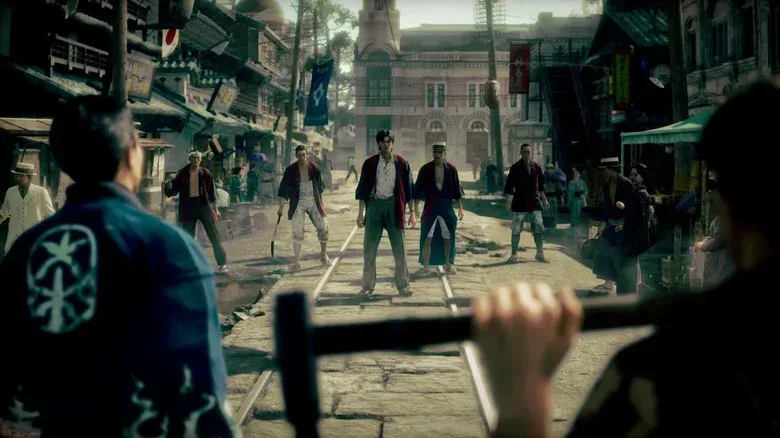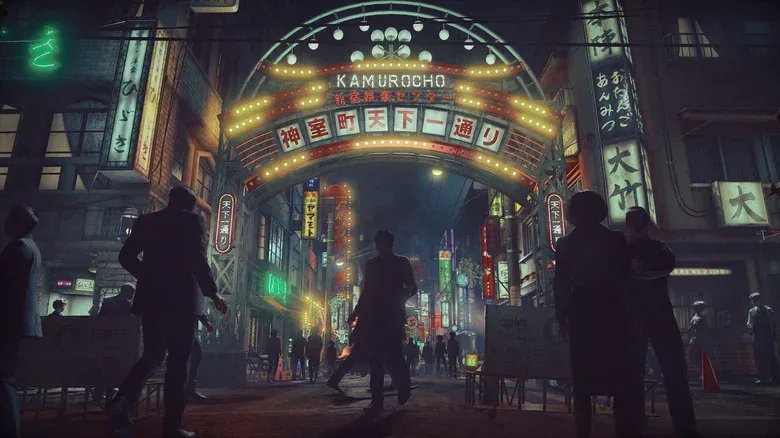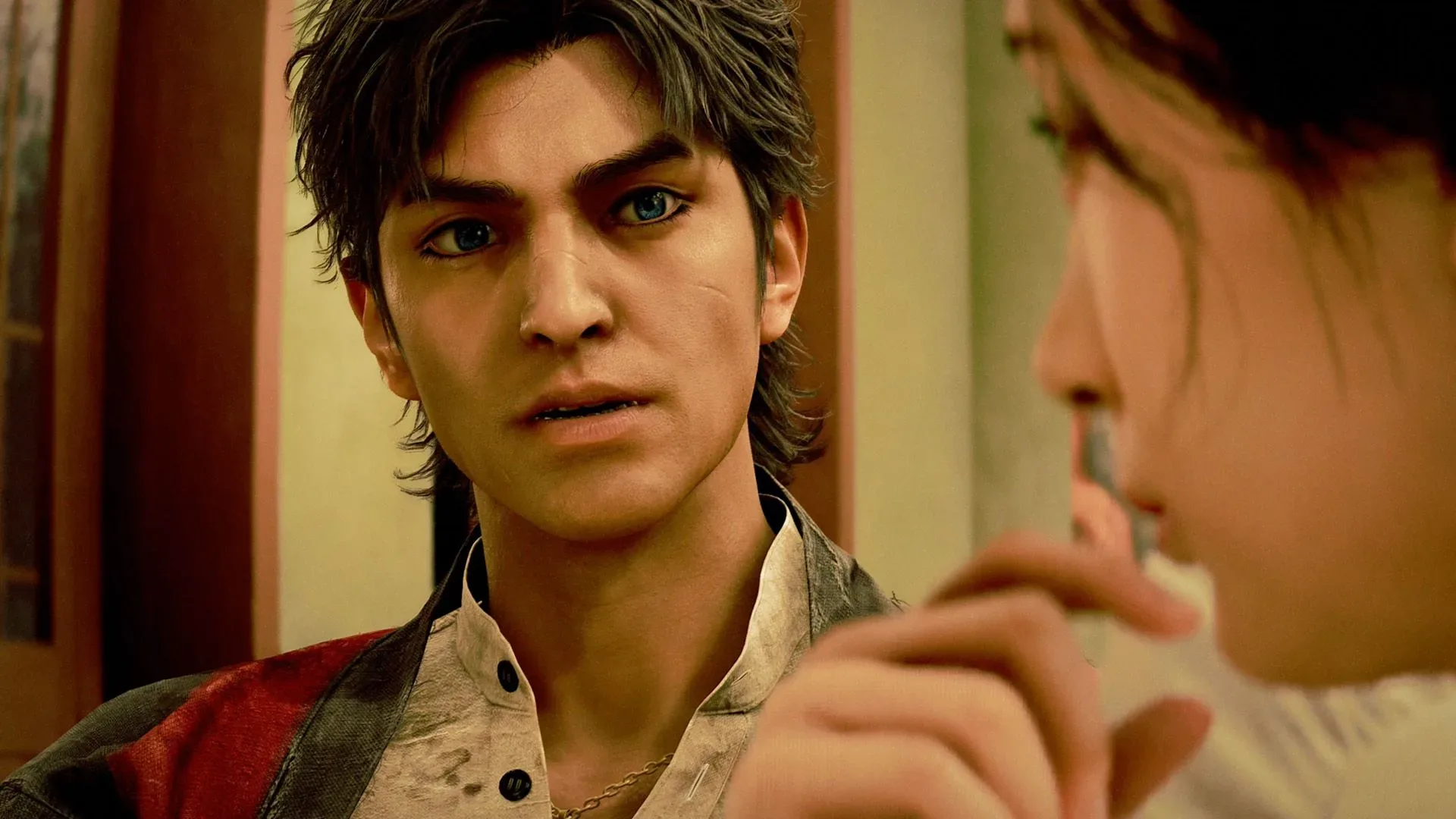
Stranger Than Heaven is positioned as a major change of register for RGG Studio’s Like a Dragon universe. It retains the street-level fights, dense explorable districts and occasional strangeness associated with the series, but the game’s central focus is a long-form crime story built around Makoto Daito, a Japanese-American outsider arriving in Japan in 1915.
The result appears less interested in the knowingly exuberant rhythm of many recent Like a Dragon games and more concerned with the cost of belonging somewhere. Daito’s journey is said to run through 1915, 1929, 1943, 1951 and 1965, tracing his movement from a man fleeing persecution in San Francisco to a dock and factory worker in Kokura, a hustler, a nightclub owner in Osaka and, ultimately, an important figure in the Tojo Clan’s 1960s Shinjuku orbit.
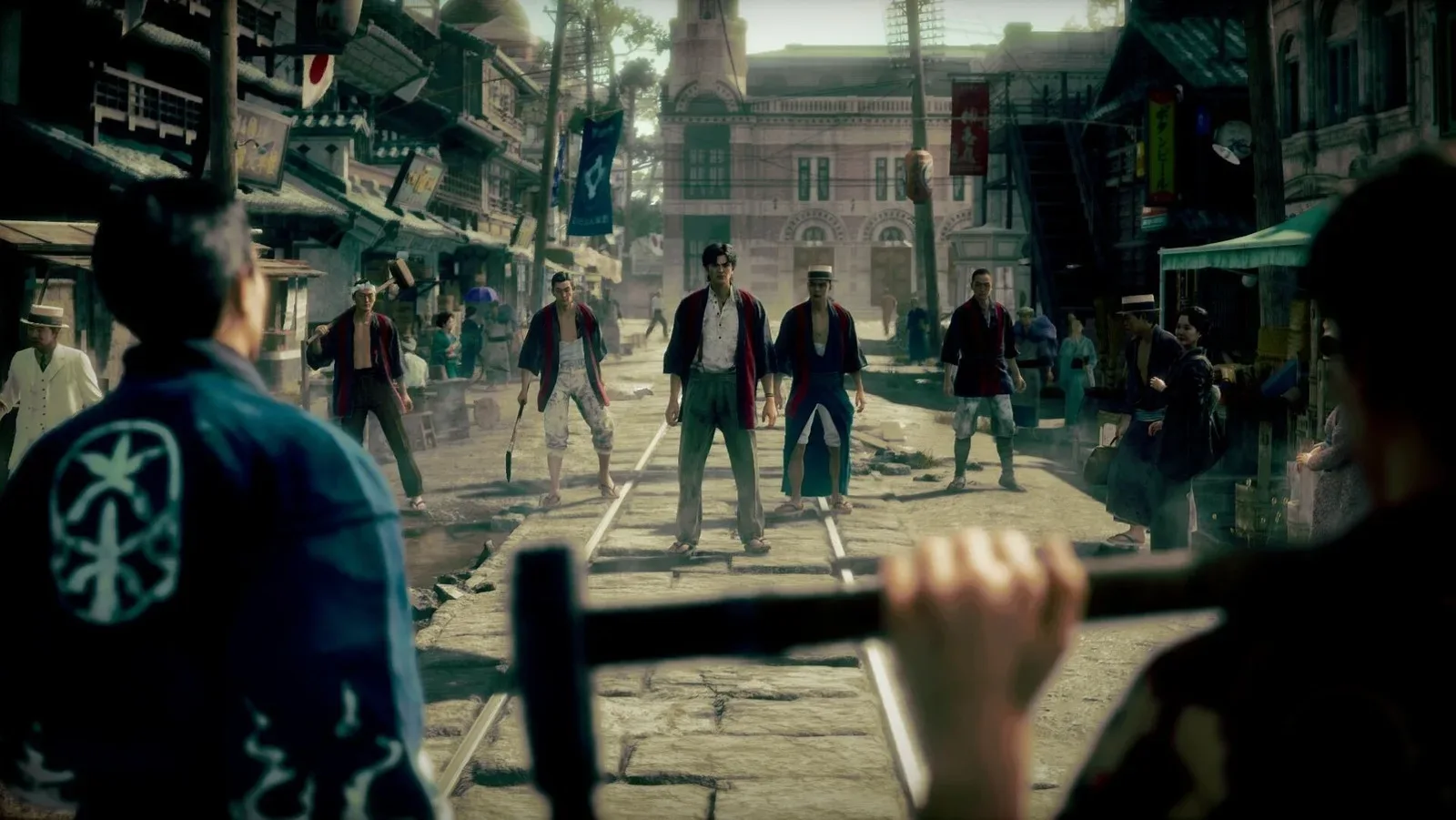
That five-decade structure is a considerable promise. It gives the game room to make social and technological change part of its setting rather than simple background dressing. It also gives Daito’s rise an unusually wide canvas for a series whose stories have often concentrated on intense, discrete chapters in the lives of established protagonists.
Stranger Than Heaven is scheduled for January 17, 2027 on PC, PlayStation 5 and Xbox Series X|S.
A standalone crime story with series-wide implications
The game is described as a standalone entry, meaning its story should be intelligible without requiring players to know every previous Like a Dragon plotline. Yet its endpoint places Daito close to material that matters enormously to the wider franchise: the Tojo Clan and the Shinjuku underworld that later frame the stories of Kazuma Kiryu and Ichiban Kasuga.
That makes Stranger Than Heaven something more useful than a routine prequel. Its premise can add texture to familiar institutions without requiring Daito’s arc to be treated as an origin story for every future event. The important distinction is that the game appears to be about one person’s experience of a changing Japan first, while its links to later Like a Dragon history supply additional resonance for returning players.
For readers looking for the broader creative pitch around the project, our earlier look at Stranger Than Heaven’s multi-era ambition explores why the structure is such a notable swing for the studio.
Like a Dragon has repeatedly balanced emotional melodrama with absurd side activities, comic encounters and spectacular brawling. Stranger Than Heaven does not abandon that DNA. Semi-open towns, optional activity and street fights remain part of its design. But the available opening material reportedly plays its core narrative more directly, with a notably stoic tone around Daito’s predicament.
Related coverage includes Stranger Than Heaven Pushes Like a Dragon Into a Harder, More Personal Era.
That tonal shift matters because it changes what the familiar city-exploration format can communicate. In prior games, wandering a neighborhood often supplies comic relief, distractions and a sense of community. Here, exploration is also tied to discomfort: Daito is reportedly subjected to racial slurs, passive aggression and outright hostility from people in the towns he visits. The streets are not merely an amusement-filled playground between plot scenes; they are meant to reinforce why this protagonist cannot move through the world as freely as others.
Makoto Daito’s perspective is the game’s sharpest distinction
Daito is a mixed-race character of Japanese and White American ancestry. The story begins with him fleeing corrupt San Francisco police officers who accuse him of a crime because of his race. His arrival in Japan does not resolve that danger. Instead, the game frames it as an encounter with different forms of prejudice in a country connected to his ancestry but not automatically welcoming to him.
This is the foundation of Stranger Than Heaven’s more grounded identity. A crime saga can certainly tell a story about ambition, loyalty and betrayal. Daito’s framing adds a more immediate question: what does it mean to try to claim a home when other people keep denying that claim?
The reported material suggests the game confronts both obvious cruelty and quieter bigotry. That distinction is meaningful. Open hostility is easy for a story to label and oppose; passive-aggressive exclusion is more difficult to portray because it can be normalized, ambiguous or woven into ordinary interactions. If the full game maintains that attention, Daito’s status as an outsider could shape scenes far beyond the main plot’s criminal conflicts.
There are caveats. Some early storytelling moments are said to be clumsy enough to disrupt the pace and undercut the weight of the subject matter. That is a concern when a game asks players to take racism and exclusion seriously while also operating within the heightened conventions of a video game crime drama.
Celebrity casting may present another tonal challenge. Characters played by Snoop Dogg and Tupac are part of the game’s setup, though Tupac was not present in the material described. The use of recognizable real-world performers can pull attention away from the period setting, particularly when one character’s role includes blunt commentary on bigotry alongside a deliberately self-aware presentation. Whether that becomes an intentional stylistic contrast or an immersion problem will depend on the finished narrative.
The combat system turns a brawler into a timing test
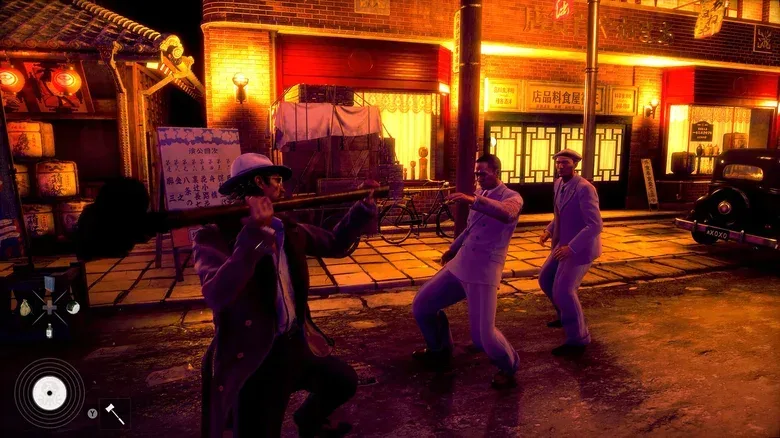
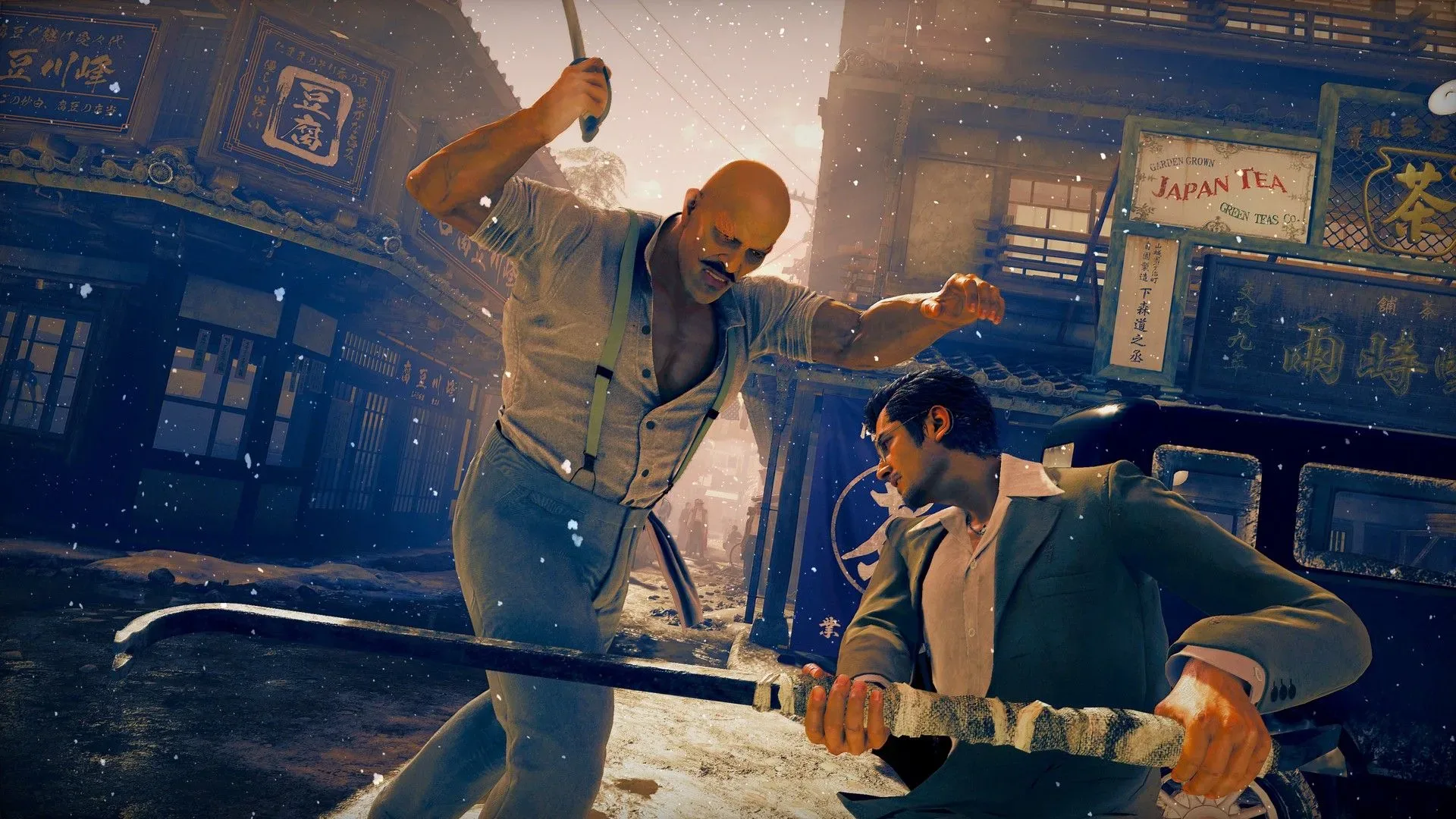
Stranger Than Heaven’s clearest mechanical departure is its combat. Rather than relying on a conventional, relatively accessible beat-’em-up control scheme, it gives Daito’s left and right arms separate inputs. The left shoulder buttons govern light and heavy attacks with the left hand; the right shoulder button handles the corresponding right-handed strikes.
On paper, this sounds like a small controller remap. In practice, it changes how players must think about an exchange. Rather than treating a punch string as a single broad action, the system asks the player to attend to the side of the body delivering each strike. The design reportedly also includes directional blocking, requiring players to alternate left or right defense based on where an attack is coming from.
Directional blocking is a defensive system in which simply holding a general guard is not enough. Players must identify the angle or side of an incoming blow and respond with the matching block. It can make hand-to-hand fights feel more physical and deliberate, but it also raises the execution burden when several enemies are attacking.
The comparison point offered for the control philosophy is souls-style action games, where measured commitment, spacing and defensive timing are often more important than freely mashing an attack button. Stranger Than Heaven is still described as faster and more immediately punchy than that category’s deliberately paced duels, but the key takeaway is the same: the game expects players to learn its systems rather than simply lean on series muscle memory.
This may be an especially notable adjustment for Like a Dragon fans. The franchise has featured many kinds of combat over time, including brawling and turn-based RPG battles, but its moment-to-moment action has generally been easy to read at a basic level even when mastery takes practice. Stranger Than Heaven seems designed to make basic competence itself more demanding.
Why the onboarding matters
Early impressions from a Summer Game Fest 2026 demo found the system difficult to absorb across three stages that offered a sink-or-swim introduction. Later material reportedly included better onboarding and gameplay changes informed by feedback, producing a clearer route into the game’s rhythm.
Onboarding refers to how a game teaches its rules and gradually prepares players to use them under pressure. It can include tutorials, controlled early encounters, practice space, clearer feedback and a sensible sequence of new challenges. For a combat system built around separate limbs and directional defense, effective onboarding is not a minor quality-of-life issue. It is what determines whether the system feels expressive or merely awkward.
The revised approach reportedly made the fighting more rewarding. Weighty punches, pressured attacks and weapon use helped sell the sensation of a scrappy fighter investing real effort in each exchange. However, directional blocking remained difficult during hectic battles. That is an important limitation to keep in view: the same mechanics that can make one-on-one encounters tactile may become hard to parse amid a crowd.
For prospective players, the practical implication is simple. Stranger Than Heaven may be a less natural fit for anyone expecting a breezy action brawler, at least initially. Players willing to spend time with defensive angles, timing and the left/right attack layout may find a more distinctive combat loop; players who mainly value immediate accessibility should pay close attention to how the final game explains and supports its mechanics.
Oddity has not disappeared from the streets
For all the emphasis on seriousness, the game has not apparently abandoned Like a Dragon’s appetite for the bizarre. One optional encounter in Kokura involves entering the wrong alley in the evening and confronting a serial killer. The enemy’s knife work and evasive behavior make the confrontation unusually punishing, to the point that avoidance is presented as a viable response after repeated losses.
That encounter says something useful about the balance RGG Studio appears to be chasing. Stranger Than Heaven is not trying to erase the unexpected side stories that have made the series distinctive. Instead, it seems to place them in a harsher environment. An unsettling alleyway meeting can still be eccentric in premise, but it also reinforces the idea that Daito is moving through a city where danger may be too much for him at a given moment.
The bigger question is whether the full game can reconcile these shifts in tone. A decades-spanning migration and crime narrative, a protagonist facing entrenched prejudice, celebrity appearances, minigames and strange side encounters are each viable ingredients. Combining them requires discipline. The strongest version of Stranger Than Heaven will make its lighter material illuminate the cities and people around Daito rather than repeatedly interrupt a story asking to be treated with gravity.
What to watch as release approaches
- Era-to-era continuity: The five dates provide the game’s defining structure. How the towns, culture and technology change between them will be central to selling the passage of time.
- Daito’s agency: His outsider perspective is powerful, but the narrative will need to ensure he remains a fully realized driver of events rather than only a recipient of abuse and historical pressure.
- Combat clarity in groups: The four-limb control concept is intriguing; its success will depend heavily on readable enemy attacks and fair tools for crowd encounters.
- Tonal control: The series’ humor is a strength, not an automatic problem. The question is whether the placement of comic and celebrity-driven moments serves the story’s more serious ambitions.
Stranger Than Heaven is taking on a more difficult task than merely placing Like a Dragon’s familiar energy in an earlier historical period. Its premise asks the player to inhabit a protagonist whose relationship to Japan is emotionally and socially complicated, while its combat asks for a higher degree of mechanical attention. If those two elements support each other, the game could stand apart as a personal crime epic rather than simply another franchise detour.