RGG Studio’s Stranger Than Heaven is shaping up to be a notably different kind of street fighter from the team’s familiar Like a Dragon lineage. The historical action game, due January 15, 2027, is being built around fights that ask players to pay attention, react to threats, and use each side of their character’s body with intention. In other words: this may not be the sort of brawler where confident button tapping turns a crowded alley into a leisurely walking tour.
That is an especially striking direction from a studio whose games have often delighted players with powerful protagonists, extravagant Heat Actions, and enemies who occasionally seem to have volunteered to be launched through nearby furniture. Stranger Than Heaven does not abandon the appeal of raw, close-range violence, but its early combat structure suggests a tougher and less forgiving rhythm. Enemies can surround the player, weapons demand serious defensive responses, and an opponent with a knife can end a fight rapidly if the player gets careless.
The game is being developed by RGG Studio and published by Sega for PC, PlayStation 5, and Xbox Series X. Its setting spans several points in Japanese history, and a Gamescom 2026 demonstration showed action sequences set in 1915 Kokura, 1929 Kure, and 1943 Osaka. Those three segments were arranged as easy, normal, and hard encounters respectively, providing a compact illustration of how the game intends to increase pressure.
Combat built around left and right
Producer Hiroyuki Sakamoto described the goal plainly: the team wanted combat that feels more intuitive and rough than the systems associated with Yakuza and Like a Dragon. He contrasted that intent with the possibility of overcoming some earlier encounters simply by continuing to press buttons. Stranger Than Heaven instead wants the player to feel actively involved in every exchange.
The key is a control layout based on the character’s left and right sides. On an Xbox controller, LB and LT govern actions from the left arm, while RB and RT correspond to the right. Blocking can be performed with one arm by combining the B button with either LB or RB. Using B with both side inputs produces a two-armed guard.
It sounds simple when laid out in controller shorthand, but the consequence is larger than a new button map. Players are meant to establish a physical rhythm: lead with one side, defend on the appropriate side, recognize openings, then respond with punches or a grapple. It is a brawling framework that seems designed to make a fight feel less like issuing a general request for violence and more like navigating a dangerous argument at arm’s length.
“But this time we wanted to make it more intuitive and more rough,” Sakamoto said of the combat direction.
That two-sided emphasis could be particularly meaningful when opponents carry weapons. A one-armed defensive choice may be useful against an immediate attack, while a two-armed block offers greater protection at the likely cost of commitment and positioning. Stranger Than Heaven’s fights, at least in the demonstrated material, appear to be asking players to read an enemy’s stance and momentum rather than treating every threat as interchangeable.
Related coverage includes Stranger Than Heaven's Combat Pushes RGG Studio Toward Tougher, Two-Sided Street Fights.
Three cities, three levels of pressure
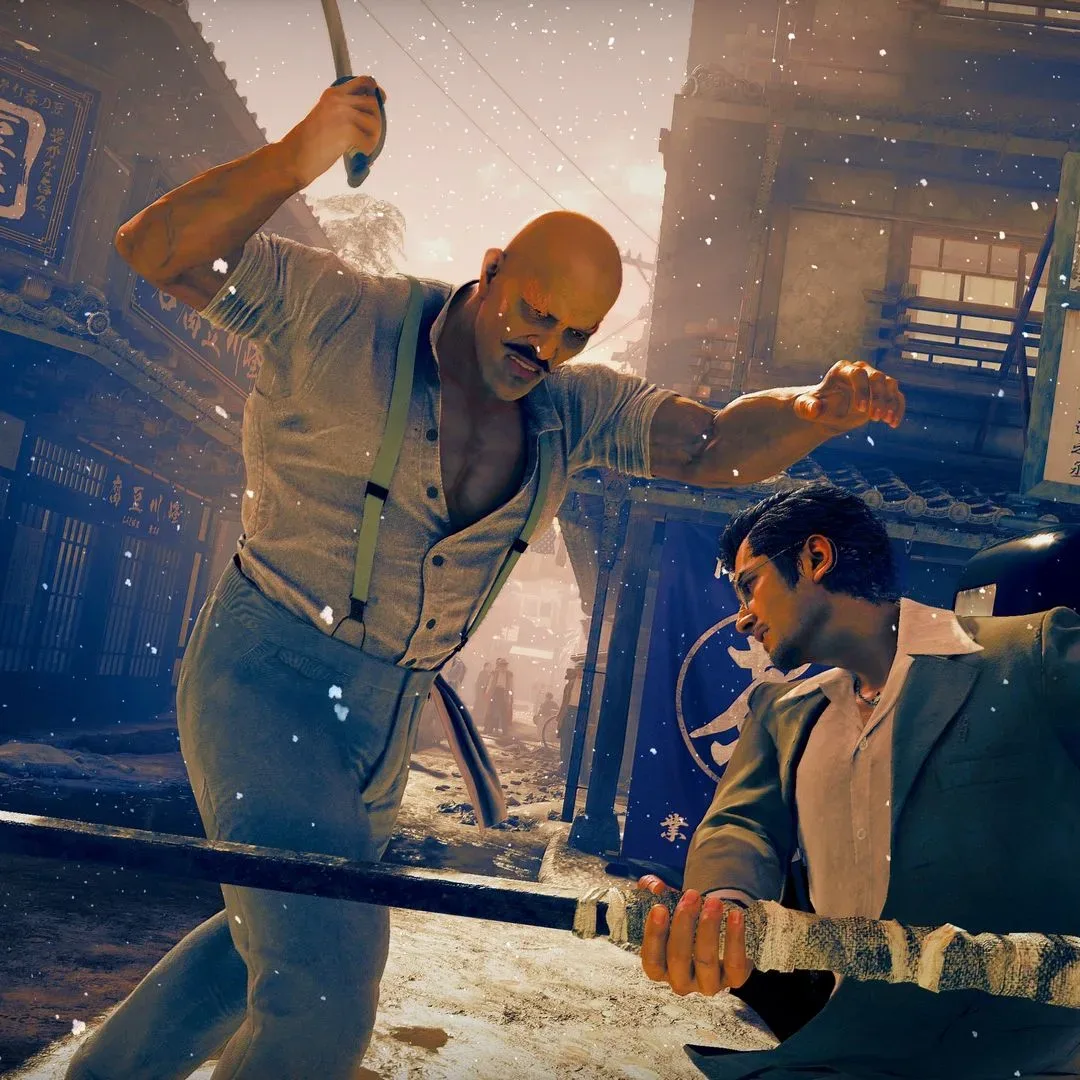
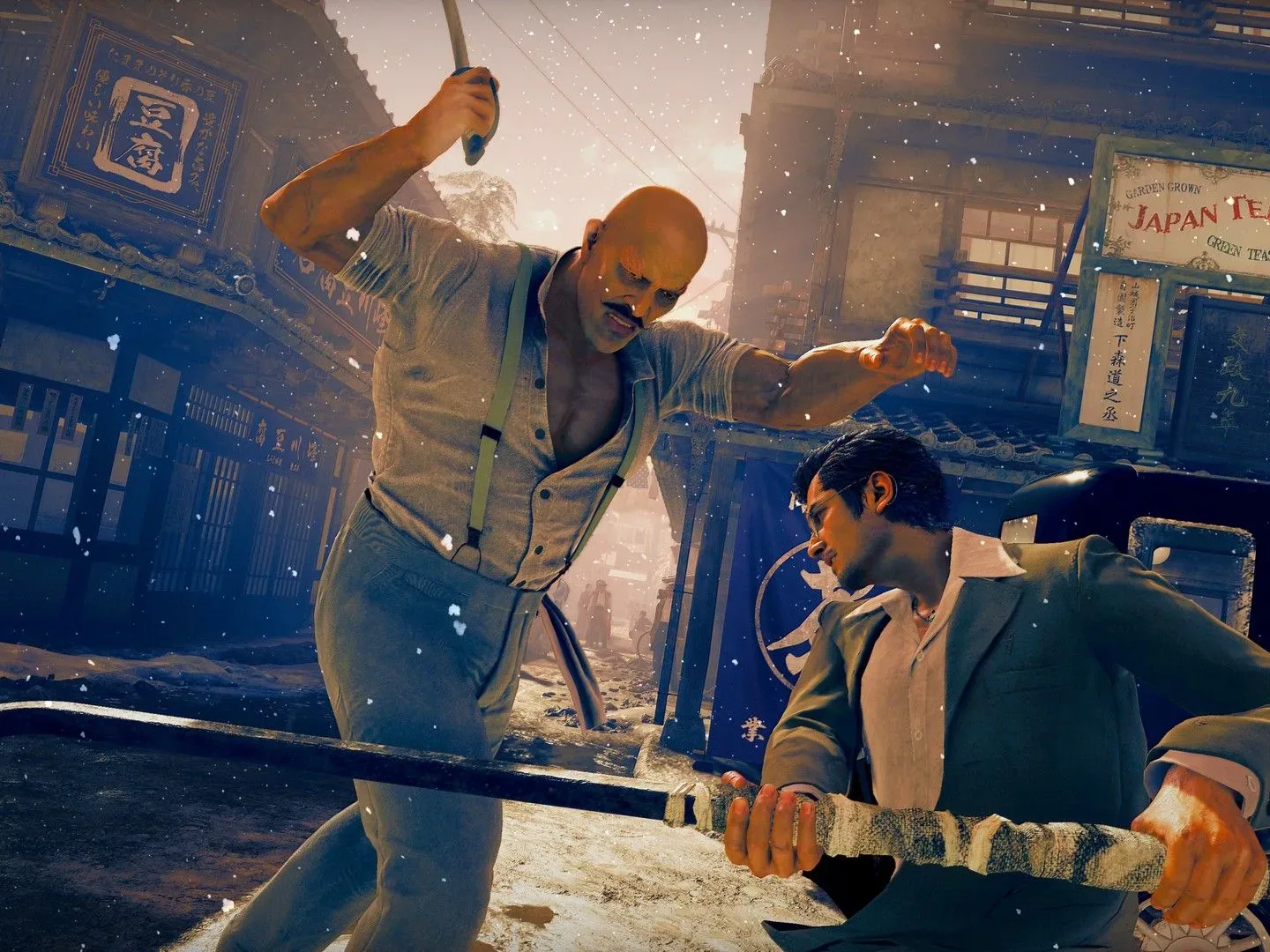
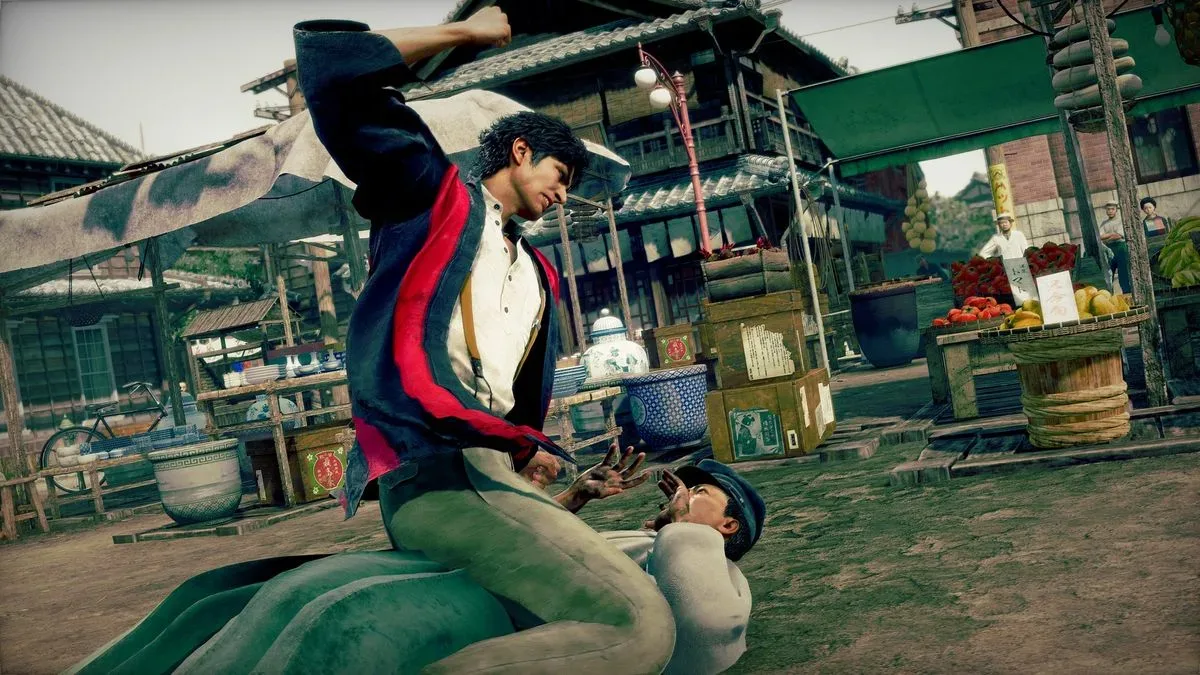
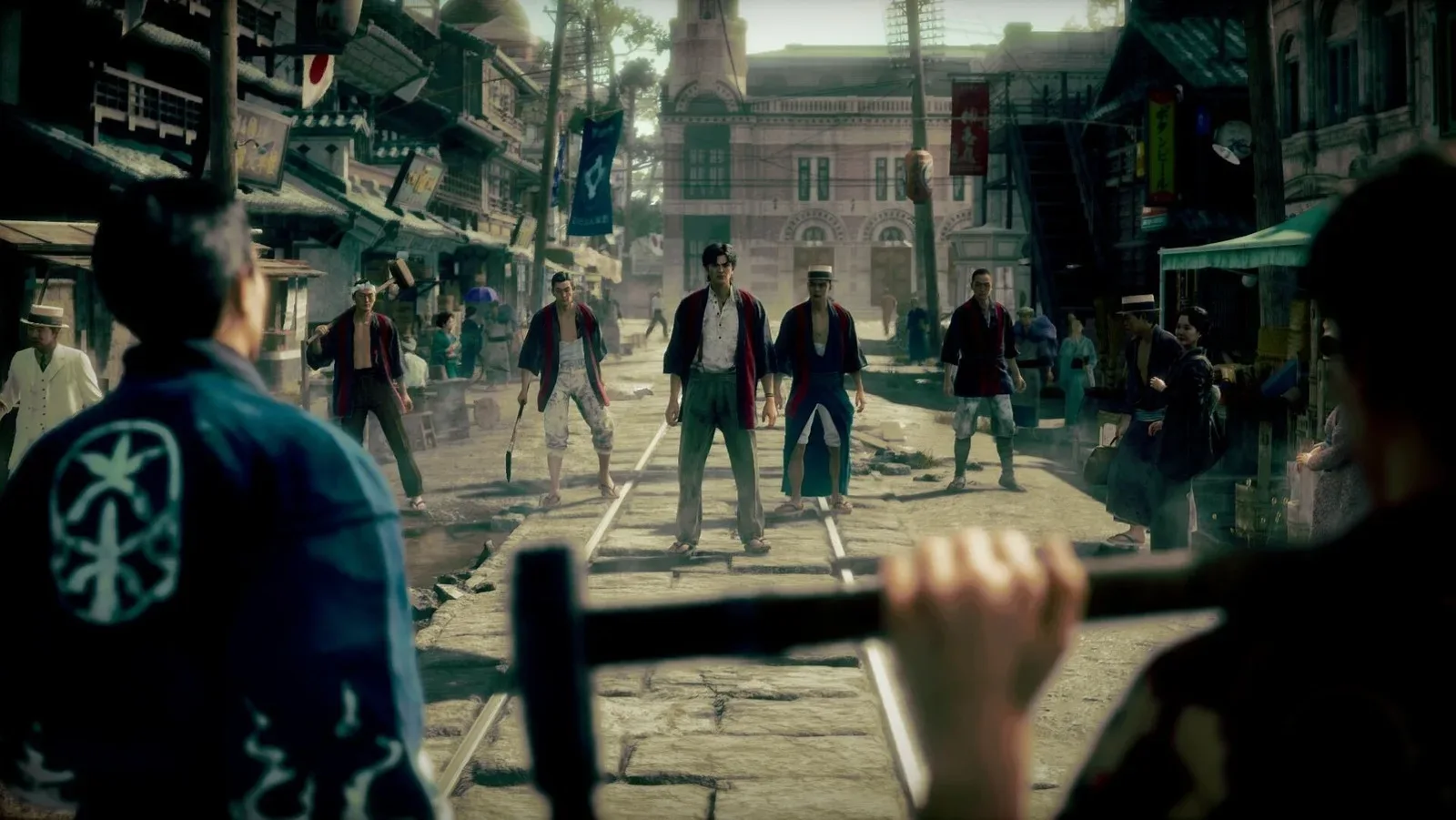
The 1915 Kokura section served as the entry point. A brief walk through the street leads to a small cluster of opponents, making it a natural place to understand punches, blocks, and the game’s basic cadence. It was presented as the easy portion of the demo, not a claim that the entire period setting will be easy on the player. Even so, beginning with manageable groups makes sense for a combat system that asks players to develop a new sense of left-right coordination.
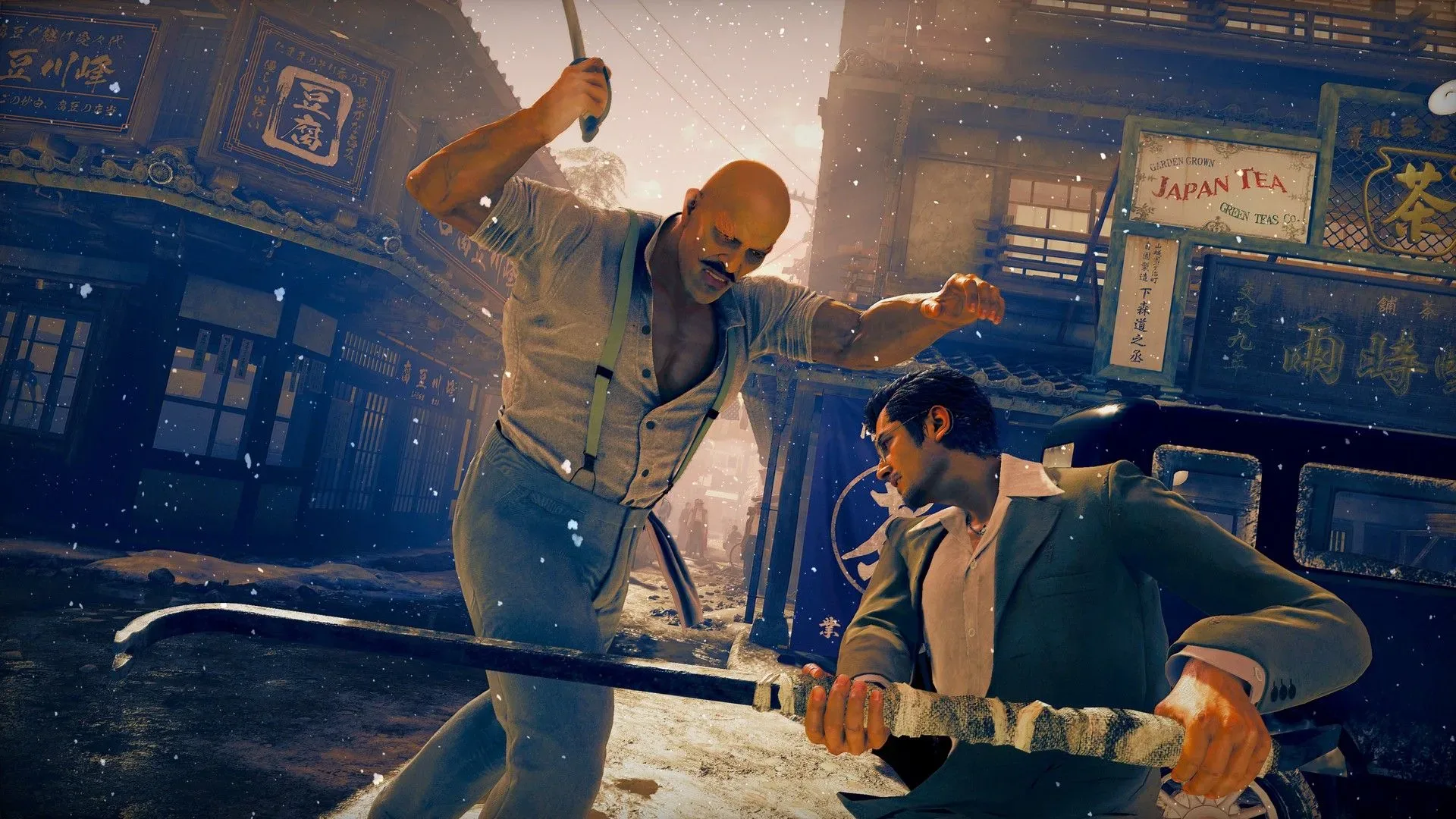
The 1929 Kure segment raised the temperature. The gang encountered there behaves more intelligently, attempting to form a circle around the player rather than politely lining up for a cinematic beating. A taller mini-boss also joins the opposition. Encirclement is an old problem in brawlers, but it becomes more urgent in a system where defensive decisions are tied to particular sides of the body. Letting enemies dictate angles could make the difference between a controlled exchange and an emergency composed largely of elbows.
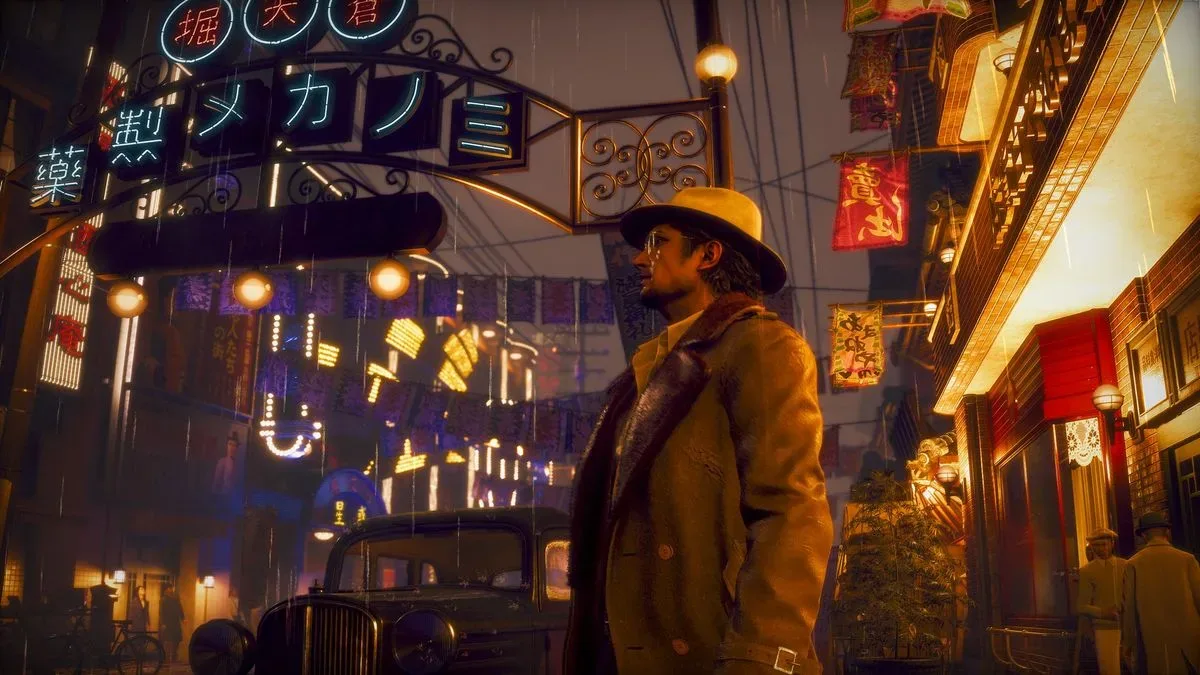
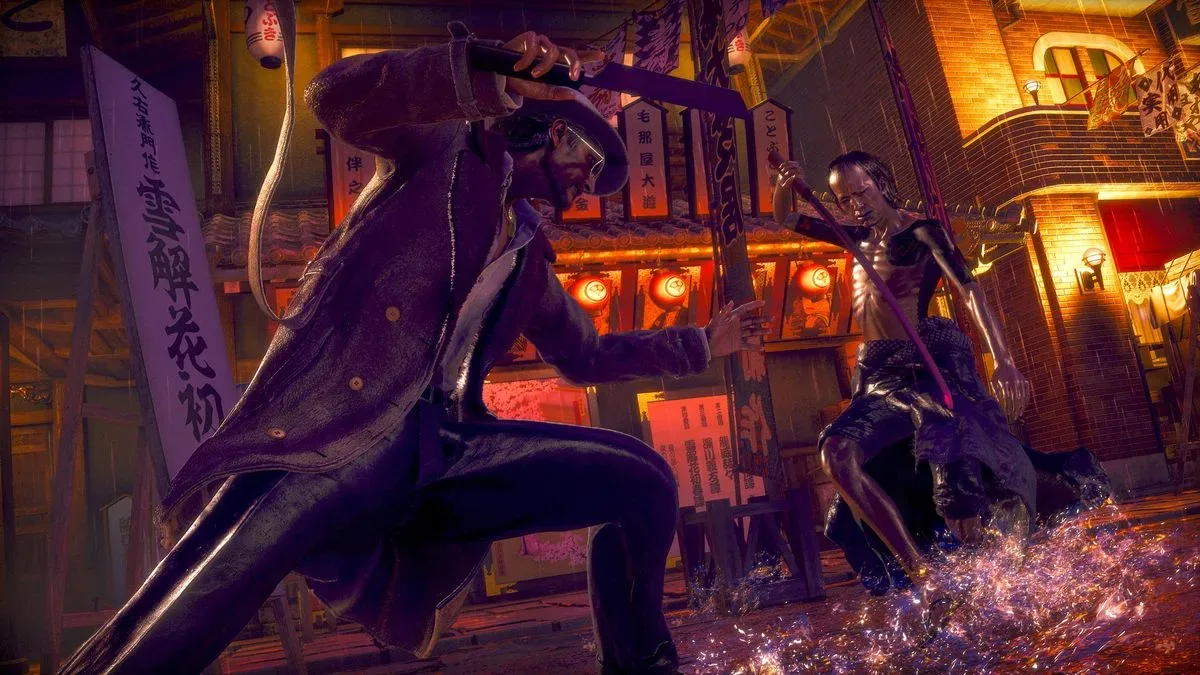
Then comes 1943 Osaka, identified as the hard slice. This is where the demo makes its clearest case that Stranger Than Heaven wants its combat to carry genuine menace. The Osaka encounter includes a knife-wielding enemy capable of killing the player quickly. Timed blocking can blunt the danger and help close distance, but the foe can change stance and suddenly lunge forward with alarming speed. The lesson is not merely that knives hurt—a lesson most people have wisely learned away from gamepads—but that an opponent can alter the pace of a duel and punish a player who assumes a previous pattern will repeat.
Against that foe, defensive timing becomes an avenue for offense. Blocking helps create the proximity needed for hooks and grabs, while using both hands enables a forceful grapple-and-strike response. The showcased confrontation is also notably bloody, reinforcing the “rough” quality Sakamoto identified. Stranger Than Heaven appears interested in weight, impact, and brutality rather than simply delivering a flashy chain of cleanly animated knockdowns.
A different fantasy from being untouchable
There is an important tonal shift in the idea of feeling outmatched. RGG Studio has spent years refining games where players can become extraordinarily capable, whether through stats, equipment, party systems, or a hero’s sheer refusal to stay down. That power fantasy remains valuable, and it is part of why the studio’s catalogue has such a devoted following. But Stranger Than Heaven’s early fights seem to locate drama in vulnerability: a few hostile bodies in a grimy street, a large opponent with a blunt weapon, and a knife fighter whose next move cannot be dismissed.
That does not necessarily mean Stranger Than Heaven will be a punishing action game throughout. A short event demo cannot settle questions about progression, accessibility options, encounter variety, upgrades, or the broader structure of the adventure. It does, however, establish an early design priority. The player is expected to look at the opponent, understand what side is threatened, choose a defense, and make an opening rather than wait for one to appear out of generosity.
Its multiple time periods may also give the game room to change the texture of combat beyond the difficulty labels seen in the demo. Kokura in 1915, Kure in 1929, and Osaka in 1943 are substantial historical distances apart. The demonstration confirms those settings and their individual encounter tiers, but it does not yet explain how stories, characters, or combat systems will connect across them. That uncertainty is part of the intrigue. A studio known for dense urban spaces and memorable side stories is taking its brawling instincts into a broader historical canvas, while making fists feel less automatic.
Why the control idea matters
Many action games build depth around broad categories: light attack, heavy attack, dodge, parry, special move. Stranger Than Heaven’s left-and-right controls instead bring attention to the body itself. This approach has the potential to make even a basic jab or guard feel more deliberate, because the player is not only selecting a defensive action but selecting how their character physically meets the incoming threat.
It also gives the studio a route to make repetition less dominant without turning every encounter into a complex command-list exam. A player can learn the core inputs quickly, but positioning, timing, weapon threats, and changing enemy behavior create the tension. The stated aim of an intuitive system fits here: the controls can become natural through use, while the circumstances surrounding them remain messy, violent, and unpredictable.
For players following games that use historical places as more than scenery, there is a related recent curiosity in 1666: Amsterdam’s early-access historical sandbox. Stranger Than Heaven is pursuing a very different genre and era, but both point toward the enduring appeal of navigating a past that is dense, unstable, and anything but a museum display.
Stranger Than Heaven launches on January 15, 2027, for PC, PS5, and Xbox Series X. Until then, the available demonstration leaves a clear impression: RGG Studio wants players to keep their eyes open, their guard up, and both arms ready. The days of treating every street scuffle like a carefree button-mashing commute may be numbered.