Retro gaming has a screen problem, and it is one of those problems that can turn a perfectly good Saturday afternoon into a cabinet of cables, converters, menus and mild existential dread. Original CRT televisions remain the benchmark for many players because they were the displays their old hardware was designed around. They handle classic low-resolution signals in a way that feels immediately familiar, from motion and scanlines to the natural shape of a 4:3 image.
But CRTs are bulky, ageing, increasingly difficult to move, and not exactly ideal for anyone whose living space is already being conquered by plastic cartridges and controller bins. Modern televisions solve the size and convenience issue, although they can introduce their own complications when an older console needs an unfamiliar input or looks awkward when stretched across a widescreen panel.
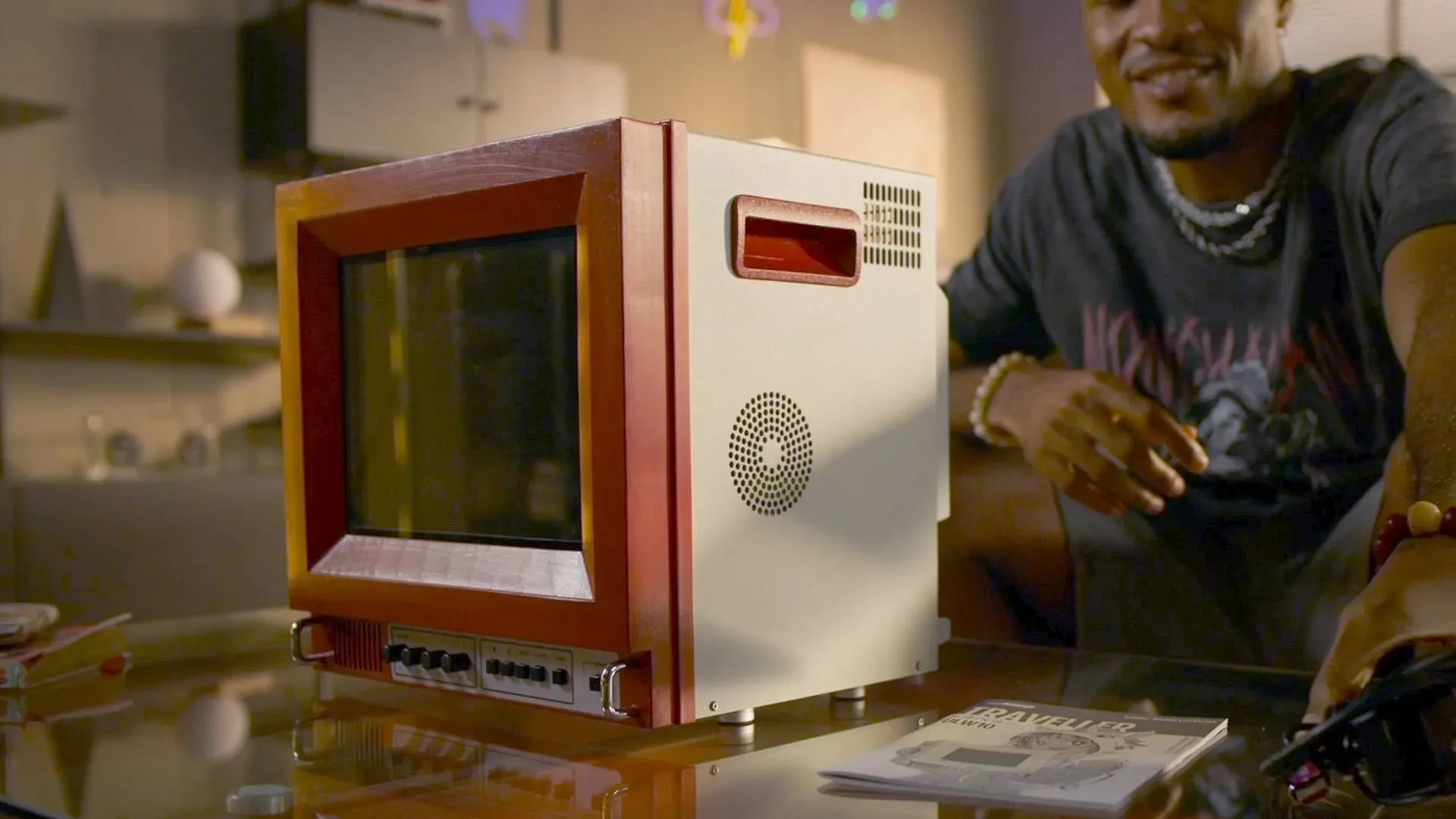
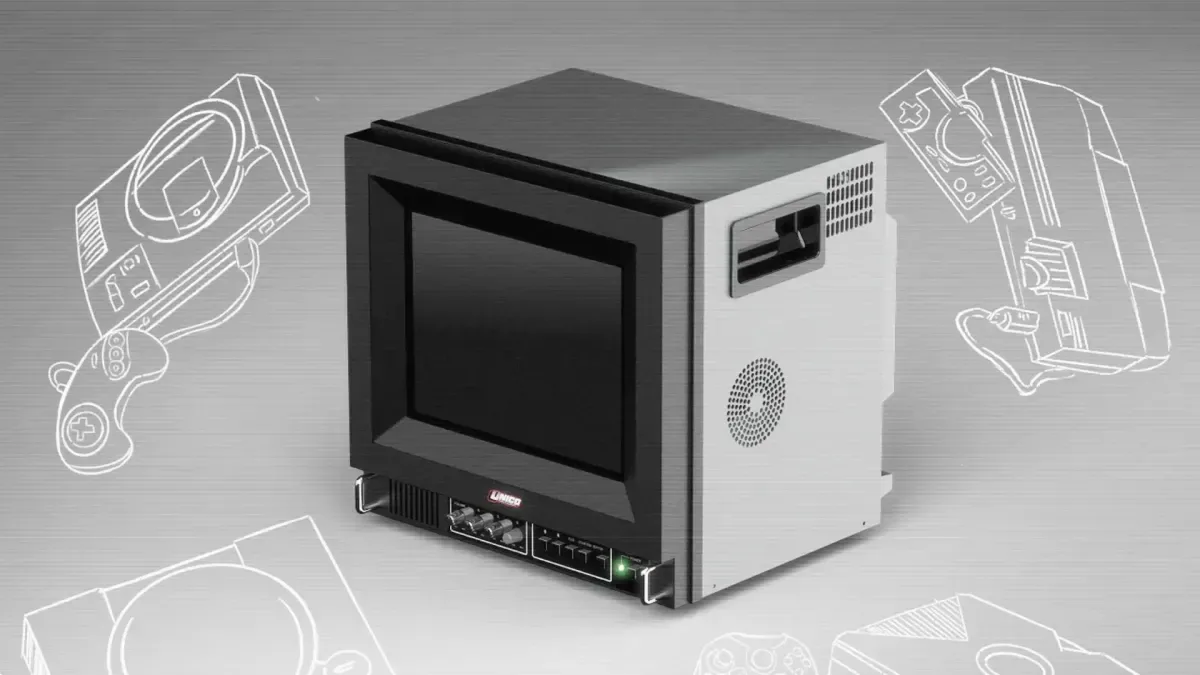
Unico’s newly revealed TRAVELLER•ULW10 is aimed at the territory between those two worlds. It is a modern LCD monitor built around a retro-inspired 4:3 presentation, with support for legacy-oriented RGB and VGA connections as well as HDMI for newer hardware. The company is planning to bring the ULW10 to Kickstarter soon, though a specific campaign date, price, detailed display specifications and a confirmed delivery timetable have not been provided.
A modern monitor that does not pretend the past never happened
The headline feature is not a radical new panel technology or an attempt to declare LCD the replacement for a beloved tube television. Rather, the ULW10’s pitch is about the shape of the experience. A 4:3 monitor gives games made for standard-definition-era televisions the proportions they expected, without forcing black bars into an ultrawide setup or tempting someone to hit the cursed “stretch” option on a modern TV.
That matters across a tremendous portion of console history. Systems from the NES and Mega Drive/Genesis through the PlayStation, Saturn, Nintendo 64, Dreamcast and earlier home-computer ecosystems were commonly played in 4:3. The correct aspect ratio does not magically add pixels or recreate every characteristic of a CRT, but it does preserve the intended geometry of sprites, backgrounds, character portraits and pre-rendered cutscenes.
Unico has equipped the TRAVELLER•ULW10 with RGB and VGA inputs, which places older hardware at the center of its identity. RGB is significant to retro enthusiasts because it is commonly pursued as a high-quality analogue output format for compatible consoles and modified systems. VGA also has a long association with computers, arcade-oriented hardware and some sixth-generation console setups. HDMI is included too, opening the door to modern systems and devices that output digitally.
Those connection names are promising, but prospective backers should resist filling in the missing technical details themselves. The available information does not establish the monitor’s native resolution, refresh behavior, input lag, internal scaling options, supported signal formats, audio arrangement, panel type, brightness, or how it processes specific 240p and 480i signals. Those are not small footnotes for this category; they can decide whether a display is a flexible all-in-one companion or a handsome object that still needs extra hardware to behave as desired.
Portable in a way old televisions absolutely were not
The other part of the ULW10 concept is physical convenience. Unico says the display is light enough to carry around easily and includes a storage compartment at the rear for a console. That suggests a compact, self-contained station rather than a monitor that lives permanently on a desk surrounded by a nest of adapters.
For players who take a small console to a friend’s house, set up a temporary game corner, attend local retro gatherings, or simply want the ability to pack a setup away, that approach has obvious appeal. The rear compartment may also make the arrangement visually tidier, although the practical fit will naturally vary by console dimensions, cable routing and power requirements. No compatibility list or measurements for that storage area have been specified so far.
It is worth emphasizing that portability is not the same thing as universal simplicity. Old consoles use a remarkable variety of video outputs, power supplies and regional standards. A monitor having RGB, VGA and HDMI does not by itself tell us which cables are included, what adapters may be required, or whether a particular unmodified console will connect directly. Before committing to any display or converter, players should identify the output on the exact console they own, the signal it produces and the input they intend to use. Our retro console HDMI adapter connection checklist is a useful starting point for untangling that chain.
Not a CRT replacement—and perhaps wisely so
Unico is not framing the TRAVELLER•ULW10 as the conventional monitor to beat. Its stated goal is to offer an experience that ordinary monitors do not. That is a sensible distinction, because the most dedicated CRT fans are not merely buying a 4:3 rectangle. They are seeking a particular combination of analogue behavior, motion rendering, scanline structure, display latency and period-correct character.
An LCD can make a strong case on different grounds: lower weight, easier placement, potentially cleaner integration with contemporary HDMI devices, and a less intimidating ownership burden than transporting a decades-old television with an unknown service history. The ULW10 appears to be pursuing that compromise explicitly. It is for someone who values an old-school form factor and older connections, but does not necessarily want a fragile tube set to become the heaviest member of the household.
That positioning could also make it appealing beyond strictly retro use. A 4:3 monitor with HDMI can be useful for enthusiasts who want a dedicated display for appropriately framed modern releases, small-form-factor PCs or video devices. Still, its strongest identity is clearly tied to older gaming setups, and the final case will rest on performance information that has yet to be shared.
The questions Kickstarter backers should ask
Crowdfunding can be a helpful route for niche hardware, especially when the audience is specific enough that mass-market display companies are unlikely to make a similar product. It also requires prospective supporters to evaluate a concept before retail-style certainty exists. The ULW10 is not yet a finished, independently documented retail monitor, so interested players should look for fuller technical and campaign details once the Kickstarter page is live.
- Signal support: Which resolutions and refresh rates are accepted over RGB, VGA and HDMI?
- Retro handling: How are 240p, 480i and other common legacy signals treated?
- Responsiveness: Is input latency measured and disclosed?
- Scaling controls: Are there aspect-ratio, sharpness, scanline or integer-scaling options?
- Connections and cables: What ports are physically present, and what cables or adapters are supplied?
- Audio and power: Are speakers, headphone output, external power bricks or battery operation part of the design?
- Storage practicality: What are the dimensions and weight limits for the rear console compartment?
- Campaign terms: What are the final cost, shipping regions, production schedule and refund policies?
None of these questions is a dismissal of the idea. They are the normal checklist for a product intended to sit between highly particular old hardware and modern display expectations. Retro players are accustomed to solving signal puzzles, but they should not have to solve them only after backing a project.
Presentation is part of the product story
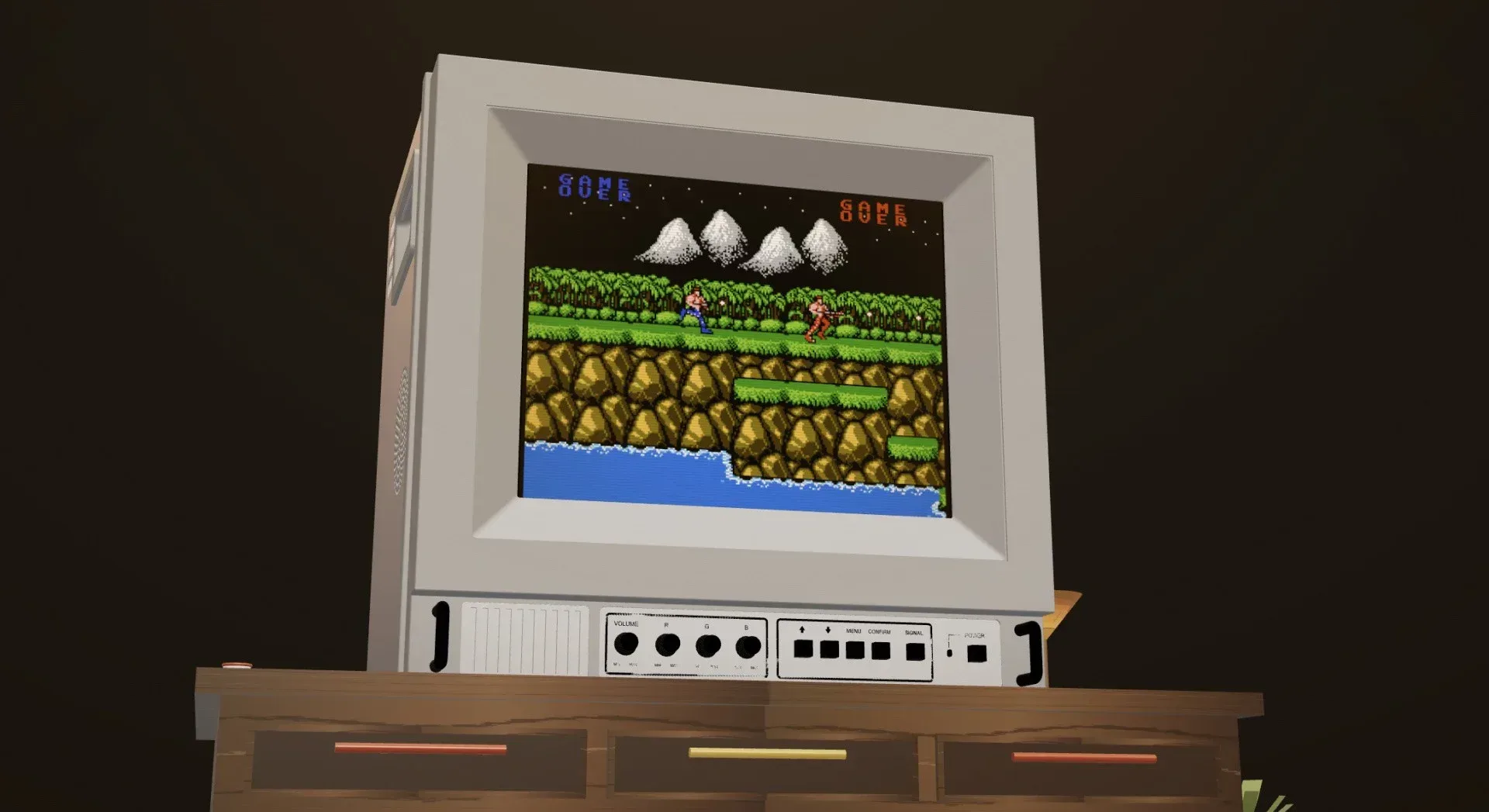
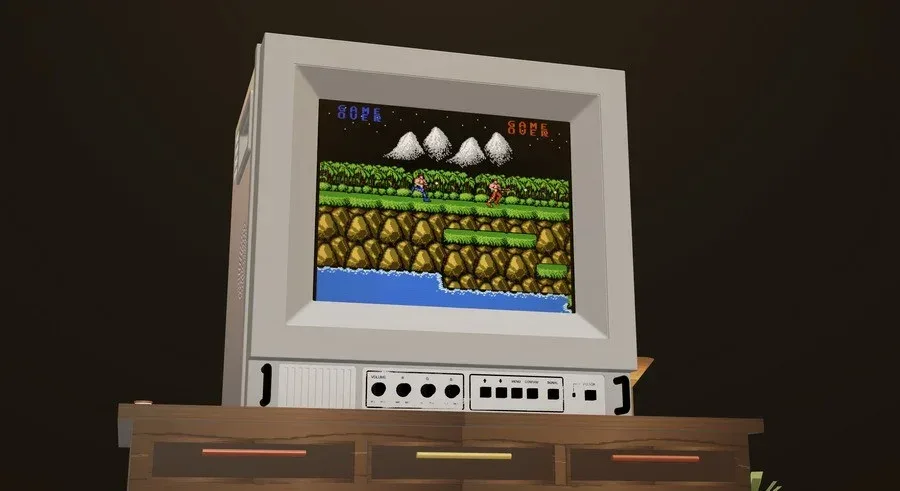
There is one awkward wrinkle in the initial promotion: some of the lifestyle imagery used for the ULW10 appears to be generative AI imagery. That choice is unlikely to inspire confidence among potential buyers who want to see exactly how a physical hardware product looks and functions in real environments.
For an item selling itself partly on design, portability and a rear-mounted storage arrangement, clear photography and detailed demonstrations would be far more useful than stylized promotional scenes. Future campaign materials will ideally answer the practical questions: what a console looks like in the compartment, how cables are managed, how the monitor sits on a surface, and what the actual inputs and menus look like. Those are the details that help enthusiasts judge the product rather than merely admire a concept render’s vibes.
The TRAVELLER•ULW10 therefore arrives as an intriguing but still incomplete proposition. Its 4:3 format, RGB and VGA support, HDMI input and portable console-storage design identify a real niche between unwieldy CRT ownership and generic modern screens. Whether it earns a place in a retro setup will depend on the specifications, evidence of video performance and crowdfunding details Unico reveals when the Kickstarter campaign opens.