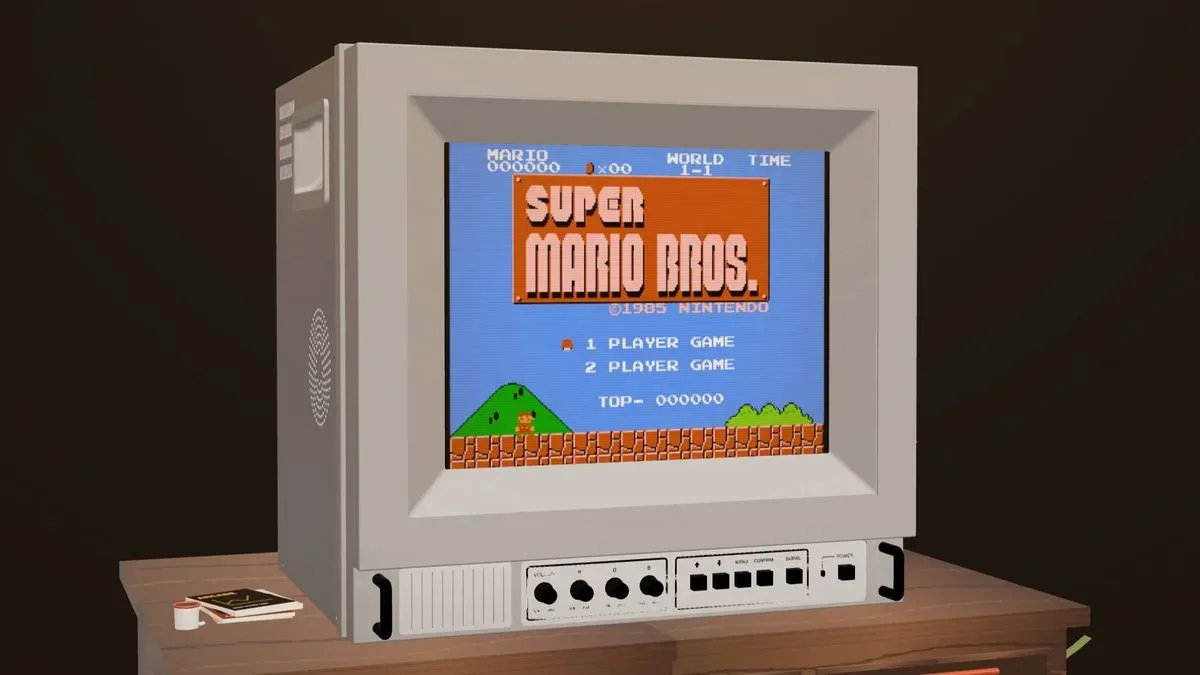
Old CRT televisions have become one of retro gaming’s least convenient necessities. They are bulky, aging, increasingly scarce, and occasionally possessed by the ghost of a remote control nobody can find. Yet for players who care about original consoles, they remain appealing for very practical reasons: low latency, friendly handling of classic video signals, period-correct motion, and an image character that modern flat panels do not automatically reproduce.
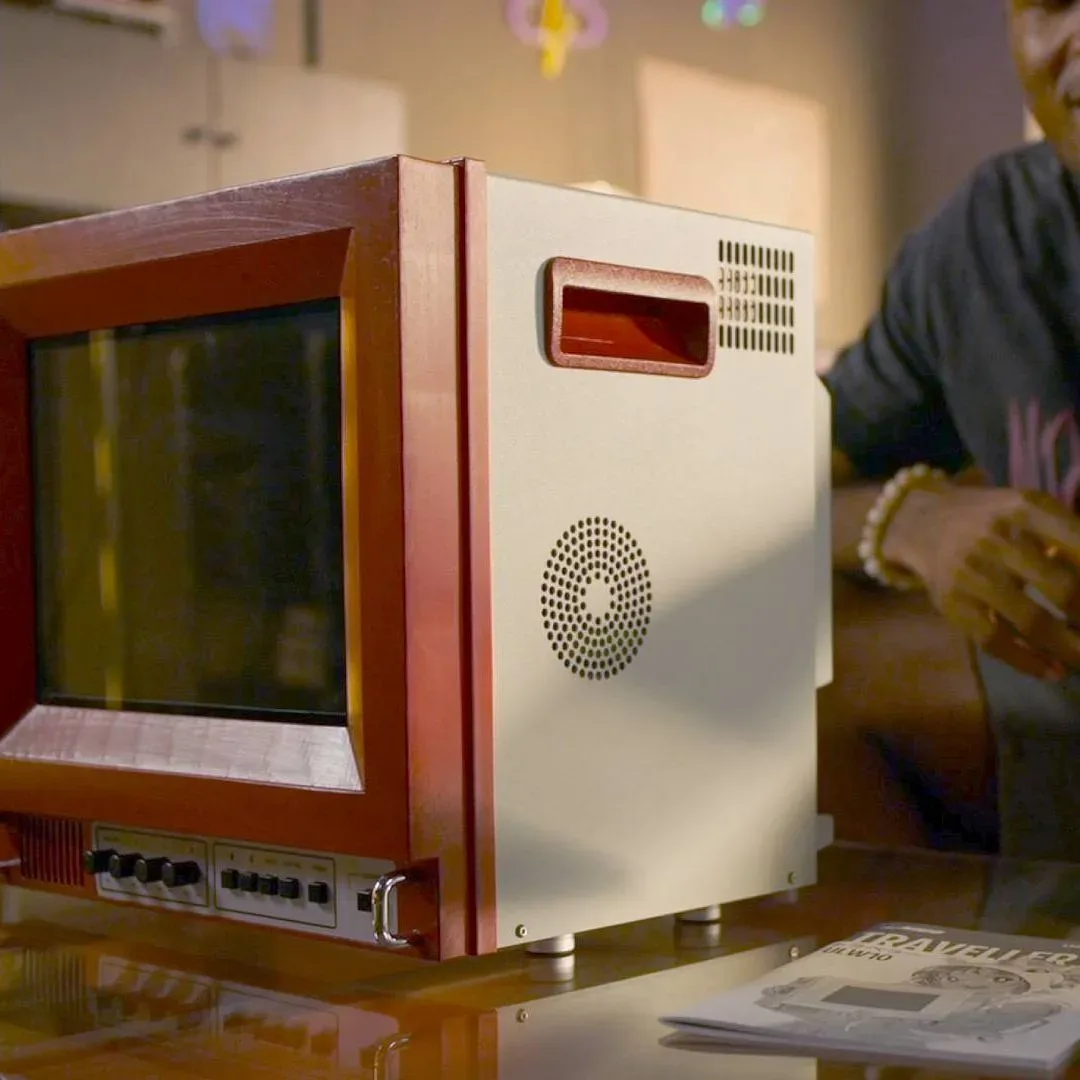
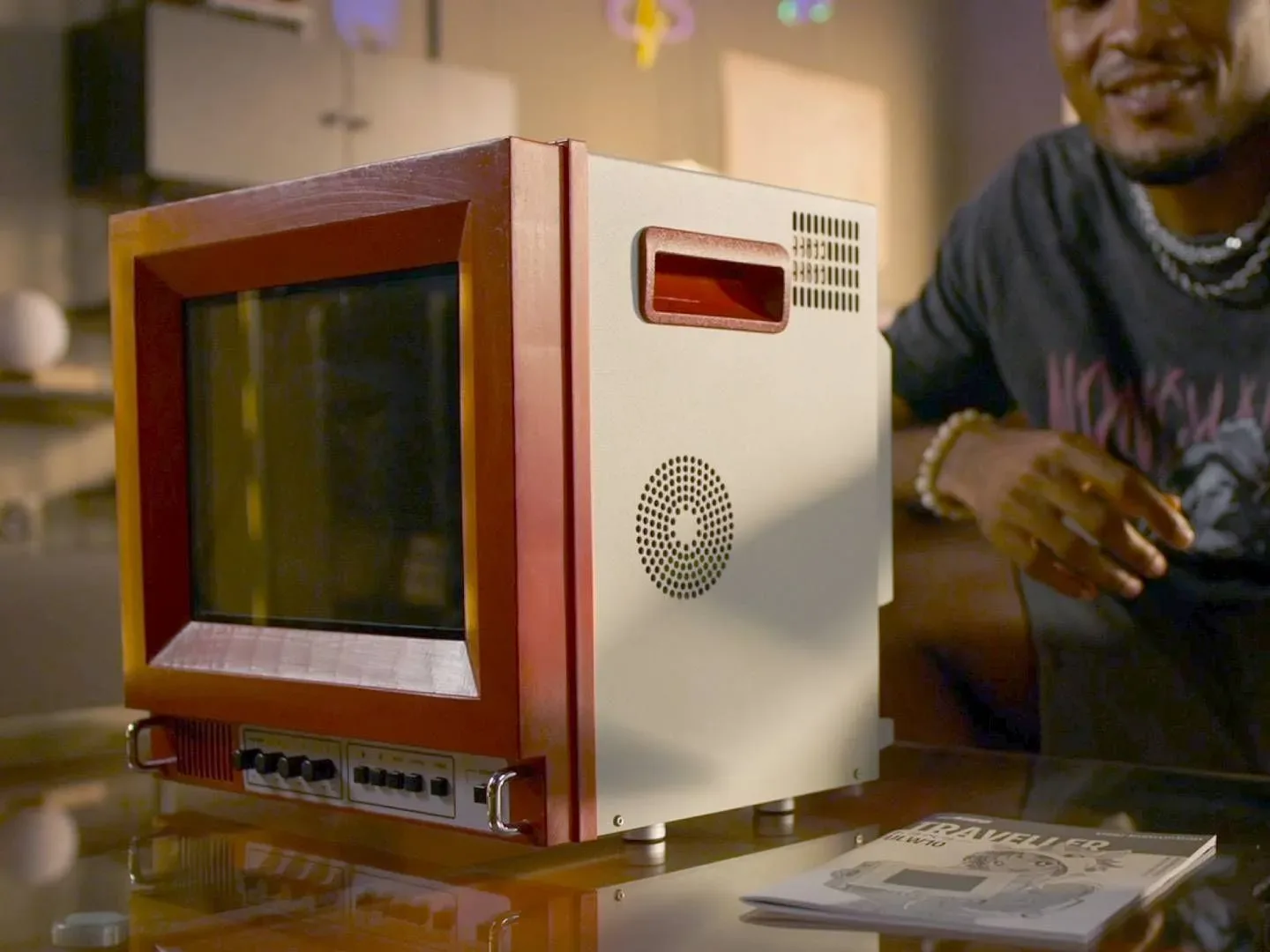
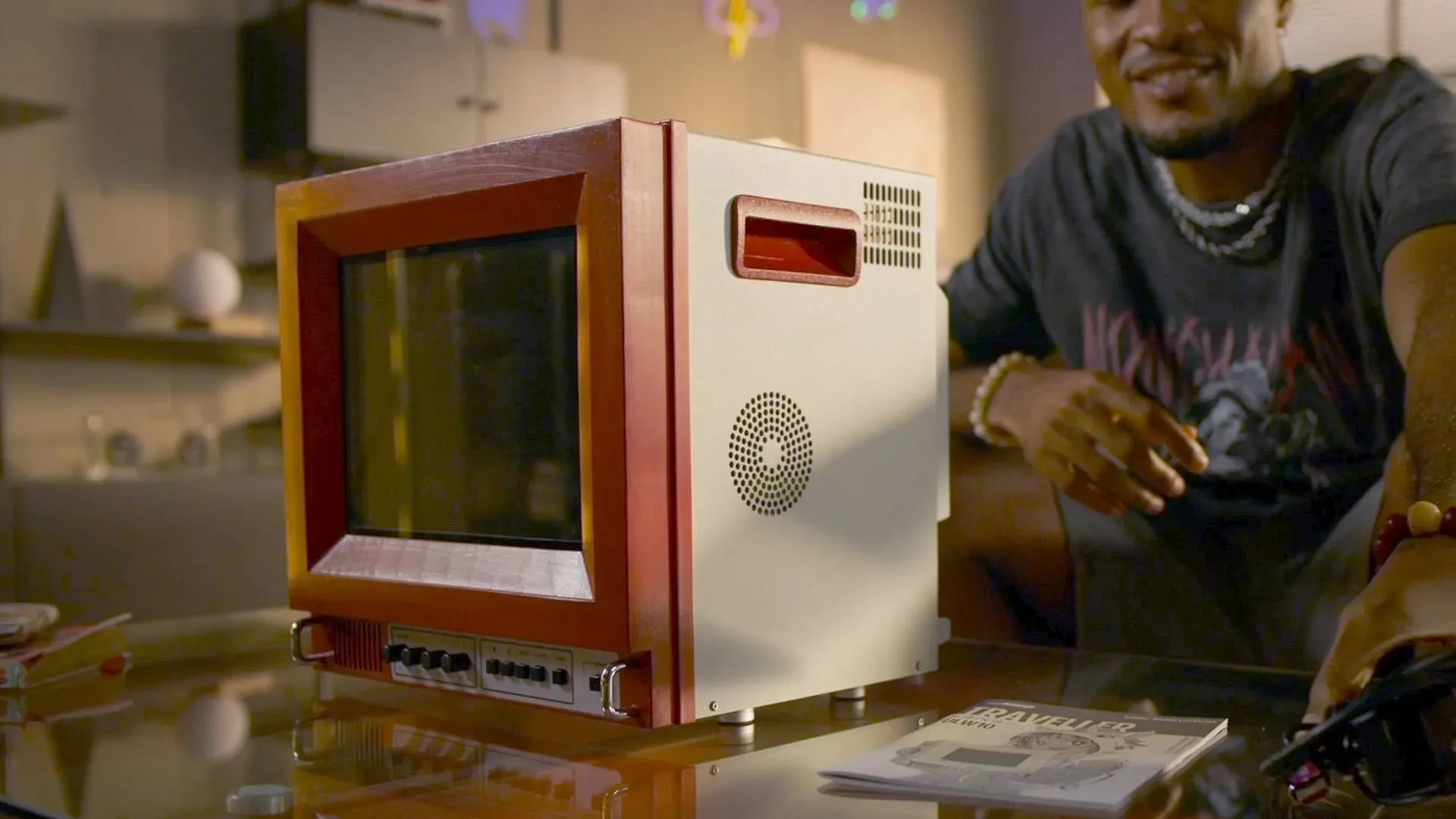
That creates an obvious opening for a new display that can serve old hardware without requiring someone to rescue a 90-pound tube television from a curbside disaster. Unico’s TRAVELLER-ULW10 is entering that gap with a familiar look: a compact screen enclosure that strongly evokes the sought-after Sony Trinitron PVM aesthetic. It is not, however, a newly manufactured CRT. The product is presented as a 10-inch 4:3 LCD display designed around retro-console use.
That distinction matters much more than the shell. A 4:3 screen and a chunky monitor-inspired case may look right beside an NES, Nintendo 64, Sega Genesis, or PlayStation, but retro gaming’s display problems do not disappear because a modern LCD puts on a convincing little plastic costume.
A retro-shaped LCD is not automatically a retro-ready display
The TRAVELLER-ULW10’s pitch is understandable. Many classic systems were built around 4:3 televisions, while today’s living-room screens are almost universally widescreen. A small 4:3 display can therefore be a more natural physical match for older games than a giant 16:9 television with black bars on the sides. The unit also appears intended to simplify cable management and provide a dedicated spot for legacy machines, rather than forcing players to negotiate with a modern TV that has never heard of composite video.
But display shape is only one piece of the puzzle. A CRT’s behavior was shaped by its analog technology. Classic consoles frequently output unusual resolutions and timings, including 240p, that modern flat panels may misread, reject, or process poorly. The conversion from an analog signal to an LCD image can introduce delay, awkward scaling, shimmering edges, deinterlacing trouble, and visual artifacts. A screen built for retro games has to address those technical issues deliberately.
That is why the unanswered questions surrounding the TRAVELLER-ULW10 are more important than its visual resemblance to a PVM. The available promotional material does not clearly explain the display’s resolution, refresh behavior, signal-processing hardware, scaling method, input lag, supported formats, or the main board doing the work. Without those details, there is no clear way to tell whether it is a carefully tuned retro display or simply a conventional LCD paired with a selection of ports.
A convincing retro setup needs more than a 4:3 rectangle. It needs a clear answer to what happens to the signal between the console cable and the pixels.
The listed connections are promising, but they need context
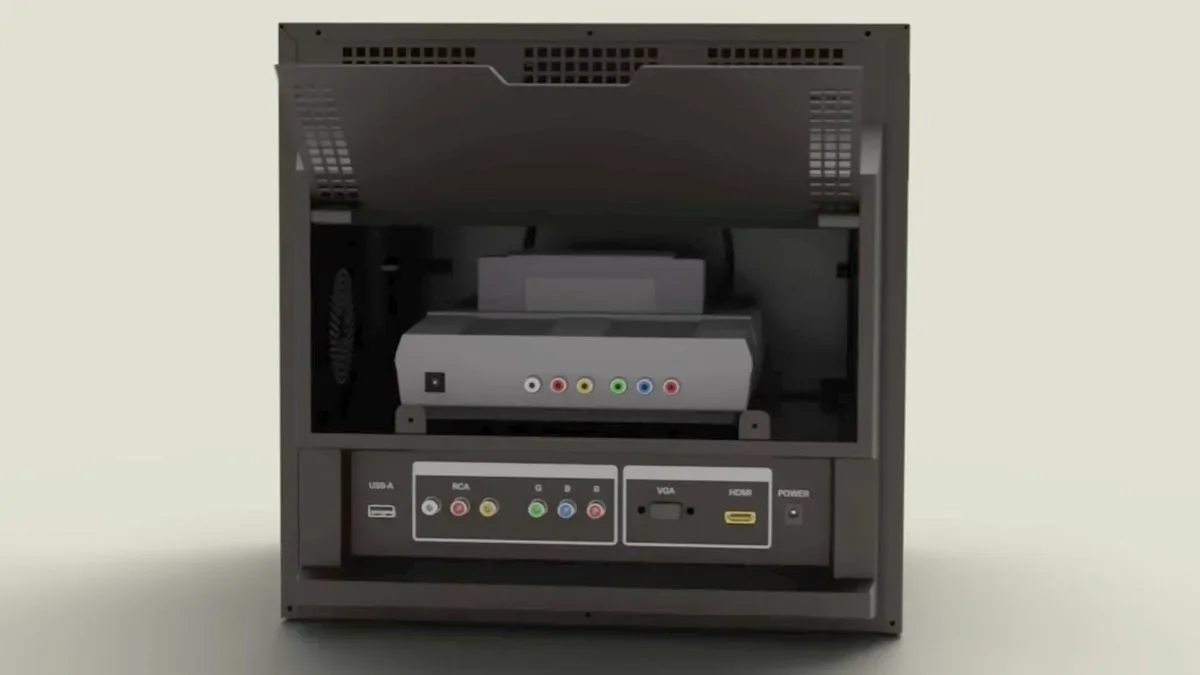
Unico has indicated that the TRAVELLER-ULW10 will include RGB and VGA inputs, along with HDMI. On paper, that is a more interesting selection than what most mainstream televisions offer. HDMI gives the unit an obvious role with newer hardware, while RGB and VGA suggest a possible path for older consoles and arcade-oriented equipment.
Still, the names on the ports do not tell the entire story. RGB can refer to several different signal arrangements, and a retro player needs to know exactly which are supported. Sync compatibility, cable type, supported resolutions, and whether a signal needs separate conversion hardware are all relevant. VGA may be useful for certain consoles, PCs, and devices, but its presence alone does not establish how the unit treats low-resolution 240p content.
Composite-video-only systems are another major complication. The NES and Nintendo 64 are especially relevant examples, as many standard setups for those consoles begin with composite video. If the TRAVELLER-ULW10 does not accept composite directly, prospective buyers would need to factor in an external converter or a modded console. If it does accept composite, prospective buyers need to know how that signal is converted and whether the results are clean, stable, and responsive.
The image labeling seen in promotional material has also raised a small but telling clarity issue: one label reportedly reads “GBR” rather than RGB. A typo is not proof that the hardware is poor, and nobody should pretend otherwise. But when a new retro-focused display is asking enthusiasts to trust its compatibility, accuracy in basic technical presentation helps build confidence.
Before buying any device that promises to bridge old machines and new display tech, it is worth taking the less glamorous but much safer route of mapping every connection from console to screen. Our retro console HDMI adapter checklist covers the questions that should come before adding an adapter, scaler, or attractive mystery box to the setup.
The best case is dedicated scaling; the weak case is an ordinary adapter
There is a significant range between the possible implementations here. In an encouraging scenario, the TRAVELLER-ULW10 could contain a purpose-built scaler comparable in concept to a GBS-C-style solution, with sensible processing for classic sources and low enough latency to preserve responsive gameplay. A well-designed internal signal chain could make the compact unit genuinely useful, especially for people who do not have room for a CRT and separate scaler.
There is also a less exciting possibility: a basic conversion board may take the legacy inputs, turn them into an HDMI-like feed, and send that to a generic LCD panel. Such a design could still display a game, but it might add noticeable delay or introduce artifacts. For menu-driven RPGs, that may be a tolerable trade. For precision platformers, shooters, fighting games, rhythm games, and arcade titles, it could be the difference between a fun session and repeatedly blaming a controller that did nothing wrong.
Neither conclusion can be fairly declared yet because the relevant specifications have not been made public. That uncertainty is the heart of the problem. Potential backers are not being asked to judge a finished, fully documented technical product; they are being asked to make sense of renders and a feature outline whose crucial implementation details remain undisclosed.
Marketing visuals do not answer the hardware questions
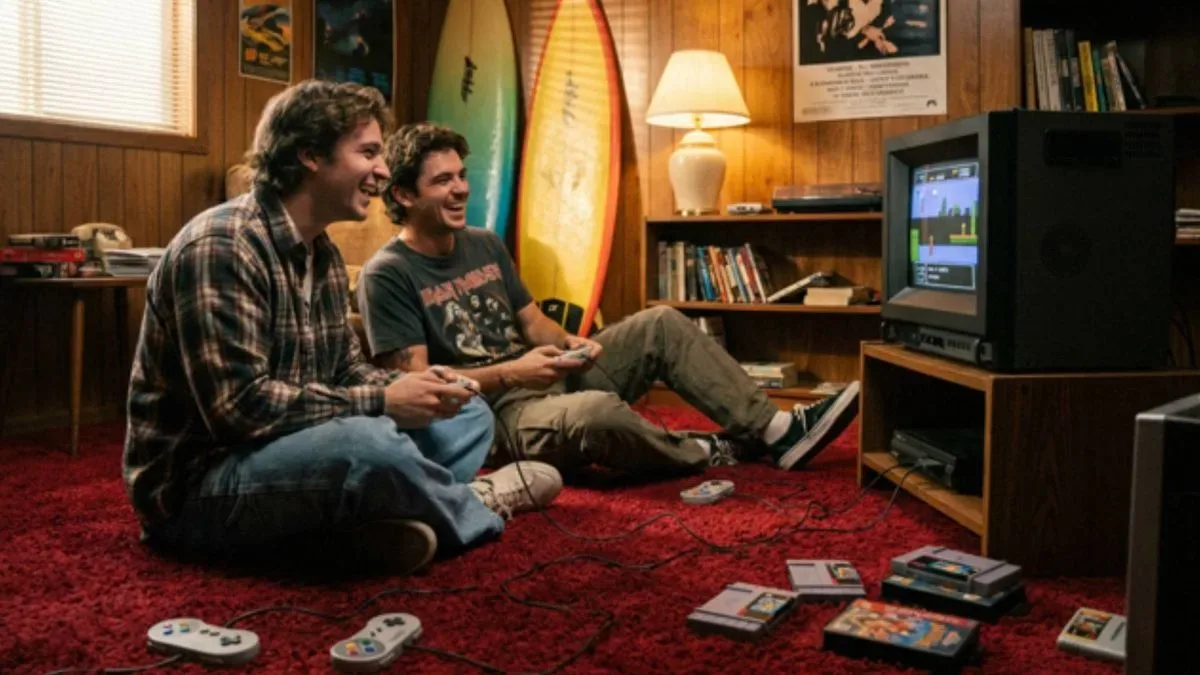
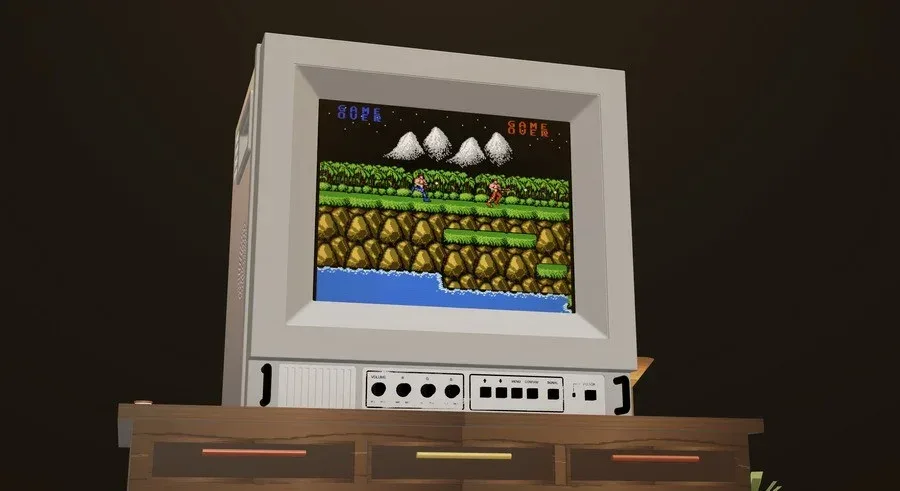
The TRAVELLER-ULW10’s promotional imagery has leaned heavily on renders, including AI-generated lifestyle-style visuals. That approach can make a concept look polished, but it is a poor substitute for straightforward product documentation. Some images reportedly make the unit appear larger than its stated 10-inch size, while another visual presentation has the look of a different, larger CRT-style set. For a compact display where dimensions are central to its appeal, clear photographs and plainly labeled measurements would be more useful than atmospheric imagery.
There is an oddity in the promo video as well: the side grilles shown in the design do not appear to conceal speakers. Again, this does not establish the final feature list, but it highlights the issue with designing around visual nostalgia before explaining the practical hardware. If there are no internal speakers, that is not automatically a dealbreaker. It simply needs to be stated, alongside the available audio outputs or inputs and the expected way players will hear their games.
Unico, an arcade hardware maker founded in 2019, is not alone in spotting demand for CRT-adjacent products. RetroBox previously floated a portable, VHS-combo-TV-inspired concept, while Retrooldtech has circulated LCD-based PVM-style ideas online. The broader trend is easy to understand: actual tube televisions are finite, aging machines, and people want more manageable alternatives. The trouble is that nostalgia has made the silhouette marketable, while the internal engineering remains what decides whether a product deserves a place in a serious setup.
Pre-launch caution is sensible, not cynical
The TRAVELLER-ULW10 is still in its pre-launch stage, so there is time for Unico to offer the information that would change the conversation. As currently presented, the Kickstarter page has only six backers. That modest number is unsurprising when the core technical story is still incomplete and the promotional approach has left room for confusion.
Anyone interested should wait for specifics rather than assuming that a CRT-like enclosure guarantees CRT-like performance. The useful details would include the panel resolution, all accepted signal standards, support for 240p and 480i, treatment of composite video, latency measurements, audio options, RGB pinout or connector standards, and evidence of the unit running real hardware. Demonstrations should show more than familiar game art on a render; they should show what the display does with the messy, wonderful signals old consoles actually produce.
This does not mean the concept is doomed. A 10-inch 4:3 LCD with thoughtfully implemented RGB, VGA, HDMI, and perhaps composite support could fill a legitimate niche. It could be a compact desk display, a convenient travel-friendly station, or a practical option for players who love retro games but cannot accommodate a real tube set. The open space inside the design for placing a console is also a neat, space-conscious touch.
For now, though, its strongest confirmed feature is style, and style cannot measure lag. The best approach is patience: keep the old console cables nearby, ask for the boring technical answers, and do not let a PVM-inspired faceplate fast-talk you into skipping them. Meanwhile, collectors setting up their existing libraries can make daily play far easier by learning how to store retro games so the collection stays accessible, rather than becoming a stack of cartridges awaiting archaeological excavation.
Keep reading
Shop the products
Check current price, model and availability at the retailer.