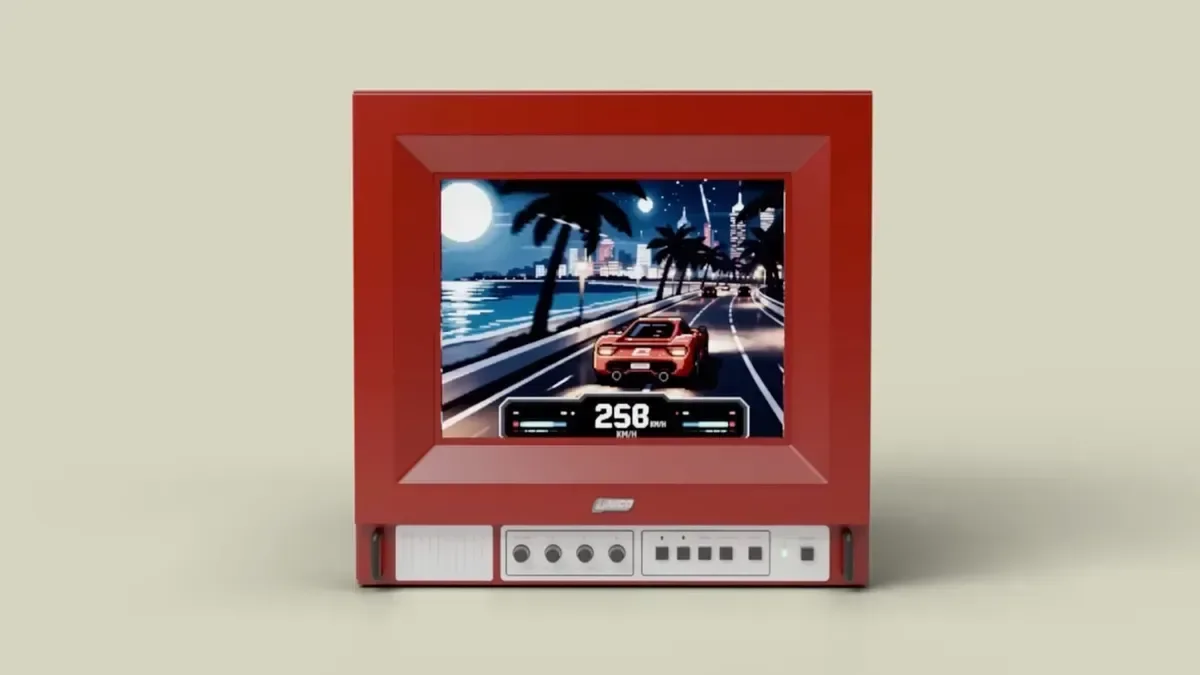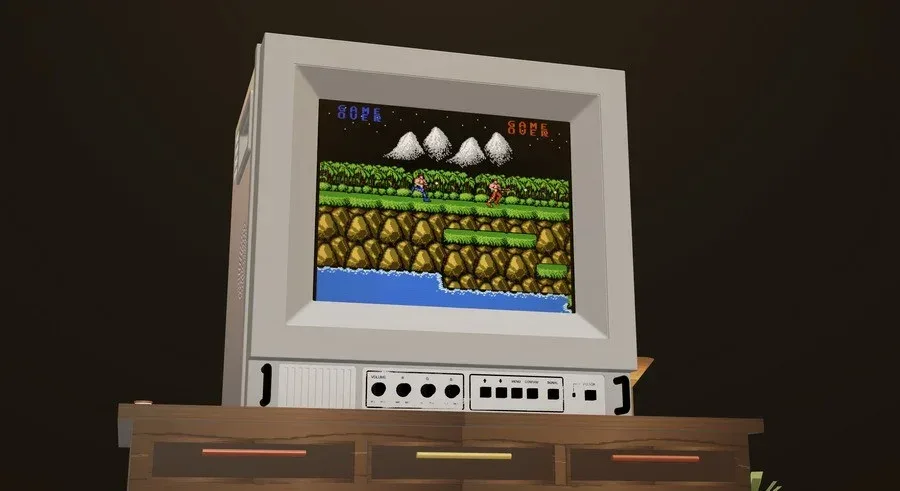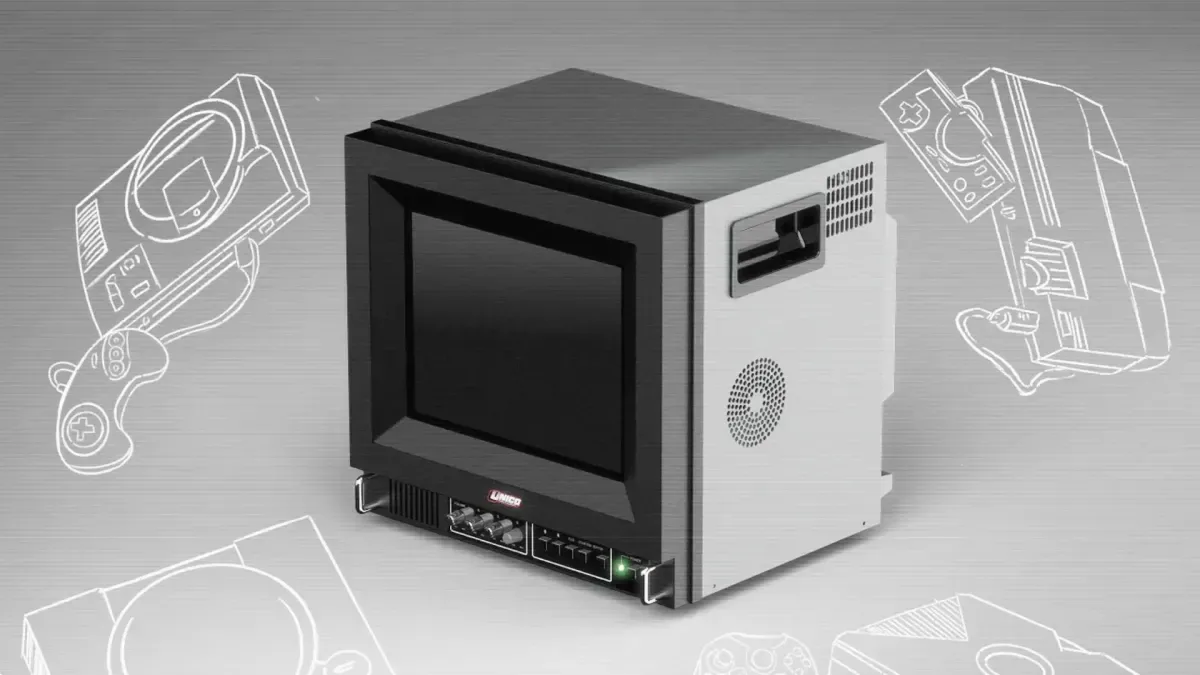
Retro gamers have spent years hunting for a decent display: one that treats old consoles kindly, fits into a small room, and does not require hauling home a heavy tube television rescued from a curbside pile. Unico’s Traveller ULw10 is aimed squarely at that audience. The compact monitor is an LCD, not a newly manufactured CRT, but its chunky television-inspired shell is designed to evoke the familiar look of a little tube set.
The idea has made a fast impression on Kickstarter. In its first 24 hours, the Traveller ULw10 campaign passed $100,000, clearing its funding target and demonstrating clear interest in a purpose-built, retro-styled display for classic hardware. That early total has also prompted discussion around the campaign, the product’s presentation, and what the success does—and does not—tell us about the broader market for CRT-inspired gaming gear.
A tiny TV-shaped monitor for classic setups
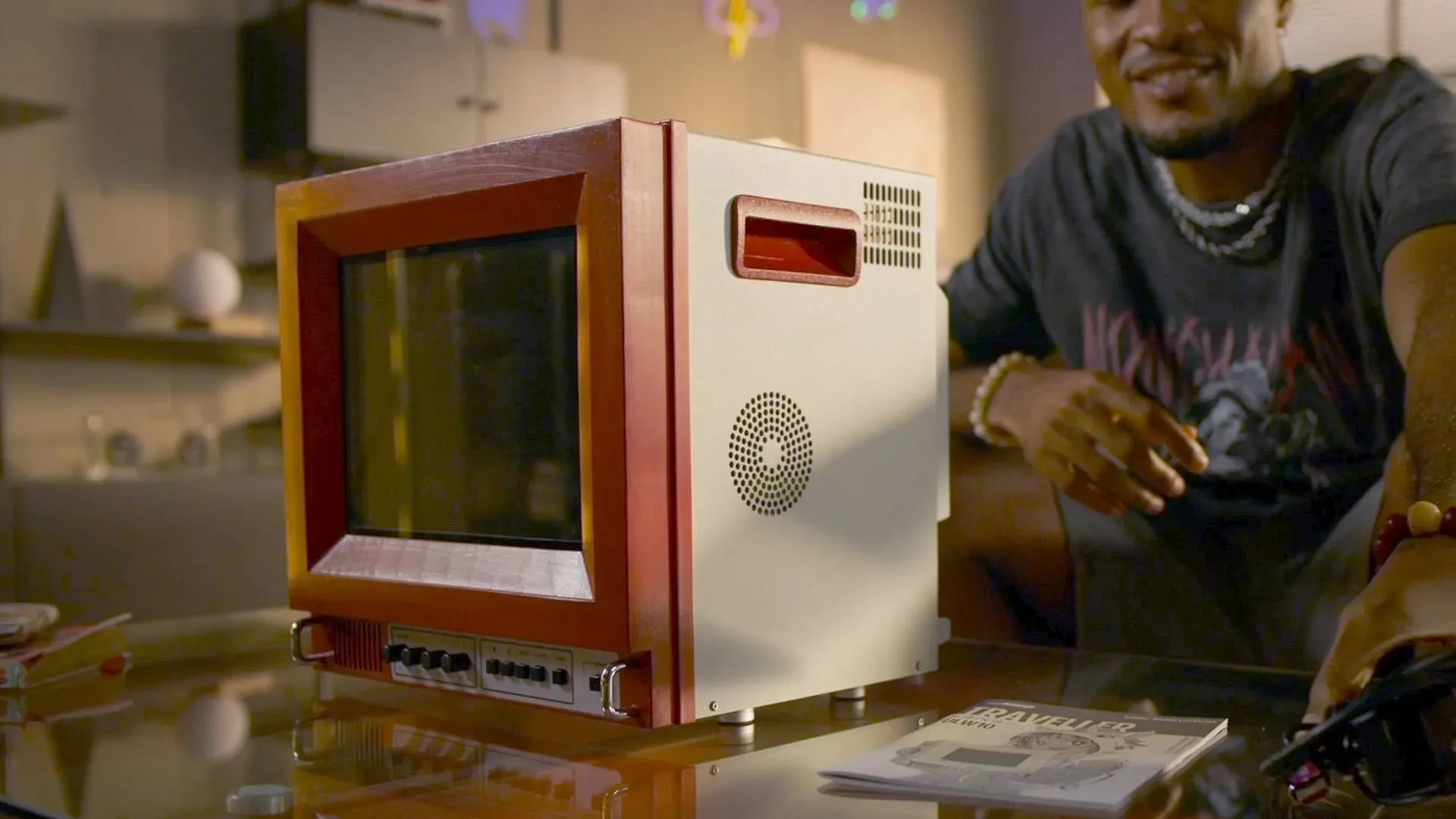
The official product name is the Traveller ULw10. It is a 10-inch monitor with a 4:3 display, the squarer aspect ratio associated with a large portion of pre-HD console gaming and standard-definition television. Rather than pretending to be an original tube set, it uses a modern LCD panel inside a deliberately nostalgic housing.
Its intended use is practical as much as decorative. Unico positions the Traveller ULw10 as a desktop-friendly screen for retro consoles and other electronics, with retro connections alongside modern ports. It has a carrying handle, so the mini-TV fantasy can extend beyond one fixed shelf, and it includes a rear storage compartment intended for stashing a console and controllers. That last feature is especially notable for players trying to keep a small setup tidy rather than turning a desk into a permanent tangle of wires, cartridges, and power bricks.
The monitor is offered in three colors: Gray, Red, and Cream. At the time of the campaign’s early run, the Super Early Bird tier was listed at $289 for one Traveller ULw10 monitor.
For collectors building a compact game corner, storage and display choices matter almost as much as the hardware itself. Players who lend cartridges, discs, accessories, or even entire systems may also want a plan for keeping a setup organized; our guide on lending retro games without losing track of discs, manuals and saves covers that often-overlooked side of the hobby.
Why it is an LCD instead of a new CRT
Some of the pushback has focused on the central compromise: the Traveller ULw10 looks like a CRT television without actually being one. For enthusiasts who prize scanlines, phosphor glow, analog motion, and the distinctive behavior of original displays, a modern LCD cannot simply become a tube television by wearing the right plastic shell.
Still, producing a real CRT from scratch in 2026 is a far more complicated proposition than nostalgia might suggest. The industrial supply chain for new consumer CRTs has largely disappeared. Components are no longer routinely made at the old scale, production would be expensive, and safety and regulatory requirements create additional obstacles. A new, affordable CRT for a relatively specialized retro-gaming audience is therefore an exceptionally difficult product to bring to market.
Related coverage includes Unico's Traveller ULw10 Retro-Style LCD Monitor Clears $100,000 in Its First Day.
That context helps explain the appeal of an LCD that embraces the form factor without making claims it cannot meet. The Traveller ULw10 offers a smaller, lighter alternative to a used tube set and brings modern connectivity into the equation. For some buyers, that combination may be more useful than chasing a decades-old television in uncertain condition. For others, the panel technology will remain the deciding factor, no matter how charming the casing may be.
Fast crowdfunding brings both excitement and scrutiny
Reaching six figures in less than a day is a major opening result for a niche retro hardware campaign. It suggests that the pitch—a compact screen with old-school visual language, a 4:3 panel, retro inputs, modern ports, portability, and built-in storage—has landed with a meaningful number of backers.
But the unusually quick total has also attracted skepticism. Unico is described as a company that has made retro-focused products since 2019, yet it has a relatively small social-media footprint and is not widely known across the retro-gaming scene. There is no publicly established explanation in the available campaign discussion for precisely which backers account for the early funding surge. It could reflect strong interest from individual supporters, support not visible through ordinary social engagement, or other factors. Without more information, it would be premature to treat the fundraising pace alone as proof of anything beyond a successful opening day.
The campaign’s promotional approach has been another flashpoint. Some material used to promote the product has been criticized for including AI-generated imagery or assets. That criticism matters in a community that often values preservation, craft, documentation, and authenticity. A device built around the emotional pull of older technology can invite sharper reactions when its marketing appears impersonal, automated, or insufficiently attentive to the details enthusiasts care about.
There is a difference, however, between raising a legitimate concern about visual presentation and making unverified claims about a campaign’s operations. The facts currently established are more limited: the Traveller ULw10 is live on Kickstarter, it surpassed $100,000 in its first 24 hours, and its marketing has generated vocal criticism as well as interest. Prospective backers can reasonably weigh those points alongside the device’s stated features and their own expectations for communication and production.
The appeal is about convenience, not only aesthetics
The old television silhouette is the obvious hook, but the product’s potential audience extends beyond people who want a cute prop for a game room. Original CRTs can be large, fragile, difficult to transport, and increasingly unpredictable in condition. Even when a used set is inexpensive, getting it home and finding space for it can be the real cost.
A 10-inch screen will not replace a large living-room display, and the Traveller ULw10’s LCD construction means it is not a direct recreation of CRT image characteristics. Yet its small footprint could make sense for several kinds of retro setup:
- A desk display for a compact console station.
- A secondary screen for a collector who lacks space for another full-size television.
- A portable game-night display where a carrying handle is genuinely useful.
- A contained shelf setup where the rear compartment can hold a small console and controllers.
- A nostalgic-looking monitor that can also accept modern hardware through its contemporary ports.
That mix of old and new is likely the strongest case for the ULw10. Retro hardware often demands awkward compromises: adapters, upscalers, aging screens, and a surprising amount of furniture. A device that tries to simplify the physical side of a small classic-gaming station has an understandable audience, even among players who still prefer authentic CRTs for their favorite systems.
What interested backers should keep in mind
The campaign’s opening success does not settle whether the Traveller ULw10 will suit every retro player. The most important question is straightforward: are you looking for a compact modern LCD monitor with retro-minded features, or are you seeking the technical and visual qualities of a genuine tube display? The ULw10 is the former.
Its $289 Super Early Bird price also places it in a category where buyers should consider their own priorities carefully. A purpose-built enclosure, a 4:3 panel, multiple connection options, portability, and storage may justify the proposition for someone building a neat all-in-one corner. Someone focused chiefly on image authenticity may instead prefer maintaining an existing CRT or seeking out a used set locally.
As with any crowdfunding project, a funding milestone signals backing rather than a finished retail product in hand. Shoppers should review the campaign’s current specifications, fulfillment information, and any updates directly before committing. Those details are especially important for hardware, where inputs, compatibility, screen behavior, manufacturing plans, and delivery timing can shape the final experience.
For now, the Traveller ULw10’s first-day performance makes one point hard to dismiss: there is active demand for retro gaming displays that borrow the warmth and personality of CRT design while sidestepping the realities of building a new tube television. Whether that demand turns into lasting confidence will depend on how Unico communicates with backers and how closely the eventual monitor matches the expectations created by its nostalgic pitch.