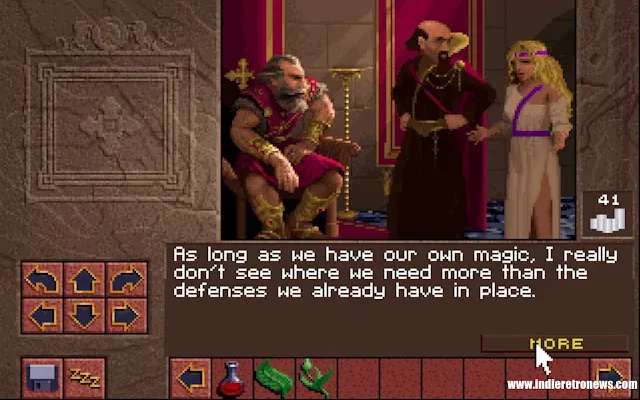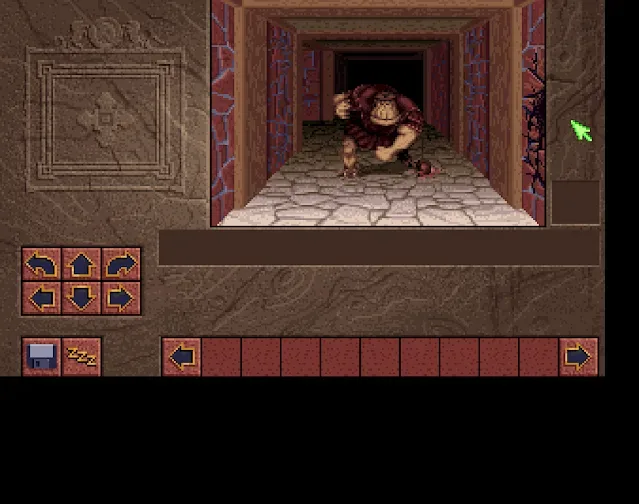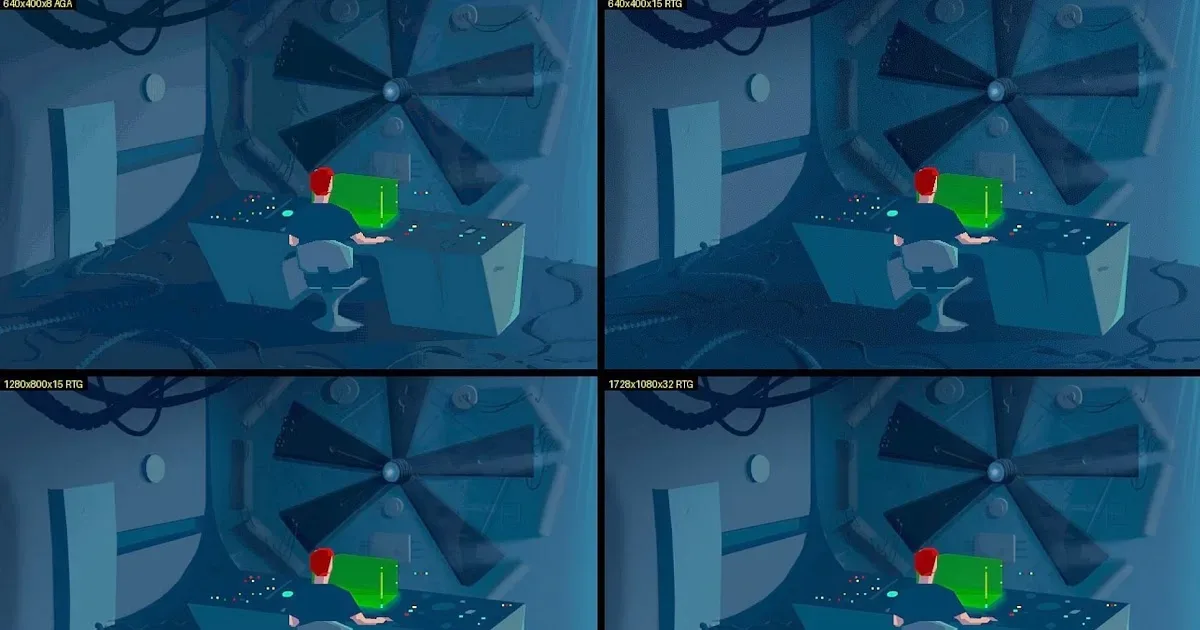
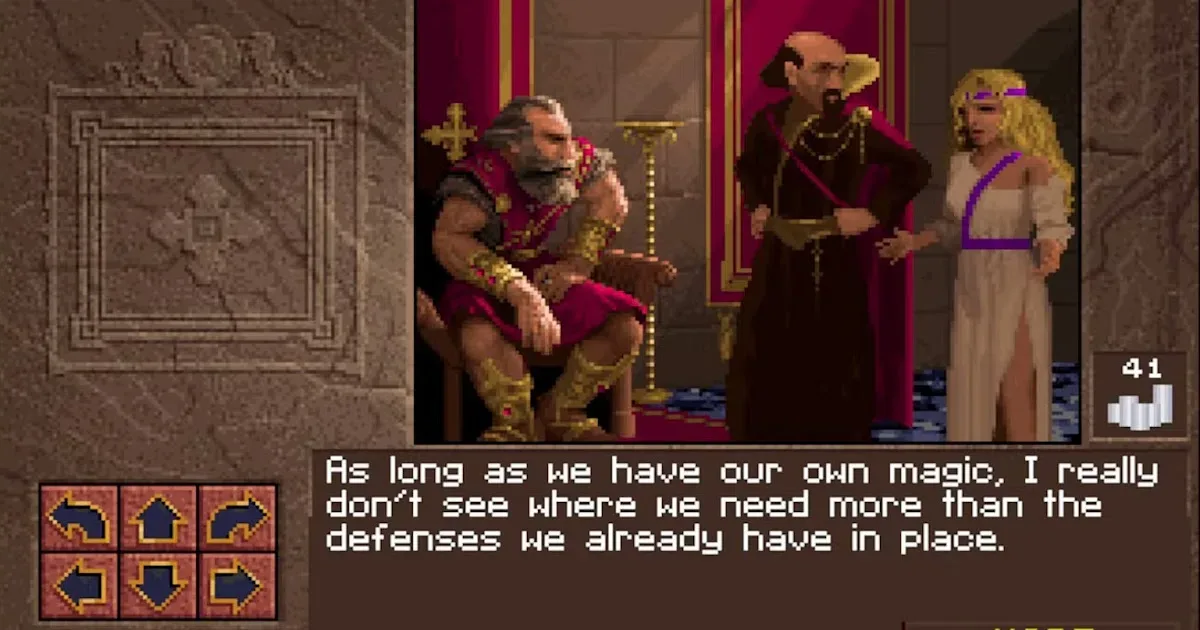
Lands of Lore is heading back toward the Commodore Amiga—twice. Two separate development efforts are working to bring Westwood Studios’ dungeon crawler to Amiga AGA machines, and their approaches could hardly be more different. One is a long-running, hand-coded C project designed around the Amiga’s graphics hardware. The other uses AI tools to help rebuild an assembly-language engine and untangle especially complicated game behavior.
The common point is important: both projects appear to be real technical undertakings with playable elements, rather than a simple claim that an old PC game might run somehow on Amiga hardware. But prospective players should keep the distinction equally clear. Vairn’s Lands of Lore AGA still needs polish before release, while CFou!’s work is presented through an evolving level tester and feature list whose scripting support is not yet complete. These are active preservation and engineering projects, not confirmed finished products with a stated release date.
Vairn’s port is built around Amiga hardware
Vairn has spent more than six years on a native Amiga version, written in C without AI assistance and without chunky-to-planar, or C2P, routines. That last detail says a great deal about the project’s technical philosophy.
“Chunky” graphics store pixels in a straightforward sequence, a common arrangement on PCs. Classic Amiga display hardware instead commonly uses bitplanes, where visual data is separated across planes. C2P is a technique used to convert chunky pixel data into that planar form, often so a game can combine PC-style rendering with Amiga display output. Vairn’s route is to convert the original assets into forms that suit the machine from the start, then use the Amiga’s Blitter hardware to handle graphics work.
For more context, explore Android Icons Refuse to Move? Check the Home Screen Lock Before Blaming Your Phone.
The Blitter is a dedicated Amiga component that can move and combine blocks of image data efficiently. In practical terms, targeting it can reduce how much visual busywork must be handled directly by the main processor. That does not make this an effortless conversion. It means the conversion pipeline and engine must be planned around the strengths and limits of the target machine.
The project uses the Amiga C Engine, or ACE. AGA chipset support was added to that engine specifically for this work. AGA is the Advanced Graphics Architecture used by later Amiga systems, including the Amiga 1200. Its additional color and display capabilities matter here because Lands of Lore is not a minimal dungeon crawler: it contains substantial monster animation, wall sets with multiple textures, and more color information than lighter examples in the genre.
Vairn is converting the PC version’s graphics, MT-32 music and audio into Amiga-oriented materials. The visual data becomes Blitter-friendly assets, while music is adapted into MOD files and audio into 8SVX files. MOD is an Amiga-associated tracker music format, in which a piece is constructed from patterns and samples. 8SVX is an audio format associated with the platform. The point is not merely to play PC data through an emulator-like layer, but to turn it into formats that fit the intended hardware.
The hardware requirement is meaningful, not incidental
An early stripped-down build reportedly ran on a base machine without Fast RAM. That is an encouraging engineering milestone, but it is not the intended specification for the fuller game. Vairn’s stated target requirement is an Amiga 1200 with a 68020 processor and 4MB of Fast RAM.
Fast RAM is memory that the system’s CPU can access without competing with custom-chip activity in the same way as Chip RAM. For a project juggling animated creatures, elaborate walls, additional colors and game logic, that extra memory is central to the practical experience rather than a luxury checkbox. Anyone following the port should therefore avoid assuming that “Amiga version” means it will perform on every Amiga configuration.
Asset conversion is also presently handled outside the Amiga itself. Python scripts running on PC, Mac or Linux perform the heavy data-processing work, said to be roughly 10,000 times faster than doing it on native hardware. A standalone Amiga conversion executable is planned later. That workflow makes sense as a development decision: the original material can be prepared rapidly on modern systems while the eventual game is engineered for the older platform.
Vairn’s current build is already playable, but graphical bugs, music refinement and the spell system remain on the to-do list. Those unfinished areas matter. Spell functionality is part of the game’s core interaction rather than decorative finishing work, and music conversion can influence whether a technically impressive build feels cohesive in use. The project’s status is promising, but it is still appropriately described as in development.
CFou!’s effort uses AI as an engineering tool
Alongside that hand-rolled port is a separate project by CFou!, an Amiga coder previously associated with AGA ports of Eye of the Beholder I, Eye of the Beholder II and Dune II. CFou! had reportedly pursued an Amiga version of Lands of Lore since 2006, but encountered a major obstacle in the game’s EMC2 scripts.
Scripts are the instruction sets that govern many game events and behaviors: dialogue triggers, quest progress, responses to switches, doors, objects and other conditional activity. A dungeon can render correctly and still fail to play correctly if the scripting layer is incomplete. That is why this work is more demanding than showing walls, maps and monsters on-screen.
To tackle that wall, CFou! experimented with tools including Claude and Fable 5.2. In this case, the stated role of AI extends beyond generating snippets of code. It was used in efforts to reverse-engineer internal logic, create documentation for data formats, adapt music and make extraction tools, contributing to a newly built assembly engine.
Assembly language is a low-level form of programming closely tied to processor operations. For an Amiga project, it can offer tight control over system resources, but it also leaves a developer responsible for a great deal of complexity. The reported result already supports major elements including intros, endings, level exploration, fog, shadows and CD voices through .TLK files.
CFou!’s public feature list is particularly useful because it shows both breadth and boundaries. The build supports English, German and French intro, ending and history animations; audio effects, voices and music; maps; a spell book; a compass; money and items; saves; poison effects; monster palette handling; and facial animation when party members speak. It also includes mazes, dialogue, entrances and exits, keys, switches, false walls, trader behavior, lantern and oil brightness management, and thrown-item animations.
There are even specific presentation features, such as animated doors while moving—with up to five active at once—and a shadow-door effect during certain animations. Such details demonstrate that the project is addressing the visual language of the original game world, not just basic movement through a test maze.
At the same time, the listed script support is 70%, while INF and TIM file support are marked partial. The feature list also references the first quests, including Roland and Thimothy, rather than claiming the entire quest structure is done. That nuance should temper expectations: a large amount is functioning, but the available information does not establish a completed full-game port.
Two philosophies, one unusually demanding adaptation
The contrast between the efforts is not simply “traditional coding versus AI.” Both require a developer to make decisions about formats, performance, behavior and compatibility. Both must confront the unusually broad stack of a game conversion: graphics, sound, music, animations, input, maps, inventory, effects, save systems, events and scripts.
Vairn’s project stresses authored C code and a pipeline tailored to AGA and the Blitter. CFou!’s project demonstrates how AI can accelerate reverse engineering and tool creation around a difficult code and data problem. Their work has also prompted an unusually candid question about authorship and craft. CFou! has described the AI-assisted experience as bittersweet, admiring the tools’ capability while feeling less like the programmer and more like a beta tester on what may be a final Amiga project.
That feeling is worth taking seriously without reducing either project to a slogan. AI can generate or interpret material quickly, but the supplied progress reports still show people defining the goal, checking outputs, integrating systems, identifying gaps and deciding what “working” means on period hardware. Conversely, the no-AI approach does not diminish the value of tools such as external Python conversion scripts. Development has always involved tools; the present question is how much of the reasoning, discovery and implementation each tool handles.
For Amiga enthusiasts, the practical upside is more straightforward: there are now two technically distinct attempts to make a famously asset-heavy dungeon crawler fit AGA machines. Vairn’s stated Amiga 1200 and Fast RAM requirement gives potential users a concrete baseline to keep in mind. CFou!’s tester feature list gives followers a visible checklist for what is present and what remains incomplete. For broader context on the two paths, see this overview of the parallel projects.
Neither team should be judged as though it has simply pressed a “port” button. The work described involves rebuilding a game’s audiovisual data, game behavior and technical foundations under constraints very different from its PC origins. Whether the final result comes from careful C and hardware-aware assets, AI-assisted assembly reconstruction, or both projects reaching their own endpoints, the Amiga is getting a rare glimpse of two routes through the same very deep dungeon.