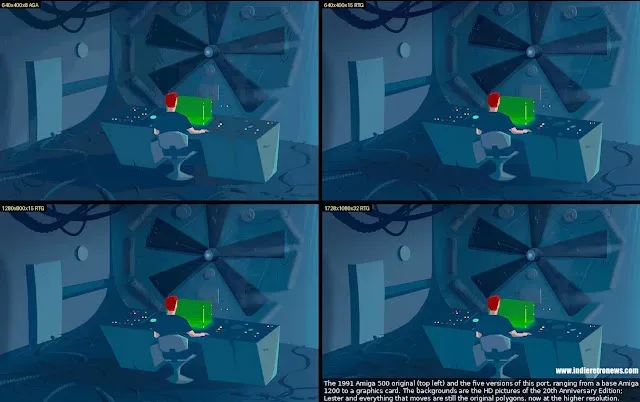
Another World has made an unusually fitting return trip. First released on the Commodore Amiga in 1991, the cinematic science-fiction adventure has now received an Amiga AGA and RTG port built around the 20th Anniversary Edition. The project, from AmiKit, brings the remaster’s redrawn artwork and remastered audio back to Amiga setups while retaining the game’s signature polygonal characters, creatures and animated objects.
This is not presented as a standalone replacement for the commercial game. It requires players to own the Steam version of Another World 20th Anniversary Edition. AmiKit’s Prefs program then converts the necessary assets for Amiga use. That requirement matters: the release is an adaptation workflow for legitimate owners, not a newly bundled edition of the game.
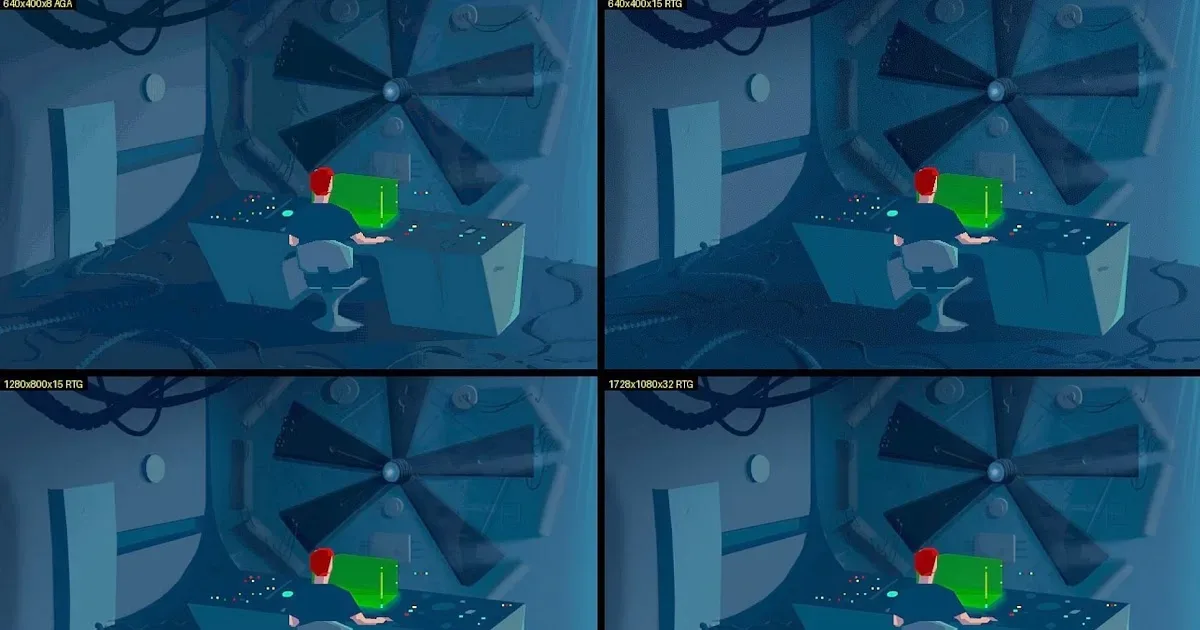
The project’s central appeal is that it spans a notably broad range of Amiga hardware. Five versions are included, from a stock Amiga 1200 operating at 640x200 through to RTG-equipped machines capable of displaying 1728x1080 at 32-bit colour. For a game so strongly associated with the early-1990s Amiga, that range turns its return into more than a simple nostalgia exercise. It is also a showcase for how varied Amiga configurations can be.
What the port changes — and what it preserves
The port uses artwork derived from the 20th Anniversary Edition rather than relying on the original Amiga 500 backdrops. In practical visual terms, that means the backgrounds move to the remaster’s redrawn high-definition art. Lester, the hostile alien life and the other moving elements remain high-resolution versions of the classic polygon-based objects.
That division is important to the game’s visual identity. Another World is remembered as much for its stark animation and unusual shapes as for its alien environments. Replacing every component with unrelated new assets would risk changing the look of the original. Here, the stated approach is more selective: bring in the revised background art while maintaining the polygonal moving figures that define the game’s on-screen motion.
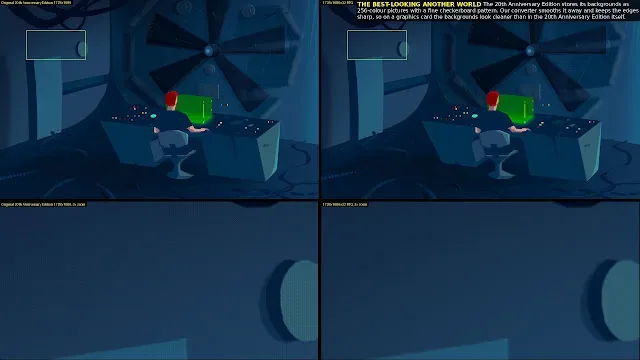
The converter also addresses a characteristic limitation of older computer artwork: checkerboard dithering. Dithering is a technique in which patterns of alternating pixels simulate extra shades or colours when a system has a restricted palette. It was an effective compromise for its time, but it can appear grainy or busy on modern displays and at high resolutions. The conversion reportedly removes the fine checkerboard pattern seen in the original 256-colour PC backgrounds without softening their edges.
For players, the intended result is easy to understand even if the technical language is not: cleaner background surfaces, sharper outlines and a clearer presentation of the remaster’s artwork. The claim that it may be the best-looking edition of the game is naturally subjective, but the technical ambition is concrete. This port is designed to exploit RTG-capable Amiga systems rather than merely reproduce the visual constraints of the 1991 release.
AGA and RTG explained
The two terms in the release description signal different points in the Amiga hardware spectrum.
Related coverage includes Another World 20th Anniversary Edition Returns to Amiga With AGA and RTG Port.
- AGA, short for Advanced Graphics Architecture, is the graphics chipset associated with later Commodore Amigas including the Amiga 1200. The stock Amiga 1200 version is listed at 640x200.
- RTG, or ReTargetable Graphics, refers to graphics-card-based display systems that allow Amiga software to use resolutions and colour depths beyond the original chipset’s standard modes. In this release, the upper end reaches 1728x1080 in 32-bit colour.
Resolution describes how many pixels are available to draw an image. The 1728x1080 mode supplies substantially more screen space than 640x200, which is why it is suited to the remaster’s high-definition assets. Meanwhile, 32-bit colour generally refers to a display format with far more colour information than older limited-palette modes, allowing smoother colour reproduction.
None of this means every Amiga owner needs a maximum-specification RTG machine. The five-version approach is specifically meant to accommodate differing systems. A stock Amiga 1200 is included in the compatibility range, while more elaborate RTG hardware is there for players pursuing the sharper, higher-resolution presentation. That is a practical distinction worth making before treating screenshots or high-resolution claims as universal across every supported setup.
The conversion step is the major requirement
There is one substantial caveat beyond owning the Steam edition: converting the assets demands a very fast CPU. The Prefs utility handles the conversion, but on slower hardware the process may take a very long time. The recommended workaround is to perform that task using emulation.
Emulation, in this context, means using a more powerful modern computer to reproduce the Amiga environment for the conversion step. The resulting advice is not necessarily that players must emulate the game itself. Rather, emulation can spare older or lower-powered hardware from a conversion workload that may otherwise be impractical. Once conversion is complete, users can select the build appropriate to their actual Amiga configuration.
That separation between preparation and playback is one of the most useful details in the release. Retro-computing projects can sometimes make support sound simpler than it is; “works on Amiga” can conceal a chain of installation, asset preparation and hardware-specific choices. In this case, prospective users should plan around three questions: do they own the required Steam edition, which of the five versions suits their Amiga, and where will they run the conversion?
A sensible preparation checklist
- Acquire and keep access to an owned copy of Another World 20th Anniversary Edition on Steam.
- Identify whether the target machine is a stock Amiga 1200-class setup or an RTG-equipped system.
- Use AmiKit’s Prefs program to convert the game assets.
- If the available Amiga CPU is not fast enough for a reasonable conversion time, use emulation for that stage.
- Select the version that corresponds to the target display hardware and desired presentation.
Why this return is notable
The new port connects several different eras of the same game. There is the original 1991 Amiga release, the later PC remaster from 2013, and now a project that brings remastered material into an Amiga-specific format. It is not simply an old game being run through a compatibility layer. The work described here involves taking the anniversary edition’s assets, converting them and shaping the result around both AGA and RTG Amiga possibilities.
That makes it a useful reminder that retro platforms are not frozen at the technical moment of their commercial peak. The Amiga audience includes stock machines, expanded systems and graphics-card configurations with dramatically different capabilities. Supporting those environments in one release is more complicated than aiming at a single fixed console specification, but it also gives preservation-minded projects room to offer distinct experiences rather than one lowest-common-denominator version.
It also gives longtime players a choice about what they value. A lower-resolution AGA setup maintains a closer relationship with the kinds of constraints associated with later original Amiga hardware. An RTG setup emphasizes clarity, colour depth and the redrawn high-definition scenery. Both paths remain tied to the same adventure and its polygonal movement, but they frame it differently.
For broader retro-game context, Joking Joystick’s look at the PlayStation 2 survival-horror library similarly explores how technical limitations and hardware eras shape a game’s identity. Another World arrives from a very different design tradition, but this Amiga release makes the same larger point: old-platform games can gain new ways to be seen without abandoning the ideas that made them endure.
What players should expect
Players should not read “high definition” as a claim that every supported Amiga will output the same image. The 640x200 stock Amiga 1200 option and the 1728x1080, 32-bit RTG option are materially different configurations. The port is broad in support, but its visual outcome depends on the machine and version selected.
Likewise, the conversion requirement means this is best approached as a small setup project rather than an instant install. For owners of the Steam release with access to a fast CPU or an emulator, the process opens a route to an Amiga-tailored version featuring remastered audio, redrawn scenery and cleaned-up background treatment. For those running original hardware, the availability of a stock Amiga 1200 target is especially meaningful; for RTG users, the high-resolution builds are the headline attraction.
With Lester returning to the platform where the game first appeared, the port is a compact but striking expression of the Amiga community’s continued technical activity. Its achievement is not merely putting Another World back on an Amiga. It is giving owners a route to experience a later remaster through hardware ranging from period-appropriate AGA machines to much more capable RTG-equipped systems.