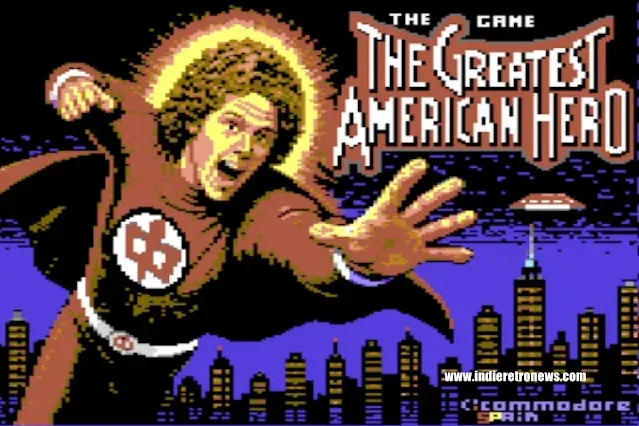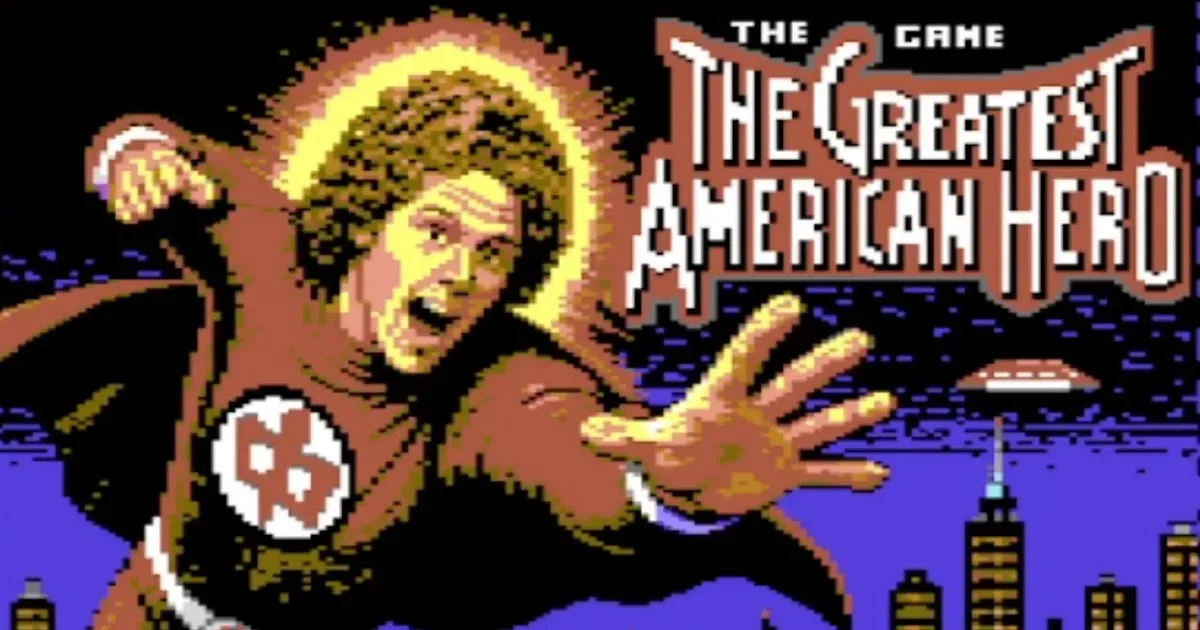
The Greatest American Hero is getting an unlikely but fitting second life in game form. Commodore Spain has created a new shooter for the Commodore 64 built around the defining joke of the 1980s superhero comedy-drama: Ralph Hinkley has immense alien-powered potential, but no clue how to use it properly after losing the instructions for his extraordinary suit.
The project is framed as a tribute marking the television show’s 45th anniversary. Rather than treating the famous suit as a simple power fantasy, the game leans into Ralph’s vulnerability. Players control him on the outskirts of a city, attempting to locate and capture the UFOs that originally gave him the suit. His objective is not merely to repel an invasion. He is trying to obtain another copy of the missing manual and finally understand what the suit can do.
That is a strong premise for a game based on this particular hero. Ralph was never defined by spotless control, perfect planning, or effortless mastery. The missing manual is the story’s central complication, and the C64 adaptation makes it the engine for its conflict: enemies work to keep the manual out of reach because an informed Ralph would be far more dangerous.
A shooter built around a very imperfect superhero
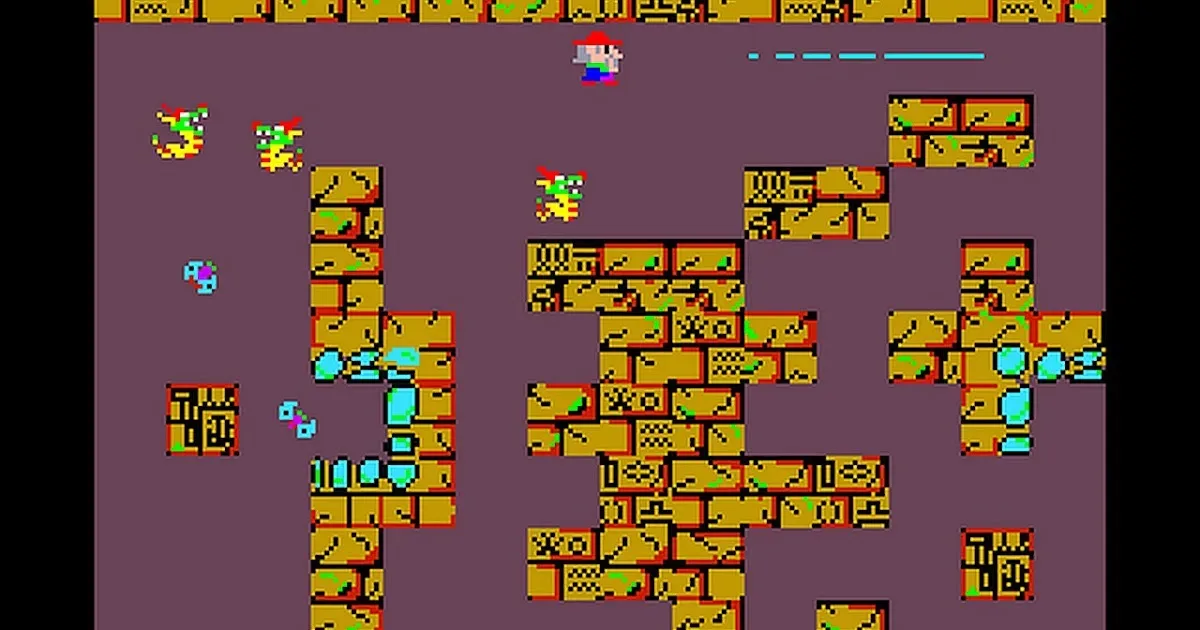
In game terms, a shooter is broadly an action game where combat against hostile targets is a primary activity. The supplied description does not specify the game’s perspective, control scheme, weapons, stages, enemy types, or scoring systems. It would therefore be premature to assume it follows the conventions of a particular C64 shooter subgenre.
What is known is more important to the adaptation’s identity: Ralph is presented as vulnerable, the action takes place around the city’s outskirts, UFOs are central targets, and hostile forces are trying to stop his search. That creates a setup with clear stakes even before any unconfirmed mechanical details enter the picture. The protagonist is not beginning from a position of total command. He is pursuing the one thing that could change the balance of power.
That structure suits the show’s comic tension. An alien suit that grants phenomenal powers would normally make a character invincible by design. The lost manual turns that assumption inside out. Power exists, but knowledge is missing. Ralph must improvise, and the game’s premise preserves that uncertainty rather than sanding it away for a conventional, all-capable superhero lead.
Ralph’s mission is to find the UFOs responsible for the suit and secure a replacement for the instructions he lost.
The result is a story hook that is easy to understand without requiring a deep knowledge of the series. The player has a concrete goal, clear opposition, and a reason for the hero’s limitations. For longtime viewers, those same elements point directly to the premise that made The Greatest American Hero distinctive in the first place.
Related coverage includes The Greatest American Hero Gets Commodore 64 Shooter Tribute.
Why the missing manual matters
The title’s superhero setup has always carried a built-in contradiction. Ralph Hinkley is an ordinary high-school teacher who is handed a remarkable extraterrestrial suit, but he loses the document explaining its operation almost immediately. Instead of receiving a clean transformation into a polished crime fighter, he is left to discover the suit’s abilities through disorderly trial and error.
Commodore Spain’s game appears to recognize that the instruction manual is not incidental backstory. It is the narrative object around which the whole plot turns. The UFOs potentially represent Ralph’s route back to the information he lacks, while the enemies’ interest in thwarting him makes practical sense: keeping him uninformed is a means of containing the threat he could become.
That is also where the tribute has room for the campy spirit associated with the programme. The situation is inherently absurd in an appealing way. A hero is chasing the beings who gave him his powers not necessarily for more power, but for the directions that should have come with it. The concept keeps the comedy close to the action instead of treating the television property as a generic superhero label.
A new project for a legacy computer
The game has been developed for the Commodore 64, positioning it squarely as a retro-platform release rather than a modern reimagining detached from older hardware. That choice is meaningful on its own: the project pairs an 1980s television series with a game platform associated with the same broad era, giving the tribute a deliberately period-conscious character.
It is not the only recent sign of continued interest in new software for legacy Commodore machines. A separate new tribute project for Commodore Amiga systems illustrates how creators are still finding reasons to make original work for established hardware communities. The two projects should not be conflated: they concern different systems and different games. But together they underline the ongoing appeal of making something new within an older platform’s boundaries.
For this release, the C64 is more than a nostalgic delivery mechanism. It helps align the adaptation’s format with its subject. The television series comes from the 1980s; the game is a shooter for a computer closely tied to that period; and its narrative centers on a character whose clumsy relationship with alien technology is the point. The combination has a natural, playful logic.
What has and has not been established
The available details establish the game’s developer, platform, anniversary framing, protagonist, setting, objective, and basic opposition. They do not establish a release date, distribution method, price, supported hardware revisions, physical edition, digital format, control options, or exact gameplay features. They also do not identify individual enemy designs or explain what happens once Ralph reaches the UFOs.
That distinction matters, especially for retro releases where a project can attract interest long before its practical release details are public. Fans should read the premise as a confirmed outline of the game’s story and tone, not as evidence of particular modes, mechanics, or technical features that have not been described.
Even with those unanswered questions, the core idea is unusually focused. This is not simply a game that borrows a television title and puts its lead character in combat. It uses the source material’s most memorable limitation as the reason for the mission. Ralph remains separated from the instruction manual; the opponents want it to stay that way; and the player’s pursuit of UFOs is driven by the possibility of changing that situation.
El gran héroe americano returns in game form
In Spain, the series is affectionately known as El gran héroe americano. That local association adds another layer to Commodore Spain’s decision to build the tribute. The adaptation is connected not just to a familiar TV premise, but to a title that has retained a distinct identity for Spanish audiences.
Whether the game can translate all of the show’s personality into a shooter will depend on details not yet outlined. Still, the published setup identifies the right pressure point: Ralph Hinkley is compelling because spectacular ability and ordinary confusion coexist. The suit may be phenomenal, but its owner is operating without the instructions.
For a C64 game celebrating the show’s 45th anniversary, that may be the most faithful place to start. The mission is not about proving Ralph is already a flawless hero. It is about getting him one step closer to knowing what kind of hero he can be.