Some games arrive with a thunderclap. Others spend decades quietly collecting admirers in cartridge cases, speedrun videos, old forum threads, and the personal memories of players who happened to find them at exactly the right time. The Battle of Olympus belongs firmly in that second category—and its story is about to gain an unusually personal new chapter.
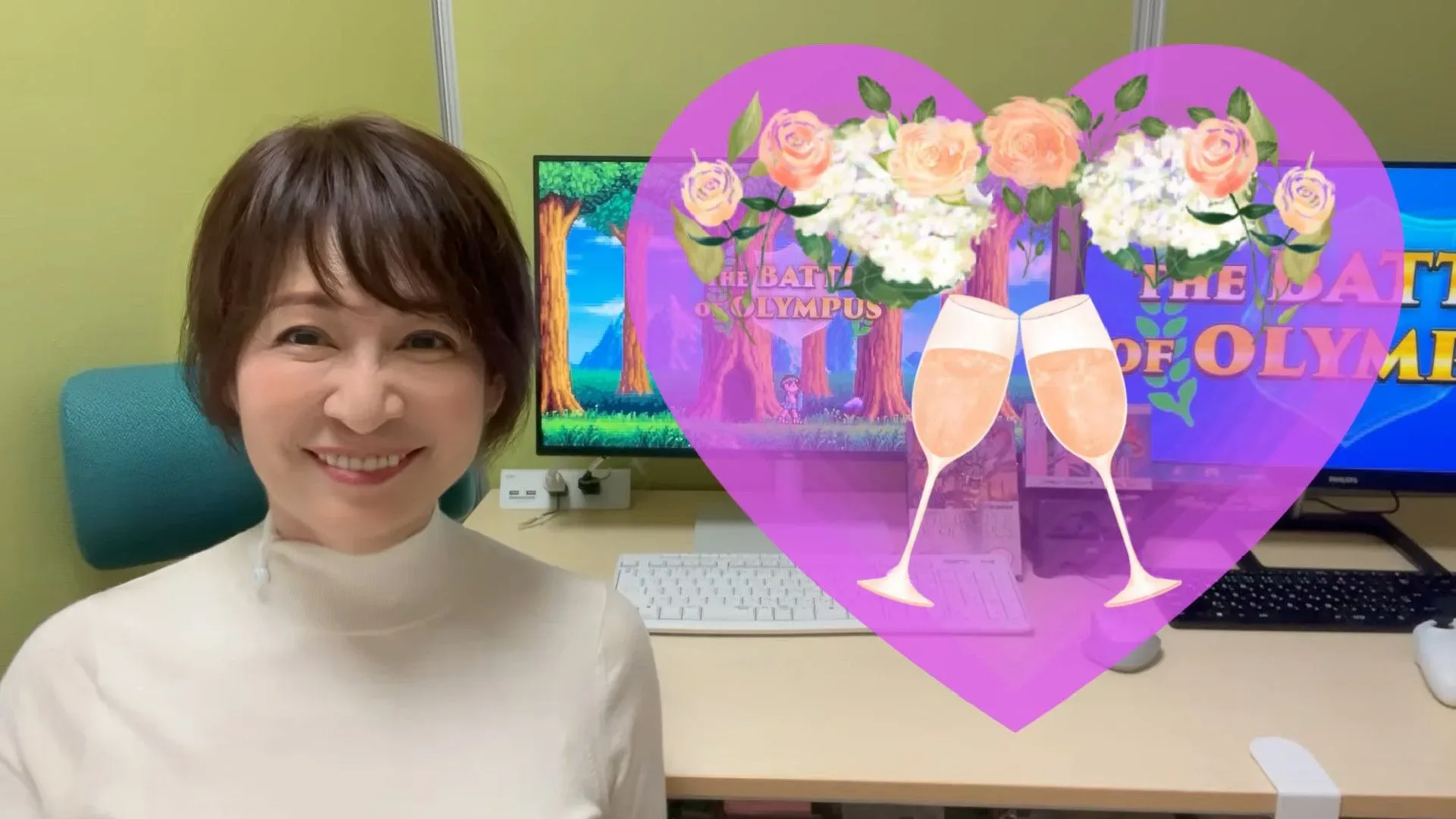
Reiko and Yukio Horimoto, the husband-and-wife team central to the 1988 Famicom game, are working on a remake of The Battle of Olympus for Steam. The project is planned for Steam Early Access in January. Rather than handing a beloved old design to a separate revival studio, the creators themselves are rebuilding it: recreating its code, producing new pixel art, and adapting it for contemporary PC players while aiming to retain the original game’s atmosphere, difficulty, and identity.
That alone makes this more than a routine retro re-release. It is an opportunity for the people who made a small, ambitious 8-bit adventure nearly four decades ago to revisit it after learning just how much affection it had accumulated beyond its original commercial moment.
An overlooked 8-bit adventure finds its audience
The Battle of Olympus debuted on the Famicom in 1988 and subsequently reached the NES internationally a few years later. Its initial market performance was modest. In an era packed with fantasy platformers and action games, it was easy for a game with a mythological setting to be read as one more sword-and-monster quest competing for attention on crowded store shelves.
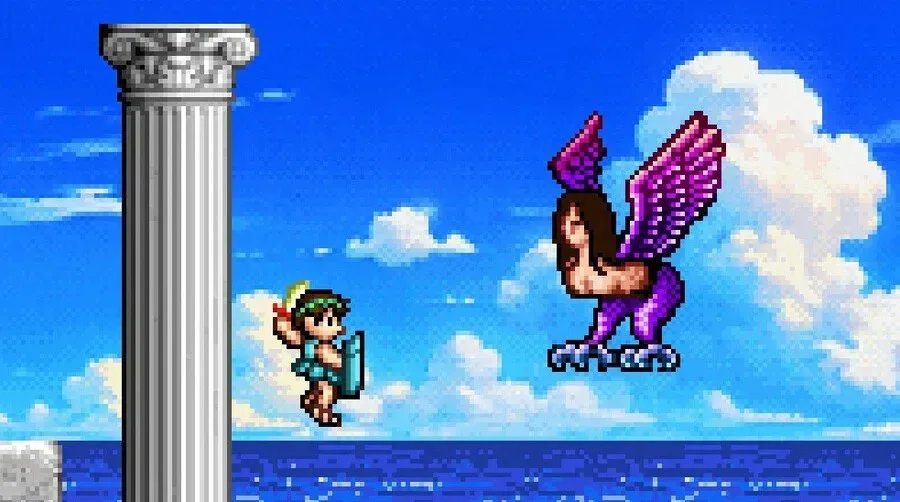
Time has been kind to it. The game gradually became a cult favorite, valued for its nonlinear structure, its elaborate world design, its striking visual presentation for the hardware, and action that gave players reasons to push through its demanding journey. Its Greek-myth inspiration also helped it stand apart from the more familiar castles, dragons, and medieval kingdoms that dominated much of the period’s fantasy output.
Players guide a hero through a world shaped by the legend of Orpheus and Eurydice, a premise that gave the original game emotional stakes beneath its side-scrolling action-RPG framework. That mythological foundation mattered to the development team as well: the project was not simply built around fashionable fantasy imagery, but around a story concept discussed by its creators during the early years of their relationship.
Yukio Horimoto has previously acknowledged the substantial influence of Zelda II: The Adventure of Link. The comparison is hardly difficult to see. Both games occupy that intriguing corner of the NES library where exploration, combat, progression, and RPG-minded systems meet in a side-view adventure. But influence is not the same as imitation. The Battle of Olympus developed its own route through those ideas, using Greek mythology and a carefully constructed interconnected world to create a distinct personality.
For collectors and retro players, that kind of lineage is part of the appeal. The NES is often remembered through its biggest icons, but its deeper history is also written by titles that took inspiration from major hits and then pushed in unexpected directions. Those are often the games that become especially rewarding to rediscover. For another example of a vintage-platform project returning with a new idea, see The Demon Jar’s move into a Victorian text-adventure world on classic systems.
Related coverage includes The Battle of Olympus Returns as Its Original Creators Rebuild the NES Cult Favorite for Steam.
A three-person team with an enormous target
The original Battle of Olympus was made by a team of only three people at Infinity. Yukio Horimoto handled programming. Reiko Horimoto led the art and story work. Kazuo Sawa created the soundtrack. Measured against the scale of today’s development teams, it is a tiny group. Measured against the expectations the trio set for themselves, it was a group attempting something remarkably bold.
Yukio’s stated ambition was to reach the standard associated with Nintendo’s games of the era. He did not present that as an easy or assured goal; it was a challenge worth pursuing. The team poured its effort into creating a game that could look and feel exceptional despite the severe constraints of the cartridge format.
Reiko’s work was especially important in defining the game’s visual character. The team was operating in a limited-color environment, with only 16 colors available, yet the graphics earned praise over the years. That technical restriction is a useful reminder that 8-bit art was never merely about individual pixels. Color selection, contrast, repeated motifs, readable silhouettes, and the arrangement of each screen carried enormous weight. A memorable setting had to be communicated economically.
The remake’s plan to redraw the pixel art therefore deserves attention. It is not just a resolution upgrade or a filter placed over an old image. Rebuilding pixel art asks creators to decide which qualities made the original work expressive in the first place: the shapes that made enemies legible, the color relationships that established mood, and the detail that suggested a much larger world than the hardware could literally display.
A game entwined with a relationship
The Horimotos’ connection to the game is unusually direct. Yukio met Reiko during work on their first game, and the two later married. They wanted to make a game of their own together and spent considerable time discussing its concept. Their romance and collaboration helped inform the tale at the heart of The Battle of Olympus, which draws upon the bond and separation central to Orpheus and Eurydice.
Calling the game a labor of love can be a tired phrase, but here the description is difficult to avoid. The game was made by partners building a creative life together; its narrative came from a legend about devotion and loss; and now those same partners are returning to the project after many years in response to people who continued to care about it.
That continuity also gives the remake a different emotional texture from the usual archival package. This is not only preservation, although preservation is clearly part of its value. It is also a renewal of a collaboration interrupted by the realities of the industry.
Sales of the original game did not provide Infinity with enough momentum to keep producing its own original titles. The studio continued to exist, but for most of the ensuing decades it worked largely in contract and support roles on projects from other developers. The distance between a young team striving to rival the best games on the NES and a studio spending years supporting other companies’ work makes this return especially meaningful.
Fan videos helped bring Olympus back into view
At one point, Yukio had said that he had almost put The Battle of Olympus out of his mind. The eventual remake was not driven by a manufactured anniversary campaign or a sudden corporate mandate. Reiko has explained that videos posted to YouTube helped change the creators’ perspective.
Decades after the game’s release, players were still uploading footage, and those videos had attracted significant viewership. More importantly, the comments were kind enough to move Reiko to tears. The discovery seems to have offered something every creator hopes for but cannot demand: evidence that a work kept traveling from player to player long after its original commercial window closed.
The Horimotos describe the remake as the culmination of their lives in game development.
That framing is powerful because it recognizes the players’ role without overstating it. Fans did not simply revive a brand. Their continued interest gave the original creators a reason to look back, recognize the game’s afterlife, and find the confidence to undertake another version together.
There is no need to pretend that a remake can replace the 1988 original. The Famicom and NES release remains a product of specific artistic and technical limitations, as well as an artifact of a particular point in game history. But a faithful remake can make a difficult-to-access cult title easier for PC players to encounter while allowing its makers to refine aspects that they believe need refinement.
What the Steam version represents
The announced Steam Early Access release in January is still best understood as a work in progress. The available description establishes the intent—newly recreated code, redrawn art, modern-PC refinements, and preservation of the original spirit and challenge—but does not establish a full feature list, a final release date, or every change players should expect.
What is already clear is why the project is notable. The Battle of Olympus is returning not merely because nostalgia is profitable, but because its original makers discovered that their small 1988 game had become meaningful to people they never expected to reach. Reiko and Yukio Horimoto now have the chance to make it together again, with the knowledge that the world they built on an 8-bit cartridge was never as forgotten as it first appeared.