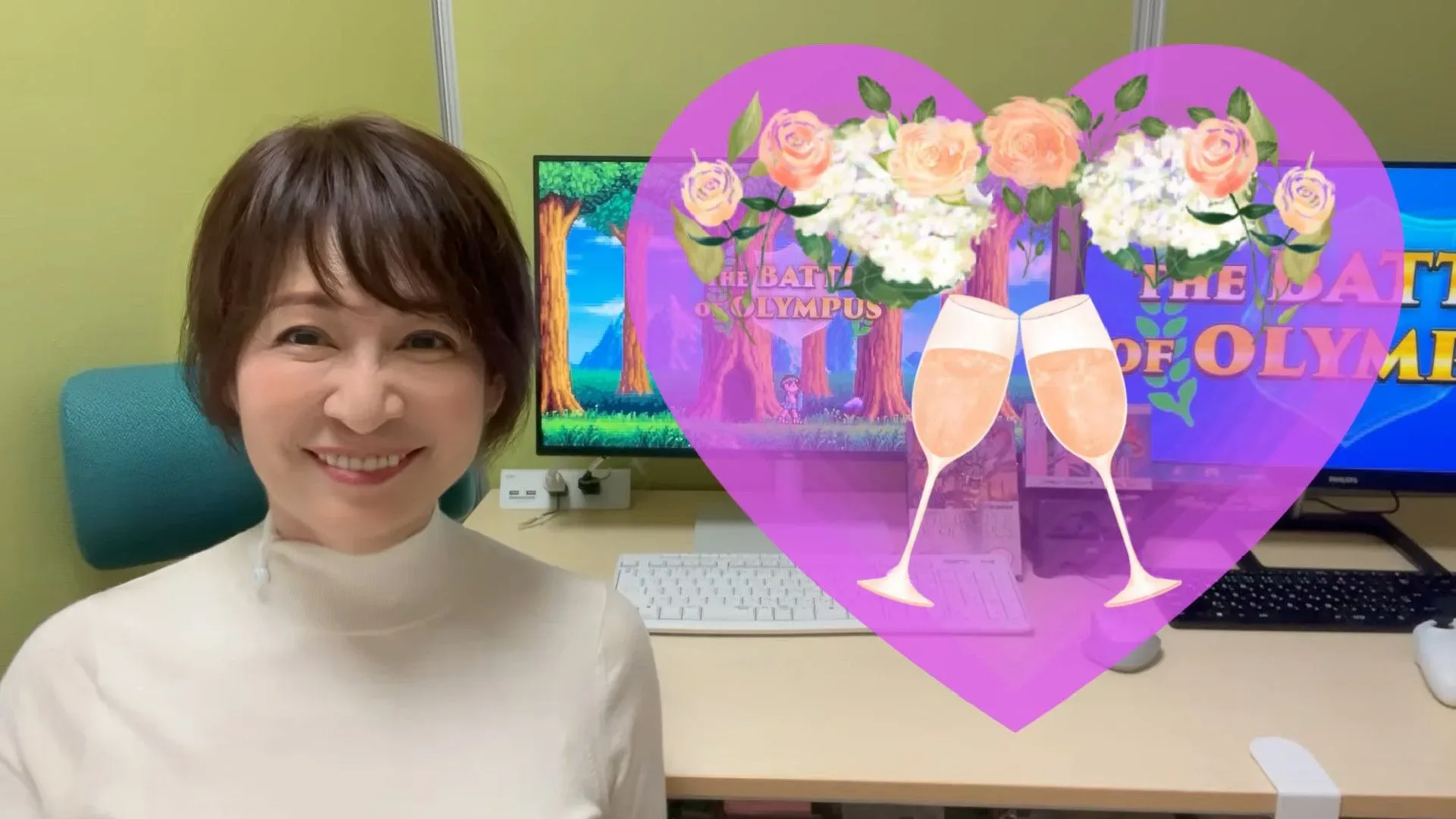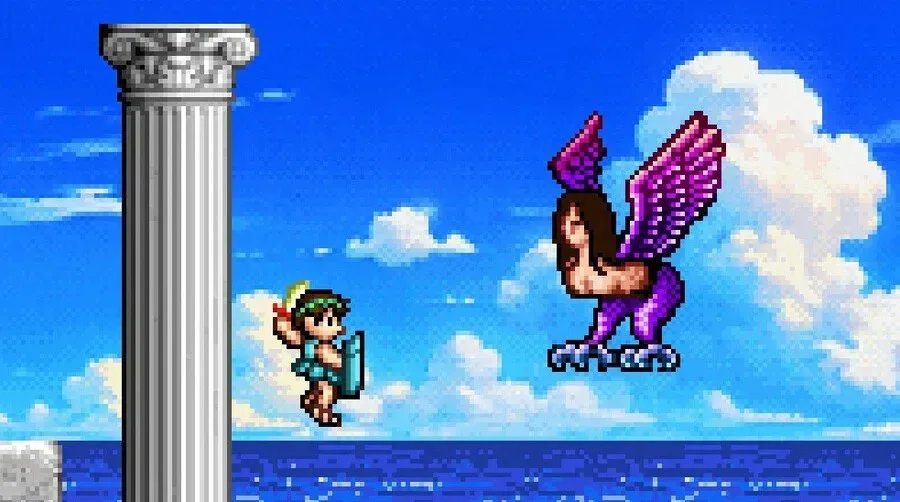
The Battle of Olympus, the Greek-myth action-adventure first released for NES in 1988, is being remade for Steam by the two people who originally made it: programmer and designer Yukio Horimoto and story-and-graphics creator Reiko Oshida. The pair have re-formed INFINITY Co.,Ltd. for the project, bringing an unusually direct form of stewardship to a revival of an 8-bit cult favorite.
That matters because this is not merely a modern studio borrowing an old title and its recognizable mythology. Horimoto and Oshida are returning to the game they built together, with the stated goal of recreating its underlying systems, redrawing its pixel art, and updating its presentation for PC without discarding its personality or demanding challenge. For a game rooted in the late-1980s overlap between platforming, exploration, and cryptic mythic questing, that is an ambitious balancing act.
The remake is planned to arrive in Early Access in early 2027. At the beginning of that process, the team intends for players to be able to complete every stage present in the original 8-bit release and reach the ending, while retaining the original game balance. The full version is expected to expand the visual overhaul with redrawn graphics, improved animation, and added visual effects, alongside optional difficulty settings and features aimed at speedrunning.
A return to a very personal NES project
Released on NES in 1988 and later adapted for Game Boy, The Battle of Olympus arrived during an era when a game’s systems, story, art, and overall identity could be shaped by a very small group. Horimoto handled its design and programming, while Oshida was responsible for the story and graphics. Their creative partnership was also becoming a life partnership: they met during the development of their first game and later married.
The original project’s Greek-myth foundation grew from long discussions between the two creators. Horimoto has previously described Greek myths and legends as a particular interest, and the game’s premise reflects that fascination. Rather than presenting ancient mythology as a static history lesson, it used the material as fuel for a hazardous side-scrolling adventure: gods, monsters, items, and perilous journeys translated into the rules and rhythms of an NES game.
That combination gave The Battle of Olympus a distinct place among its contemporaries. It is often discussed alongside Nintendo’s early action-adventure work, yet its setting and mood point in a different direction. Its world is tied to Greek legend rather than Hyrule, and its identity comes from navigating a mythological quest through a side-view format where movement, combat, exploration, and player persistence all matter.
The new Steam edition is therefore more than a graphical refresh. It is a chance for its originators to revisit the design decisions of a game created under the technical limits and expectations of the 8-bit period, then decide where modern PC presentation and optional accessibility can be added without sanding away the qualities people remember.
Zelda’s influence was always part of the story
Horimoto has been candid about a major influence on the original: The Legend of Zelda, and specifically ideas associated with Zelda II. He identified the earlier Nintendo series as a source of inspiration for making a scrolling platform game and pointed to its jumping and walking as reference points. Elements including attack, crouch, and jump animation were influenced by that work.
That transparency is useful context for anyone discovering the game through the remake. The late 1980s were full of developers studying successful releases and adapting individual ideas to their own worlds, settings, and technical approaches. In this case, the influence did not result in a fantasy kingdom copy-paste. It helped shape a side-scrolling framework that Horimoto and Oshida redirected toward classical Greek mythology and their own sense of atmosphere.
It also explains why a contemporary remake may be especially interesting to retro-game fans. The original belongs to a period when genres had not entirely separated into neat categories. A game could be a platformer, an action game, an exploratory adventure, and a somewhat mysterious mythological odyssey at once. Revisiting that formula can be revealing, especially when the original creators are the ones deciding which rough edges are essential and which are fair game for revision.
For broader PC-release context, Joking Joystick’s indie game roundup shows just how varied the current PC landscape can be. The Battle of Olympus sits apart from many new projects by drawing its central appeal from a specific historical game and from the people who originally authored it.
What the remake team says it is rebuilding
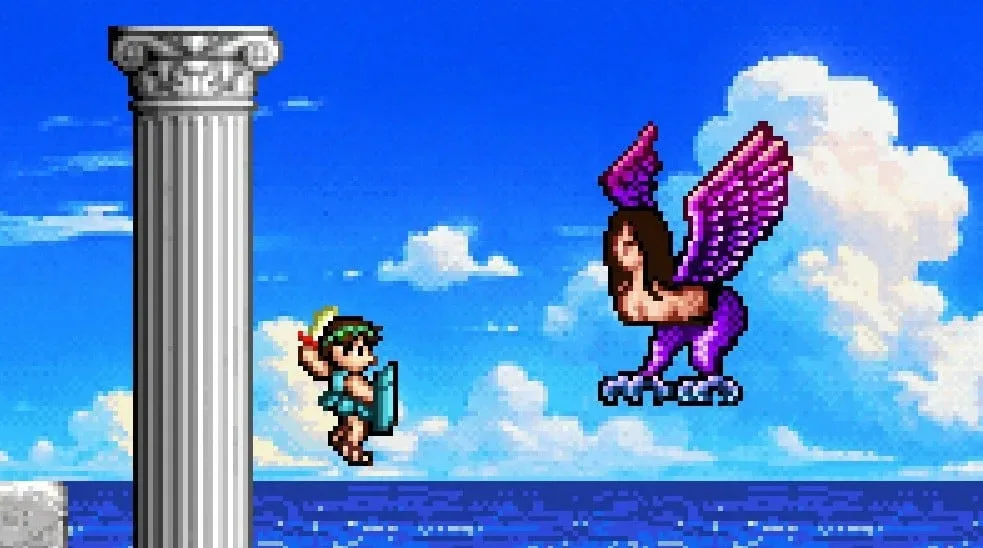
INFINITY Co.,Ltd. describes the remake as being personally reconstructed by the original programming-and-graphics duo. The plan covers core code and pixel art rather than simply placing an old ROM inside a modern launcher. The team says it is rebuilding the game’s systems and main gameplay structure in preparation for Early Access, while redrawing the art and refining the experience for contemporary PC players.
Its stated priorities are reassuringly specific, if still subject to the normal realities of development. The spirit, atmosphere, and challenge of the original are intended to remain intact. At the same time, the full version is planned to receive across-the-board graphical redraws, enhanced visuals and animation, and new visual effects. These are meaningful changes for a title whose original visual identity was necessarily shaped by NES hardware, but they do not automatically tell players how closely every screen, enemy, or effect will resemble the 1988 release. Those details will become clearer as development progresses.
On the gameplay side, the team plans to retain the original balance as an option while adding Easy Mode and Normal Mode. Speedrun-focused features are also planned. This is a potentially smart split for a difficult older game: preservation-minded players can pursue the historical balance, while newcomers may have a clearer route into the adventure. Still, the exact structure of those modes, and what speedrunning tools will include, have not been detailed.
Early Access begins with the complete original route in mind
The most notable promise around the Early Access launch is scope. Rather than beginning with a limited opening area or a disconnected vertical slice, the developers plan for the initial Early Access version to include all stages from the original 8-bit game through its ending. If that plan holds, players entering at the start of Early Access should be able to experience the entire original journey, even as visual and feature work continues toward the full release.
That approach makes sense for a remake with a fixed, established foundation. The original game already supplies the complete progression and conclusion; the new project’s work lies in rebuilding, presenting, and selectively extending it. It also offers supporters a more useful way to assess the team’s preservation goals. The original balance is not just being referenced in a description—it is intended to be playable from beginning to end at the Early Access starting point.
Of course, Early Access is still development in public. Planned modes, enhancements, pacing adjustments, visual revisions, and speedrun options can change before a full release. No price, precise Early Access date, or final-release date has been specified here. Players interested in the remake should treat early 2027 as a target window rather than a guaranteed day on the calendar.
Why this remake is worth watching
Retro remakes come in many forms. Some preserve a game almost frame for frame. Others use an old name as a launch pad for a radically different production. The Battle of Olympus appears to be aiming for a middle ground: a new PC build with refreshed art and modern options, guided by the people whose programming, art, and story formed the original version.
That does not remove the challenge of the task. The game’s old-school difficulty and design logic are part of its character, but contemporary players will reasonably expect clarity, consistency, and flexibility from a new release. The planned combination of original balance, selectable modes, visual improvements, and speedrun features suggests the team knows it must serve several audiences at once: returning players, curious retro fans, and people meeting this particular Greek-myth quest for the first time.
For now, the essential facts are straightforward. A 1988 NES game with later Game Boy history is being rebuilt for Steam. Its original husband-and-wife development team, Yukio Horimoto and Reiko Oshida, are directly making it through their re-formed INFINITY Co.,Ltd. studio. Early Access is targeted for early 2027, with the complete original stage lineup planned from the outset and a fuller visual and feature upgrade intended over the course of development. Olympus is getting another climb—this time with its original architects back on the mountain.