Indie games remain extremely good at answering questions nobody in a corporate pitch meeting would dare ask. What if office work were performed by a worm flinging itself across a keyboard? What if the answer to a puzzle was throwing yet another shoe? What if shipbuilding tools let players export their nautical masterpieces for 3D printing or use them in other games?
This week’s PC-heavy assortment has all of that, alongside a vibrant mascot platformer, a first-person puzzle adventure built around walking on walls, and several promising games on the horizon. There is also substantial news from studios taking unusual routes to fund, publish and develop games. It is an encouraging reminder that the independent scene is not one genre, one business model, or one appropriately sized animal pretending to be a financial analyst.
Double Fine’s new independent experiment
Double Fine Productions has become independent again after leaving Microsoft, and its current Kickstarter project is built around a game jam rather than a conventional single-game campaign. The proposal gives backers a vote among 26 concepts. Four pitches are intended to advance into playable prototypes, after which a further vote will select one to become a completed, deliberately small-scale game.
The process is being documented by 2 Player Productions and streamed on Twitch, giving viewers a chance to see an experiment in game development as it evolves. There is, naturally, an enormous stretch goal attached: if the campaign reaches $100 million, Double Fine says it will make Brütal Legend 2. That is a very high bar, but it is a funny and unmistakably ambitious one.
Elsewhere in the studio’s catalog, former Xbox exclusive Keeper has come to PlayStation 5, while Kiln, Double Fine’s most recent game, has had its price reduced to $8. The broader story is not merely about an old studio changing corporate status; it is about a team openly testing a more communal way to choose a manageable next project.
A publisher model with a sharper edge
Aggro Crab is also turning recent success into support for other developers. The studio, whose hit Peak provided the financial footing, plans to publish a small number of games each year. Its stated interest is in intense, stylized work with attitude rather than any narrowly prescribed genre.
Just as important is how the label intends to handle money. Aggro Crab does not plan to insist on recovering every bit of its investment before the creators it signs receive revenue. That distinction matters in an industry where recoupment structures can leave smaller teams waiting a long time for the commercial reward of their work. The publisher has also made clear that projects using generative AI are not welcome.
One announced signing is Rebounder, ThirtyThree’s precision platformer with a hand-drawn comic-book look. Aggro Crab’s existing publishing catalog also includes the surreal horror title Subway Midnight. A label that limits itself to only a couple of projects annually cannot fix every difficult part of game financing, but a sustainable scope and a developer-friendly revenue approach are a worthwhile combination to watch.
Related coverage includes New Indie Games: Worm Office Chaos, Colorful Platforming and DIY Ships.
For a different look at how games create shared experiences outside the usual release-calendar churn, Joking Joystick has also explored the unwritten rules of couch multiplayer.
Haunted Chocolatier remains in progress
Eric Barone has offered another status update on Haunted Chocolatier, the game announced in 2021. No release window accompanied the update, so fans should not read a date into it. Barone did say that development is continuing and characterized the project as the work he is most motivated to pursue, even while other commitments, including the anticipated Stardew Valley 1.7 update, demand attention.
The important message is a familiar one: the game will not be rushed simply to end the wait. That may be disappointing to anyone eager for a calendar square, but it is a more useful update than artificial certainty. Haunted Chocolatier is moving forward; its finish line remains unannounced.
New games to put on the weekend list
Worming From Home
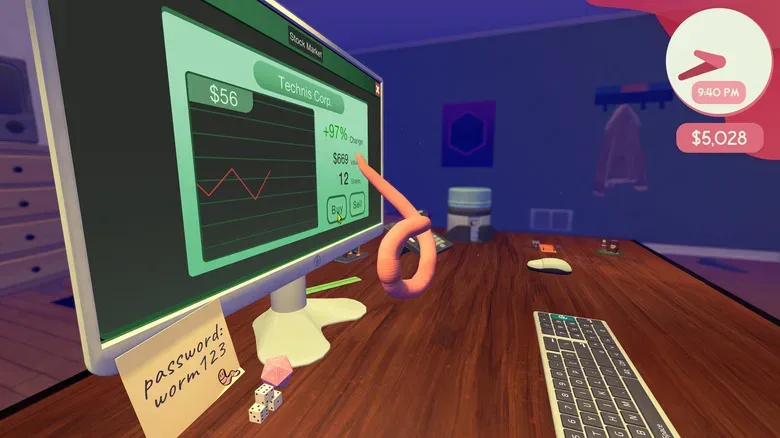
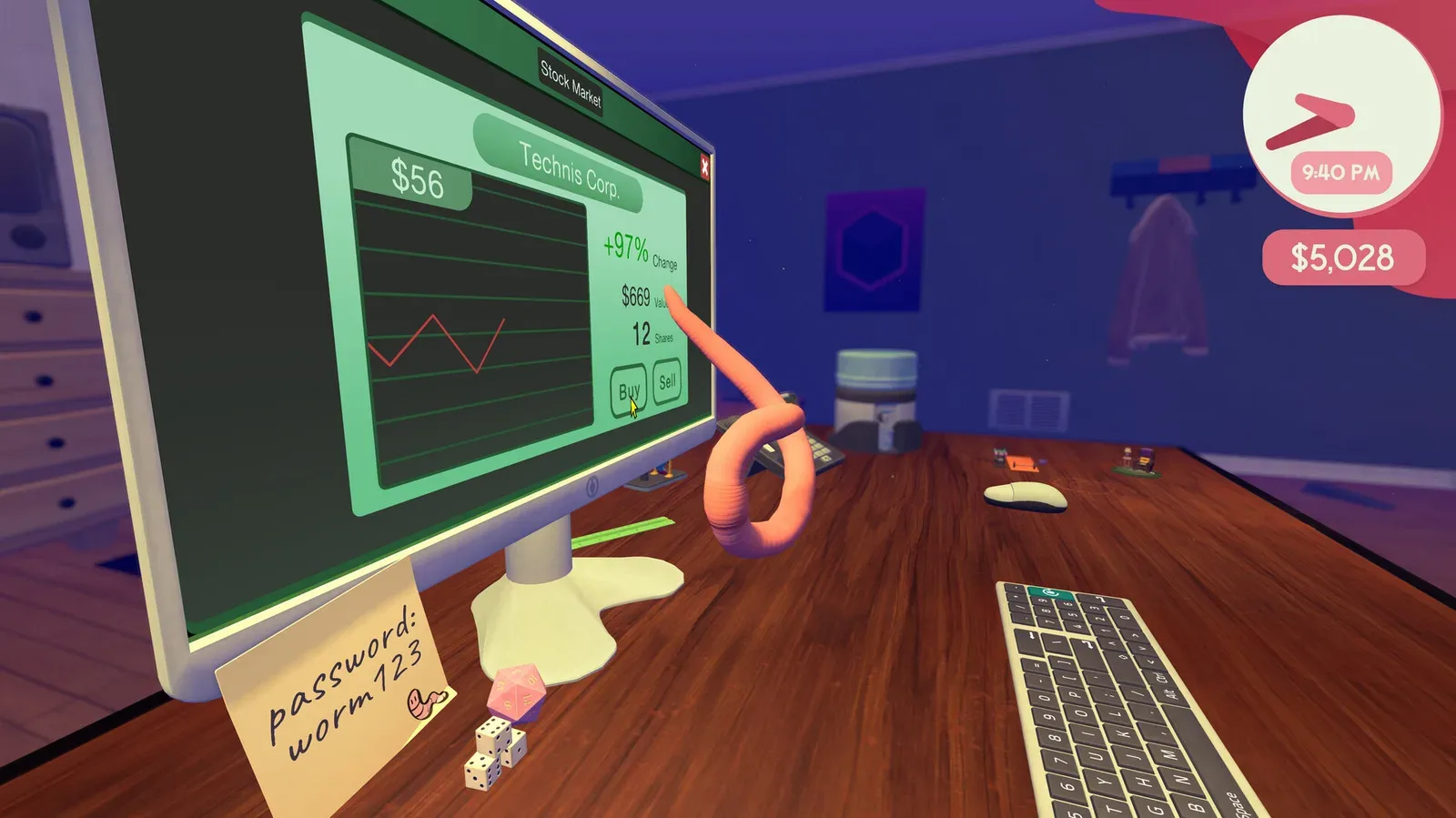
Worming From Home, from Zach Northrop and Mason Sabharwal, is on Steam for Windows and Mac and is Steam Deck Verified. Its listed standard price is $10, with a 25 percent discount running through September 18. The central joke is also the game’s premise: players are a worm attempting to rise through the ranks as a financial analyst without anyone noticing that their colleague has no limbs and possibly lives beneath a rock.
The worm must propel itself over a keyboard to type messages and complete spreadsheet work, while other tasks include handling calls and video meetings. There are life-simulation touches as well, such as exercise, hat shopping and flirting with co-workers. One reported oddity involves dialing 911, though the precise result is best left undisclosed for anyone curious enough to risk an invertebrate workplace incident.
Marsupilami 2: Salsa Palombia
Ocellus Studio’s Marsupilami 2: Salsa Palombia is available for Steam on Windows, Epic Games Store, PlayStation 5, Xbox Series X/S and Nintendo Switch. Steam Deck verification is listed, a demo is available, and the stated price is $30.
The colorful platformer draws on the long-running Belgian comic character and uses a three-character setup. Levels allow players to switch between two characters in order to apply different abilities to hazards and routes. One can curl into a ball to bounce about and avoid spike traps, for example. That structure recalls the character-swapping momentum of classic mascot platformers, while the game’s stages pack in secrets and steadily increase the challenge. It has four worlds, plus bonus levels for those who want more after reaching the ending.
He Who Watches
Bobby Vanden’s He Who Watches, published by Draknek and Friends, is available through Steam and Itch for Windows and Mac. It is Steam Deck Verified. The regular listed price is $20, with a 15 percent Steam discount through September 16.
This first-person puzzle game uses a magical bow and arrow for far more than basic target practice. Arrows can trigger switches, shift blocks and serve as a hookshot for crossing gaps. The player can also travel along walls and ceilings, making perspective and spatial orientation central to its riddles. Inspirations include Fez, Animal Well and Tunic, which suggests an appetite for secrets is sensible preparation.
Its hint design is especially notable. Rooms contain smaller optional puzzles meant to point players toward the logic behind the main challenge, offering guidance without simply replacing discovery with an answer screen.
ShipShaper: Falconeer Chronicles
ShipShaper: Falconeer Chronicles comes from Tomas Sala, the creator of The Falconeer. It is in Steam Early Access for Windows, is playable on Steam Deck, and has a demo. Its regular listed price is $9, with a 10 percent discount through September 16.
The tool-game hybrid is designed to make vessel creation more tactile and less dependent on conventional 3D modeling expertise. Players shape hulls organically and attach decorative and functional parts, then can take their construction onto the water. Ships can also be used in Bulwark: Falconeer Chronicles.
The project goes beyond a personal boat workshop: creators may use their designs in their own games, and an export option supports 3D-printing files. That makes it an unusually open-ended proposition for anyone whose ideal digital craft deserves to become a physical desk-bound fleet.
Shoe It All!
Amberbite’s Shoe It All! turns footwear into a puzzle-solving projectile. It is on Steam for Windows and Mac, as well as Xbox Series X/S, PlayStation 4, PlayStation 5, Switch, Android, Google Play for PC, iPhone, iPad and Mac. PC and console editions are listed at $8, mobile versions at $5, and the Steam release has a 20 percent discount until September 17.
Players swing, time their release and launch shoes to solve more than 65 hand-crafted puzzles. Secrets, efficiency solutions that use fewer shoes, trick shots, collectible stickers and a speedrun mode give the game reasons to revisit its comic-styled rooms. A pop-punk soundtrack completes the promise that responsibility is optional when the correct answer is a flying sneaker.
Games arriving later this year and beyond
I Am Your Beast: Quitting Time is a prequel expansion from Strange Scaffold and Frosty Pop, due October 20 on Steam, GOG and Itch for Windows. It contains 10 new levels set in Southeast Asia. The base game is also scheduled for Switch and Switch 2 that day; it is already on PlayStation 5, Xbox Series X and iOS. Console versions of the expansion are planned later.
The Final Cut of Lilith Cunningham is targeting 2027 on Steam. Causeway Studios’ supernatural mystery follows Lilith’s search for her missing daughter through a strange hotel and drive-in. Its unusual mechanic involves editing full-motion-video footage on a mystical film reel, with alterations reshaping the surrounding people and world. It stands alone, though it connects to the wider Worlds Across the Causeway setting that includes The Haunting of Joni Evers.
Milki Delivery arrives November 17 for Steam on Windows, Mac and SteamOS/Linux. From the developers of Minami Lane and Kabuto Park, it follows a young milk courier caring for a pet cow, making deliveries including strawberry milk and milk tea, and upgrading a bike and farm. The hand-drawn game is expected to run two or three hours and has no fail state.
Finally, Cat Secretary is due November 4 on Steam, where a demo is available. Good Story Guild’s narrative adventure casts a suit-wearing cat as an office worker resisting a plan to replace people with robots. Alongside coffee, router repairs and reception-area upgrades, players can pursue workplace relationships and promotions. Side quests have multiple solutions, player choices influence the cat’s personality, and demo progress will carry into the full game. For anyone seeking an office simulator with more whiskers and less automation, that is a solid memo.