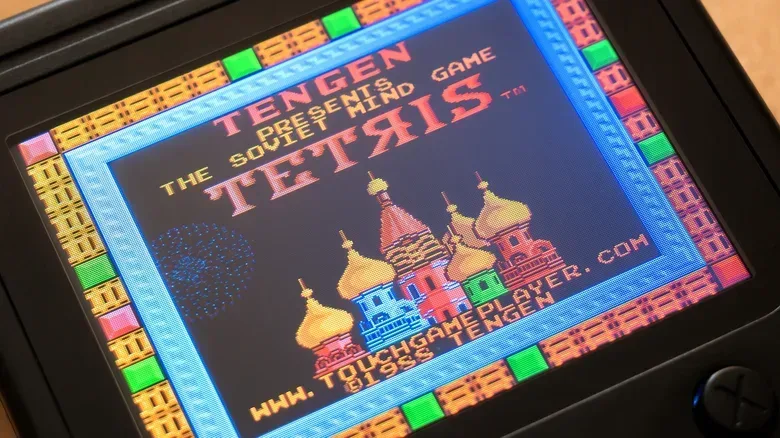
Some games become landmarks because they belong to one machine. Tetris became a landmark by refusing to stay put. The puzzle has accumulated more than 200 official releases, plus an uncountable ecosystem of unofficial ports and bootlegs, putting it in a category beyond the familiar jokes about frequently reissued games. Its route from a Soviet computer to computers, handhelds, consoles, virtual reality and multiplayer competition is less a story of one definitive edition than a story of an idea that keeps fitting new contexts.
That adaptability is not accidental. Tetris asks players to move and rotate falling tetrominoes—shapes each made from four square blocks—so they complete horizontal lines. Finished lines disappear, making room for the next pieces. The premise can be grasped almost immediately, yet the demand to plan ahead increases as the board fills and the pieces speed up. It needs only a small set of controls, a readable playfield and a way to display shapes. Those modest requirements have made the game unusually portable across generations of hardware.
Its longevity also has a more interesting consequence: “Tetris” does not describe one frozen set of mechanics. Different official versions preserve the central act of arranging blocks while changing the pacing, piece behavior, competitive format, presentation and even the purpose of play. The Game Boy edition turned it into a defining portable experience; NES Tetris developed into a demanding competitive standard; later entries added timed clearing, held pieces, online matches, crossover play and battle royale pressure. The brand survived because the design could be protected at its core while still being interpreted.
From text characters to a worldwide puzzle
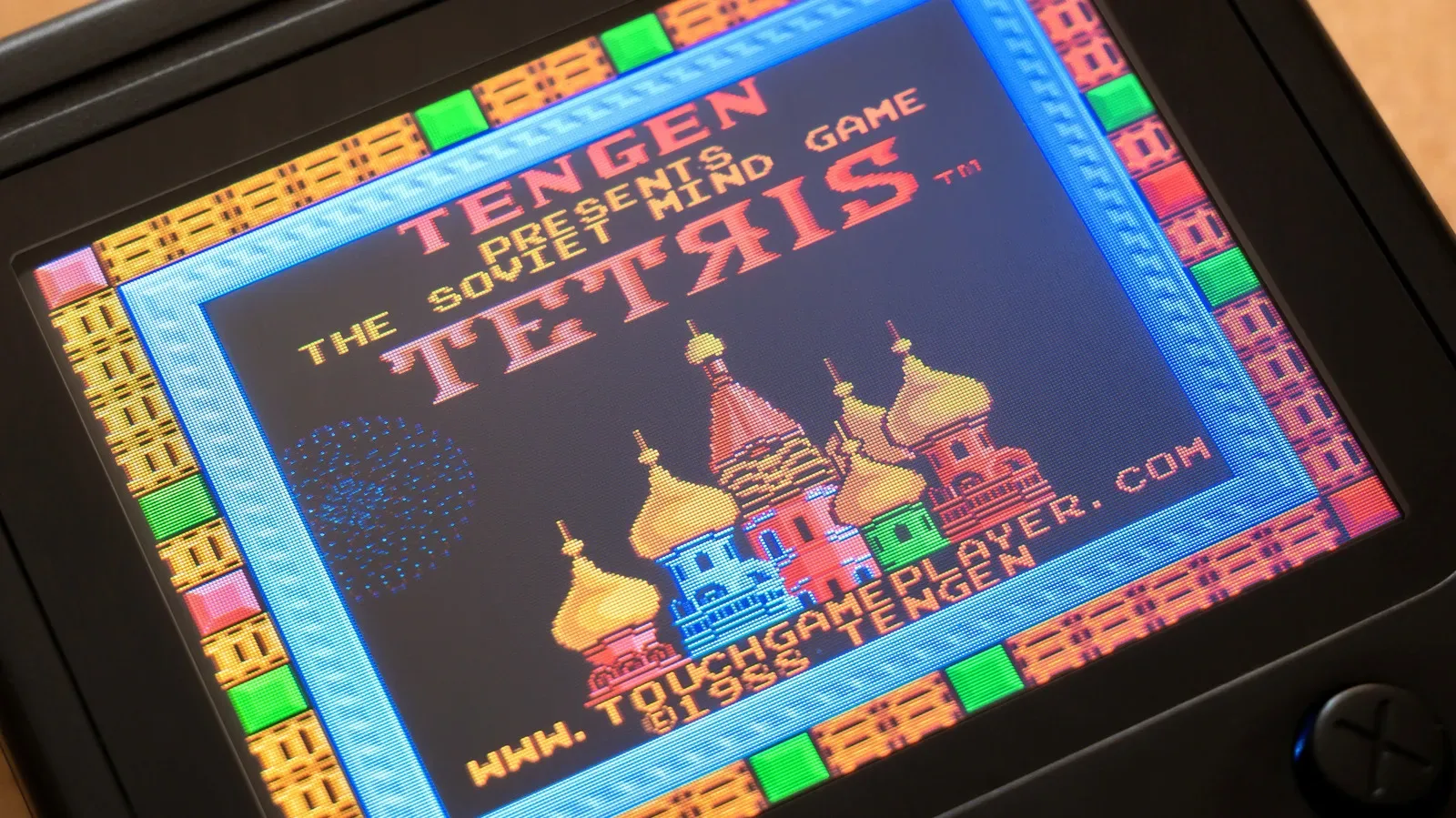
Alexey Pajitnov developed Tetris in the Soviet Union in 1984–1985 while making games for fun. The first version ran on the Elektronika 60, a machine without graphical output. As a result, its tetrominoes were represented using text characters rather than the bright blocks now associated with the series. That origin underlines a useful point about the game’s construction: the appeal was present before familiar music, color screens or elaborate visual effects. The important information is spatial—where each shape is, how it can turn and whether a row is complete.
Pajitnov and colleagues subsequently brought the game to the IBM PC and shared copies around the region. Versions later appeared on prominent home computers including the Commodore 64, Amiga and Mac. The process was not simply a matter of a modern publisher launching a game simultaneously everywhere. The rights journey involved complicated distribution and licensing efforts. Nintendo’s pursuit of the handheld rights for its forthcoming Game Boy included a legal battle, but the company ultimately secured them.
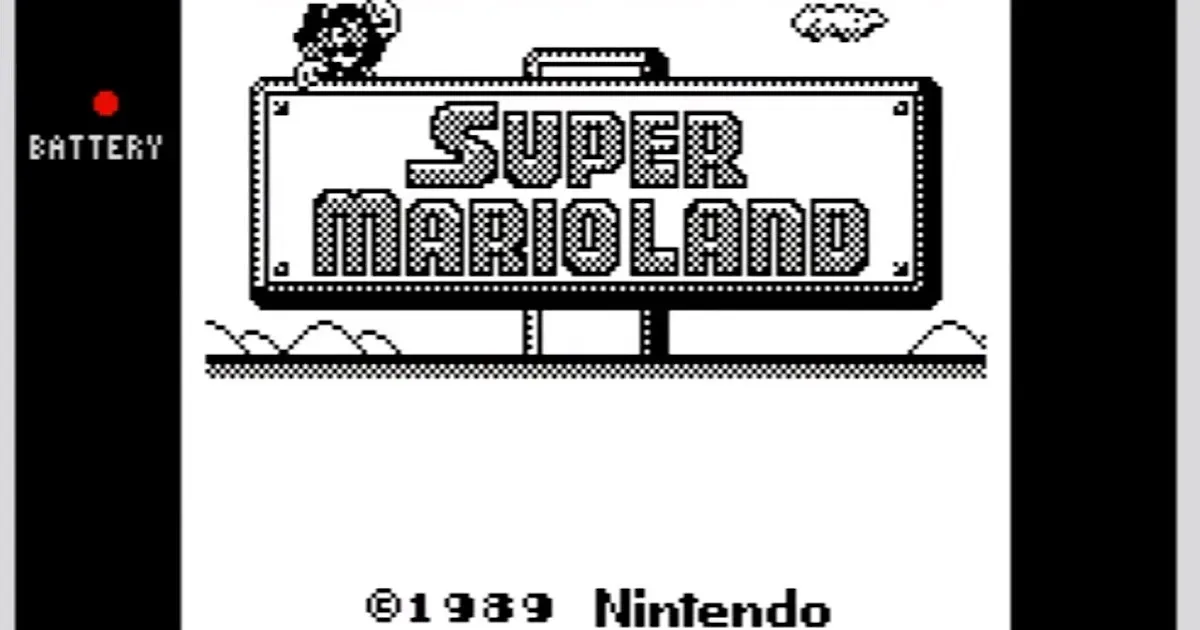
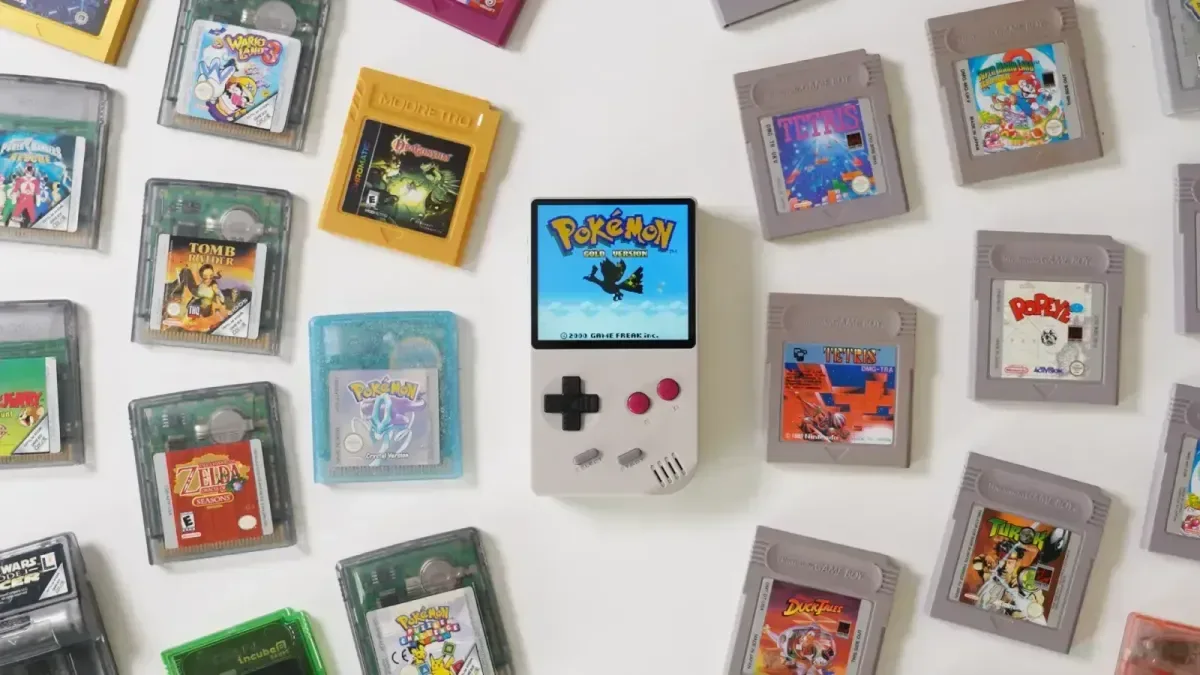
The result in 1989 was an edition with extraordinary reach. Tetris was bundled with Game Boy in every market except Japan, introducing the puzzle to a huge audience alongside Nintendo’s handheld. It also debuted the now-iconic “Theme A” music. Pajitnov has named the Game Boy edition as his favorite, and it sold more than 35 million copies, excluding mobile versions. For a game famous for flexibility, this release is a major reason it became culturally fixed in the first place: it made a portable machine and a portable game feel inseparable.
In 1996, Pajitnov and longtime business partner Henk Rogers formed The Tetris Company to oversee branding and licensing. That framework matters because a game appearing everywhere can otherwise become so fragmented that its identity is unclear. The company’s Tetris Guideline sets rules for how official games should look, play and be controlled. In practical terms, a guideline is a shared design standard: it gives developers boundaries so a new release can make changes without ceasing to feel recognizably like Tetris.
Why a minimal ruleset keeps producing new versions
Tetris has an unusually compact loop. A player receives a piece, decides where to put it, and immediately lives with that decision. A good placement can clear a line and improve the board; a careless one can leave gaps that constrain every later move. There is no need for a large command list or extensive tutorial before this tension emerges. That clarity helps explain why it works with a few buttons and uncomplicated graphics, and why unofficial versions have found their way to unlikely devices such as graphing calculators.
The technical economy of the design should not be confused with simplicity of mastery. Players must read the current board, recognize the next piece, preserve useful spaces, and act within a shrinking time window. A single long straight tetromino—the I-block—can be especially valuable for clearing four lines at once, but a player cannot always count on receiving it when needed. The game turns a limited vocabulary of shapes into a steady sequence of risk assessments.
Analysis: this is a key reason rereleases do not automatically feel redundant. A newer device can change the social setting, display style or input feel without requiring the puzzle to be rebuilt from scratch. A compact handheld session, a solo score chase, a four-player contest and a 99-person elimination match all begin with the same readable board. The format changes what the player values—survival, speed, score, disruption of opponents or atmosphere—while the line-clearing logic remains intact.
The Game Boy bundle also gave Tetris a powerful generational advantage. People who met it on that handheld had a clear, portable memory attached to it, while later players continued to encounter official versions on newer devices. That is different from nostalgia alone. Nostalgia can invite someone back, but the puzzle’s short learning curve lets a fresh player understand why it matters without needing to know its history.
The name has become so broadly associated with falling-block puzzles that it has sometimes been used as marketing shorthand. The SNES game released outside Japan as Tetris Attack was originally Panel de Pon in Japan. Nintendo licensed the Tetris name in other markets, apparently betting that audiences would connect it with block-based puzzling; later releases outside Japan used the Puzzle League name instead. It is an instructive example of the difference between a name and a ruleset: public recognition of Tetris was valuable even when the underlying game was not the familiar tetromino design.
NES Tetris: the version built for a hard stop
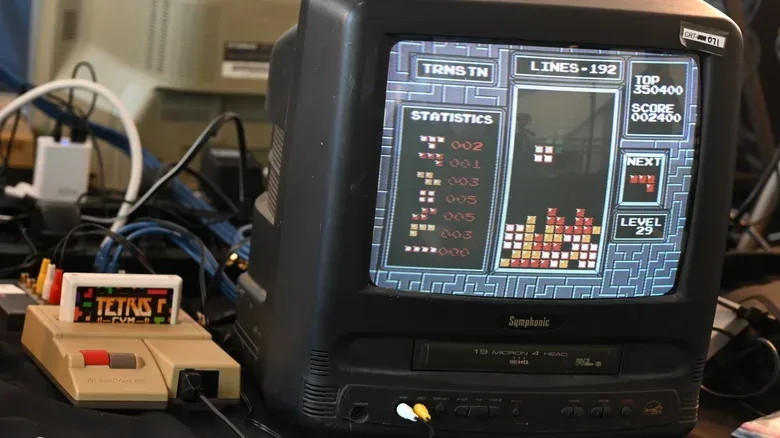
The 1989 NES release occupies a distinctive place in the series. It was not designed as an endless game in the way many later versions are. At higher levels, the speed rises drastically enough to create what was intended as a natural endpoint for a run. Competitive attention initially centered on scoring as highly as possible before the so-called kill screen—the point where the game’s speed and conditions were expected to make continued play effectively impossible. More recently, players have developed techniques that take play beyond barriers once considered insurmountable.
Its competition appeal comes partly from what it lacks. NES Tetris has no hold function, meaning a player cannot set aside the current piece to use later. It also has no grace period after a tetromino reaches the bottom of the board: it locks immediately. In newer games, that delay is often called lock delay; it allows last-second movement or rotation before a piece is fixed in place. Removing it makes each descent more final.
Piece selection is another defining difference. Later Tetris games commonly use a pseudo-random system intended to ensure each tetromino appears within a reasonable span. NES Tetris can instead produce long droughts, including stretches without the I-block a player may be saving space for. This makes the version harsher and less predictable. In a competitive setting, that unpredictability becomes part of the challenge rather than a mere inconvenience: players need strategies that survive awkward pieces, not only ideal ones.
For players trying to understand why the NES edition remains important, the lesson is not that older automatically means better. It is that its constraints create a particular kind of drama. Later features such as held pieces and lock delay are quality-of-life tools that broaden tactical options. The NES game’s absence of them puts the emphasis on immediate placement and recovery under pressure.
How official Tetris expanded its vocabulary
Subsequent releases demonstrate how much room exists around the core rules. Tetris DX arrived for Game Boy Color in 1998, updating the Game Boy formula with color and introducing Sprint mode. Rather than asking a player to continue indefinitely, Sprint challenges them to clear 40 lines as quickly as possible. That simple change shifts the skill being measured: survival becomes less important than efficient stacking and quick decisions.
The New Tetris on Nintendo 64 followed in 1999. It was the first mainstream release to let four players compete at the same time, and it introduced the hold feature. Holding lets a player swap the active tetromino for one saved for later, adding planning flexibility that the NES version deliberately does not offer. The feature has since become a familiar part of modern Tetris expectations.
Tetris DS in 2006 attached several modes to Nintendo themes including Zelda and Metroid, and it was the first official Tetris game with online play. Its standing among well-regarded entries illustrates another way the series travels: a recognizable puzzle can share space with a platform holder’s characters and visual language without losing its basic readability.
In the more recent era, Puyo Puyo Tetris joined two established puzzle traditions. Puyo Puyo had been popular in Japan but had often been reskinned under other franchises outside that market, including Dr. Robotnik’s Mean Bean Machine and Kirby’s Avalanche. After its 2014 Japanese release, Puyo Puyo Tetris reached other regions in early 2017 with modes that combine the two styles. A crossover is a particularly strong test of Tetris’s durability: its rules are distinct enough to remain legible even while another puzzle system is operating beside it.
Tetris Effect, released in 2018, took a different path by making audiovisual immersion the central frame. Its journey through visual landscapes and music emphasizes mood alongside performance, and its time-stopping ability permits clears larger than four lines. The expanded Tetris Effect: Connected version brought the experience to modern systems in standard view after the original was limited to VR platforms.
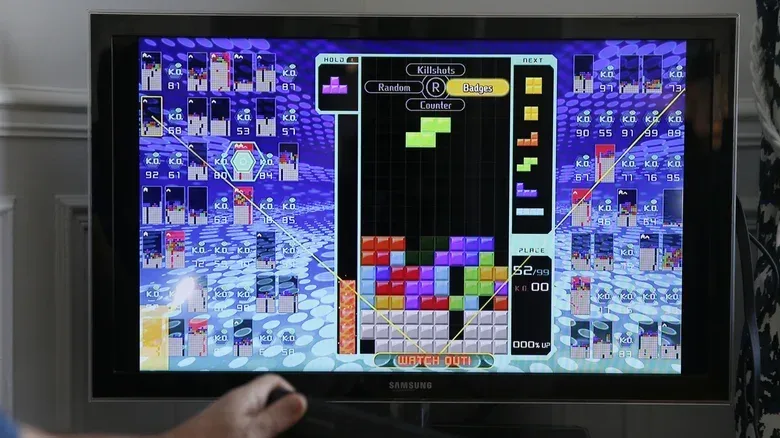
Then Tetris 99 translated battle royale conventions into falling blocks in 2019. Ninety-nine players compete at once, and knocking out opponents sends garbage—pre-filled obstructive blocks—to their boards. It is a dramatic alteration of the social stakes, but not an abandonment of the central puzzle. Clean, fast line clears still matter because they become a means of applying pressure elsewhere.
Forty years of versions, not one replacement
Tetris Forever, released in 2024, treats four decades of the series as an interactive museum with interviews and playable versions. That framing is appropriate. Tetris history is not a straight line where each new entry erases the last. The Game Boy release remains a sales and cultural giant; NES Tetris remains a specialized competitive challenge; Tetris DX established a speed-focused mode; and newer games demonstrate how far the format can stretch into VR presentation, crossover systems and mass online competition.
That variety explains why the number of releases is meaningful rather than a trivia stunt. Tetris has repeatedly met players where they are, whether that meant text characters on an early computer, a cartridge in a handheld, a four-player living-room session or a crowded online match. Its central demand is still immediate: make space before there is none. Everything around that demand can change, which is precisely why Tetris keeps finding another screen to occupy.
For a broader look at the challenge of reducing gaming distractions without entirely giving up modern connectivity, see why a dumb phone can cut gaming distractions but remains a difficult smartphone replacement. Tetris’s history suggests the opposite side of that equation: a game with exceptionally clear fundamentals can endure on almost any device people choose to keep nearby.