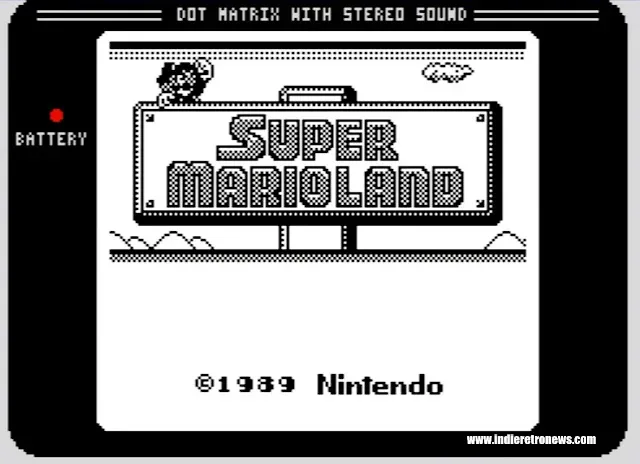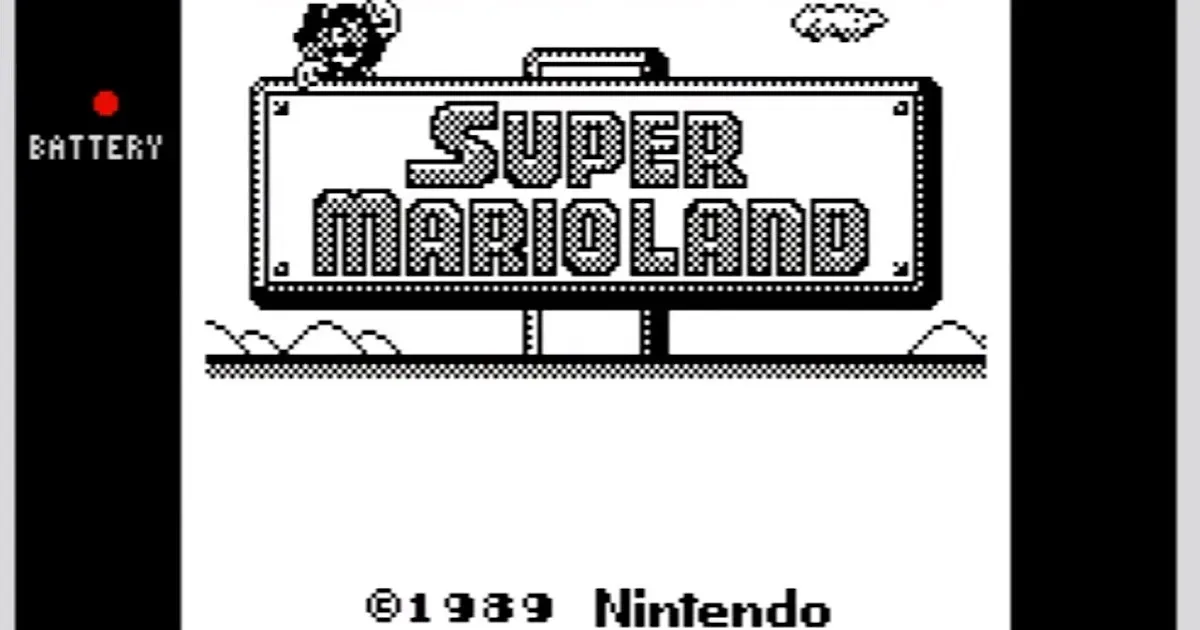
Mario has taken an unusual detour through 8-bit history. Super Mario Land ZX, a public-beta demake by Kirby2000, brings the full 1989 Game Boy adventure Super Mario Land to the ZX Spectrum 128K. The project is described as fitting the original game’s entire 12-level campaign, spread across four worlds, into one 128K load.
That is a particularly interesting match-up because the source game and destination machine come from different corners of the late-1980s games landscape. Super Mario Land was built as a launch-era portable Mario game for Game Boy; the ZX Spectrum 128K version instead targets a home-computer platform and supports both keyboard controls and a Sinclair joystick. The result is not presented as a new Mario adventure or a selective tribute, but as an attempt to reproduce the complete compact Game Boy game in Spectrum form.
A full campaign, not just a first-level showcase
The beta includes all 12 levels and four worlds from the original. That scope matters. Retro demakes can sometimes mean a single stage, a technical experiment, or a visual reimagining. Here, the stated goal is broader: convert the whole game while retaining the distinctive pieces that made Super Mario Land unlike the better-known console Mario titles of its era.
Most notably, that includes the submarine and aeroplane shoot-’em-up stages. Rather than staying entirely in the familiar side-scrolling platform format, the 1989 game changes its play style in those sequences. Their inclusion means the Spectrum version has to account for more than Mario’s running and jumping: it also has to carry over the original’s shifts in pacing and control expectations.
Those stages are important to the identity of Super Mario Land. The game is often remembered as a short, portable interpretation of Mario platforming, but its vehicle sections helped distinguish it from a straight miniature of the NES formula. A conversion that omitted them might still evoke the Game Boy release; retaining them is a stronger claim to recreating the game as a whole.
What “128K load” means in this project
The phrase single 128K load refers to the project’s stated effort to place the complete converted game within the ZX Spectrum 128K’s available memory configuration, rather than splitting the adventure across separate loads. In practical terms, that makes the reported scale notable: level data, game logic, graphics and music arrangements all have to coexist within a constrained memory budget.
It also helps explain why projects like this invite attention from retro-computing communities. The appeal is not merely seeing a famous game on a different machine. It is seeing what survives when a familiar design is translated across different technical limits, display characteristics, controls and audio hardware.
That does not automatically tell players how closely every scene, movement behavior, collision rule or timing detail matches the Game Boy game. The beta’s stated objective and feature list establish its breadth, but an early build is still an early build. For now, the more useful takeaway is that Super Mario Land ZX is attempting a complete-platform adventure conversion rather than advertising an isolated proof of concept.
Related coverage includes Super Mario Land ZX Brings the 1989 Handheld Adventure to ZX Spectrum 128K.
AY audio gives the soundtrack a Spectrum voice
Kirby2000 has also rearranged 18 tunes for the Spectrum’s AY audio chip. An audio chip is the dedicated hardware responsible for producing sound; in this context, arranging music for the AY chip means adapting the game’s musical material to the voices and character of Spectrum 128K audio.
That distinction is worth making because a rearrangement is not necessarily an attempt to duplicate the Game Boy soundtrack note-for-note in identical sound. It is an adaptation for a different sound system. The original game’s melodies are being brought into the format and limitations of the destination hardware, making the music part of the conversion rather than an afterthought.
Music is especially central to this sort of project because players often recognize a game long before they consciously evaluate its technical details. The familiar melodies can make an adaptation immediately legible, while the AY treatment gives the conversion its own platform-specific character.
Why the original remains an ambitious game to revisit
Super Mario Land launched on Game Boy in 1989 and went on to sell 25 million copies. It is identified as the fourth best-selling Game Boy title of all time. Its importance is not simply commercial: it demonstrated that Mario’s side-scrolling approach could be made to work in a compact handheld format.
The game also introduced Princess Daisy to the series. Its success fed into later branches of Mario history, including Super Mario Land 2: 6 Golden Coins and Wario Land, the latter of which became the starting point for Wario’s standalone spin-off line. In that sense, revisiting the first game is not only about Mario’s early portable years; it also means revisiting the foundation of later characters and series developments.
Nintendo has officially rereleased the original through the Nintendo 3DS Virtual Console and Nintendo Switch Online. For a broader look at the company’s changing relationship with games on physical formats and platforms, see Nintendo Physical Media: From Cartridges to Switch 2 Game-Key Cards.
Super Mario Land ZX approaches the same material from a different angle. It is neither a modern official rerelease nor a version designed to reproduce the Game Boy experience on its native hardware. Its identity is the translation itself: an established handheld game reworked for a Spectrum 128K audience and its control options.
Beta status makes real-hardware feedback especially valuable
The release is explicitly a public beta, and Kirby2000 is seeking feedback from the community. There is particular interest in reports from people running the build on real hardware.
That request is significant. Software intended for vintage systems can behave differently depending on how it is run. Real-hardware feedback can help expose issues that are not necessarily apparent in every other environment, whether they involve loading, controls, sound or general operation. No specific faults have been identified here, and players should not assume that the beta has any particular issue; the request simply reflects the normal value of testing a work-in-progress on the machines it targets.
For prospective players, the practical point is straightforward: this is a community-tested beta rather than a declared final build. Those able to use it with a ZX Spectrum 128K setup, keyboard or Sinclair joystick may be in a position to provide the kind of targeted feedback the creator has requested. Players mainly interested in a finished, stable conversion should keep that in-progress status in mind.
AI-assisted code disclosure
The project carries an AI-assisted code disclosure. That describes the stated use of AI assistance in the coding process; it does not, by itself, explain the exact role of the tools, the degree of assistance, or the specific portions of the game affected. It is therefore best understood as a development-process disclosure, not a substitute for evaluating the beta’s actual performance and faithfulness.
For retro fans, Super Mario Land ZX’s appeal is easy to understand. It takes a concise Game Boy landmark—complete with the unexpected vehicle levels, Daisy’s debut-era adventure and an unusually important place in Mario’s portable lineage—and recasts it for a machine with its own visual, control and audio identity. The public beta now puts that premise in the hands of the Spectrum community, with real-hardware testing set to help determine how the conversion develops from here.