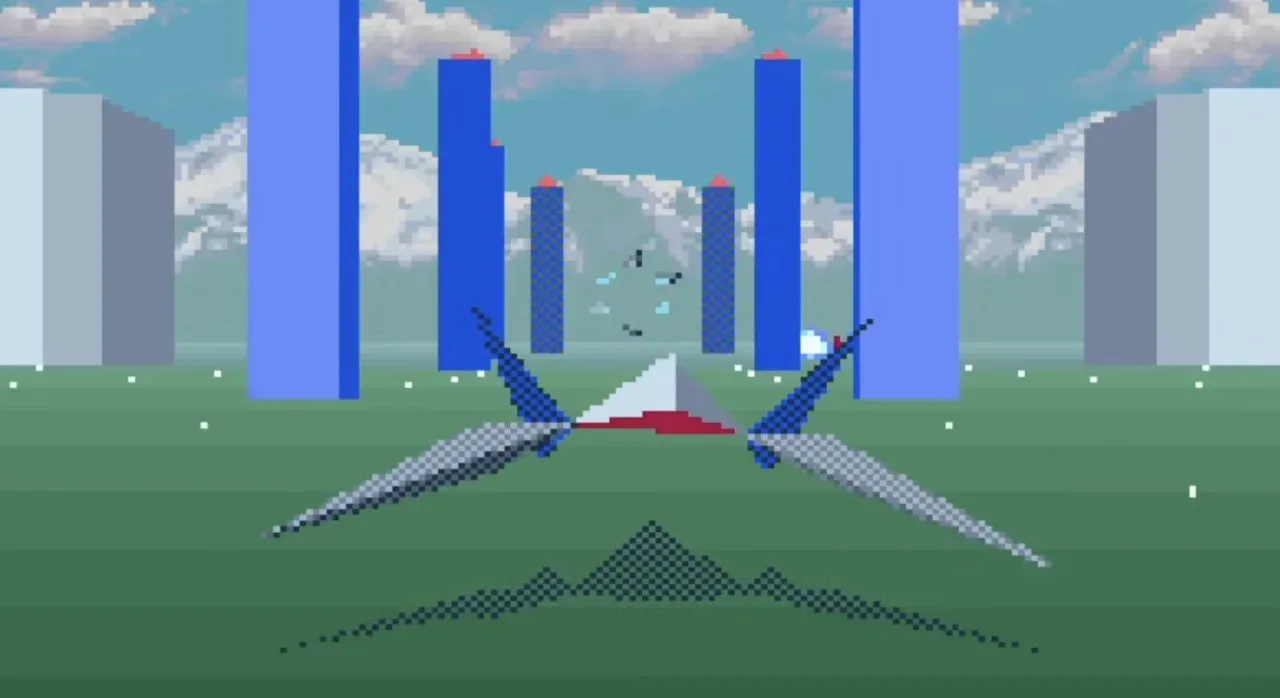
A long-running creative partnership in the Star Fox fan-development scene appears to have come to an end. Sunlit has publicly said they are no longer comfortable being associated with KandoWontu, citing disagreement over KandoWontu’s reported use of AI tools on a native PC port project connected to the original Super Nintendo Star Fox and work associated with Star Fox EX.
The split matters because Sunlit and KandoWontu were collaborators on Star Fox EX, a fan-made expansion and enhancement of the original SNES game. Projects of that kind are rarely just about getting a game to run in a new form. They can involve reverse engineering, programming, art, design decisions, testing, documentation, and the painstaking work of understanding an old game’s unusual hardware and software behavior. In short: exactly the sort of hobby where people can have strong feelings about how the sausage gets made, even if the sausage is flying an Arwing through a corridor full of angry polygons.
Sunlit’s statement frames the disagreement as a question of creative process, authorship, and technical learning—not merely a blanket objection to any use of AI. Sunlit said they strongly disapprove of KandoWontu’s current effort, which they characterized as an AI-assisted attempt to rapidly produce a native PC version. Sunlit also objected to the project drawing on work connected with Star Fox EX, describing that mod as a passion project made by a human team.
A collaboration ends over competing ideas of the process
Sunlit’s central argument is that fan projects derive much of their value from the work required to make them. A finished build, patch, or PC conversion is important, certainly. But for many modders, preservationists, and homebrew developers, the route to that finished result is inseparable from the point of the exercise.
That route can mean gradually learning an unfamiliar programming language, tracing bugs through old routines, writing custom tools, rebuilding systems in a way that makes sense to the team, or figuring out why a decades-old game does something that looked perfectly sensible in 1993 and resembles a haunted appliance in 2026. The result is not only a playable project. It is knowledge that can be shared, extended, fixed, and understood.
Sunlit said they believe an AI-generated or heavily AI-driven codebase risks removing that educational foundation. Their concern is that a creator may reach a functional-looking result without gaining a useful grasp of the underlying code. In that view, the consequence is a “black box”: a project that exists, but one its supposed maker may not be able to maintain, explain, improve, or confidently debug.
That concern is especially relevant to fan development. These efforts are often maintained across years by volunteers, sometimes changing hands as contributors come and go. Clear code, readable tools, technical documentation, and a shared understanding of design choices can make the difference between a project with a future and a build that becomes impossible to support after its initial release.
Sunlit’s distinction: assistance versus replacement
Importantly, Sunlit did not describe every AI tool as unacceptable. Instead, they drew a bright line between using AI in an assistive role and using it to directly create the game or project itself.
Sunlit acknowledged using AI to help produce tools and scripts, and as a way to learn about unfamiliar subjects. That position resembles a practical workflow many developers recognize: a tool can help explain an error message, suggest a starting point for a utility script, organize information, or point a person toward concepts they still need to verify and understand.
For Sunlit, however, the final implementation and design should remain human work. They said they do not intend to use AI directly in the programming of a game project and want their released work to be programmed and designed by people. The key principle is simple: an assistant should assist, rather than substitute for the creator.
Sunlit’s position is that the finished project should reflect human programming and design, with AI limited to support work rather than taking over the core creative and technical labor.
There is room for reasonable disagreement over exactly where that boundary sits. A script that automates repetitive conversion tasks may save hundreds of hours. An AI explanation of an obscure programming concept may help someone learn more quickly. At the same time, asking a model to produce major systems, assets, or an entire port creates harder questions about ownership, reliability, skill-building, disclosure, and whether contributors agreed to have their work fed into such tools.
The important point here is not that every developer must share Sunlit’s personal rule. It is that their rule was clear enough to make continued collaboration untenable. A partnership needs more than compatible schedules and technical ability; it also needs shared expectations about what the work is and how it should be done.
Why Star Fox projects make the dispute feel bigger
The original Star Fox is a particularly meaningful game for this conversation. Released for the SNES, it was a technical landmark, built around the Super FX chip and its polygonal visual style. Its place in video game history comes not only from what appeared on screen, but from the inventive engineering that made that presentation possible on limited hardware.
That legacy can make modern fan work around the game feel like more than a routine modding exercise. An expansion such as Star Fox EX exists in dialogue with the original game’s engineering constraints and design language. The work of unpacking those systems, then expanding them thoughtfully, has its own creative identity.
A native PC port would also be different from simply running the SNES original through emulation. Native projects generally aim to recreate or translate a game’s logic for a contemporary platform, which can open the door to technical improvements and new ways to experience older software. But the method matters to people involved in the work. If a project includes contributions from multiple creators, questions over permission, attribution, and whether earlier work is being reused are not side issues. They are fundamental.
For readers interested in old hardware projects, the practical side of playing original consoles has its own complications too. Our guide on mapping your connection before buying a retro console HDMI adapter is a reminder that preservation and accessibility can involve many small technical choices—even before an Arwing has left Corneria.
What has and has not been established
Sunlit’s post represents Sunlit’s account and their personal explanation for ending the association. It establishes that Sunlit objects to the described approach and does not plan to continue the collaboration. It also lays out Sunlit’s view of responsible AI use in their own work.
It does not, by itself, settle every broader question that can arise around a PC-port effort, including technical implementation, project ownership, permissions, future release plans, or the full extent of any AI involvement. Those are details that require direct, specific clarification from the people involved if and when they choose to provide it.
That uncertainty should not obscure the direct news: one contributor has publicly drawn a professional and creative boundary. Sunlit’s language is critical of KandoWontu’s current direction, but it also ends with a wish that KandoWontu does well in whatever comes next. The relationship may be over, yet the statement is not presented as a call for harassment, pile-ons, or treating a fan-development disagreement like a boss fight with loot drops.
The wider AI question in fan development
This disagreement lands amid a broader debate that has spread through game development, art communities, modding circles, and open-source software. AI tools are not one single practice. They range from search-like help and code completion to generating assets, writing substantial chunks of code, analyzing repositories, and automating tasks that were once manual. Treating all of those uses as identical tends to hide the difficult choices that creators actually face.
Fan communities may feel the pressure more intensely because their projects often depend on trust. Contributors give time without the conventional structure of a commercial studio. They may expect credit, consent before their work is reused, and a shared commitment to learning or preservation. When those expectations differ sharply, a project can fracture even if everyone involved still cares about the game.
Sunlit’s statement is therefore more than a narrow dispute about one Star Fox-related effort. It is an example of a debate likely to continue: whether creative tools should accelerate human craft, or whether speed can become the goal at the expense of understanding, consent, and the satisfaction of making something oneself.
For Sunlit, the answer is unequivocal. The destination is not enough. The journey—the human work of building, learning, and caring about the details—is the part worth protecting.