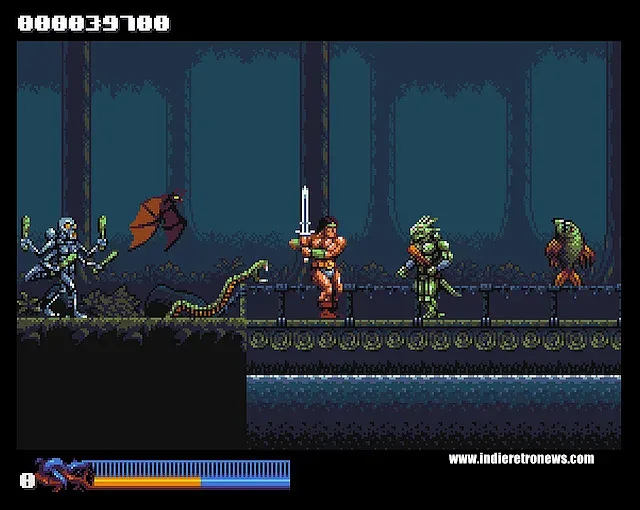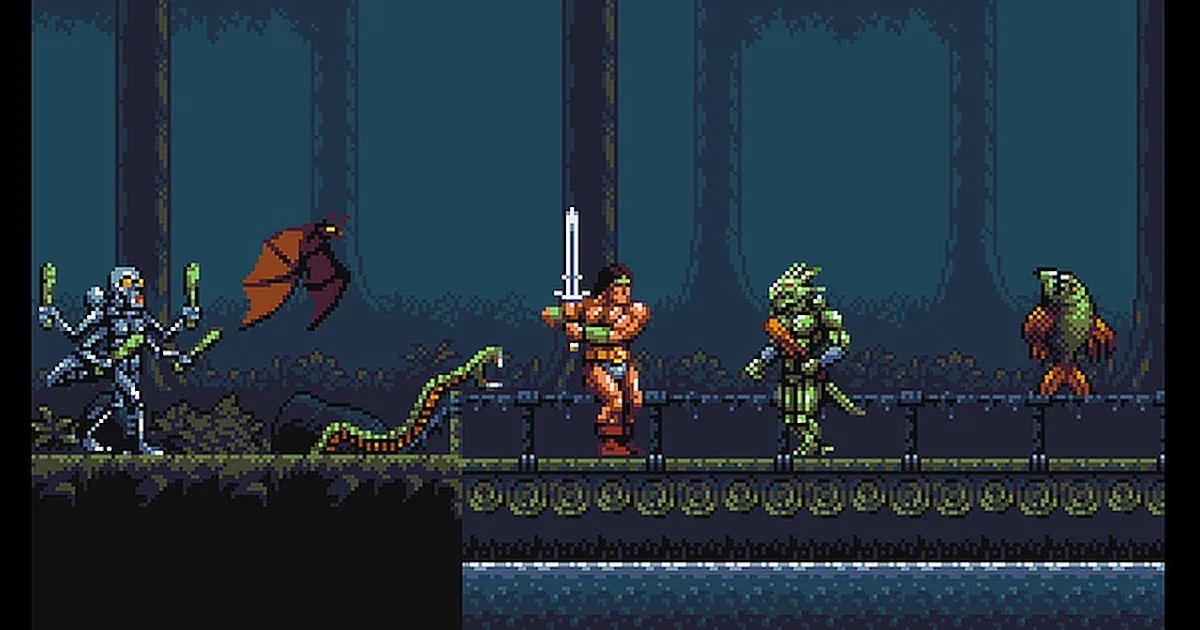
A work-in-progress Amiga conversion of Rastan has received a small but important update: a fix for a joystick-control bug serious enough to disrupt gameplay. The project, a non-commercial fan-made adaptation of Taito’s 1987 fantasy action-platformer, is being developed by BasementApe for Commodore Amiga hardware.
The corrective release is otherwise the same as version 0.56. That makes the headline modest in scope, but it is a meaningful one for an action game built around immediate movement and attacks. A control fault that occurs specifically when using a joystick can undercut the entire experience, even where the game’s visuals, level work and sound are progressing well. For Amiga players using the control method most closely associated with this style of game, getting that input path working properly is foundational rather than optional polish.
A remake-shaped project with a low-end Amiga target
This is not presented as a commercial release or a simple reuse of original assets. BasementApe is rebuilding the game with reworked character sprites and reimagined background environments, while aiming to retain the forceful arcade atmosphere of Rastan. The original game is a fantasy hack-and-slash platformer, a description that matters here because it highlights the difficult balance the conversion must strike: character animation, enemy behavior, stage scenery, scrolling action and responsive attacks all need to coexist under the limits of older Amiga configurations.
The stated hardware target is particularly notable. The engine is designed to run on a standard Amiga 500 fitted with a 512 KB RAM expansion. In practical terms, that means the project is not framed only around expanded later hardware. It is trying to accommodate a baseline Amiga setup with a relatively small memory budget while still delivering redesigned art and a substantial audiovisual presentation.
That distinction also helps explain why optimization appears repeatedly in the update notes. Optimization is the process of making a program use its available processing time and memory more efficiently. On vintage hardware, it can affect whether action remains smooth, whether art and audio can fit into memory, and whether the game is practical to deploy on the intended configuration. It does not automatically mean a visible new feature, but it is often what makes visible features viable.
Two hardware and distribution paths
The project has separate requirements depending on how it is run. The floppy-disk route is intended for an Amiga 500 with 512 KB of Chip RAM and another 512 KB of RAM. Chip RAM is memory shared with the Amiga’s custom hardware, including the components responsible for graphics and audio, making it especially important to a game carrying sprites, backgrounds and sound.
A hard-drive version is planned for the Amiga 500+ and higher models. That configuration calls for 1.0 MB of Chip RAM plus a 512 KB RAM expansion. The separate paths suggest an effort to serve different Amiga setups rather than treating one configuration as universal. They should not be read as a release-date or availability promise: the available information describes the project as an upcoming work in progress and identifies technical targets, not a final launch schedule.
For owners returning to older game systems, the broader lesson is familiar: storage and RAM configuration can be as important as the machine name on its badge. Those keeping legacy hardware active may also find useful maintenance context in this guide to getting continued use from a PlayStation 3, even though the platform and requirements are entirely different.
Related coverage includes Rastan's Ambitious Amiga 500 Conversion Receives a New Work-in-Progress Update.
What version 0.56 changes
The content additions and adjustments in version 0.56 are more substantial than the later joystick hotfix might initially imply. The build adds a flail power-up and an upward stab move. Both are combat-facing changes: a power-up can alter a player’s offensive capability for a period, while an upward stab broadens the directions in which a player can threaten enemies. In a game identified with close-range weapon action, a new vertical option can be important for encounters where enemies or hazards occupy space above the player rather than directly ahead.
The update also revises boss artificial intelligence, or AI. In this context, AI does not refer to generative tools; it means the programmed behavior that governs how computer-controlled bosses respond and attack. BasementApe’s goal is to make bosses as challenging as intended, with a specific caveat that the boss in stage 1-1 still needs further work.
That caveat is useful because it avoids presenting the current boss behavior as final. Difficulty tuning is more than making an opponent stronger or faster. A boss needs attacks that are readable enough for players to understand what happened, while remaining threatening enough to reward timing, positioning and knowledge of the fight. The note on the first boss signals that this balance is still being iterated.
- A flail power-up has been added.
- An upward stab move has been added.
- The title-screen legend has been updated.
- Boss behavior has been adjusted, though the stage 1-1 boss remains a work in progress.
- Stage 1-1 background colors have been reworked.
- Snake statues in stage 2-3 have been redone.
- Additional minor tweaks and optimizations are included.
Art and sound are shared responsibilities
BasementApe is credited with the project’s programming, graphics and castle music. JMD and Tsak contribute music for field and boss sections, with custom sound design also part of the package. That division of duties matters because the conversion is pursuing more than a mechanical approximation of the arcade game. The redesigned sprites and environments need an audio identity capable of supporting the intended mood across different situations, including exploration-oriented field areas, castle material and boss encounters.
Music segmented by game context is a straightforward but effective design choice. Field material can establish pace and atmosphere during stage traversal, while boss music can underline a shift into a concentrated encounter. The information available does not define the exact musical style or implementation, so it would be premature to make claims about fidelity to the arcade soundtrack. What is clear is that the project has dedicated contributions across multiple gameplay contexts rather than a single undifferentiated audio layer.
Why the joystick fix is the right immediate priority
The new content in 0.56 gives players more to examine, but the joystick bugfix is the more urgent revision. A platform action game is experienced through inputs: walking, jumping, attacking and reacting to threats. If joystick controls break gameplay, changes to boss tuning or new weapon options cannot be assessed reliably by affected players. Fixing the input issue restores the conditions needed for all the other work to matter.
It is also a reminder of the iterative nature of homebrew development. Versioned builds make it possible to introduce systems, tune their behavior, find problems in real use and issue targeted corrections without pretending the project is already complete. Here, the team has identified the hotfix as functionally identical to version 0.56 apart from the joystick correction, preserving clarity over what has and has not changed.
For now, the project’s most concrete status is a promising in-development conversion with defined Amiga memory requirements, a collaborative audio effort, redesigned visual material and continuing gameplay refinement. The latest update makes the build more dependable for joystick users while preserving the version 0.56 additions that expand combat, revise specific stage artwork and continue the careful task of making its bosses play as intended.