A familiar jewel-dropping puzzle is preparing for an unlikely hardware hop: Ceonello is working on an Amiga adaptation of the Game Gear version of Columns. The project is still an alpha rather than a finished release, but its current form is already public in two important ways: there is a playable build for people to try, and the underlying code has been shared as open source.
That combination makes this more than a simple retro curiosity. It is a work-in-progress recreation aimed at the Commodore Amiga, built entirely in C with help from AI, while remaining visibly rooted in the Game Gear version’s presentation. For players who know Columns as SEGA’s classic puzzle game, the prospect is delightfully specific: not merely a new jewel-matching game for Amiga, but an attempt to bring over this particular portable iteration.
There is also an appropriately retro complication behind the modern development process. Ceonello no longer has a physical Amiga 500, so the project is being made through emulation. As a result, the current alpha is limited to keyboard input. That is an important expectation to set early. The available build should be viewed as a development snapshot, not a declaration that every intended control method, feature, or visual ambition has already been finalized.
An Amiga destination for a Game Gear puzzle game
Columns is the sort of game whose basic appeal is instantly legible. Falling vertical sets of gems require quick placement decisions, with matches clearing the board and opening room for the next drop. Its enduring charm comes from the tension between clean rules and increasingly cramped space: a player can see a promising move, but may have only moments to rotate and position the incoming pieces before the board becomes a colorful administrative disaster.
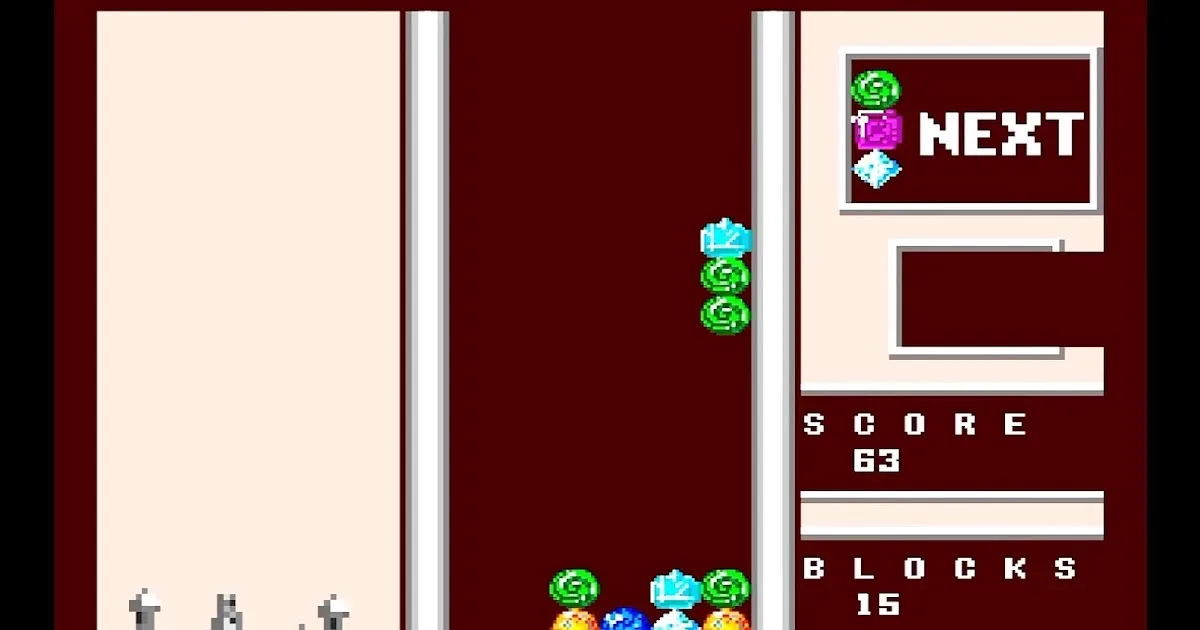
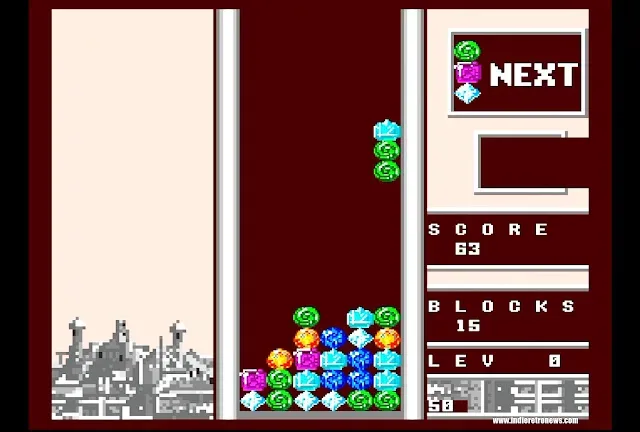
That makes the stated target especially interesting. The project is designed to reproduce the Game Gear version, rather than simply borrowing its title or treating the handheld release as loose inspiration. The present build uses authentic retro sprites associated with that version. For preservation-minded players, that is a meaningful choice. A port can be appealing because it creates a new way to run a familiar game, but it becomes more historically focused when it deliberately follows a specific release’s identity.
The Amiga and Game Gear occupy different places in retro-game memory, and a project connecting them naturally invites attention from both communities. The Game Gear association gives puzzle fans a recognizable visual and gameplay reference point. The Amiga angle turns the effort into a home-computer project with its own technical and cultural appeal. It is less about declaring one platform superior than enjoying the peculiar magic of seeing a game lineage show up somewhere it did not originally belong.
For anyone maintaining older hardware and software, practical care still matters as much as the excitement of a new homebrew build. Our guide to storing retro games so a collection remains playable is a useful companion piece for collectors who want their original media, manuals, and related materials accessible rather than buried in a mystery tote labeled “computer stuff.”
C, AI assistance, and an openly visible work in progress
The project is being built entirely in C, with AI assistance. Those details establish the development approach without turning the project into a vague exercise in technological buzzwords. The relevant result is concrete: an alpha build exists, a codebase is available to inspect, and community members can test what is there and offer feedback.
Open-source availability changes the character of an early port. It gives technically inclined observers a chance to examine the work rather than relying only on screenshots or a description. It also lets the broader community identify issues, suggest changes, and follow the project’s progress from a much closer vantage point. In retro development, where tools, platforms, documentation, and hardware access can vary enormously from one creator to another, that transparency can be as compelling as the game itself.
It also encourages the right kind of patience. A publicly shared alpha is not a promise that its current state represents the eventual endpoint. It is an invitation to look at an ongoing effort honestly: what works now, what is still restricted, and what may evolve after testing and feedback. Here, keyboard-only operation is one of those present limitations, tied directly to development via emulation instead of a physical Amiga 500.
That limitation does not make the project less legitimate; it simply describes where it is today. Emulation can provide a workable environment for continuing development when original equipment is unavailable. At the same time, it means there is a sensible difference between the current development setup and assumptions about how a later version might be used. Until additional details are shared, the safest reading is straightforward: keyboard input is what the alpha supports now.
Faithful sprites now, a possible HD reskin later
Visually, the present direction favors recognizable retro sprites. That decision preserves a direct connection to the Game Gear edition the project is replicating. It also helps the alpha communicate its purpose immediately. A player who knows the handheld version should be able to understand the intended relationship at a glance, rather than wondering whether the name is being attached to a radically different reinterpretation.
Ceonello has also expressed interest in an eventual upgraded high-definition reskin. It is worth emphasizing the conditional nature of that idea. An HD treatment is an ambition under consideration, not a confirmed completed feature of the current build. The alpha presently uses the authentic retro sprite work; any later reskin would represent a possible additional layer rather than the basis of the project as it exists today.
That split between faithful presentation and prospective enhancement is one of the more appealing aspects of community retro work. A classic visual style can remain available as the core identity, while alternative presentation ideas can be explored without pretending that the original aesthetic was inadequate. Puzzle games in particular often benefit from clarity above all else. Whether a future higher-definition look arrives or not, the immediate visual goal appears to be recognition and fidelity to the selected Game Gear reference.
Players who plan to connect older systems to newer displays may also want to separate game-development news from display-chain expectations. The practical variables can be surprisingly numerous, which is why our checklist on mapping the connection before buying a retro console HDMI adapter is helpful. It cannot determine how this alpha will develop, but it can help collectors think more clearly about the equipment around their retro setup.
Why the alpha and code matter right now
The most useful takeaway is not that a finished Amiga release is guaranteed at a particular time, because no release date, final feature list, or completed control plan has been established here. The useful news is that a playable alpha and open code are already out in the community, where people can test and review the project in its current state.
That is a healthier basis for attention than treating an in-progress port as a completed product. Interested players can appreciate the project’s specific goal, note the keyboard-input restriction, and watch for further changes. Developers and hobbyists can examine the C-based, AI-assisted work and potentially contribute observations through the channels attached to the public project. Everyone else can enjoy the basic novelty: another classic puzzle-game path is being traced onto the Amiga, one falling stack of jewels at a time.
For now, the project stands as an open, early-stage recreation of the Game Gear Columns experience for Commodore Amiga systems. Its current retro sprites, emulation-led development, and keyboard-only alpha define the present moment. A possible HD reskin and any future refinements belong to the road ahead. That distinction is not a drawback—it is exactly what makes following an open development effort interesting.