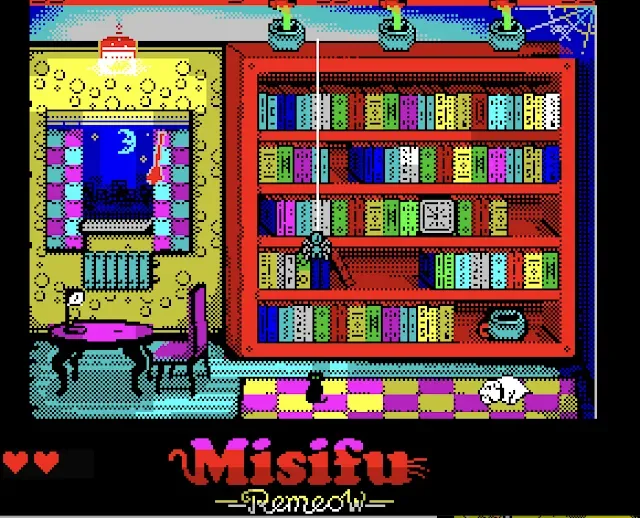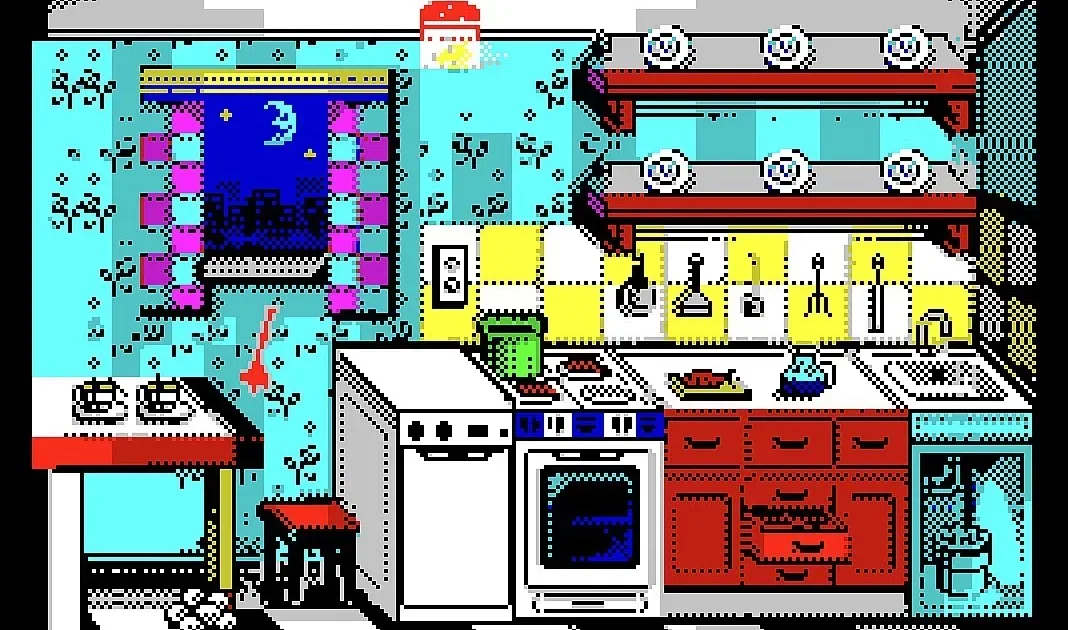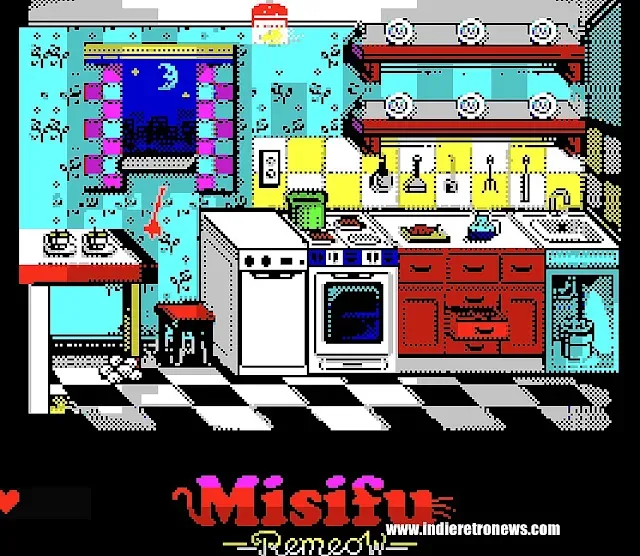
Next Misifu is an overhauled ZX Spectrum Next version of Jordi’s Misifu Remeow, bringing a project previously released through the ZX-DEV MIA remake competition back into focus. The game is described as a demake of Alley Cat, the cat-led classic originally created by Bill Williams.
That lineage is the essential point here. This is not being presented as an unrelated new cat game that merely resembles an old favorite. Misifu Remeow began as a reinterpretation of Alley Cat for Spectrum hardware, and the newer Next version revisits that work in an overhauled form.
From Alley Cat to a Spectrum Next remake
Alley Cat arrived first for Atari 8-bit computers in 1983, followed by an MS-DOS release in 1984. It was created by Bill Williams and published by Synapse Software. Players control Freddy the Cat as he attempts to rescue Felicia, his feline love.
The premise matters because it establishes the direct narrative connection behind Misifu Remeow. Freddy and Felicia are part of the original game’s setup, while Jordi’s project is identified specifically as a demake of that earlier design. A demake generally means a work that recreates or reinterprets a game through the constraints, visual language, or technical expectations of older hardware. In this case, the relevant platform context is the ZX Spectrum family.
That makes Next Misifu an interesting kind of retro project: its inspiration already comes from the early home-computer era, while its newer version targets a modern extension of one of Britain’s best-known 8-bit machines. Rather than treating the original as a distant historical reference, the project keeps it active as a design starting point.
What the ZX Spectrum Next angle means
The ZX Spectrum Next is the platform named for this overhaul. The supplied details do not list new modes, specific graphical changes, performance targets, release channels, pricing, or distribution information, so those points remain unconfirmed. What is clear is that the new version is framed as more than a simple re-listing of the earlier competition entry: it is described as an overhauled version.
“Overhauled” is a useful but broad term. It signals that Jordi has revisited Misifu Remeow for the Next, but it does not by itself establish exactly which parts have changed. Readers should therefore avoid assuming a particular set of additions—such as extra stages, revised controls, music changes, or a new visual style—until those details are separately documented.
That distinction is especially important in retro computing. Platform ports, remakes, remasters, conversions, and demakes can overlap in casual discussion, yet they describe different things. A port moves a game to another machine. A remake rebuilds an existing game, potentially with substantial changes. A demake adopts an older platform’s constraints or aesthetic for a game or concept. Next Misifu sits in the latter conversation because Misifu Remeow was previously characterized as an Alley Cat demake, while the current release is an overhaul for ZX Spectrum Next.
Related coverage includes Next Misifu Brings an Alley Cat-Inspired Adventure to ZX Spectrum Next.
A competition-born project gets another pass
Misifu Remeow was previously released via the ZX-DEV MIA remake competition. That background gives the game a clear origin in a community setting where developers revisit familiar material through Spectrum-focused development. The Next version shows that the project did not end at its initial competition release.
There is a practical value in that continuation. Competition entries are often encountered as finished snapshots: complete enough to be judged, shared, and played, but not necessarily the final word from their creators. Returning to one for an overhaul can provide room to revisit the adaptation itself, especially when moving to a platform within the same broad Spectrum ecosystem.
It also keeps the focus on a style of game history that is easy to overlook. Early computer games have long been revisited through sequels, collections, and emulation, but fan-made and homebrew reinterpretations offer another route to preservation. They do not replace the originals. Instead, they demonstrate which premises, characters, and challenges still inspire developers working with retro hardware.
Why Alley Cat remains a fitting reference point
At the heart of the story is a straightforward rescue mission: Freddy the Cat is trying to save Felicia. That sort of immediately readable objective is well suited to a remake or demake project because it gives a new version a recognizable dramatic anchor without needing a long exposition. The details supplied here do not describe the exact structure of Next Misifu’s play, so it would be premature to map its activities or mechanics directly onto those of Alley Cat.
Still, the connection is useful for players who know the 1983 Atari 8-bit game or its 1984 MS-DOS counterpart. They can approach Next Misifu knowing it comes from the same basic creative lineage, rather than expecting a direct archival reissue. For newcomers, it supplies a compact introduction to the older game’s premise and to the kind of cross-generational conversation that homebrew development can create.
The arrival of a revised Spectrum Next edition also fits alongside the broader stream of projects that continue to find new homes on legacy-inspired systems. For another recent example of a classic game style being carried to a different retro platform, see Hang-On Jr. Version 1.0 on Mega Drive and Genesis.
What is confirmed, and what is not
The confirmed outline is concise: Jordi has released Next Misifu as an overhauled ZX Spectrum Next version of Misifu Remeow; the earlier game appeared through the ZX-DEV MIA remake competition; and its stated inspiration is Alley Cat. The original Alley Cat was created by Bill Williams, published by Synapse Software, launched on Atari 8-bit in 1983, and reached MS-DOS in 1984.
Beyond that outline, caution is warranted. No supplied information establishes a release price, purchase page, download location, cartridge edition, physical edition, controls, compatibility requirements, feature list, screenshots, or a detailed account of the overhaul. Likewise, the available description does not state whether the new release is intended to be a one-for-one remake of Misifu Remeow or a more extensive revision.
For now, the significance of Next Misifu is in its premise and provenance. It is a modern Spectrum Next revisit of a Spectrum demake, itself built in conversation with an early-1980s Atari and DOS cat adventure. That nested history is a neat reminder that retro gaming is not only about replaying preserved software. It is also about developers returning to old ideas, adapting them to different machines, and giving them another life.