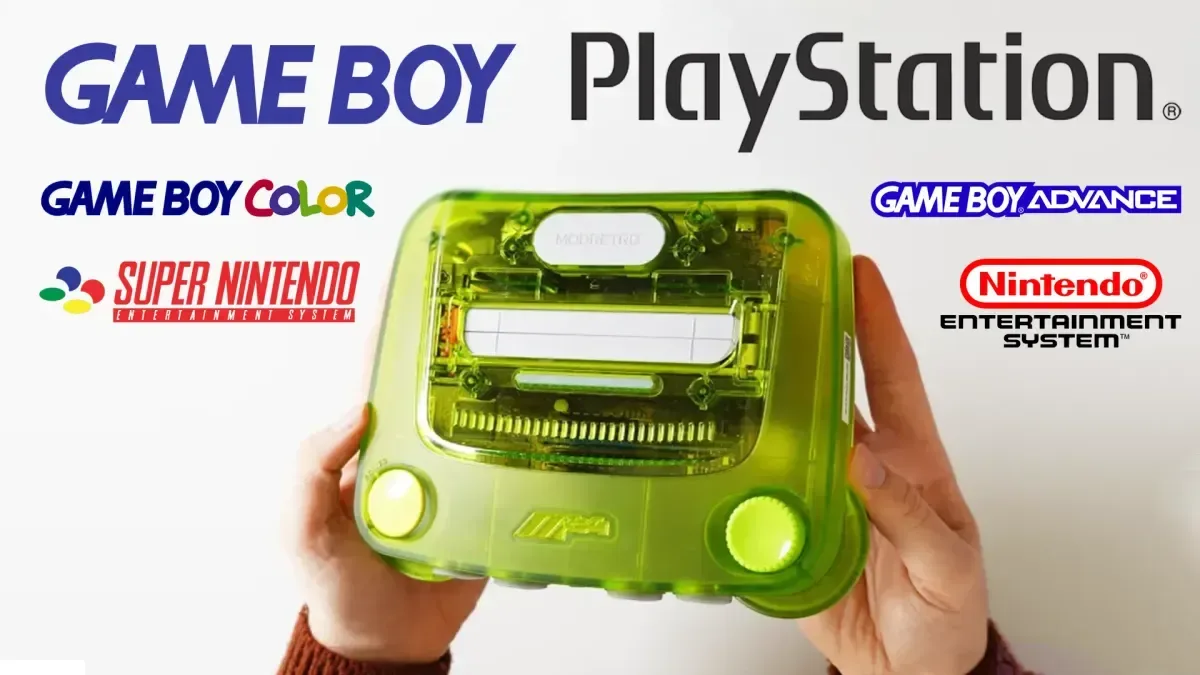
Magic64 is an in-development custom firmware project for the ModRetro M64 with an ambitious but deliberately limited first goal: replace the machine’s existing software stack and let it run six retro platforms as separate FPGA images from its built-in SD-card reader.
The planned launch lineup covers Game Boy and Game Boy Color, NES, SNES, Game Boy Advance, Nintendo 64 and PlayStation. That makes the project more than a menu or feature patch. Its creator, Nate, has written both the FPGA images and the M64’s microcontroller firmware from scratch rather than modifying the manufacturer’s firmware.
A first beta is described as coming very soon, while a fuller release is targeted for sometime in October if development stays on track. Those windows remain plans, not guarantees. More important than the calendar, perhaps, is the stated approach: get a smaller group of systems polished before expanding the list.
What Magic64 is trying to replace
Firmware is the low-level software that helps a device start, recognize hardware and run its core functions. In this case, Magic64 is intended as a complete alternative operating foundation for the M64, not simply an app added on top of the original environment.
The project uses open-source MiSTer cores. A core in this context is a hardware design configured for an FPGA to reproduce the behavior of a specific system. An FPGA, or field-programmable gate array, is a chip whose logical circuits can be reconfigured through an uploaded design. That is why Magic64 can load distinct system images rather than being permanently one kind of console.
Magic64’s stated aim is hardware emulation at original hardware speed rather than conventional software emulation. The distinction is technical, but it matters to enthusiasts because an FPGA core seeks to model a machine’s hardware logic on reconfigurable circuitry, while software emulation recreates a platform’s behavior through code running on a general-purpose processor. Neither label alone settles quality; compatibility and polish still depend on the individual core and implementation. Magic64’s creator is explicitly prioritizing tested behavior over a much larger, less stable launch catalogue.
The intended trade-off is a narrower initial selection in exchange for quality testing, instead of rushing out numerous cores with bugs while also pursuing 4K60 HDMI output.
That restraint is meaningful because the six systems span very different generations and technical demands. The Game Boy family and NES sit far apart from Nintendo 64 and PlayStation, yet the initial scope attempts to place them behind one M64 interface. The promised 4K60 HDMI output is a display-output target; it should not be confused with a claim that the original games themselves were designed around modern 4K visuals or 60-frame-per-second presentation.
Related coverage includes Magic64 Firmware Targets Six FPGA Systems for ModRetro M64.
The six planned systems and how they will load
- Game Boy and Game Boy Color
- NES
- SNES
- Game Boy Advance
- Nintendo 64
- PlayStation
Each is planned as its own FPGA image, loaded from the M64’s SD-card reader. For PlayStation software, Magic64 is expected to support cue/bin and CHD files directly from SD storage. Cue/bin is a common disc-image arrangement, while CHD is a compressed archival format often used for disc-based game images. The project also plans memory-card support and multi-disc handling at launch, two practical needs for a platform with games that can span more than one disc.
PlayStation use will require users to provide a BIOS under the current plan. A BIOS is foundational system firmware used in a console’s startup and system behavior. The developer has raised the possibility of open-source BIOS options arriving with the firmware eventually, but that is not a confirmed launch feature. For prospective users, that distinction is worth keeping in view: the announced file-format and memory-card goals do not remove the stated BIOS requirement.
Nintendo 64 remains central to the hardware’s identity. Magic64 is intended to retain normal use of the M64 cartridge slot for N64 games, while adding the ability to back up a cartridge and its save data to SD storage. That is a more practical feature than it may first sound. It creates a stated route for keeping a separate SD-based copy of game and save data, rather than treating the cartridge as the only place those files can reside.
ChroMagic could make the Game Boy connection unusually useful
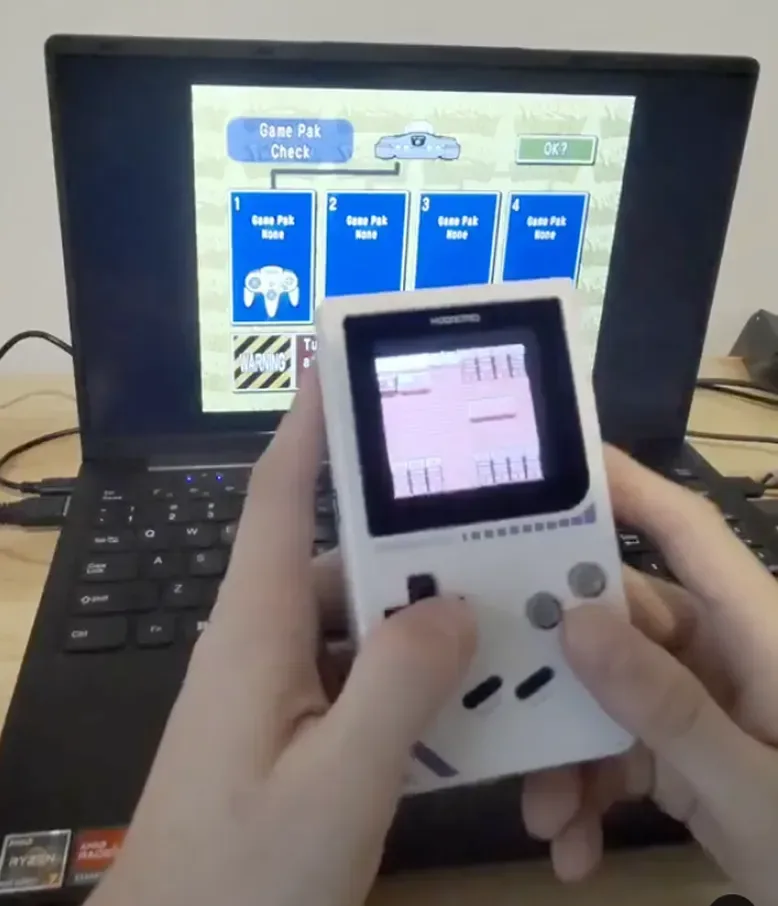
Magic64 is also planned to work with ChroMagic, Nate’s custom firmware for the Chromatic handheld. Connecting a ChroMagic-equipped Chromatic to the M64 over USB is intended to provide two specific functions: it can act as a Transfer Pak for compatible games such as Pokémon Stadium, and it can serve as a cartridge reader for Game Boy and Game Boy Color cartridges.
The Transfer Pak angle is especially notable because it connects handheld cartridge data to a Nintendo 64 game context. The cartridge-reader function, meanwhile, is meant to allow Game Boy and Game Boy Color cartridges to be played through the handheld-to-M64 connection. It is a focused integration rather than a vague promise of USB compatibility.
That also makes the current boundary clear. Direct cartridge support at launch is not described for NES, SNES, Game Boy, Game Boy Color or Game Boy Advance carts through the M64 itself. Adding those capabilities is part of the project’s longer-term ambition, not the initial beta feature list.
Controllers, mappings and features still on the roadmap
At first, Magic64 is planned to support standard Nintendo 64 controllers and the wireless M64 Pro controller. Customizable button mapping is intended for the M64 Pro. USB controller support is a future objective, as is support for wireless USB dongles that could connect third-party wireless controllers.
That means buyers should not read the future USB plans as present universal controller support. The initial controller story is narrower: native N64 pads plus the M64 Pro, with its configurable mappings. For a firmware beta, drawing that line is useful. It gives users a clearer idea of what hardware is expected to work immediately and what remains in development.
Another requested feature on the roadmap is RetroAchievements across all six systems. RetroAchievements adds achievement-style goals to supported retro games, typically tracked through compatible software and services. Magic64’s creator wants the feature across its six launch platforms, while the M64’s original firmware does not offer it. This too should be treated as an objective rather than a confirmed, finished component of the first public build.
Why a complete replacement is different from a feature update
Calling Magic64 a full replacement is not marketing shorthand for a themed interface. Rewriting the FPGA images and microcontroller software means the project is taking responsibility for the console’s basic behavior as well as its platform cores. That can create room for substantial new functionality, including SD-loaded systems and custom device interactions, but it also explains why a polishing phase matters so much.
The developer is currently focused on usability and bug fixing. That work is easy to overlook next to the headline promise of six systems, but it is the portion most likely to determine whether switching firmware feels manageable for ordinary M64 owners. Menus, file loading, controller setup, save handling and dependable boot behavior all matter alongside a core’s technical fidelity.
Magic64 also arrives in an environment where M64 custom firmware experimentation is already underway, including the separately announced OM64 project. The significance is less about declaring one project a winner before public releases exist and more about what the activity says about the platform: an open-source-capable device is attracting alternative software approaches soon after its arrival.
For anyone evaluating dedicated game hardware more broadly, the appeal of a configurable device is different from that of buying a current console solely for its native library. That broader hardware calculation is not getting simpler either; recent changes in PS5 pricing underline why prospective buyers may weigh long-term function and flexibility closely. Magic64 is not a substitute for modern-console software, but its planned feature set illustrates the particular appeal of a machine that can be reconfigured around multiple older platforms.
What to watch before treating the feature list as settled
The most sensible reading of Magic64 right now is promising, but provisional. The core platform list, SD-based loading, PlayStation file formats, N64 cartridge-save backups, ChroMagic connectivity, launch controller support and future expansion plans are all developer-stated targets while the software remains in development.
Several details deserve particularly careful wording:
- The beta is not a finished release. The project is still being polished and debugged.
- More systems are planned, not included in the initial six. The intended expansion path includes additional cores.
- Additional direct cartridge support is future work. NES, SNES, Game Boy, Game Boy Color and Game Boy Advance cart capability is an aspiration after launch.
- USB and third-party wireless controller support are also future-facing. Initial compatibility is limited to the stated controller options.
- RetroAchievements are wanted across the six systems. The goal should not be mistaken for a confirmed beta-day guarantee.
If Magic64 reaches its outlined first release, the M64 would gain a carefully scoped multi-system FPGA identity without abandoning its Nintendo 64 cartridge function. The project’s strongest idea may be that it does not need to solve every retro platform at once. A complete firmware replacement, six quality-tested cores, useful save options and a specialized Chromatic link would already be a substantial foundation. The more extravagant possibilities—broader core coverage, direct support for more cartridges and wider controller compatibility—can remain future work until they are ready.