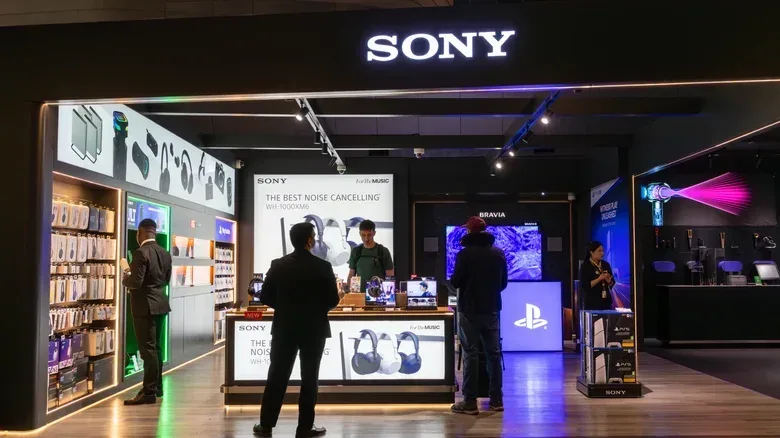
The usual console-generation script is supposed to be comforting: launch hardware is expensive, manufacturing gets more efficient, a smaller revision arrives, and eventually the machine that once seemed like a luxury becomes the affordable default. PlayStation 5 pricing has taken that script, loaded it into a DualSense, and hurled it across the room.
In the United States, the PS5 Digital Edition launched in 2020 at $399, while the disc-equipped model launched at $499. In 2026, their stated retail prices sit at $599 and $649 respectively. That makes the Digital Edition $200 dearer than its launch MSRP, while the disc model is up $150—roughly a 30% increase.
The change matters beyond a pair of price tags. It alters what buyers can expect from a mature console platform, complicates the choice between physical and digital libraries, and makes the PS5 Pro’s $900 MSRP an especially consequential proposition. It also offers a clear example of how the AI-led demand for memory can flow from data centres to living-room hardware.
The PS5 price timeline: from launch value to a higher entry fee
Sony began the generation with a straightforward split. Buyers who wanted an optical disc drive paid $499 for the standard PS5, and those comfortable purchasing games digitally could get the Digital Edition for $399. The latter price matched the launch MSRP of the PlayStation 4 in 2013 and the PS4 Pro in 2016, without making an inflation adjustment.
The subsequent PS5 Slim revision in 2023 did not bring a traditional discount. Instead, the Digital Edition’s starting price rose to $449, while the disc model remained at $500. The revision reduced the console’s physical footprint and reorganised its internal components, but did not deliver better performance. Its notable specification change was storage: the launch machine’s 825GB became 1TB in the Slim.
There was also a meaningful distinction for people weighing a cheaper digital console against a disc machine. The Digital Slim can accept a separately sold $80 disc drive. That adds flexibility, but it means a buyer who expects to use physical games may not save much compared with choosing a disc-equipped PS5 from the start.
Price pressure accelerated in two stages. Each PS5 model rose by $50 in August 2025. Later that year, the Slim Digital model’s storage moved back from 1TB to 825GB. A second increase of $100 followed in April 2026, bringing the stated MSRP to $600 for the Digital Edition and $650 for the disc edition.
- PS5 Digital Edition: $399 at launch in 2020; $599 in 2026.
- PS5 disc edition: $499 at launch in 2020; $649 in 2026.
- PS5 Pro: $700 at its 2024 starting price; then $750 after the August 2025 increase; $900 after the April 2026 increase.
The PS5 Pro is the starkest example of where the market has landed. It is a premium model, so it was never intended to be a low-cost point of entry. Still, its move from $700 to $900 means the more powerful option now requires a materially different purchasing decision than it did at launch. For more on the circumstances around that model, see the PS5 Pro supply pressure and GTA 6 demand picture.
Related coverage includes PS5 Prices in 2026: How Sony’s Console Became More Expensive Than at Launch.
Inflation explains part of the increase—but not all of it
Comparing prices six years apart requires some care. A dollar in 2020 did not have the same purchasing power in 2026, so a flat MSRP would effectively represent a price cut in real terms. But inflation does not settle the entire question here.
Using the U.S. CPI inflation calculation cited for this comparison, the original $399 Digital Edition price equates to about $514.90 in 2026 dollars. Its $599 MSRP is still well above that inflation-adjusted figure. The disc model tells a different, tighter story: its $499 November 2020 price equates to roughly $644 in 2026 dollars, close to the stated $649 MSRP.
That distinction is useful. It suggests the Digital Edition has moved notably beyond simply preserving its original real-world price, while the disc model’s present figure is much closer to an inflation-adjusted equivalent. Neither result changes the practical shopping reality: buyers see a higher amount at checkout. But it prevents a broad claim that every PS5 price increase is identical in real terms.
It also underlines why the digital model’s path feels counterintuitive. Digital editions have often been the lower-priced door into an ecosystem. Here, the lower-priced door remains lower than the disc version, but it has become much more expensive in absolute terms than it was in 2020.
The component problem: NAND, DRAM and the bill of materials
The major explanation is an industry-wide squeeze on memory. Two terms are especially relevant. DRAM is working memory: the fast, temporary memory a system uses while software is running. NAND is flash memory used for persistent storage, such as the space where games and system data live. Both are vital to modern consumer hardware, including consoles.
Only a limited number of specialised factories produce leading DRAM and NAND. At the same time, data-centre companies building AI capacity have secured large volumes of high-performance memory. When that demand tightens supply, the pressure reaches beyond servers. Laptops, phones and consoles are all competing within a broader electronics supply chain.
For a console maker, higher memory pricing raises the bill of materials, often shortened to BOM. This is the combined cost of the physical components that go into a product: memory, processing hardware, storage, boards, cooling parts, the chassis and more. A rising BOM does not automatically prove that every dollar of a retail increase maps directly to one component. Retail pricing also reflects manufacturing, logistics, inventory decisions and broader business strategy. It does, however, identify why the old assumption of ever-cheaper hardware is not holding.
Sony has said rising memory prices increase PS5 BOM and manufacturing costs. It has also said it has secured enough memory to meet manufacturing capacity through the end of 2026, while expecting the shortage to continue into 2027 and potentially affect the next console generation. Securing supply is not the same thing as obtaining it cheaply; it means production capacity can be supported despite a constrained market.
Why a Slim redesign did not deliver the usual discount
A smaller console normally invites the expectation of savings. Over time, manufacturers can refine production, shrink or consolidate components, and reduce the cost of building each unit. Historically, that helped make price cuts feasible. The PS4 Slim, for example, arrived in 2016 with a $299 MSRP, below the original PS4’s $399 launch price.
The PS5 Slim demonstrates why a redesign alone is not a guarantee of a cheaper console. It reduced the system’s physical size and initially expanded storage to 1TB, but it did not improve performance. In a market where memory costs are rising, production efficiencies from a more compact design can be offset—or overtaken—by more expensive key components.
The late-2025 return to 825GB on the Slim Digital model is particularly revealing in practical terms. Storage capacity is not the whole value of a console, but it directly affects how comfortably players can keep a library installed. A lower storage figure alongside a higher price will understandably feel like a weaker hardware proposition, even if the wider memory market is part of the reason.
Games, subscriptions and the long-term economics of a console
Console makers do not necessarily treat the hardware sale as the main profit event. A platform can earn revenue over years through games, downloadable content, accessories and subscriptions. Sony takes a 30% share of nearly every game, DLC or other transaction on the PlayStation Store. Some of that supports download servers and related services, but digital spending remains a substantial part of the platform model.
Subscriptions add another recurring dimension. PlayStation Plus is required for online multiplayer in paid games and for cloud-save backups. The membership price has also increased. These ongoing relationships allow a hardware company to spread expected returns across a player’s time on the platform rather than relying solely on the console’s margin on day one.
That model helped enable aggressive hardware pricing in prior generations. When component costs reliably declined, a manufacturer could lower a console’s MSRP while still anticipating years of digital-store and subscription revenue. The PS5 situation shows what happens when the component side refuses to cooperate. A company still has reasons to keep its entry price inviting, because a bigger installed base can lead to more software and service spending. But it has less room to absorb manufacturing increases indefinitely.
The planned discontinuation of game discs in 2028 gives the disc-versus-digital choice further weight. A disc model can support physical purchases today, while the Digital Edition keeps every purchase within the digital storefront model from the outset. Buyers should distinguish between the console’s upfront price and the likely cost of their preferred way of buying games over several years.
What buyers can reasonably watch for next
A lower MSRP is not impossible, but it should not be treated as an imminent certainty. If RAM and other memory pricing eases, temporary discounts and retailer bundles may be the first signs of relief. A permanent MSRP reduction would be a larger step. The supply outlook extending into 2027 makes an immediate return to the familiar late-generation bargain phase less certain than it has been in past cycles.
Demand is another counterweight. Interest in the PS5, particularly the PS5 Pro, is expected to be supported by the forthcoming Grand Theft Auto 6 release. The game’s broader open-world ambitions remain a major point of attention, including its approach to pedestrian dialogue, as explored in this look at GTA 6’s ambient-world design. Strong demand reduces the commercial incentive to cut hardware prices quickly.
For buyers, the useful question is less “will a PS5 eventually be cheaper?”—most hardware eventually changes price—and more “which configuration matches the games and media I will actually use?” The disc model costs more at entry, but can be the more natural fit for people who want physical games. The Digital Edition has the lower current MSRP, but it is still $200 above its launch price and its storage history is worth noting. The Pro carries the largest upfront commitment, so its value depends on whether its premium capabilities matter to the individual buyer.
There is no automatic bargain waiting simply because the PS5 is a mature platform. In this generation, expensive memory, constrained supply and healthy demand have rewritten the usual timing. The console did not merely avoid the customary price cut; it became more expensive to join.