A reported GameStop listing has put a used PlayStation 5 Pro at $1,399.99—a figure that is $500 above the console’s stated $899.99 MSRP and dramatically changes the question facing prospective buyers. This is no longer simply a decision about whether Sony’s higher-spec machine offers better image quality. It is a decision about whether limited supply, anticipated demand around Grand Theft Auto VI, and a volatile resale market justify paying a scarcity premium for a used console.
The short answer is that the hardware may be appealing, but a resale price should not be confused with a sensible upgrade price. The PS5 Pro’s listed strengths are real: 4K output at 60 frames per second in supported circumstances, 2 TB of storage, a more capable GPU, ray tracing, and PlayStation Spectral Super Resolution, or PSSR. Yet every one of those advantages needs context. They depend on the game, the display, the player’s existing console, and—most importantly at these prices—what someone is actually paying.
Reports describe a broader shortage that could continue into early 2027 at the earliest. They also describe other elevated listings: more than $1,500 at one major retailer, $1,200 for an open-box unit at another, and regular resale prices above $1,100. Those figures suggest the GameStop price is not an isolated oddity. They do not, however, establish that the machine is worth that amount to an individual player.
Why the PS5 Pro price is drawing attention
The PS5 Pro launched in 2024, and its stated price has since risen by $200 to $899.99. That increase is already substantial before a retailer adds another $500 to the transaction. A used product listed above current MSRP is especially notable because “used” normally indicates a discount in exchange for prior ownership and potentially more limited certainty about condition. In a supply squeeze, that normal relationship can flip: immediate possession becomes the product people are being asked to pay for.
That is the key distinction in this market. MSRP, or manufacturer’s suggested retail price, is the benchmark Sony sets for a new unit. A resale or retailer listing is an asking price shaped by inventory and demand. An asking price can reveal what a seller hopes to receive; it does not by itself prove that buyers are consistently completing purchases at that amount.
Interest in a version of GTA VI advertised as PS5 Pro Enhanced appears to be an important part of the urgency. A big release can make a premium console feel like the definitive place to play, particularly for people chasing the best available picture or performance. Readers looking for the confirmed release picture can also see what is confirmed about GTA VI release regions, languages and availability. But an enhanced label is not the same thing as a universal requirement. It indicates that a title is designed to take advantage of PS5 Pro-specific capabilities; it does not make a standard PS5 unusable or obsolete.
The component-pressure explanation, in plain terms
Reports tie the shortage to pressure on memory supply as data centers consume more high-bandwidth memory for advanced processors. The proposed chain is straightforward: if manufacturers prioritize memory needed by data-center hardware, supply for consumer-device components can become tighter. That can affect production schedules and, ultimately, the number of consoles reaching stores.
A few technical terms are worth separating because they describe different parts of the story:
Related coverage includes Used PS5 Pro Listings Reach $1,399.99 as Shortage Squeezes Buyers.
- High-bandwidth memory: memory designed to move data quickly, a useful trait for demanding processors and data-center workloads.
- DRAM: dynamic random-access memory, the working memory used by many electronic devices. The reports identify constrained DRAM production as a consumer-hardware problem.
- RAM crisis: a broad shorthand for a shortage or pricing pressure affecting memory supply. It is not a single PS5 Pro component with its own isolated problem.
An August 2026 financial-industry forecast cited in the reports projected worldwide DRAM prices could rise 400% by the end of the year compared with prices when the PS5 Pro released in 2024. That is a striking projection, not a guarantee of a specific future console price. Consumer-hardware pricing is affected by several steps between component cost and shelf price: production capacity, allocation, distribution, retailer inventory, regional policies, and the behavior of resellers.
Similarly, the reported outlook that shortages may last through early 2027 at the earliest is an indication of uncertainty rather than a deadline buyers can plan around with confidence. Some forecasts reportedly stretch memory constraints much farther out, even toward 2030. Forecast ranges this wide should make shoppers more cautious about panic-buying, not less. No individual purchaser can solve a supply shortage by accepting the highest available listing.
What the Pro hardware can actually add
The PS5 Pro is presented as Sony’s more powerful version of the PS5, with tangible specifications and rendering features behind its pitch. Its enhanced GPU is intended to provide more graphics performance, while its 2 TB of storage gives users more local capacity for games. Ray tracing is also among the highlighted features.
Ray tracing is a graphics technique that models how light travels and interacts with surfaces. In practical game terms, it can improve the appearance of reflections, shadows, and lighting, though its visual impact varies heavily by game and scene. It is often computationally demanding, which is why graphics hardware and developer choices matter. A feature appearing on a spec list is not a promise that every game will prioritize it in the same way.
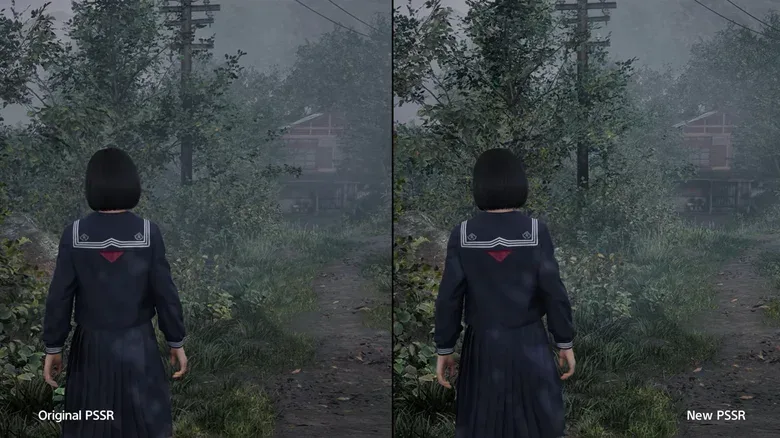
The more distinctive feature is PlayStation Spectral Super Resolution, or PSSR. This is an AI-based image-upscaling technology: rather than rendering every pixel at the final output resolution in the conventional way, the system uses a lower-resolution image and processing to produce a higher-resolution-looking result. Upscaling can be valuable because it aims to preserve a sharp picture while freeing performance resources for other visual settings or smoother frame rates.
PSSR initially received criticism, but an improved version called PSSR Enhanced has become the default setting. Even that improvement has an important limitation for buying decisions: the most compelling Pro-specific gains are tied to games that support them. A PS5 Pro Enhanced title is therefore the meaningful unit of analysis—not the console’s logo alone. If the games someone plays do not make meaningful use of PSSR, enhanced rendering, or ray tracing, the value of the upgrade drops.
The reports identify GTA VI as one such PS5 Pro Enhanced game. That may matter enormously to a player focused on that release. Still, an individual game’s enhancement status cannot establish the value of paying $1,399.99 for the entire system. The relevant questions are more personal: How many supported games will actually be played? Is there a high-end television capable of showing off the difference? Is a sharper image or steadier performance worth hundreds of dollars beyond MSRP?
The standard PS5 may narrow the practical gap
Sony has also said that an October 2026 PS5 update will bring Quick Spectral Super Resolution, or QSSR, to the regular PS5. QSSR is described as a similar AI upscaling function that can improve image quality and stability, although it is not positioned as equivalent to PSSR’s “gold standard” role on the Pro.
This matters because hardware value is relative. The Pro does not need to become less capable for the ordinary PS5 to become more appealing. If QSSR delivers useful improvements to standard PS5 owners, the perceived gap between the two consoles may narrow for games and setups where Pro-specific advantages are already subtle. That makes a used Pro listing hundreds of dollars above MSRP even harder to defend on features alone.
It also reinforces a basic rule for premium gaming hardware: technical capability is not the same as visible benefit. A 4K, 60-frames-per-second target can sound decisive, but the outcome viewers perceive is shaped by the television, the game’s implementation, the viewing distance, the selected mode, and the player’s tolerance for visual trade-offs. Someone upgrading from a base PS5 may see value in the Pro; someone being asked to pay an extreme market price needs a much higher threshold.
A practical way to evaluate an inflated listing
With reported listings spread from roughly $1,100 on resale platforms to $1,500 or more at retailers, the safest response is to slow the purchase down. The following checks do not solve availability, but they help distinguish a desired upgrade from an expensive reaction to scarcity.
- Start with MSRP, not the highest listing. The stated $899.99 current MSRP is the central comparison point. A $1,399.99 used listing carries a $500 premium before considering condition.
- Determine whether the unit is new, used, or open box. These labels are not interchangeable. A purchaser should understand condition and the retailer’s terms before treating the price as comparable to a new console.
- List the games that matter. The strongest case for the Pro is made game by game, especially where PS5 Pro Enhanced support is relevant. A vague intention to own the best console is less informative than a real library of supported titles.
- Consider the existing display. The reported 4K/60 appeal and visual features are most relevant when paired with a television that can make those improvements appreciable.
- Separate availability from necessity. A looming game release can create urgency, but paying a shortage premium now is not the same as proving that no other acceptable way to play exists.
- Be wary of resale-market signals. Multiple high listings show market pressure, but completed-sale data, condition, return rights, and seller reliability are all separate issues.
Scarcity is doing much of the work
The PS5 Pro’s features give it a legitimate technical case. More storage, an enhanced GPU, ray tracing, and AI-based upscaling are meaningful advantages when software uses them well. But the reports themselves describe a relatively limited set of titles making native use of the newer PSSR capability, while the standard PS5 is set to receive its own related upscaling feature. That is not the profile of an upgrade that automatically warrants a $500 above-MSRP surcharge on a used unit.
There is a broader warning here for gaming hardware. Reports say standard PlayStation 5 prices have risen by $150, roughly 30%, while hardware sales have reached a 13-year low. If buyers are encountering higher prices at the same time that the value of incremental upgrades remains heavily dependent on individual games, each purchase deserves more scrutiny—not less.
For players who can buy at or near official pricing and who place a high value on the supported visual improvements, the PS5 Pro may still be the preferred PlayStation system. For a buyer staring at a $1,399.99 used listing, the additional $500 is best understood as the cost of a constrained market and immediate access. That premium is not a new graphics feature, extra storage, or a guaranteed transformation of every game.