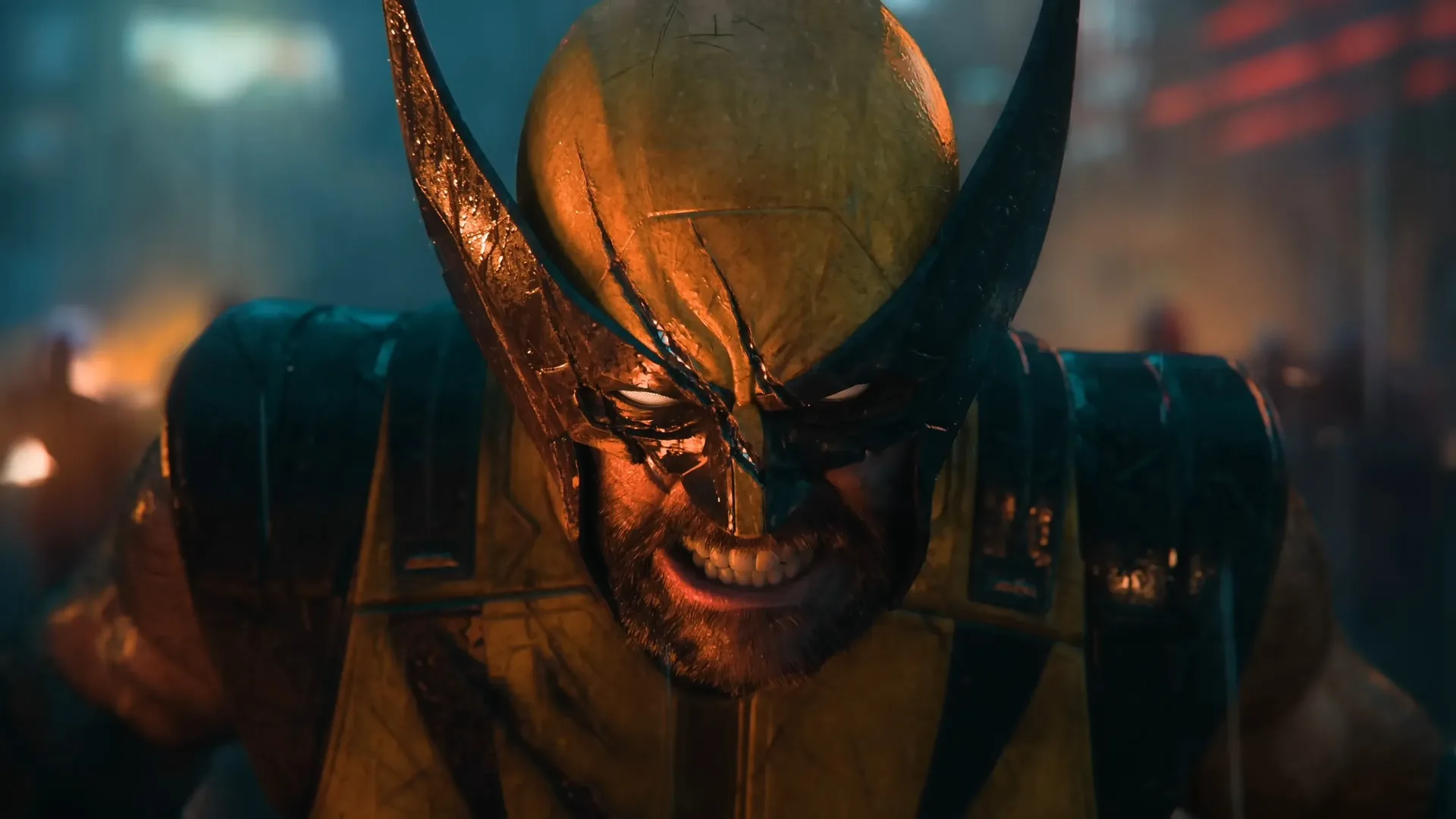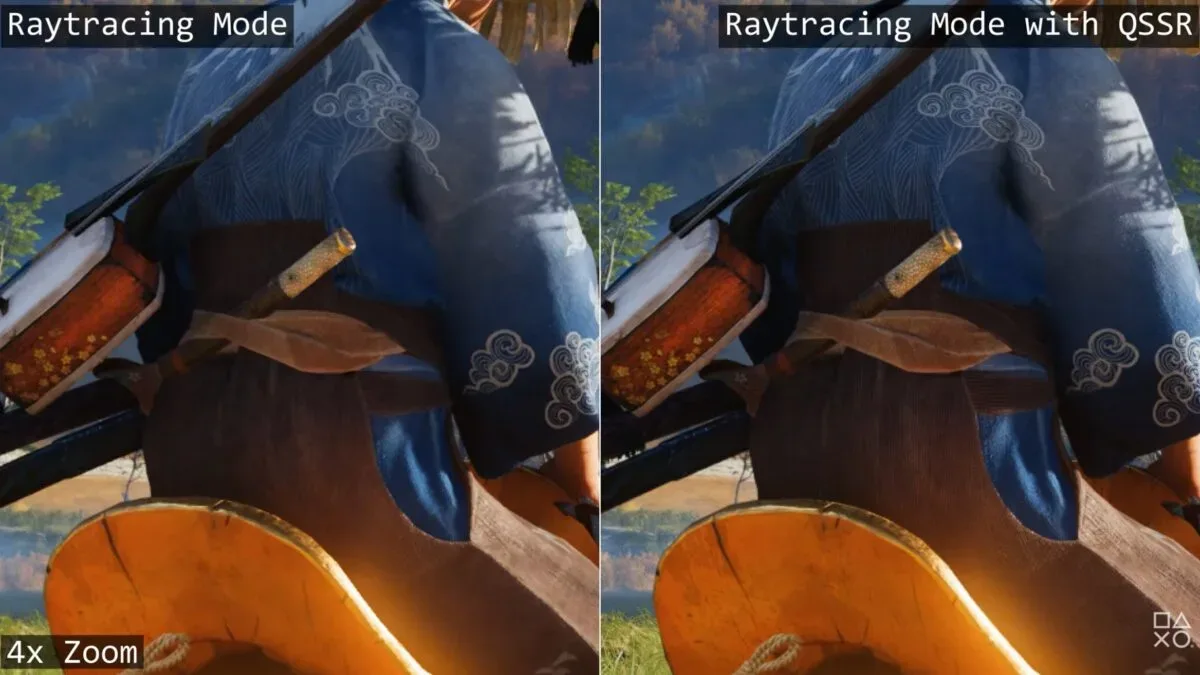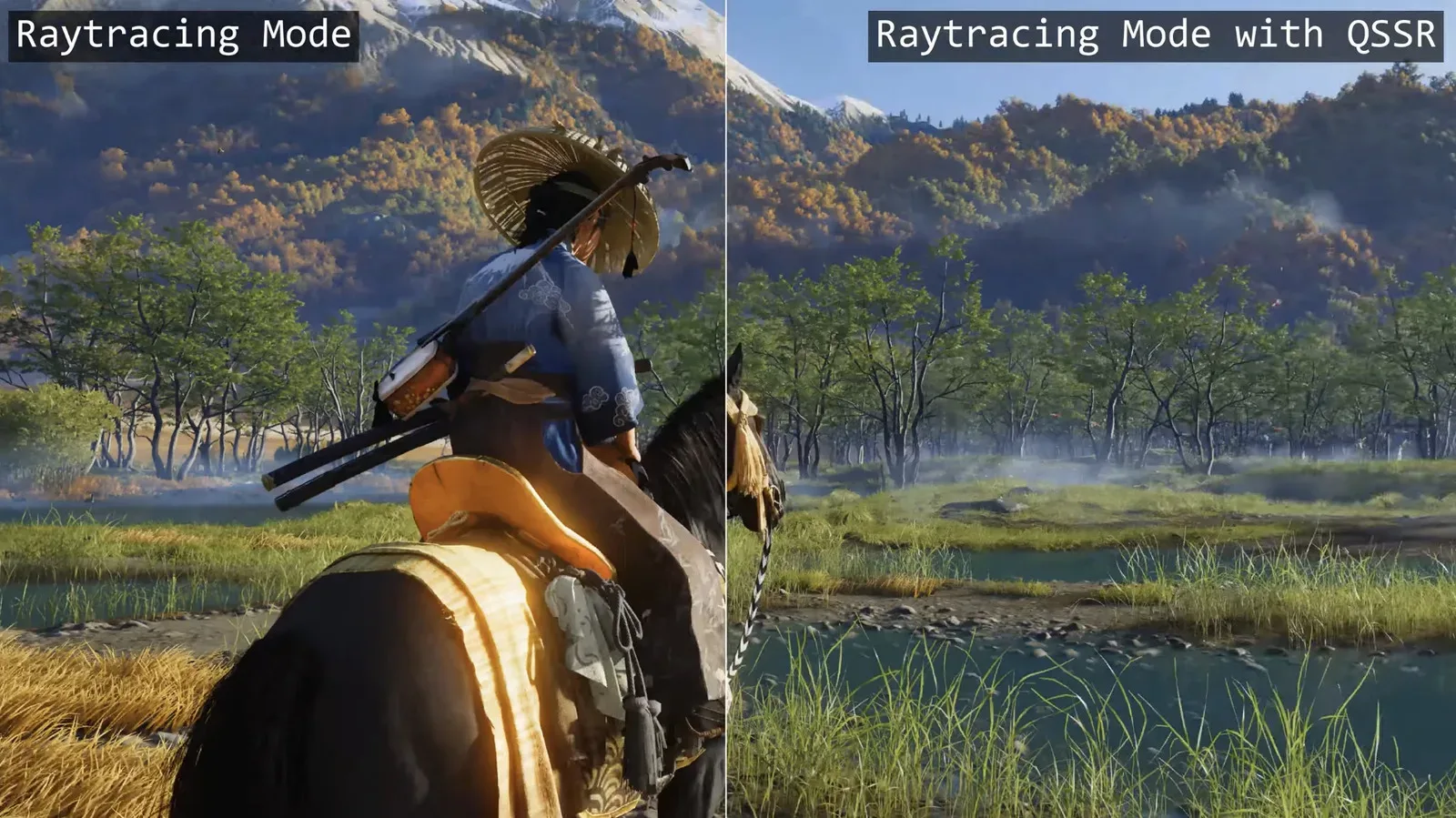
Standard PlayStation 5 consoles are getting a new AI-guided image-upscaling option called Quick Spectral Super Resolution, or QSSR. The feature begins rolling out with Marvel’s Wolverine and Ghost of Yōtei, giving those games access to technology that takes inspiration from the higher-end PlayStation Spectral Super Resolution system associated with PS5 Pro.
The important caveat is right in the name: QSSR is not simply PSSR arriving unchanged on every existing PS5. PlayStation continues to position PSSR as its top-tier solution on PS5 Pro, while QSSR is a separate, performance-conscious implementation designed for the base console. In other words, this is a meaningful expansion of AI-assisted rendering on PS5, but not the erasure of the hardware distinction between the two console models.
What QSSR is intended to do
Upscaling is a rendering technique in which a game starts from a lower-resolution image and reconstructs it for output at a higher resolution. The practical aim is to reduce the rendering burden enough to support smoother performance, more demanding visual settings, or both, without making the final image look as soft or unstable as a simple lower-resolution presentation.
AI upscaling adds a trained neural-network component to that reconstruction process. Rather than relying exclusively on conventional image-scaling methods, the system uses learned patterns to help infer detail in the output image. PlayStation describes QSSR as a new performance tier of AI upscaling built around a streamlined neural-network architecture and a hand-tuned implementation for PS5 hardware.
Those phrases matter because the base PS5 has a different performance envelope from PS5 Pro. A streamlined architecture suggests the feature has been shaped to make AI-guided reconstruction practical without demanding the resources available to the more powerful model. “Hand-tuned” similarly indicates that this is not necessarily a one-size-fits-all version of the Pro feature, but an approach adjusted specifically for standard PS5 performance constraints.
PlayStation says QSSR can improve image detail and image stability. Detail is the easier term to picture: fine elements such as textures, distant scenery, edges, foliage, or thin objects may look cleaner in motion or at viewing distance. Stability refers to whether the image holds together consistently from frame to frame. It can be particularly relevant around moving camera shots, complex scenery, and thin high-contrast details, where shimmering or flickering can draw attention away from the game itself.
PSSR remains the Pro feature to beat
PSSR, short for PlayStation Spectral Super Resolution, remains the company’s stated “gold standard” for this area on PS5 Pro. That technology analyzes game imagery pixel by pixel and uses proprietary AI upscaling in pursuit of a more detailed, stable result.
QSSR shares the broader objective, but PlayStation has not presented it as identical to PSSR. That distinction is useful for setting expectations. Owners of a standard PS5 should read QSSR as an effort to improve the presentation of games that support it, not as a promise that every Pro-specific visual benefit will transfer to the original hardware.
Related coverage includes PS5 Gets QSSR AI Upscaling as Sony Brings a Lighter PSSR-Style Feature to Standard Consoles.
The initial footage for Marvel’s Wolverine and Ghost of Yōtei shows the intended comparison. Any visual gain from a reconstruction technique may be subtle, especially in compressed video, on different displays, or when the viewer is not pausing on the exact scene details the technology is meant to improve. The visible impact can also vary substantially by game art style, scene complexity, developer implementation, and the settings a game uses.
That variability is a core part of the story. Upscaling is not a single visual preset that produces the same outcome in every title. Developers decide how and where to incorporate a tool in their rendering pipeline. Consequently, the presence of QSSR in one game does not establish exactly how it will look, perform, or be presented in another.
Why the first two games matter
Marvel’s Wolverine and Ghost of Yōtei are the first named PS5 games receiving QSSR. Their support establishes that the feature is not being held solely as a technical demonstration; it is entering released game implementations immediately.
For players, the most practical question will be whether QSSR arrives as a visible option, sits behind an existing graphics mode, or otherwise operates through a game’s rendering setup. Specific mode behavior, resolution targets, frame-rate effects, and download details have not been established here, so those points should not be assumed. A game may use an upscaling technology in ways that are deliberately unobtrusive, with developers prioritizing the final image rather than making players manage the underlying tool.
Nor is there a confirmed universal expectation for older PS5 games. PlayStation says it will make QSSR broadly available to PlayStation developers, but has not identified a complete adoption list for released titles or future projects. That leaves several open questions: which teams will choose to support it, whether existing games will receive updates, and how individual studios will balance it against their own technical priorities.
The broader developer availability is potentially the most consequential part of the announcement. A platform-level rendering tool becomes more significant when developers can decide whether it suits their projects, rather than when it is restricted to a pair of showcase games. Still, “available” does not mean “required.” QSSR support will depend on development decisions title by title.
Project Amethyst and the AMD collaboration
QSSR comes out of Project Amethyst, PlayStation’s AI graphics collaboration with AMD. In this case, the collaboration provides the backdrop for a consumer-facing feature intended to bring a form of AI-guided upscaling to standard PS5 hardware.
For the moment, the useful takeaway is narrower than any sweeping claim about future console graphics: Project Amethyst has produced a PS5 implementation that PlayStation believes can improve detail and stability within the performance limits of the base machine. The announcement does not establish a full technical specification for QSSR, nor does it give a definitive game-by-game performance forecast. It does, however, show that AI reconstruction is becoming part of PlayStation’s graphics-toolkit conversation beyond the premium Pro model.
That development is notable because the usual player-facing graphics choice is framed as a trade between image quality and performance. Upscaling technologies attempt to make that trade less severe by reconstructing a higher-quality output without requiring every pixel to be rendered natively. They cannot make hardware limits disappear, but they can give developers another tool for deciding where to spend finite system resources.
What PS5 owners should watch for next
The immediate answer is straightforward: QSSR support starts with Marvel’s Wolverine and Ghost of Yōtei. Players interested in the feature should look for implementation details from the games themselves and compare footage with the understanding that the differences may be most apparent in particular scenes rather than across every second of play.
- Confirmed: QSSR is an AI-guided upscaling tier for standard PS5, derived from work connected to Project Amethyst and AMD.
- Confirmed: Its stated goals are improved image detail and image stability.
- Confirmed: Marvel’s Wolverine and Ghost of Yōtei are the initial supported games.
- Confirmed: PlayStation plans to offer QSSR broadly to developers.
- Not yet established: which other released or forthcoming games will adopt the technology, and what form that support will take in each title.
- Still distinct: PSSR on PS5 Pro remains PlayStation’s higher-end reference point rather than being replaced by QSSR.
For more on another current PlayStation game update, see our coverage of 007 First Light’s Extended Operations update.
QSSR is therefore best understood as an incremental but potentially useful technical addition: a way for standard PS5 games to access a tailored form of AI upscaling, while leaving PS5 Pro’s PSSR in its separate premium position. The eventual value of the initiative will depend less on the acronym and more on the number of developers that adopt it—and on how effectively each game uses it.