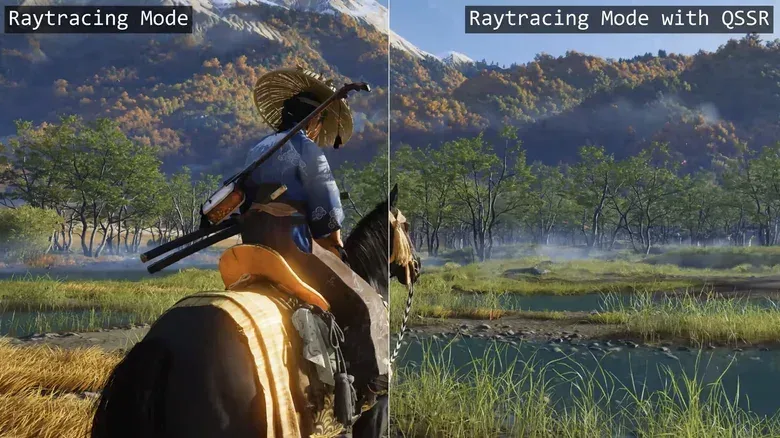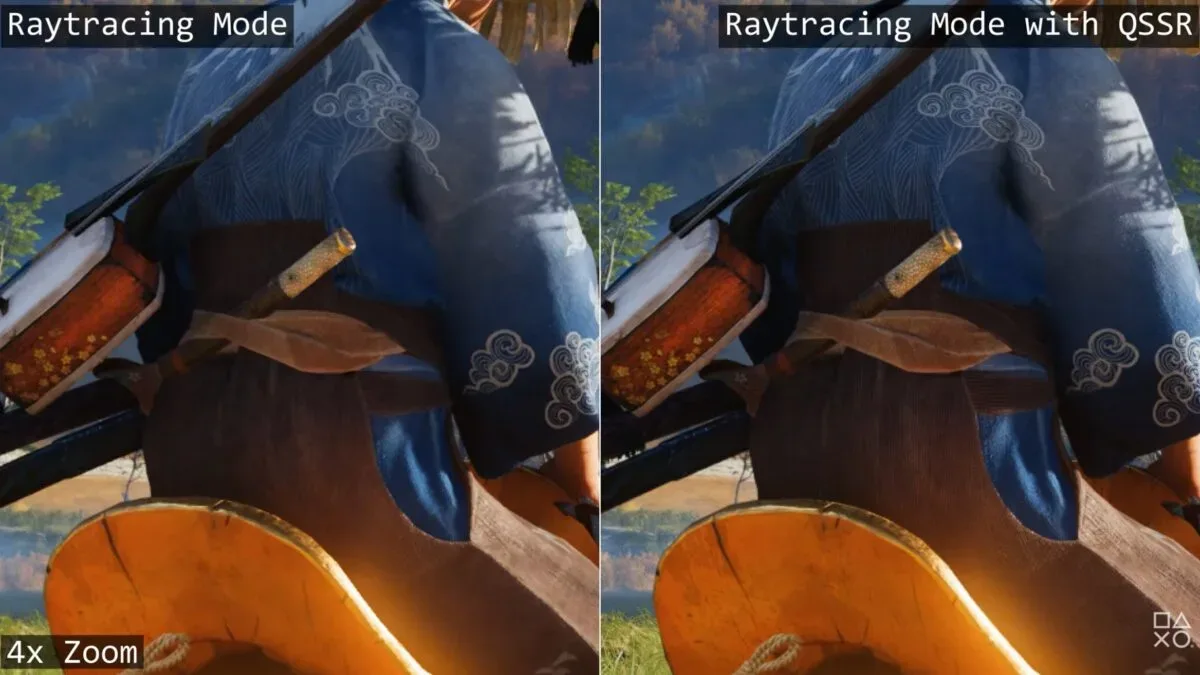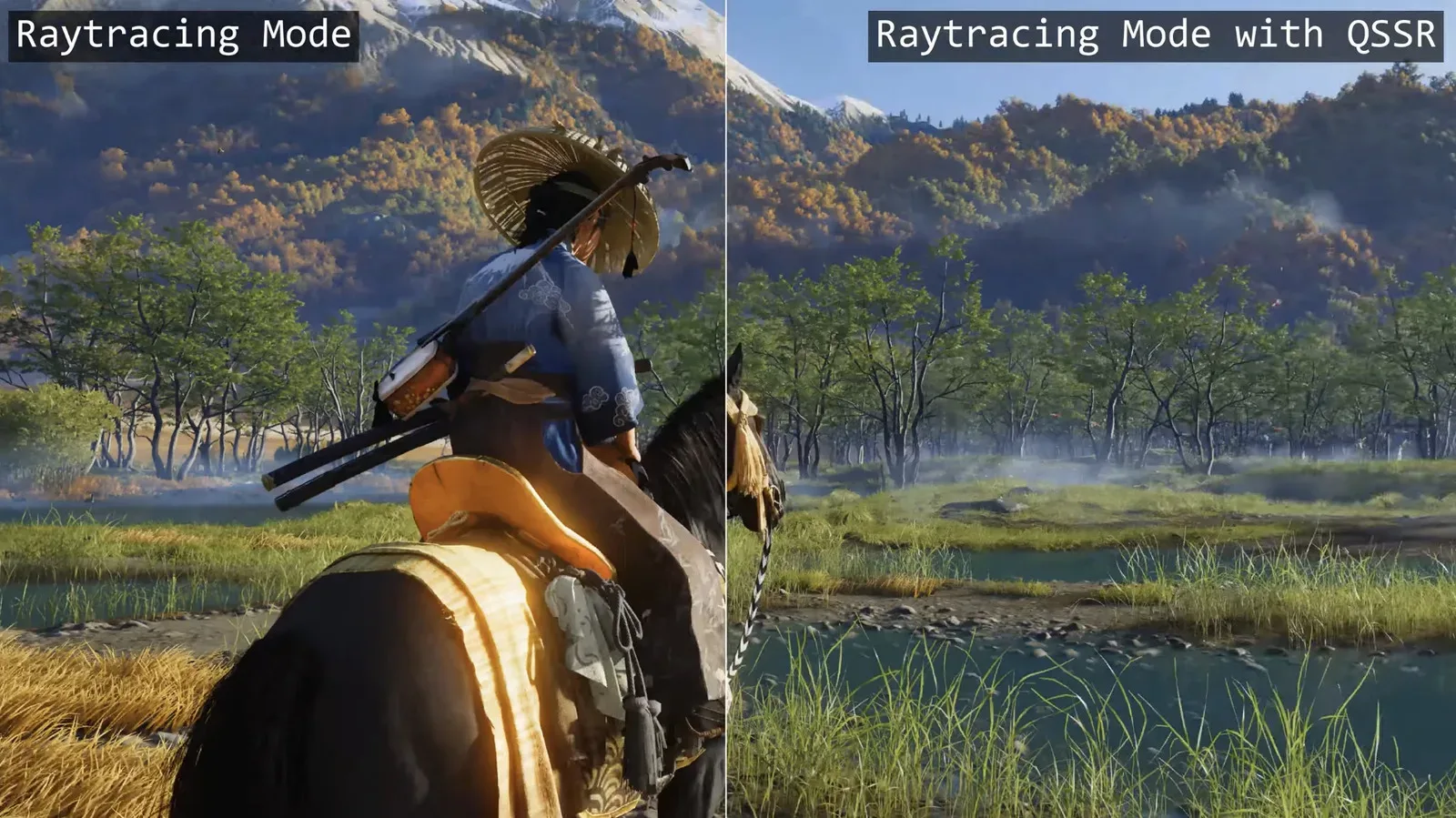
Sony Interactive Entertainment is bringing AI-based image upscaling to the standard PlayStation 5. The feature is called Quick Spectral Super Resolution, or QSSR, and it is being introduced through new graphics options in patches for Marvel’s Wolverine and Ghost of Yōtei.
The two games are the first announced titles to support QSSR on the base PS5. Sony says the technology produces notable gains in image detail and stability, and says PlayStation developers broadly will be able to implement it in their games. That last point is potentially the bigger story: this is not positioned as a one-game visual trick, but as a graphics capability that other PS5 releases may adopt.
What QSSR is meant to do
Upscaling is a rendering technique used to create an image at one resolution and reconstruct it for display at a higher resolution. In practical terms, a game can render fewer pixels than its output resolution would normally require, then use motion data, previous frames and other image information to create a sharper-looking final picture.
That is valuable because rendering is expensive. The higher the internal resolution, the greater the work required from a console’s graphics hardware. Upscaling seeks a balance: preserve convincing detail while avoiding the full cost of rendering every pixel natively at the final resolution.
QSSR is Sony’s AI upscaling approach for the regular PS5. Its stated goals are image detail and image stability. Detail refers to the discernible fine information in an image: edges, textures, distant scenery and complex geometry. Stability concerns how consistently those details hold together from one frame to the next, particularly when a camera is moving or when a scene contains dense visual information.
Those aims matter most in games where the screen is doing a lot at once. A reconstruction method may help retain clarity in foliage, architecture, crowds, fast motion and busy lighting. But the announcement does not provide resolution figures, frame-rate targets, mode-by-mode comparisons or a universal performance promise. QSSR’s eventual benefit will therefore need to be considered game by game and option by option.
From PSSR on PS5 Pro to QSSR on standard hardware
The PS5 Pro has already used PlayStation Spectral Super Resolution, known as PSSR, since that higher-end console launched two years ago. Sony has continued to iterate on that technology. QSSR brings a related AI-upscaling option to the less powerful standard PS5 after Sony says players and developers asked whether a comparable approach could be made possible there.
The distinction in the names matters. Sony calls the new standard-console feature Quick Spectral Super Resolution rather than simply saying PSSR has been moved wholesale from PS5 Pro. The available information supports a straightforward reading: QSSR is a separate implementation intended to make AI upscaling practical within the base PS5’s performance limits, rather than a claim that the two consoles now have identical graphics capabilities.
Sony attributes that work to a project undertaken with AMD. It says QSSR became possible on PS5 through a streamlined neural-network architecture and a hand-tuned implementation designed to maximize performance.
A plain-English explanation of the technical language
A neural network is a machine-learning model that processes input through layers of mathematical operations. For image reconstruction, the relevant job is to infer a high-quality output image from the information the game provides. “Streamlined” suggests that the model and implementation have been tailored to operate within a tighter hardware budget than a more demanding approach might require.
Hand-tuned implementation means engineers have optimized how the method runs for the target platform. That can involve carefully managing the workload, timing and use of console resources. Sony has not laid out the precise implementation details, so it would be premature to infer a specific rendering pipeline or to assume every game will use QSSR in exactly the same way. The salient point is that software optimization, not merely the label “AI,” is central to making the technique fit the base machine.
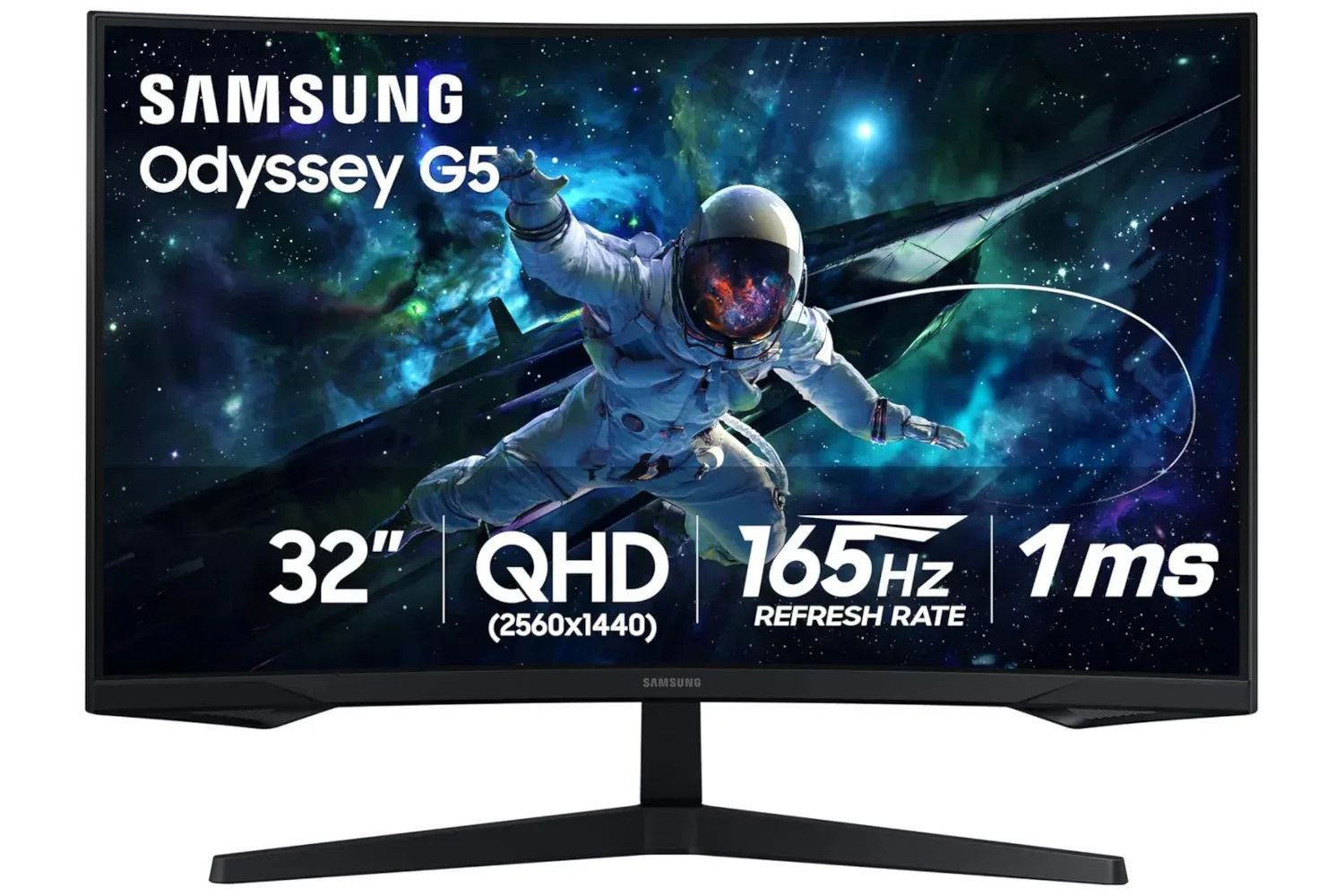
For players, the immediate practical implication is simple: supported games gain another graphics setting or option to evaluate. The best choice may depend on an individual’s display, viewing distance and preference for detail, stability or other visual priorities. A display’s own characteristics can influence what a player notices, which is one reason the wider conversation around image quality includes both console-side rendering and screen hardware; for example, the Samsung Odyssey G55C’s QHD and high-refresh specifications illustrate the kinds of display features gamers weigh alongside a console’s output.
Why Marvel’s Wolverine is a telling first use case
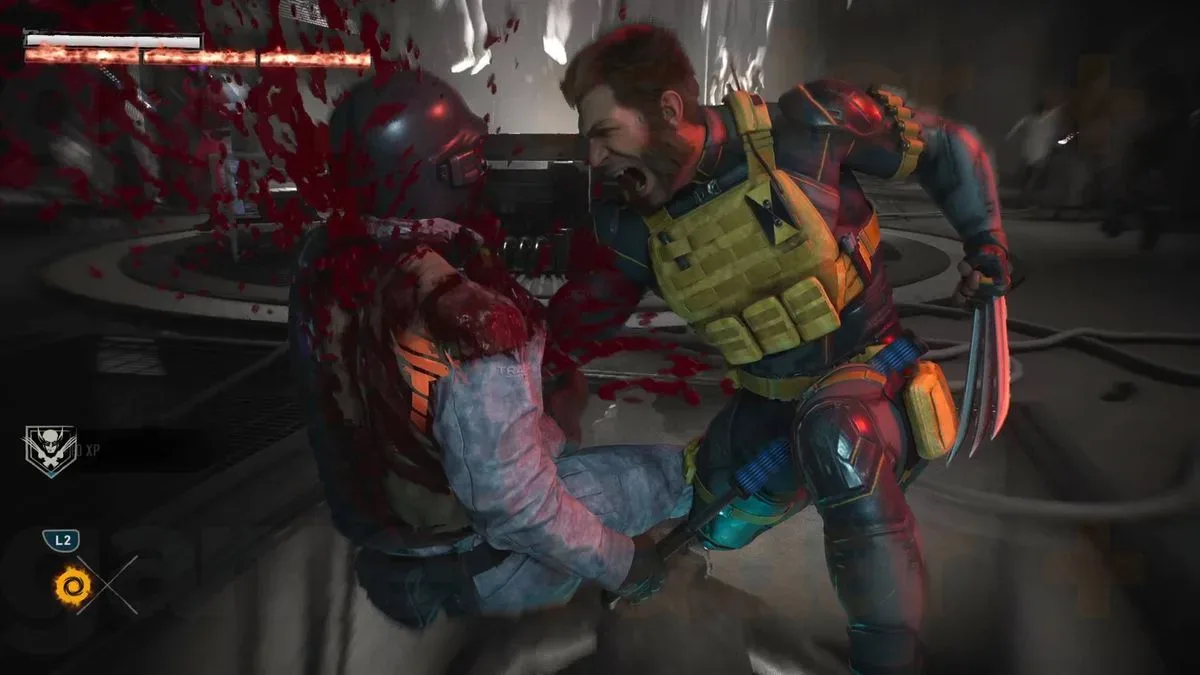
Insomniac Games’ Marvel’s Wolverine is among QSSR’s first supported titles, and the studio has pointed to scenes with considerable visual density. Mike Fitzgerald, the developer’s head of technology, says the feature adds pixel-level clarity and stability in environments including Madripoor’s streets and Shinjuku’s dense alleyways, alongside other areas in Logan’s journey.
That description captures the type of scenario an upscaler is expected to address. A city environment can combine detailed building facades, signs, lighting, distant objects and moving camera perspectives. Fine lines and small features are where weaknesses in reconstruction are often easiest to spot, while a rapidly changing image can make stability particularly important. Sony and Insomniac are therefore emphasizing the visual qualities QSSR is intended to improve, rather than presenting a claim about one fixed technical outcome across the entire game.
It is also worth separating what has been confirmed from what has not. QSSR support is confirmed for the game through its patch. The available details do not establish how each graphics mode is configured, whether the feature changes every mode, or exactly how much improvement every scene will show. Those distinctions will matter as players compare the newly available options.
Ghost of Yōtei gets QSSR alongside a Complete Edition
Ghost of Yōtei receives QSSR on the same day that Sucker Punch Productions is releasing a Complete Edition of the game. That edition includes a story expansion and a roguelike mode described as being similar to The Last of Us Part II’s No Return mode.
Existing owners can upgrade for $15. The QSSR addition and the Complete Edition arrive together, but they are distinct parts of the update picture: one is a new graphics technology option for the base PS5, while the other packages additional game content and an upgrade route for people who already own the title.
The pairing may put QSSR in front of more players at a moment when the game is receiving renewed attention. Still, Sony’s stated plan is broader than either launch. Its assertion that every PlayStation developer can add QSSR means the feature’s importance will be determined over time by adoption across the PS5 library, as well as by how developers choose to expose and tune its settings.
What players should and should not expect
- Expect supported titles to offer a new graphics option: Marvel’s Wolverine and Ghost of Yōtei are the first named examples.
- Expect Sony’s focus to be clarity and consistency: the company specifically highlights improvements to image detail and stability.
- Do not assume a blanket performance result: no universal resolution, frame-rate or mode-specific claims have been provided.
- Do not treat QSSR as identical to PS5 Pro’s PSSR: QSSR is the name Sony is using for a standard-PS5 implementation built around a streamlined network and performance-focused tuning.
- Watch for developer adoption: Sony says the option is available to PlayStation developers, but individual studios will decide whether and how to support it.
AI upscaling has become one of the most consequential behind-the-scenes tools in modern graphics because it aims to stretch limited rendering resources further. With QSSR, Sony is now making that approach part of the base PS5’s toolkit. The first two supported games will offer the earliest concrete look at how the company’s performance-conscious version of the technology translates into real graphics options on the console most PS5 owners use.