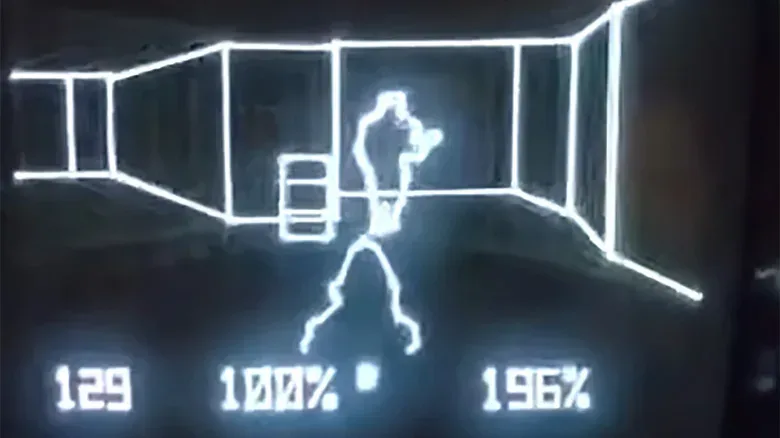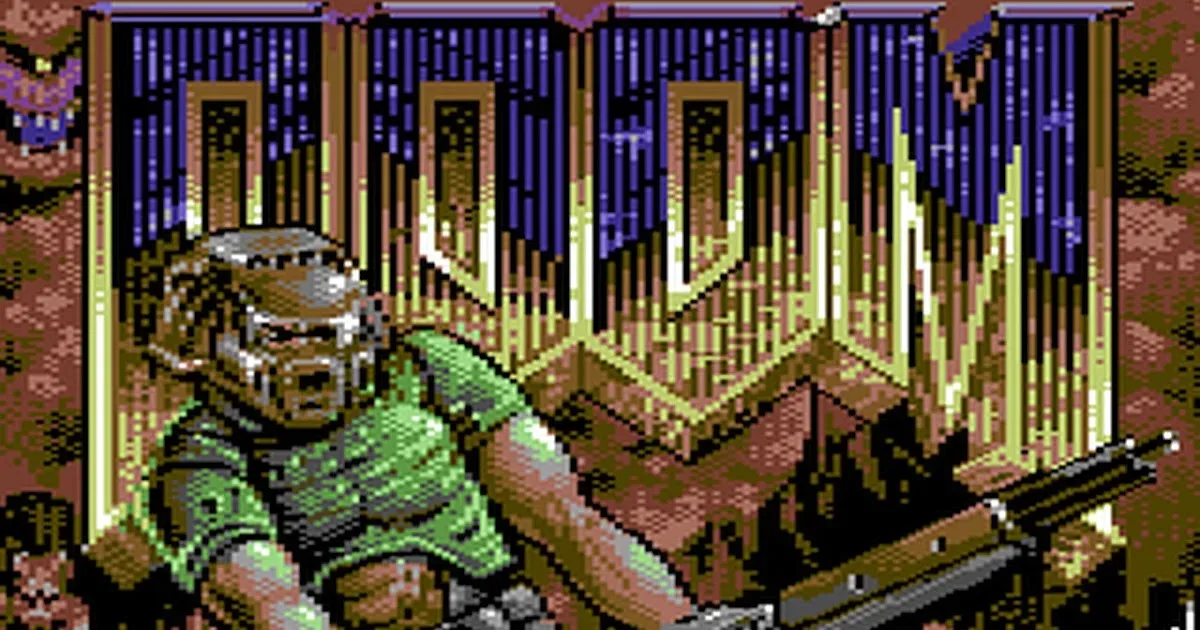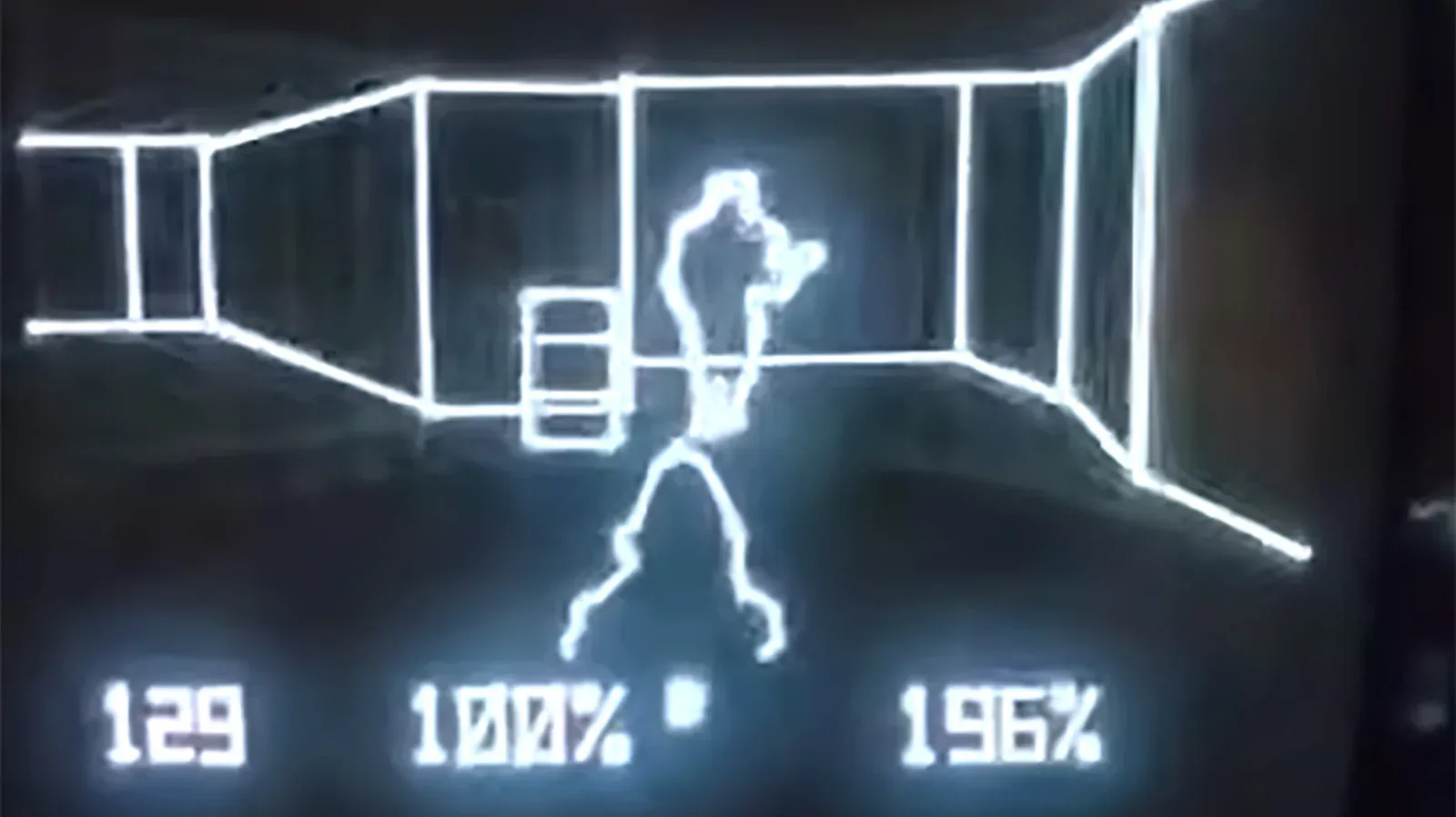
Doom has reached another improbable screen, but this time the novelty is not merely that it runs. A new demo built for the Vectrex recasts the 1993 shooter as a sharp, glowing field of directly drawn lines. It is an especially arresting match of game and hardware: Doom’s corridors, enemies and first-person viewpoint are filtered through a display technology that makes everything look less like conventional pixel art and more like an arcade transmission from an alternate future.
There is an important technical caveat behind the spectacle. This is not Doom running natively on the Vectrex’s original hardware. Modder Jason Kopp, known as ArcadeJason, built the demo around the Ultimate Vectrex Multicart 2, or UVMC2. That cartridge performs the processing while the Vectrex contributes its built-in CRT display. Sound is handled separately through the cartridge’s 3.5mm output. The project also uses an SDK created by Daniel Ferrer Guerrero.
That qualification does not diminish what makes the demonstration compelling. The point is not a claim that a 1982 machine somehow acquired the full computational abilities of a much later game platform. Rather, it is a clever hybrid: newer electronics make the Doom presentation possible, while the Vectrex provides the one component no ordinary modern display can replicate in quite the same way—its distinctive vector-drawn image.
The screen is the story
Most games render their pictures on a grid of pixels. A pixel is a small point in that grid, and images are assembled by lighting many of those points in particular colors and arrangements. The Vectrex works differently. Its display directs an electron beam to trace lines on the CRT itself.
That is the key to the demo’s dramatic look. Instead of treating Doom as a collection of tiny colored blocks, the machine presents its world as connected strokes: walls become wireframe-like planes, silhouettes resolve into angular marks, and the scene gains a clean electronic glow. “Tron-like” is an easy shorthand, but it gets at something real: this is an image language in which lines are the fundamental visual object.
The effect is more consequential than putting an old game on an unusual device for bragging rights. Doom has appeared on iPods, graphing calculators and even toasters, examples often appreciated for the engineering challenge or the joke of seeing a famous game emerge somewhere it plainly was not expected. The Vectrex approach changes the game’s visual identity. It does not just relocate Doom; it reframes it.
In that sense, the demo belongs as much to display experimentation as it does to the long-running Doom-port tradition. The game is instantly recognizable, yet the medium makes it appear newly abstract. Its familiar maze-like spaces are well suited to a line-based screen because the geometry of corridors, doorways and perspective is so central to how Doom reads at a glance.
What “not native” means here
Retro-hardware projects often need a little vocabulary cleanup, because words such as port, native and runs on can describe very different arrangements.
Related coverage includes Doom Reimagined on Vectrex in Striking Neon Vector Display Demo.
- A native port would mean the target machine’s original processor and hardware are doing the work of running the adapted game software.
- A display-driven hybrid, which is the more accurate description here, uses additional hardware for the main computation while routing output through a vintage machine’s original display system.
- An SDK, or software development kit, is a set of tools and supporting code that helps developers create software for a particular platform or setup.
Kopp’s UVMC2 is therefore not simply a storage cartridge carrying an old game image. It effectively operates as a small plug-in PC, taking on the processing workload that the original Vectrex hardware was not designed to shoulder. The console’s CRT remains vital, however, because it is the mechanism generating the demo’s direct-line presentation.
Audio follows a similarly practical division of labor. Rather than asking the Vectrex to deliver the project’s sound through its normal setup, the cartridge provides a dedicated 3.5mm output. For anyone encountering the demo, that means the picture and sound are not necessarily emerging from the same vintage-hardware path. It is a design choice that prioritizes the special display while providing a separate route for audio.
This distinction matters because it makes the accomplishment clearer, not less impressive. Calling it a native Vectrex version would incorrectly credit the original 1982 hardware with work being done inside the cartridge. Calling it “just Doom on a screen” would miss the engineering and artistry of using the Vectrex display in a way that gives the game a radically different appearance. Both halves of the setup are essential to the idea.
Why the Vectrex remains a magnet for experiments
The Vectrex holds a singular place in home-console history as the only released home console built around vector graphics. Although vector displays were largely left behind in mainstream game hardware, the format still has devoted enthusiasts. Their interest is not difficult to understand: the technology creates a visual result that is immediately distinct from pixel-based systems, even before a game’s design enters the equation.
For a community working with niche legacy hardware, that visual difference is a powerful reason to keep experimenting. A project can invite attention without pretending that the old system competes directly with current machines. The Vectrex’s value is precisely that it cannot be casually mistaken for an ordinary television-connected console. Its display has character, and that character gives developers and modders a creative constraint worth exploring.
The Doom demo is a particularly effective showcase because the source game is so culturally legible. A viewer does not need a detailed explanation of its original look to notice the contrast. The familiar premise—fast first-person action inside hostile corridors—makes the line-rendered transformation easy to appreciate. The more recognizable the game, the more clearly the display technique gets to take center stage.
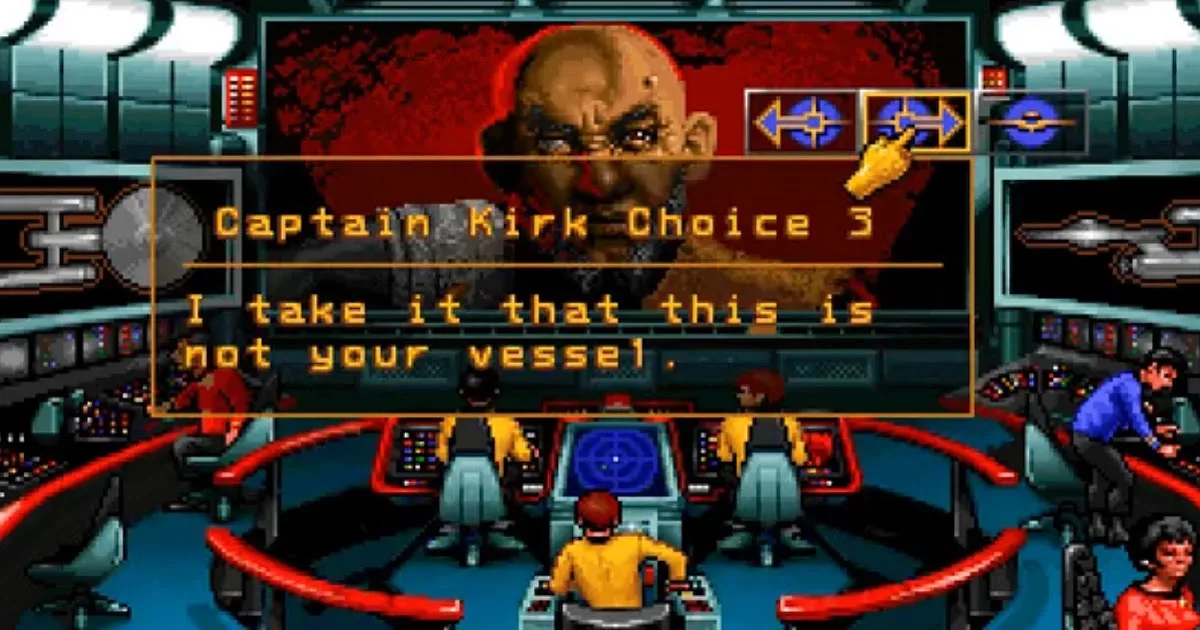
That same spirit is visible across retro computing projects that bring software to unusual legacy environments through fresh technical work. For another example of a classic game reaching old hardware by a different route, see Star Trek: Judgment Rites reaching Amiga through a custom interpreter. The methods and platforms differ, but the shared appeal is in revealing new possibilities around machines long assumed to be finished products.
A technical workaround that serves an artistic result
It would be easy to reduce the UVMC2 arrangement to a workaround: a modernized cartridge does the difficult job, and an old console becomes an unusually stylish monitor. But that description is incomplete. The hardware split is also the project’s artistic logic.
A conventional modern PC could display Doom in countless familiar ways. What it cannot ordinarily do is make use of the Vectrex’s own electron-beam line tracing as its output character. The cartridge’s processing power and the console’s display are being combined precisely because each supplies something the other lacks. One supplies the ability to handle the game presentation; the other supplies the visual personality.
That is why the demo is more interesting than a straightforward exercise in maximum compatibility. It treats vintage hardware not as an obstacle that must be overcome, but as an ingredient. The limitation becomes an aesthetic choice. Doom’s brute, pixel-era imagery is translated into sparse geometry and luminous outlines, yielding a presentation that looks more like an interpretation than a museum reproduction.
There is also a useful lesson for how audiences talk about retro projects. Technical honesty and appreciation can coexist. It is correct to say the Vectrex itself is not natively running Doom. It is also correct to say that the Vectrex is central to the result, because its CRT is doing the task that defines the demo’s appearance. The question is not whether the old hardware alone is responsible; the question is what the combined system creates.
What viewers should take away
The demo should be viewed as a proof of concept and a visual experiment, not evidence of a newly discovered native Doom capability for the original console. The supplied details identify it as a demo and explain the role of the UVMC2, the separate audio output and Ferrer Guerrero’s SDK. They do not establish a release plan, a price, broader compatibility, or a complete playable conversion.
What is established is plenty: Kopp’s setup uses the Vectrex CRT to transform one of gaming’s most portable classics into something unusually elegant. The result spotlights a display system that has long been outside the mainstream and demonstrates why it still inspires attention. Doom has been put on devices that make people laugh. On the Vectrex, it also makes people look twice.