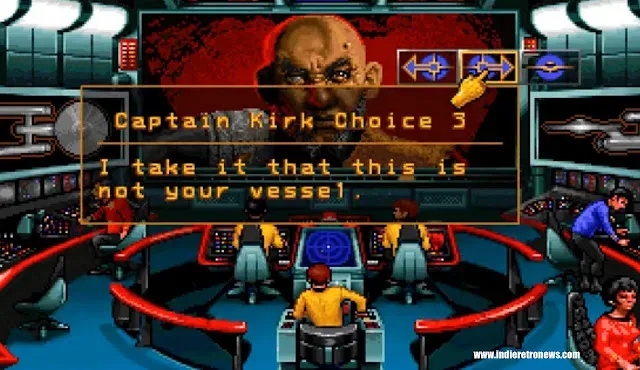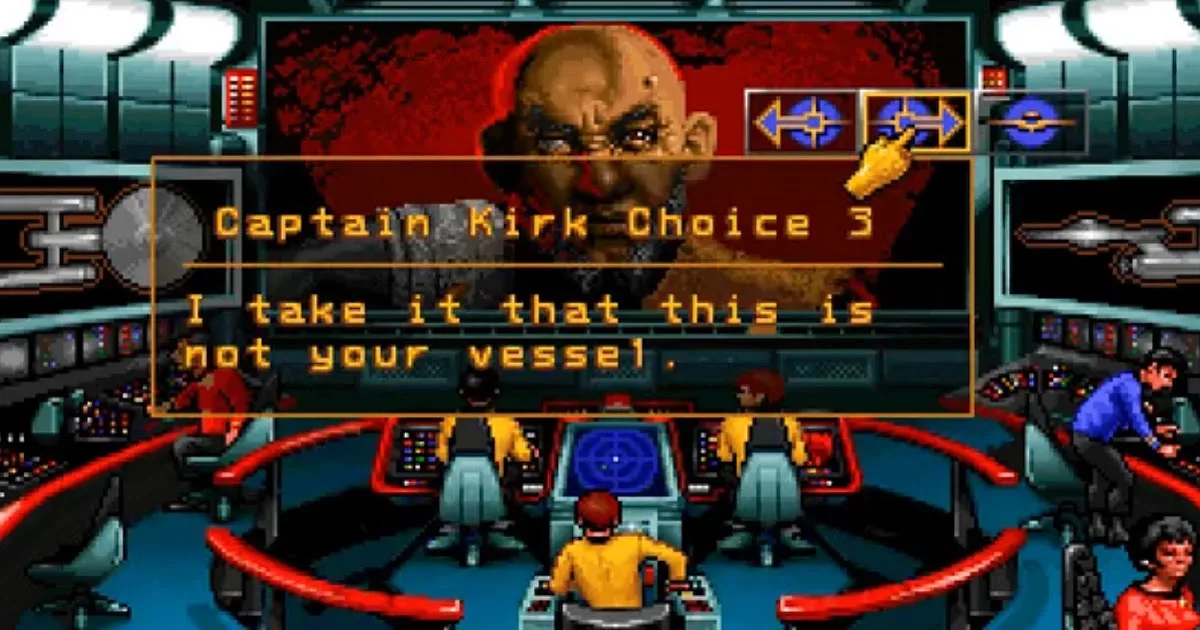
Star Trek: Judgment Rites can now be played on Amiga systems through a newly released custom interpreter by nexusle, finally closing a conspicuous gap in the platform’s adventure-game library. The game followed Star Trek: 25th Anniversary, which did receive an official Amiga AGA version in the 1990s. Its sequel, however, originally remained confined to MS-DOS and Macintosh systems. The new community software changes that long-standing situation by enabling Amiga machines to run the original game code.
For Amiga and Star Trek game enthusiasts, the important distinction is that this is not being presented as a newly remade adventure. An interpreter is software that provides the environment needed to execute a game’s existing code on another system. In practical terms, the project aims to bring the original Judgment Rites experience to Amiga hardware rather than replace it with a separate conversion.
A sequel that missed the Amiga at the time
25th Anniversary established a precedent for Star Trek adventures on the machine through its official Amiga AGA release. That made the absence of Judgment Rites all the more notable: the sequel arrived during the 1993–95 period for MS-DOS and Macintosh, but no equivalent Amiga edition materialized.
That history is what gives this release its particular retro-computing appeal. It is not simply another way to launch a familiar title on contemporary hardware. It supplies a platform option that fans did not have when the sequel was current, while maintaining a relationship to the original game code. For people interested in the Amiga’s software catalogue, that effectively expands the practical library without pretending the game had an official port in its original era.
The project also arrives as another example of the continuing technical work around the platform. Community projects can preserve access to older games, but they can also make them relevant to the real machines enthusiasts still use. That distinction matters: retro software preservation often concerns archival copies and documentation, while an interpreter concerns whether a program can actually be run in a useful form on a particular system.
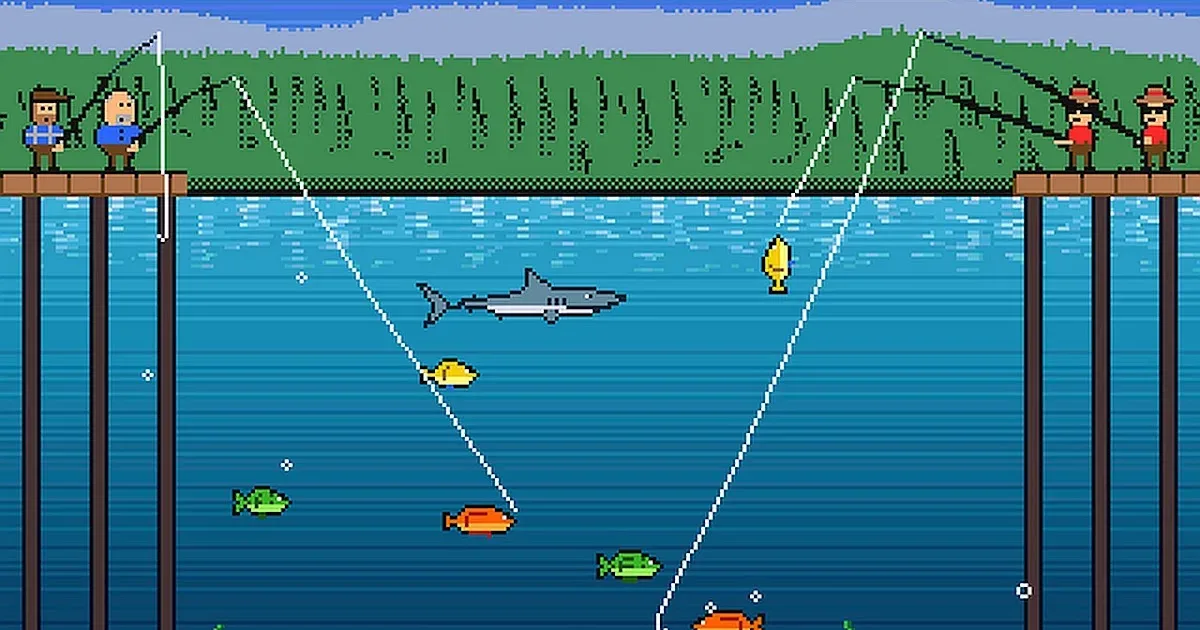
Readers following other newly supported Amiga software can also see how varied that effort has become in this look at Fishing Derby – Amiga Edition, another project aimed at the platform’s enduring hardware community.
What the interpreter supports
The interpreter supports both the Amiga’s enhanced AGA graphics capabilities and modern RTG video cards, along with AHI audio. Those terms describe different parts of an Amiga setup, and together they show that the project is intended to accommodate more than one kind of machine configuration.
- AGA, or Advanced Graphics Architecture, refers to the enhanced Amiga graphics hardware associated with later systems.
- RTG, short for retargetable graphics, is used with modern graphics-card arrangements that offer display modes beyond the original chipset’s capabilities.
- AHI, or Audio Hardware Interface, is an Amiga audio system designed to provide a consistent route to supported audio hardware.
In straightforward terms, users with an AGA-focused setup and those with an RTG-equipped system are both within the stated support picture, while AHI handles audio output. That is useful because the Amiga world is not a single fixed specification. Original and expanded systems can differ greatly, and modern add-ons can substantially change the display and sound options available to an owner.
Related coverage includes Star Trek: Judgment Rites Is Now Playable on Amiga Through a Custom Interpreter.
The practical implication is flexibility, not a claim that every setup will behave identically. The available information establishes the supported graphics and audio paths, but does not provide a detailed compatibility matrix, performance figures, installation sequence, or a list of individual Amiga models. Anyone planning a setup should therefore treat the support labels as a starting point and check the project’s own accompanying documentation for hardware-specific details.
Lower processor requirements are a major part of the story
Perhaps the most striking technical point is the interpreter’s stated ability to run on a 68ec020 processor with FastRAM after adjustments to its tooltypes. This is especially notable against the Macintosh version’s much heavier requirement: the original title calls for a 68040 processor.
The 68ec020 and 68040 are members of Motorola’s 68000-family processors, a family closely associated with the Amiga line. The 68040 is the more powerful chip in this comparison. Saying the new interpreter can scale down to a 68ec020 does not mean all Amiga configurations will offer the same responsiveness or that memory and configuration cease to matter. It does mean the project is designed with a considerably broader section of Amiga-class hardware in mind than a simple one-to-one assumption based on the Macintosh requirement might suggest.
FastRAM is additional memory that is separate from the Amiga’s chip memory. Its presence in the stated minimum-style configuration is significant: the project is not described as operating on a bare processor alone. Memory remains part of the equation, as it does for many games and applications on older computer platforms.
Likewise, tooltypes are Amiga configuration settings associated with an application’s icon. The release notes indicate that a few tooltype changes can help the interpreter operate on the lower-end 68ec020 target. That is a useful warning as well as encouraging news. Prospective users should expect that configuration may be necessary, particularly when trying to use a modest CPU. The supplied information does not specify which tooltypes should be changed, so it would be unwise to guess at settings or present an unverified installation recipe.
Why optimization matters for real hardware users
“Optimized” can be a vague word in retro software discussion, but here it has a concrete consequence: a game associated with a 68040-class Macintosh requirement is said to be workable on a 68ec020 Amiga setup with FastRAM and appropriate tooltype adjustments. That is the meaningful result for owners deciding whether the project is relevant to their machines.
For users with later AGA systems or RTG upgrades, the listed graphics options offer a path to use the display capabilities already present in their configuration. For users whose priority is running software on less powerful processor hardware, the 68ec020 support claim is the more attention-grabbing element. Neither point eliminates the need to match the interpreter’s documentation to a specific machine, RAM arrangement and audio/display setup, but both suggest a deliberate effort to avoid making this an ultra-high-end-only curiosity.
It is also worth separating original-game ownership from the interpreter itself. The available details describe software that runs the original game code; they do not establish that the game data is included, that it has been relicensed, or that any particular edition is bundled. Users should not infer those points from the existence of an interpreter. The project’s release materials and distribution package are the appropriate places to verify precisely what files are required.
A meaningful restoration of an unfinished platform story
There is a particular satisfaction in an Amiga release that addresses a historical omission rather than merely offering a technical novelty. Judgment Rites was the sequel to a game Amiga players had already received, yet the follow-up never joined it on the system during the original commercial release period. The new interpreter gives that missing sequel a route onto the platform decades later.
That does not rewrite the record: Judgment Rites was originally an MS-DOS and Macintosh release, not an official Amiga port. Instead, it gives modern Amiga users an opportunity to bridge that divide through community engineering. The result is a project with value for both Star Trek adventure-game followers and people who appreciate the continuing life of classic computer hardware.
Its appeal is ultimately built on several linked points: the preservation of the original game code, support for AGA and RTG graphics paths, AHI audio compatibility, and a stated route down to a 68ec020 processor with FastRAM when tooltypes are adjusted. For a sequel that never made the leap to Amiga at the time, that is a substantial new chapter—one made possible not by a delayed official product, but by focused community development.