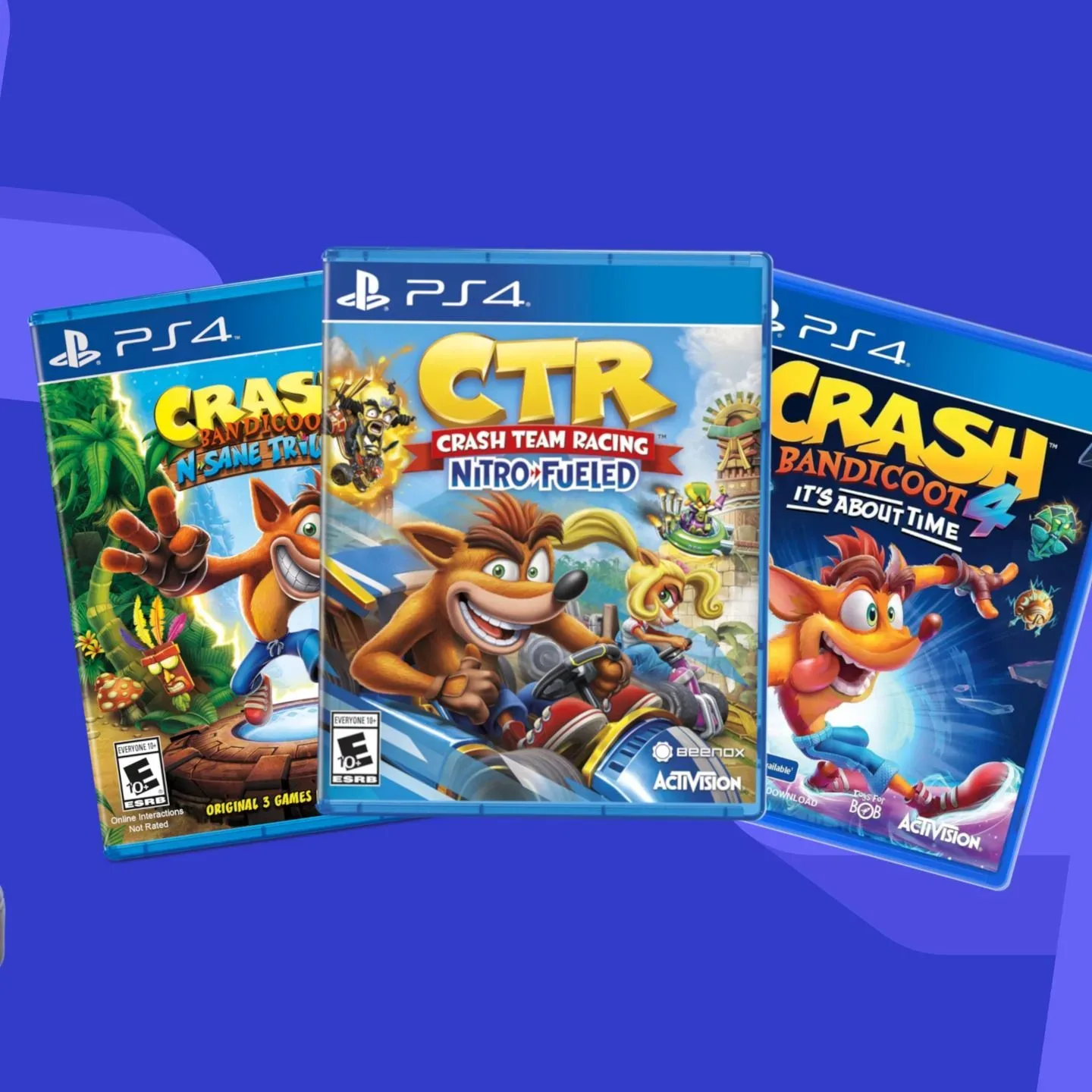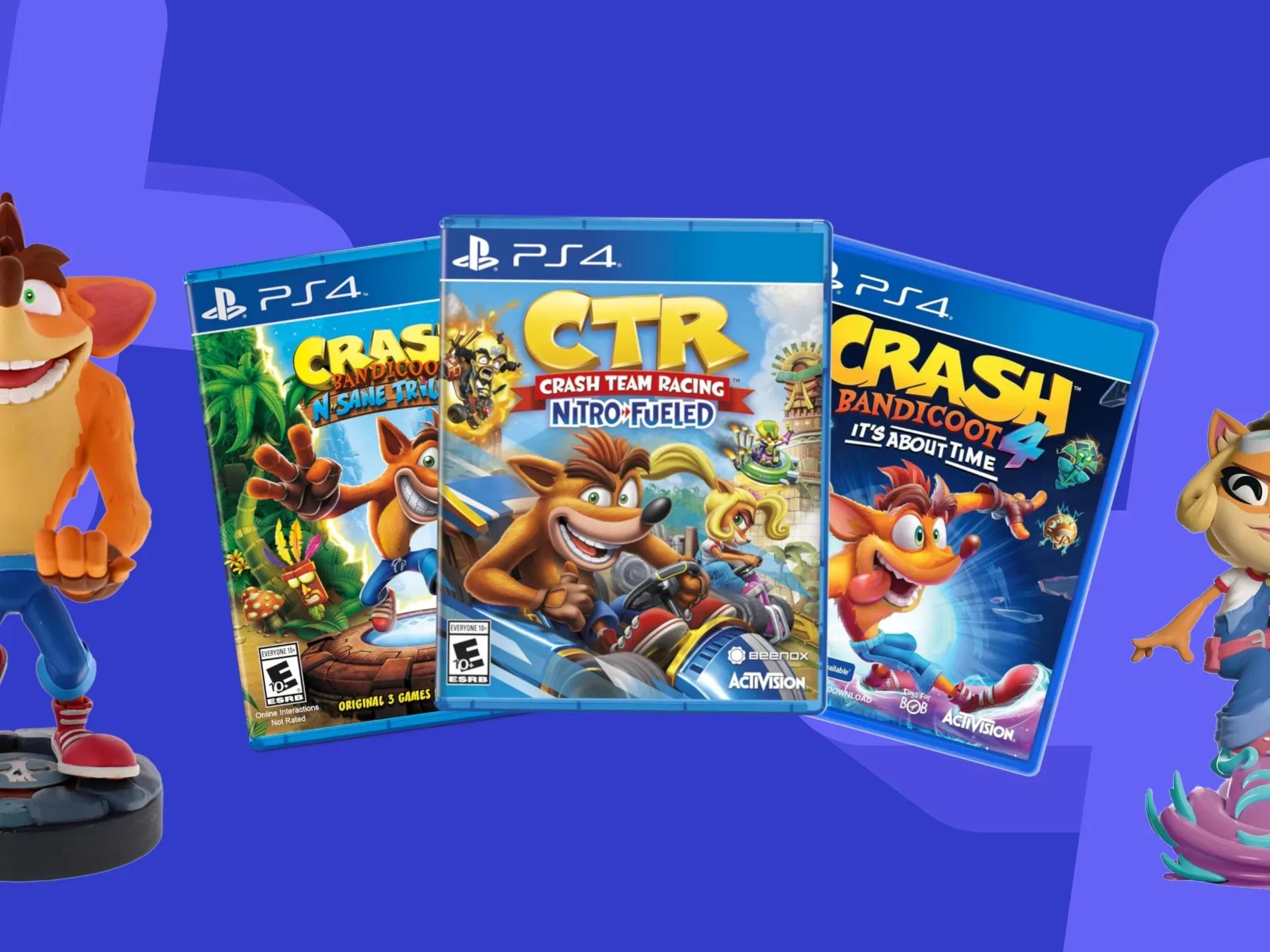
Thirty years after Crash Bandicoot first bounced, spun and body-slammed onto the original PlayStation, the orange marsupial is marking a major milestone. The series turns 30 this week, a landmark that feels especially fitting for a character built around momentum. Crash has spent three decades running toward the camera, away from boulders, through crates and into the kind of hazards that would make a workplace safety inspector quietly lie down.
Crash Bandicoot arrived in North America and Europe in 1996, with Naughty Dog’s original game becoming one of the defining platformers of the first PlayStation generation. It quickly gave Sony a highly visible mascot character through the latter half of the 1990s and into the 2000s. For many players, that bright orange silhouette, unmistakable spin and stacks of breakable crates remain inseparable from memories of early 3D console gaming.
A 30th anniversary is a useful excuse to appreciate what has endured. Crash is not simply a character from one era who has been sealed inside a display case marked “Do Not Touch: 1996.” The core, mainline games remain playable on modern consoles, meaning the original appeal is not confined to dusty hardware, fragile old discs or memories of a controller cable stretched across the living room.
That accessibility makes the occasion a celebration for more than longtime PlayStation veterans. Someone who started with Crash Bandicoot 4: It’s About Time can trace the series back toward its earliest foundations. Someone whose personal high point is a multiplayer detour such as Crash Bash can join in, too. And anyone who remembers being repeatedly humbled by a supposedly innocent crate placement can treat the birthday as a perfectly legitimate reason to try again.
The 1996 arrival of an orange PlayStation fixture
The original Crash Bandicoot launched in 1996 in North America and Europe. Its timing matters: the original PlayStation was helping define a new console era, and Crash became a familiar part of that transition. Platform games had already established a huge audience, but Crash gave the hardware a character with an immediately readable identity and a very physical style of play.
The character’s design communicated the basics at once. Crash ran, jumped, spun and smashed. His levels were filled with obstacles and collectible items, but the visual language was clear enough that players could understand the danger even when the route ahead was less forgiving than it looked. The boulder may be enormous, the bridge may be suspiciously narrow, and the crates may be positioned like a practical joke, but the goal is rarely unclear: keep moving and try not to become a cartoonish cautionary tale.
Over time, Crash’s role expanded beyond a single release. The character became a brand mascot through the 1990s and well into the following decade, while the series built a much wider history across platforming and racing. The 30th birthday therefore recognizes an entire franchise legacy, not merely one nostalgic box art image.
For a related look at how present-day PlayStation games continue to balance familiar character appeal with big expectations, see our coverage of Marvel’s Wolverine’s PS5 critical reception.
Related coverage includes Crash Bandicoot Turns 30: A Guide to Celebrating Three Decades of Spins, Wumpa Fruit and Platforming.
Four central games, plus a much bigger history
One of the amusing quirks of the Crash legacy is that its numbered count is relatively compact. There have been four numbered entries in the franchise, even though the broader series has been anything but small. That distinction is worth keeping in mind when people talk about a complete Crash replay: “every Crash game” is a far larger project than revisiting the central numbered path.
The four mainline installments provide a natural backbone for an anniversary session. They capture the essential platforming lineage and give players a straightforward way to move through Crash’s history. Since those central releases are available on modern consoles, fans have a practical route back to the games without turning the celebration into an archaeological expedition.
But an anniversary tour need not stop at the numbered titles. Crash Bandicoot: Warped, Crash Bandicoot: The Wrath of Cortex and Crash Team Racing are all significant names in the franchise conversation. Each represents part of the reason Crash’s three decades cannot be reduced to a single genre, a single studio era or a single definition of what a Crash game should be.
Crash Team Racing is particularly important as a reminder that Crash’s world could work outside the traditional platforming route. A character known for frantic footwork and spinning attacks could also make the jump into racing, carrying the series identity into a different kind of competitive chaos. Meanwhile, the broader platforming catalogue illustrates how the franchise continued to develop beyond its first PlayStation outing.
How to mark the birthday without overcomplicating it
Not every game anniversary needs a ceremonial cake shaped like a wooden crate, although the concept has undeniable structural risks. Crash’s 30th works best as an invitation to revisit whatever part of the series means the most to a particular player. There is no single required route through three decades of Wumpa-chasing history.
- Start at the beginning: Return to the 1996 original to experience the foundation of Crash’s PlayStation identity.
- Follow the core sequence: Use the four numbered games as the main anniversary route, with the benefit that the central releases remain accessible on modern consoles.
- Take a side road: Include Warped, The Wrath of Cortex or Crash Team Racing to reflect the series’ larger history.
- Celebrate your own entry point: Players who came aboard with It’s About Time, or who remember Crash Bash, do not need to pretend they were there on day one.
- Make room for failure: A Crash replay without missed jumps, broken rhythm and at least one “that absolutely should have counted” moment would not feel entirely authentic.
The most sensible anniversary plan is the one that matches the time available. A person with an afternoon can return to one favorite level or one favorite game. A group can put the spotlight on racing or party-game memories. A dedicated completionist can set ambitious goals, then discover that Crash still considers confidence a resource to be efficiently demolished.
Crash collecting goes far beyond the game shelf
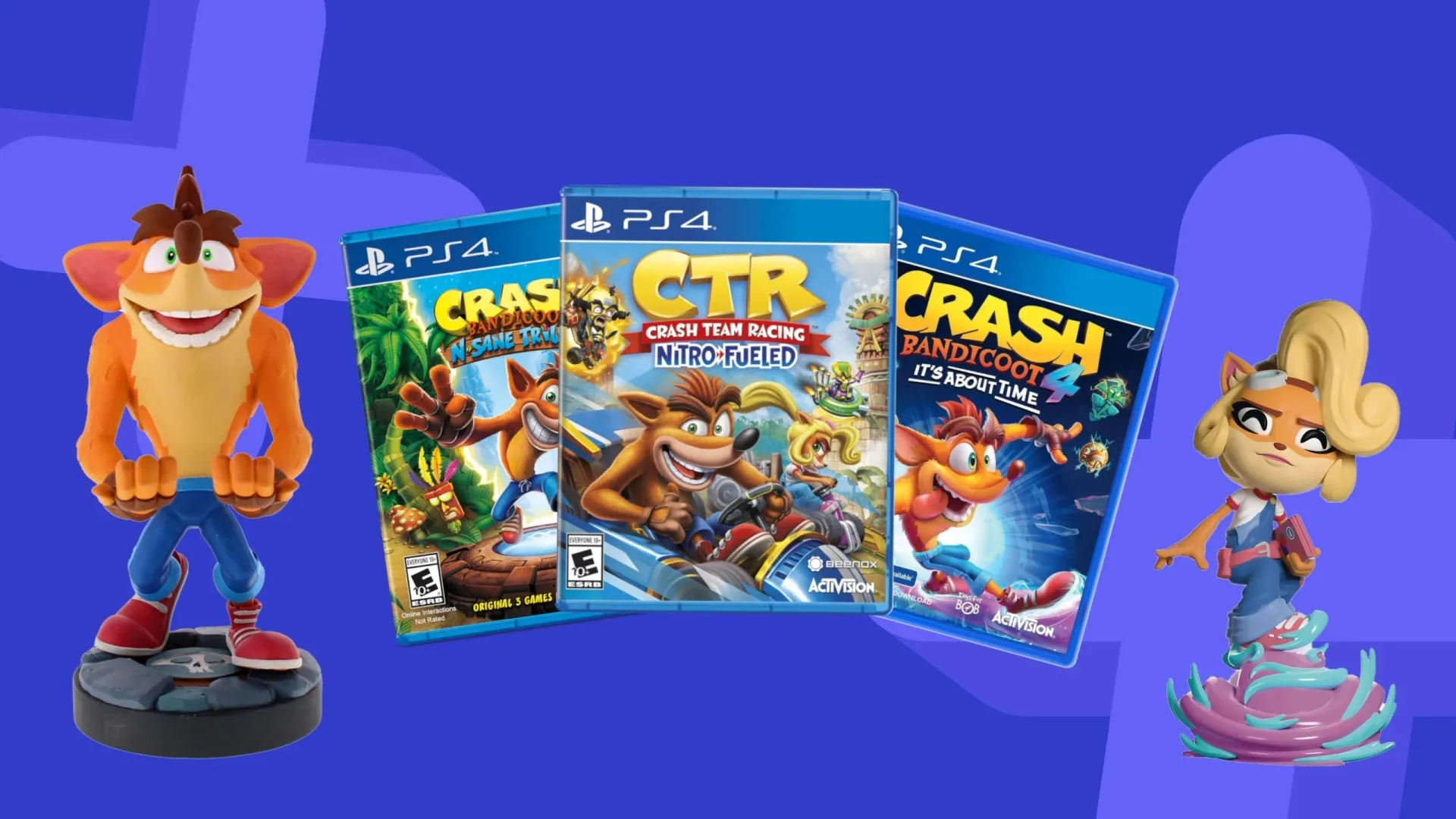
Games are only part of the birthday picture. Crash’s recognizable face has appeared across a range of merchandise, making it possible to celebrate without necessarily adding another platforming challenge to the backlog. Character goods associated with the franchise include apparel such as socks and official artbooks, alongside other gadgets and collectibles carrying Crash’s likeness.
That variety reflects the advantages of an instantly identifiable mascot. Crash’s orange coloring, expressive design and broad physical comedy translate naturally to items made for display, reading or everyday use. A game box may be the essential artifact for some collectors, while another fan may be happiest with an artbook that foregrounds the visual work behind the character and his world. Others may prefer a smaller piece of apparel that signals their allegiance without requiring an entire shelf devoted to Wumpa fruit.
For collectors, the anniversary can also be a prompt to organize what is already there. Original PlayStation items, later games, character merchandise and books all tell different portions of the same 30-year story. The goal does not have to be a complete archive. A few meaningful items connected to the game that first made someone a fan can be a more personal celebration than chasing an impossible definition of completion.
A mascot built to survive the obstacle course
Crash Bandicoot reaching 30 says something about the durability of a strong game character. The franchise has seen different eras, titles beyond its numbered installments and fans who arrived years apart. Yet the center remains recognizable: kinetic platforming, big personality, memorable hazards and an orange hero whose most reliable conflict-resolution technique is rotating at high speed.
That does not mean nostalgia is the only reason to revisit Crash. The ability to play the mainline releases on modern consoles gives the anniversary a living quality. These are games that can still be picked up, replayed, compared and shared. Newer players can see why the original PlayStation appearance mattered, while established fans can return to the moments they remember—perhaps with slightly more patience than they had in 1996, or perhaps with exactly the same futile optimism.
Three decades on, Crash’s birthday party does not require much ceremony. Pick a game, queue up a familiar track, admire an official artbook or put on the socks if the occasion calls for formalwear. Then spin toward the nearest crate and remember why the bandicoot became a PlayStation fixture in the first place.
Shop the products
Check current price, model and availability at the retailer.