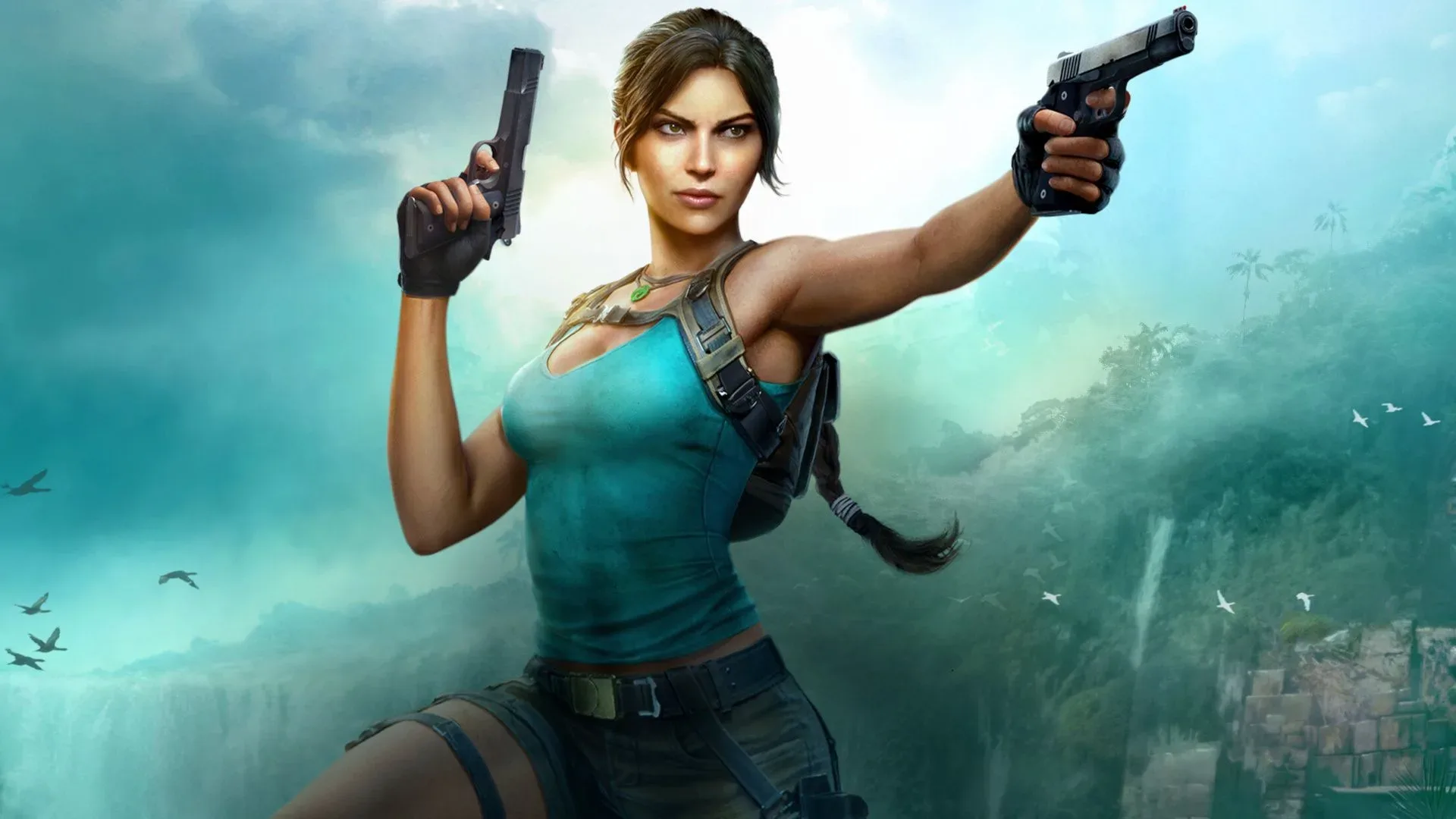
Lara Croft’s first expedition is heading back into the tombs. Tomb Raider: Legacy of Atlantis is a new reimagining of the original Tomb Raider, returning the series’ most famous archaeologist to the hunt for the Scion. The game is scheduled to launch on February 12, 2027.
The premise deliberately reaches back to the adventure that established Lara as one of gaming’s enduring icons: a globe-spanning pursuit that takes her through Peru’s dense jungles, ancient Greek locations and Egyptian tombs. This time, Lara is portrayed by Alix Wilton Regan, and the journey is being rebuilt with systems and interaction options that could not have existed in the 1996 original.
That distinction matters. This is not simply a cosmetic return to familiar ruins. Legacy of Atlantis is positioned as a modernized version of the original adventure, retaining the mix of exploration, combat, platforming and puzzle-solving associated with classic Tomb Raider while adding equipment and environmental mechanics designed for a newer era.
A third way to experience the original Tomb Raider story
The first Tomb Raider remains a landmark PlayStation-era release, and its story has already been revisited once before in 2007’s Tomb Raider: Anniversary. Legacy of Atlantis therefore represents another interpretation of the same foundation rather than Lara Croft’s first return trip through this material.
That history gives the project an unusually interesting balancing act. The Scion quest, its major regions and Lara’s recognizable identity are central to why longtime players may be interested. Yet a reimagining has to make room for ideas that distinguish it from both the original and Anniversary. The newly described toolkit suggests that the game is attempting to do precisely that: preserve the outline of a classic expedition, then give its explorer more ways to read, reach and manipulate the world around her.
For anyone discovering Lara Croft through this release, the setup should still be approachable. The central objective is clear, the locations are immediately evocative, and the genre language is familiar: explore dangerous places, overcome traversal challenges, solve ancient mechanisms and survive hostile encounters. Veterans, meanwhile, will be able to compare the new interpretation with a game that helped define 3D action-adventure design on the original PlayStation.
The Scion hunt returns to Peru, Greece and Egypt
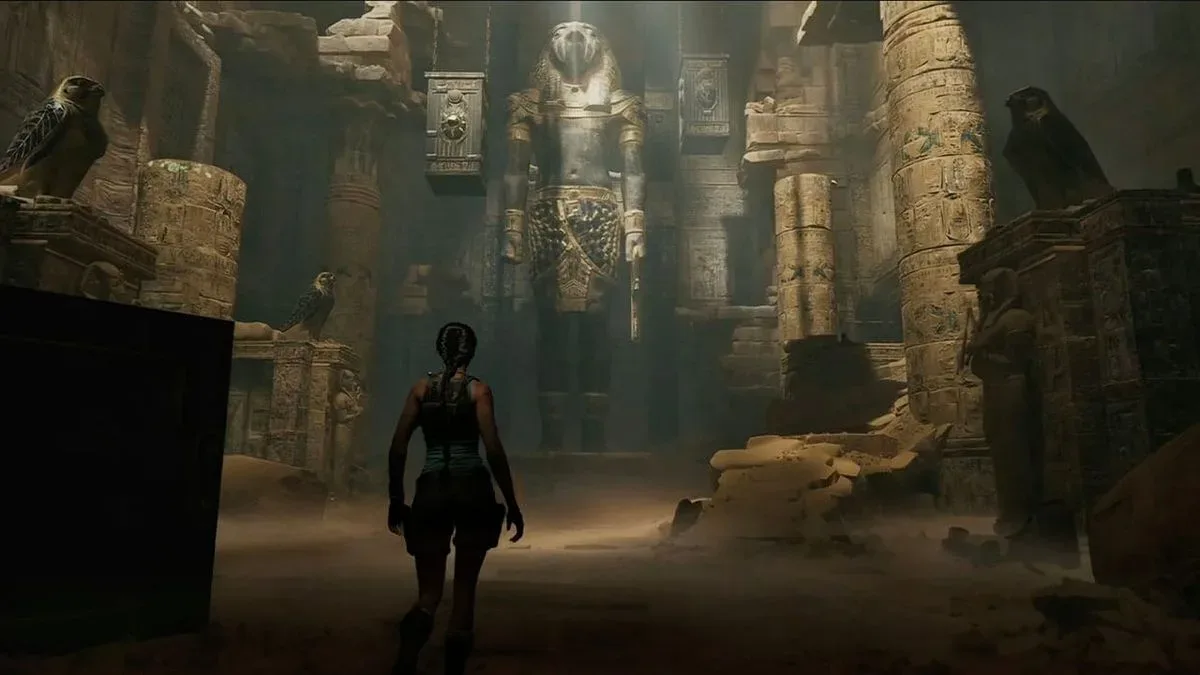
Three of the original game’s most memorable geographical pillars are confirmed for the new version: Peru, Greece and Egypt. They are more than a sightseeing itinerary. Together, they express the adventurous rhythm long associated with Lara Croft: an opening plunge into wilderness, monumental ruins steeped in myth, and tombs where history, architecture and danger are tightly intertwined.
The Scion remains the object driving Lara’s expedition. In practical terms, that gives Legacy of Atlantis a ready-made structure for alternating scenic exploration with more enclosed archaeological spaces. The original game’s enduring appeal was never only about firing pistols at enemies or making a difficult jump. It was also about the sensation of entering spaces that seemed huge, silent and just a little hostile to human presence. A modern reimagining has the opportunity to revisit that mood while making the act of investigating those spaces more active.
Related coverage includes Tomb Raider: Legacy of Atlantis Switch 2 Pre-Orders Open Ahead of February 2027 Launch.
There is no need for a remake to erase the old game’s character in order to update it. The announced destinations signal an intention to keep the broad identity of that first adventure intact. Peru, Greece and Egypt are not arbitrary backdrops; they are woven into how many players remember the original Tomb Raider. Revisiting them with a modern Lara, and with contemporary interaction systems, is the core proposition here.
New gear could reshape exploration and puzzles
The most notable additions are a wrist-mounted grappling hook, a scanner for analyzing artifacts and uncovering lore, and wider opportunities to interact with the environment. Each one points toward a more flexible approach to exploration than was possible three decades ago.
- Wrist-mounted grappling hooks: These should add another option to Lara’s traversal repertoire, fitting naturally beside the climbing, leaping and acrobatics that have long been fundamental to the series.
- Artifact scanner: Lara can analyze artifacts and reveal lore during the adventure, providing a direct investigative layer to the treasure-hunting premise.
- Expanded environmental interaction: Players will be able to engage with surroundings in ways that were not available in the original game, potentially changing how they approach routes, objects and puzzles.
- Combat and puzzle-solving: Both remain confirmed parts of the package, rather than exploration features replacing the action-adventure structure.
The scanner is particularly fitting for a character whose profession and reputation are tied to archaeology, artifacts and ancient sites. It can serve as more than a collectible checklist if the lore discoveries make each location feel more connected to the larger Scion search. At the same time, its presence does not automatically reveal how detailed that system will be, how often it will be used or whether discoveries will be optional. Those are questions for later information rather than assumptions to make now.
Likewise, grappling equipment has obvious potential without confirming a precise implementation. It may broaden the range of routes Lara can take, support puzzle design, or simply provide a new means of getting across hazardous spaces. What is clear is that it belongs to a larger modernization effort: a Lara Croft adventure that keeps the series’ athletic identity but equips her for more elaborate interaction with its environments.
Dual pistols and acrobatics remain part of Lara’s identity
Modern equipment is joining, not replacing, the hallmarks of the character. Lara will still have her signature dual pistols and acrobatic movement available as she confronts the dangers of the expedition. For a project revisiting the original game, that is an important continuity point. The pistols and the agility are immediately recognizable visual and mechanical parts of Tomb Raider’s heritage.
Combat is also explicitly part of Legacy of Atlantis, alongside puzzles. That balance has always been significant to the franchise’s identity. A tomb is not merely scenery between fights, and a firefight is not the whole purpose of the journey. The promise here is of a game where combat, traversal, environmental investigation and puzzle-solving coexist.
How the new features affect that balance remains to be seen. More interaction can make a world feel richer, but the lasting question for any reimagining is whether the added options reinforce the feeling of being a capable explorer in perilous ruins. The announced design elements at least point in a coherent direction: Lara gets more tools, the sites offer more to examine, and the original quest remains the narrative anchor.
A classic-game revival in a busy retro landscape
Projects like Legacy of Atlantis arrive at a moment when games and hardware from earlier eras continue to command attention. The appetite is not limited to direct remasters; it also includes re-creations that preserve a recognizable core while translating it through modern conventions. Elsewhere in the retro space, even new hardware plans can be affected by the realities of contemporary component supply, as seen in the Neo Geo AES+ delay to September 2027.
For Tomb Raider, the challenge is especially visible because the original has such a clear place in PlayStation history. Its influence is easy to recognize in the many action-adventure games that followed, while Lara herself became a fixture far beyond one console generation. A new retelling has to acknowledge that legacy without being trapped by it.
The confirmed February 12, 2027 release date gives players a firm marker for when this latest version of the Scion hunt is due. Until further details emerge, the known picture is focused but enticing: Alix Wilton Regan’s Lara Croft, iconic locations in Peru, Greece and Egypt, the pursuit of the Scion, and a toolset built around grappling, scanning and deeper interaction. It is a familiar expedition returning with considerably more gear in its backpack.