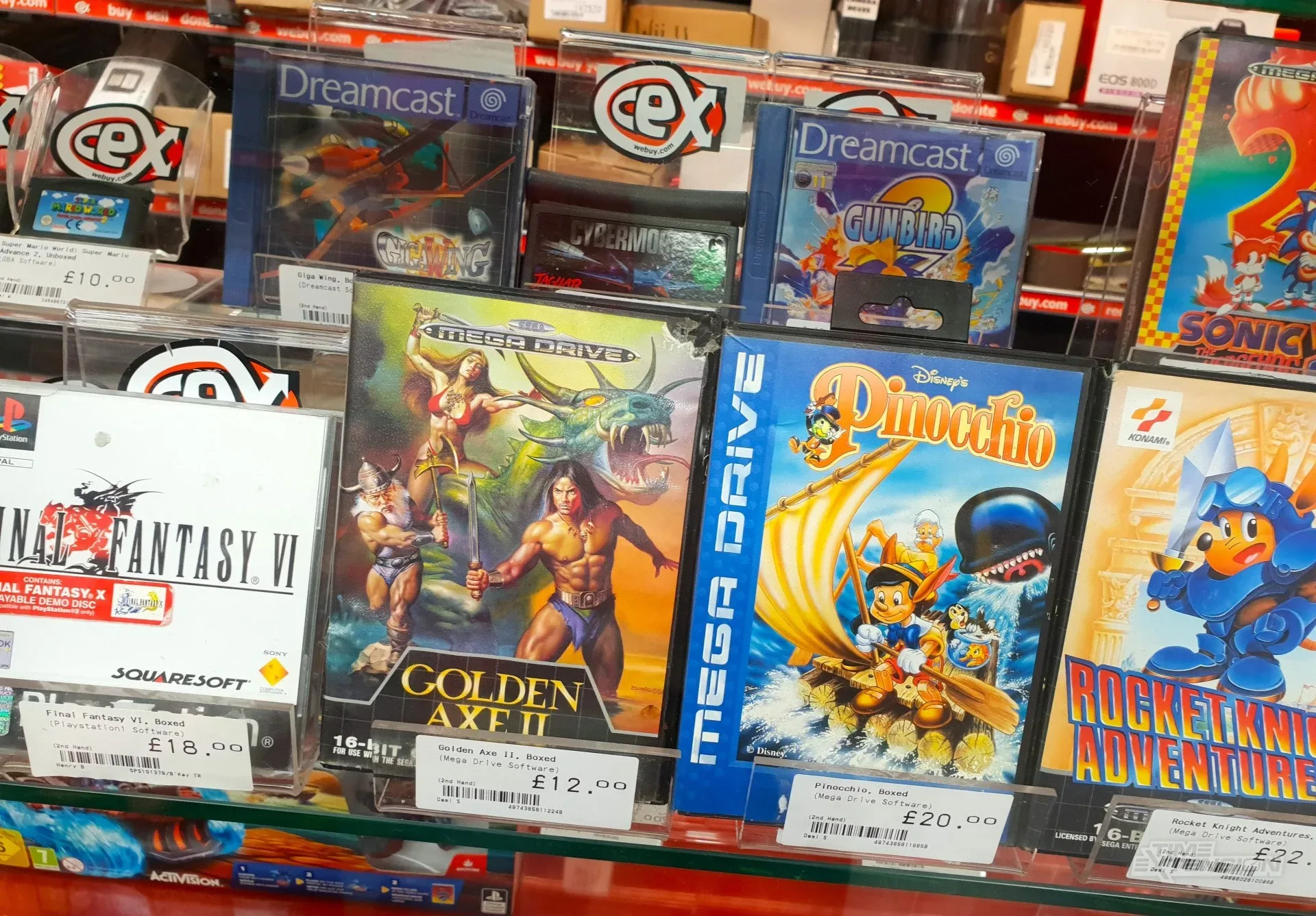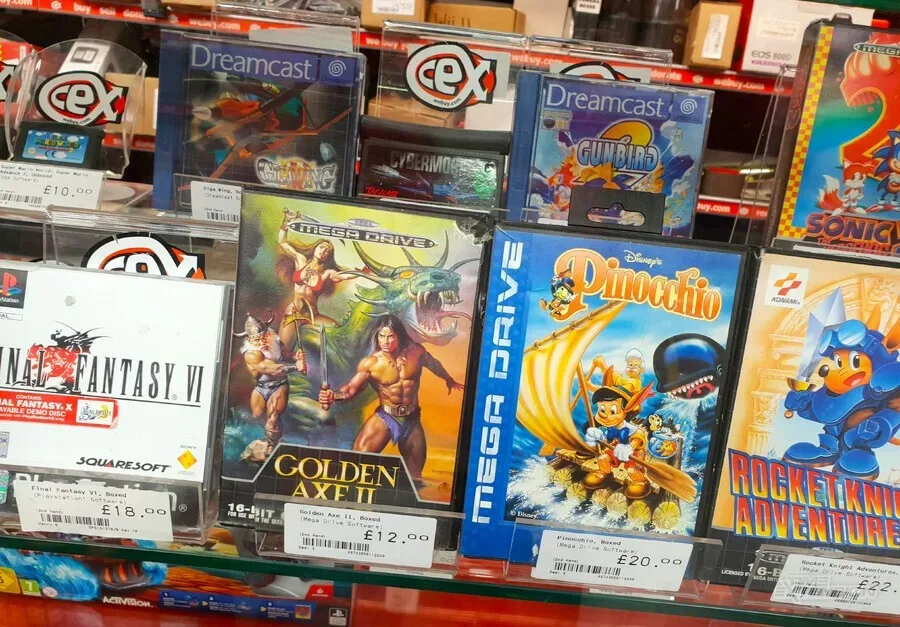
There is now a rather substantial clue that CeX is preparing a more focused home for old games in Birmingham: “Retro Birmingham” has appeared on the retailer’s own store-finder page. It is not a full-scale corporate announcement with a launch date, inventory list, or ribbon-cutting photo involving a giant pair of scissors and a boxed Mega Drive. Still, a store listing is considerably firmer evidence than a whispered tip passed between people examining yellowed SNES cartridges.
The listing points toward Bull Street, where the retro operation appears set to exist within one of CeX’s current Birmingham branches rather than as a wholly separate shop elsewhere in the city. That matters because the location sits near the site of a previous flagship that held a special place in the memories of players who bought imports there during CeX’s game-centric earlier years.
For now, the safest reading is straightforward: a CeX retro-focused presence is coming to Bull Street. The finer details circulating around it—including imported games, possible arcade stock, the eventual name, and a wider rollout—remain unconfirmed. In collector terms, the label is authentic; the contents have not yet been graded.
A store listing, but not the whole instruction manual
“Retro Birmingham” appearing on CeX’s store finder is meaningful because it comes directly from the company’s public-facing retail information. It strongly indicates that a retro outlet or department is planned for Birmingham. The available indication also suggests it will be part of the existing Bull Street branch.
What the listing does not establish is equally important. It does not state when the space will open, what formats will be on shelves, whether it will use a distinct brand, or how large the retro area will be. There has been no detailed announcement setting out a product range or confirming that other specialist locations will follow.
That caution is worth retaining because retro retail is built on specifics. “Retro games” can mean anything from a modest rack of common PAL PlayStation discs to an intimidating wall of complete Japanese Saturn releases, loose handhelds, controllers with questionable thumbstick histories, and one rare item locked behind glass like it has personally seen the Ark of the Covenant.
Someone visiting the Bull Street branch reported that a small section near the entrance, previously closed for a long period, had lights on and appeared to be seeing activity. Staff, however, would not provide comment. That observation fits the prospect of a new retro section taking shape, but it is still an observation rather than formal confirmation of the layout or opening plan.
Why imports are the big question
The most exciting unresolved point is whether Birmingham’s retro offering will carry imported hardware and software. Earlier reporting and online discussion suggested that a retro-focused concept could include PAL, North American NTSC, and Japanese NTSC-J stock. Possible names reportedly considered included “ReX,” short for Retro Exchange, and “CeX Retro.” Arcade titles were also mentioned as a possibility.
None of those details have been confirmed by the store listing. They should therefore be treated as possibilities, not promises. That distinction is especially important for collectors who may already be mentally allocating shelf space for a Japanese Dreamcast, WonderSwan, Neo Geo Pocket Color, Sega Nomad, or stack of Mega Drive and Saturn games with artwork that somehow makes every Western box look like it arrived at the party underdressed.
Import stock changes the character of a specialist retro shop. Regional versions can have different box art, manuals, language options, censorship changes, release timing, compatibility requirements, and collector appeal. Hardware can introduce power, video-output, and controller considerations too. A Japanese cartridge or disc is not simply an alternative cover for the same experience; depending on the game and system, it may be a distinct version with practical hurdles attached.
Anyone contemplating an imported-console purchase should also account for the technical side before falling in love with a listing photo. Region locks, TV compatibility, power supplies, display connections, and controller standards can all matter. For a useful pre-purchase reality check, see this guide to mapping a retro console’s connection before buying an HDMI adapter. Nostalgia is powerful, but it has never successfully negotiated an incompatible video signal.
CeX and the long arc of retro retail
The prospect of a dedicated Birmingham retro space carries extra weight because CeX has history with the category. In its 1990s and early-2000s form, the chain was closely associated with video games, including Japanese and North American imports. It later shifted away from that specialist identity and broadened into a major buyer and seller of technology and entertainment products, spanning phones, computers, cameras, DVDs, and more.
Classic games have since returned as part of the company’s wider offering, although the selection has generally centered on regional releases. Occasional exceptions have appeared, including reports of Japanese Virtual Boy games turning up at a York branch, but that is very different from a location explicitly organized around older gaming stock and potentially imports.
CeX also previously operated a dedicated retro store in London. That precedent makes the Birmingham listing feel less like an impossible summon from a discarded 2001 wish list and more like a return to a retail model the company has already explored. The market, however, has changed substantially since the era when finding an unusual import often meant physically going somewhere and hoping the cabinet contained treasure rather than three copies of the same sports game.
What a focused physical shop could offer collectors
Online marketplaces have given collectors global reach, but physical retro retail still has advantages that are difficult to replicate through thumbnails and seller-condition dropdowns. A well-run specialist space can make it easier to examine box wear, label condition, missing inserts, disc damage, battery corrosion, screen quality, controller condition, and whether a console looks complete or merely assembled from the remains of several difficult lives.
There is also value in having formats in the same place. A customer who arrives looking for a Game Boy title may discover a compatible accessory, a better-condition copy, an overlooked handheld, or a system they had only encountered in old magazine ads. That kind of accidental encounter is a major part of the appeal of browsing retro stock in person.
A dedicated department could also create clearer expectations than a standard branch where classic items share space with current electronics. If the Bull Street site is arranged around older gaming, collectors may reasonably hope for more shelf space, a broader turnover of stock, and staff processes suited to identifying older formats. Those are potential benefits rather than confirmed features, but they explain why the listing has generated interest.
Questions still awaiting answers
- Opening date: No date has been confirmed through the store listing.
- Scale: The retro space appears tied to an existing Bull Street branch, but its final size is not known.
- Stock: Classic games are the central expectation; PAL, NTSC, NTSC-J, and arcade inventory have not been officially detailed.
- Branding: “Retro Birmingham” is listed, while “ReX” and “CeX Retro” remain reported possibilities rather than settled public names.
- Expansion: Earlier claims suggested two stores could be planned, but no second site is confirmed by the listing.
Birmingham gets the clearest sign yet
For the moment, collectors should resist treating a possible import paradise as already stocked and open. The confirmed development is narrower, but still notable: CeX has publicly listed “Retro Birmingham,” linked to Bull Street, signaling a dedicated retro initiative in the city.
That is enough to make the location worth watching. If it ultimately embraces imported releases and deep hardware selection, it could revive a particularly fondly remembered side of UK game retail. If it begins with a more modest classic-games department, it will still represent a visible investment in a format many chains handle only incidentally.
Either way, the next useful information will be practical: the opening date, the scope of the space, the systems represented, and whether the first customers can genuinely browse beyond the usual regional staples. Until then, “Retro Birmingham” is a promising listing with a lot of empty slots beneath it—exactly the sort of inventory screen that makes a collector start saving up.