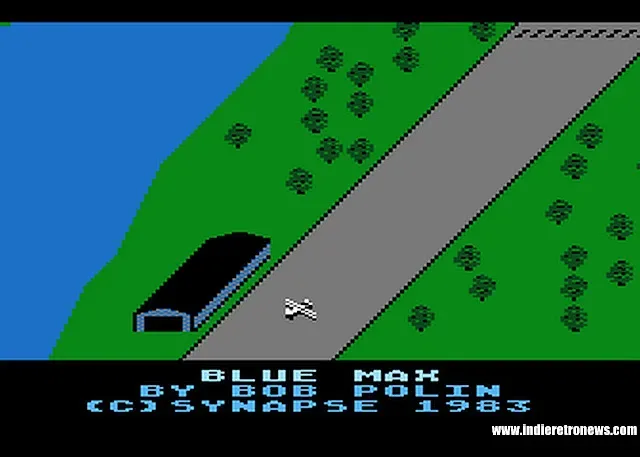
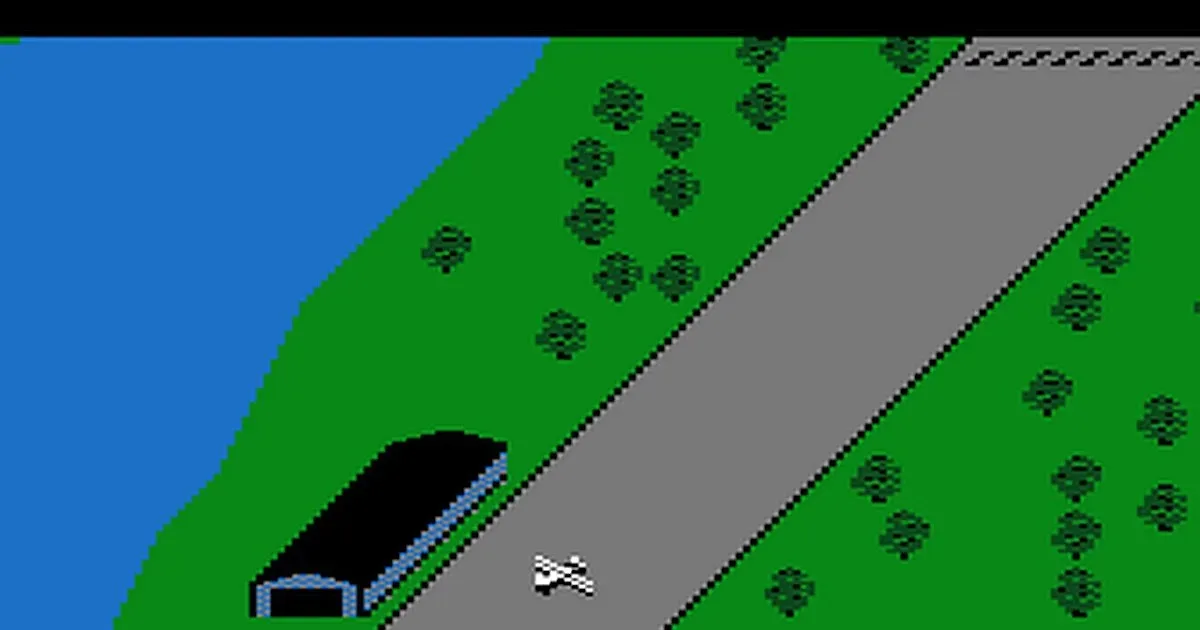
Blue Max, Bob Polin’s classic aerial shooter for the Atari 400 and 800, is finally being brought to Commodore Amiga hardware. Developer LutzGrosshennig has created a port from the game’s publicly released Atari source code, filling a conspicuous gap in the game’s old-school platform history: it reached the Commodore 64 through a conversion by Peter Adams, but never received an Amiga version at the time.
The project’s stated performance target is particularly notable for a faithful retro conversion. The current build runs at 60 frames per second in the WinUAE emulator while using a standard Amiga 500 configuration. That is an encouraging result, though it is important to separate emulated performance from verified hardware performance: the port still requires testing on a real Amiga before its performance and behavior on original machines can be treated as confirmed.
An Amiga version built from the Atari original
Blue Max began on Atari’s 8-bit computers, the Atari 400 and 800, and its original code is central to this new project. Rather than reconstructing the game from observation or using the later Commodore 64 conversion as its primary template, LutzGrosshennig is working from Polin’s released Atari source. That choice gives the Amiga effort a direct technical route back to the original implementation.
For players, the distinction matters because a port is not automatically a remake. A port aims to carry an existing game to another machine while preserving its original structure and behavior as closely as practical. A remake, by contrast, commonly rebuilds systems, art, presentation, or design decisions more extensively. The initial Amiga Blue Max release is positioned as the former: a version rooted in the original Atari game rather than a broad reimagining.
For more context, explore The Rings of Power Season 3 Gives Elrond and Elros a Quiet, Emotional Turning Point.
The project also arrives with a clear visual direction. The first release will retain the Atari version’s 8x8 tiles and sprites, instead of adopting the more elaborate visual style associated with the Commodore 64 conversion. Tiles are small reusable graphics used to assemble playfields, while sprites are graphics generally used for moving objects such as the player craft and enemies. Preserving those Atari-era building blocks should make the Amiga version feel closely tied to its source material.
That does not mean the project is intended to stop there. An Amiga Enhanced edition with improved visuals is planned for later. No details have been supplied on exactly what those enhancements will include, so it is best understood as a future goal rather than a finished feature set. For now, the focus is on getting the core conversion working correctly and smoothly.
Why 60fps on a standard Amiga 500 is a meaningful target
A 60fps target means the game is designed to update its animation and action up to 60 times each second. In an aerial shooter, that can make a material difference to the feel of flight, scrolling, enemy movement, and control response. Blue Max is a game about maneuvering an aircraft through hostile territory, so visual motion and timely input are not cosmetic concerns; they are part of how readable and satisfying the action becomes.
Related coverage includes Blue Max Takes Flight on Amiga in New Fan-Made Port.
The phrase “standard Amiga 500” is equally important. It indicates that the goal is not limited to a heavily expanded setup. A conversion designed around a baseline configuration has the potential to be relevant to a wider share of original-hardware users, assuming real-machine testing bears out the emulator result.
Emulation remains a valuable part of development, but it cannot settle every hardware question by itself. WinUAE can provide a controlled Amiga environment and makes it possible to measure whether a build reaches its intended frame rate. Original hardware testing is still needed to check whether timing, display behavior, input, sound, and general stability behave as expected on an actual Amiga. The remaining test step is therefore not a minor footnote; it is part of turning a promising build into a dependable hardware release.
Old source code brings both an advantage and a puzzle
Having source code available removes one major obstacle from a retro port, but it does not make the work automatic. The project has had to contend with the syntax of the old Synapse assembler used by the original. Assembly language is a low-level programming language that sits close to a machine’s processor instructions. Its compactness and hardware-specific nature can make it powerful for performance-focused games, but code written for one computer’s conventions cannot simply be dropped onto another system unchanged.
In this case, the original material also contained an unexpected archival issue. During the conversion work, a copy-and-paste error was found in which one data file was a complete duplicate of another. That means the developer is doing more than translating old code into a new environment: the underlying source itself has required scrutiny and correction.
This is one of the less glamorous but most valuable parts of preservation-minded development. Publicly available source code is immensely useful, yet it can still contain omissions, mistakes, or artifacts of its original development process. Finding a duplicated data file does not erase the usefulness of the Atari source; instead, it shows why careful validation is essential when old material becomes the foundation for a new build.
Atari fidelity first, Commodore 64-style flair later
The decision to base the opening release on Atari tiles and sprites is practical as well as aesthetic. The Atari source is available, giving the developer a firmer foundation for a faithful conversion. The Atari version is also described as having arguably better audio, providing another reason to preserve its identity rather than treating the Commodore 64 edition as the default reference point.
That choice may be especially welcome for players interested in the lineage of the game rather than only a maximally upgraded presentation. Blue Max has passed through different versions and platforms, and those versions need not be treated as interchangeable. A game conversion can preserve the character of one branch of that history while later making room for a different visual interpretation.
The planned Enhanced edition suggests a sensible two-stage approach:
- Initial port: prioritize the Atari source, original-style 8x8 graphics, and the core game running at the intended speed.
- Enhanced version: pursue upgraded visuals after the foundational conversion has been established.
Keeping those aims distinct helps set expectations. The initial version is not being presented as a showcase for flashier graphics from day one. Its value is in bringing a previously absent Amiga edition to life with a close connection to the Atari original. The later Enhanced effort can then explore how the platform might present Blue Max with more visual ambition.
What has been confirmed—and what has not
The project has several concrete elements already on record: it is an Amiga port of Blue Max by LutzGrosshennig; it is based on Bob Polin’s publicly released Atari source code; it targets 60fps on a standard Amiga 500 setup; early WinUAE builds hit that target; and real-hardware testing remains to be completed.
It is also known that the first release is intended to use the Atari-style tiles and sprites, with an enhanced visual version planned afterwards. The work has involved adapting difficult old assembler syntax and addressing a duplicated data-file issue discovered in the source.
What has not been established is just as important. There is no supplied release date, no confirmed distribution method, no announced feature list for the Enhanced version, and no real-Amiga test result yet. Retro fans should therefore treat the current report as a development milestone, not as confirmation that a final build is already available.
A useful addition to Amiga retro preservation
Blue Max arriving on the Amiga is a reminder that a platform’s historical library is not always frozen when its commercial era ends. A game can be closely associated with several classic machines and still leave a major system without an official version. Community development, preserved code, and modern tooling can sometimes address that absence decades later.
The most compelling part of this project is not merely that Blue Max can now be seen running in an Amiga environment. It is the combination of fidelity and caution behind the effort: use the released Atari code, retain the original graphic language for the first version, pursue a high frame-rate target, identify problems in the vintage material, and reserve more ambitious visual changes for a later edition.
For Amiga owners and retro shooter fans, the next meaningful checkpoint is real-hardware validation. If the port’s 60fps behavior carries over from WinUAE to a standard Amiga 500, Blue Max will gain a carefully considered new home on a machine it missed the first time around.