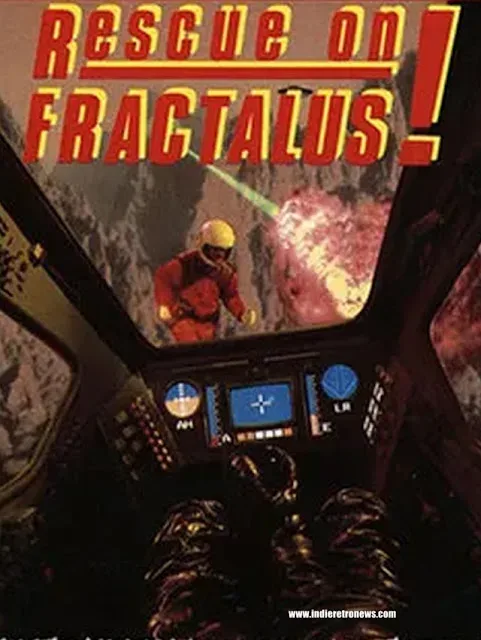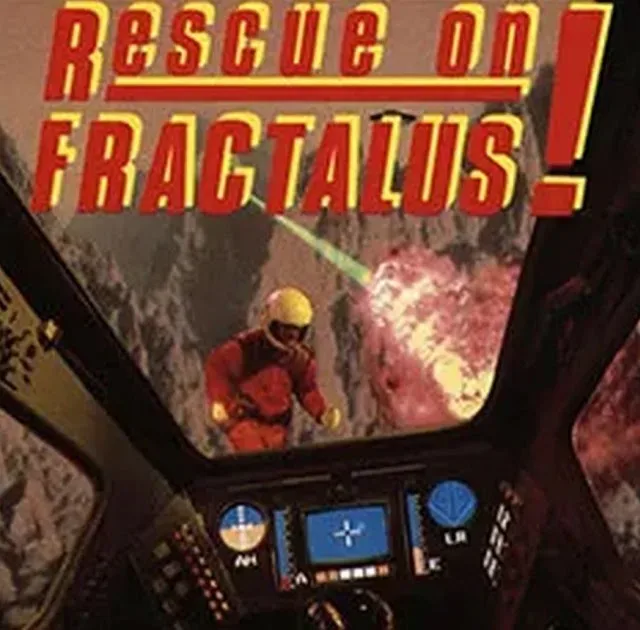
Rescue on Fractalus!, the 1985 science-fiction classic known for rendering hostile alien terrain with fractal-generated mountains, has reached the Commodore Amiga in a new v1.0 port by Vesuri. It is a welcome arrival for players who remember the game from its original wave of 8-bit editions—and for Amiga owners interested in seeing a landmark early Lucasfilm Games project operating on Commodore’s 16/32-bit machine.
There is one hardware detail prospective players should treat as essential rather than optional: this version needs 1 MB of RAM. It will not fit on an unexpanded 512 KB Amiga 500. Development and testing took place on an Amiga 500+ running Kickstart 3.1, while Kickstart 1.3 PAL is also supported. That makes the port especially relevant to expanded A500 setups, A500+ machines, and compatible Amiga configurations that meet the memory requirement.
An old rescue mission finds a new home
Originally released in 1985, Rescue on Fractalus! appeared across a remarkably broad group of home-computer and console platforms: Atari 8-bit computers, Atari 5200, Amstrad CPC, Apple II, Commodore 64, Color Computer 3, and ZX Spectrum. The new Amiga build adds another chapter to that platform history more than four decades after the game’s original era.
The title was among the first two products associated with the then-fledgling Lucasfilm Computer Division Games Group, led by Peter Langston. David Fox served as project leader and designer, and Charlie Kellner composed most of the music. Those names give the release an important place in the early story of a game-development operation that would become deeply influential, but the port’s immediate appeal is simpler: it lets an Amiga take on a game built around an unnerving, unusual approach to alien-world atmosphere.
Its central visual identity comes from fractal technology used to form the planet’s rugged mountain ranges. In an era when home hardware regularly forced designers to make every visual trick count, that terrain gave the game a distinctive sense of place. Rather than feeling like a flat backdrop, the craggy environment suggested a hazardous landscape stretching beyond the player’s craft. The new Amiga release preserves the reason the game’s title still carries weight among retro enthusiasts: it represents a period when technical ideas and mood could be tightly intertwined.
The practical checklist for Amiga owners
With vintage software, a new port can be exciting right up until the machine configuration gets in the way. The stated specifications here are clear, and they are worth checking before anyone assumes a standard Amiga 500 is sufficient.
- Memory: 1 MB RAM is required.
- Unexpanded A500 compatibility: a 512 KB Amiga 500 without expansion is not enough.
- Development and test system: Amiga 500+ under Kickstart 3.1.
- Additional stated compatibility: Kickstart 1.3 PAL.
That distinction matters because “Amiga” covers a wide family of configurations. The port is not being presented as a fit for every stock machine carrying the Amiga name. A player with an original A500 should therefore verify the installed memory before planning a flight over Fractalus. An A500+ is specifically relevant because that was the development and testing environment, but the core requirement supplied for the release is the 1 MB memory threshold.
Just as importantly, the available details do not establish broader compatibility claims beyond those systems. It would be premature to treat the stated A500+ and Kickstart information as a complete compatibility chart for every model, accelerator, display setup, or regional configuration. For now, the reliable takeaway is straightforward: this is an Amiga v1.0 port designed around 1 MB RAM, tested with Kickstart 3.1 on an A500+, and able to run under Kickstart 1.3 PAL.
Related coverage includes Rescue on Fractalus! Reaches Amiga in a New v1.0 Port.
Why the port is a particularly fitting retro project
Amiga ports of older games can invite a misleading expectation that every project is about turning an earlier title into a radically transformed showcase. The more interesting angle here is preservation through a different machine family. Rescue on Fractalus! already traveled across several systems in its original life, including the Commodore 64. Bringing it to the Amiga does not erase that history; it extends it, giving the game another authentic-feeling hardware context in which to be played.
That is also why the machine requirements are part of the story rather than a footnote. Retro computing is full of small but meaningful boundaries: available RAM, Kickstart revision, PAL support, and whether a computer is a stock base model or an expanded one. Each can decide whether a program simply boots, how it is expected to run, and which owners can take part without changing their setup. Here, the 1 MB requirement cleanly separates this release from the unexpanded 512 KB A500 experience.
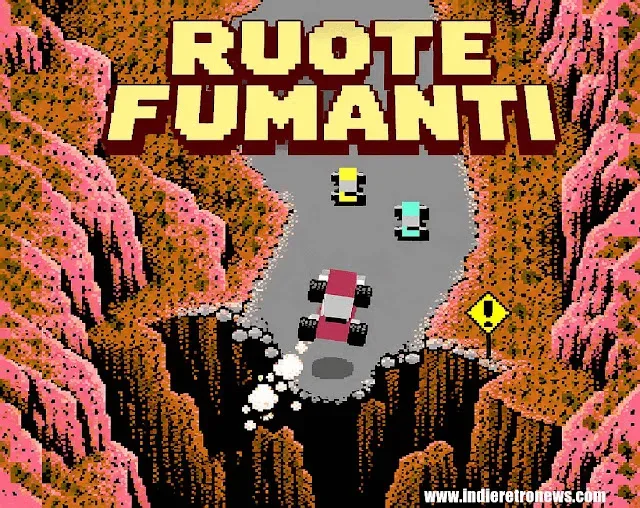
The project also joins a healthy pattern of continued attention for Commodore-era games and hardware. For a different example of current work aimed at classic systems, see our coverage of Ruote Fumanti’s 50 FPS arcade racing on a stock Commodore 64. The two projects are not the same kind of technical undertaking, but together they illustrate why older platforms remain active rather than merely archival: developers are still building, adapting, and revisiting software for machines whose limitations continue to inspire focused work.
Fractals, mountains, and an enduringly strange atmosphere
The word “Fractalus” immediately points to the technique at the game’s heart. Fractal technology was used to create the alien planet’s jagged mountains, making terrain generation more than a piece of background technology. The landscape is central to the game’s identity. Its rough peaks and valleys make the setting feel severe and isolated, a natural fit for a rescue scenario where the world itself looks difficult to cross.
That visual approach helps explain why the game is remembered as a groundbreaking 1985 release. The importance is not merely that it used a particular mathematical or graphical idea. It is that the technology served a recognizable dramatic purpose. Craggy mountains are not neutral decoration when the player is navigating an alien planet; they communicate danger, distance, and uncertainty before any other detail has to do the work.
For players returning after years away, the Amiga version offers a fresh route back to that atmosphere. For players encountering it for the first time, it provides an opportunity to approach a foundational Lucasfilm Games-era title through a platform it did not originally receive. Neither audience needs to treat the release as a replacement for the Atari, C64, Spectrum, Apple II, Amstrad, CoCo 3, or Atari 5200 editions. Its value is in being another way to engage with the same influential design and its peculiar alien terrain.
What v1.0 means right now
The release is identified as a v1.0 build, marking it as a finished numbered version of the Amiga port. Beyond that designation, the supplied release information does not detail changes from any earlier builds, additional features, distribution methods, or future update plans. It is best not to infer those details. What is established is that Vesuri’s work brings Rescue on Fractalus! to Amiga hardware with a defined baseline configuration.
For collectors and active Amiga users, that is enough to make the compatibility notes worth saving alongside the game’s name. This is not a plug-and-play prospect for a bare 512 KB A500, but owners with 1 MB available have a new platform-specific way to visit Fractalus. Given the title’s original reach and its place near the beginning of the Lucasfilm Computer Division Games Group’s catalog, an Amiga version feels less like a curiosity than a long-delayed stop on a journey the game has been making since 1985.