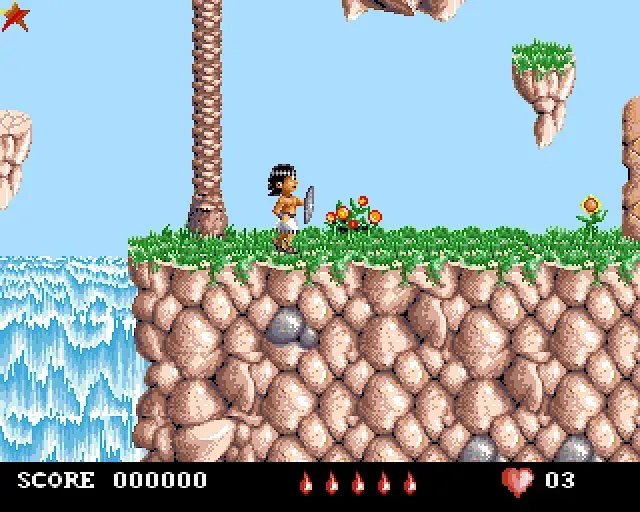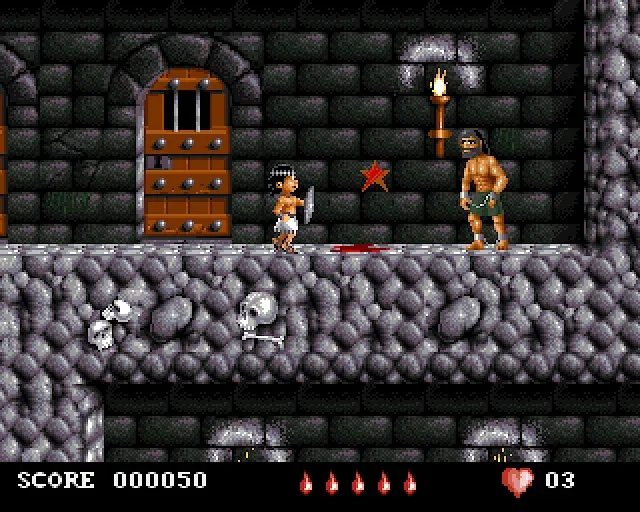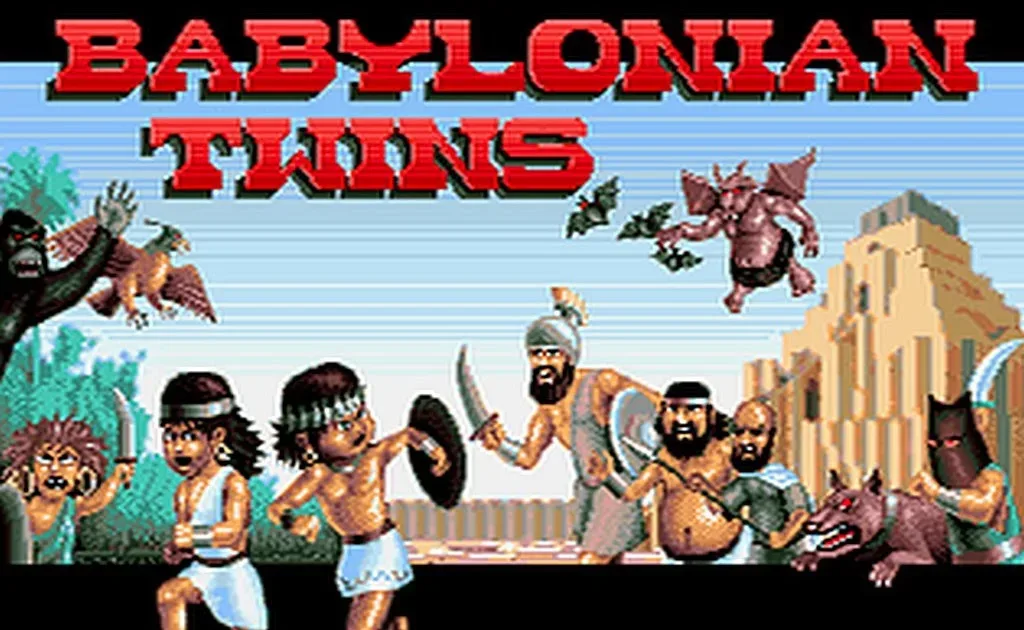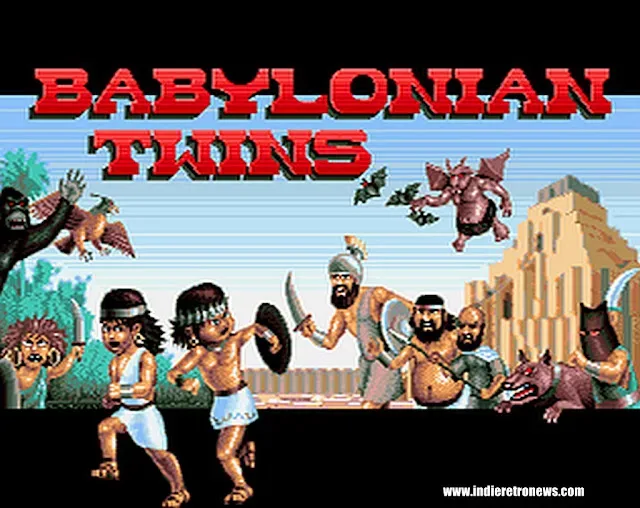
Some retro releases are exciting because they bring back a beloved classic. Babylonian Twins is compelling for a different reason: for more than three decades, its original Amiga version was effectively a finished game stranded in time. Now the two-disk 1993 release has been made available as a free download, allowing players to see a rare piece of Amiga history on an emulator or, with the right equipment, on original hardware.
The platform game was created in Baghdad in 1993 by students Rabah Shihab, Murtadha Salman, and Mahir AlSalman. It is described as Iraq's first Amiga video game, and its journey from a small team working under extraordinary pressure to a free preservation release is as notable as the game itself. This is not merely an old build or a fragment recovered from a development archive. The newly available release is presented as the authentic full game that had remained on physical floppy disks.
A game made under severe limits
Amiga developers were familiar with working around tight memory budgets, but Babylonian Twins was made amid constraints that went well beyond a typical bedroom-coding story. The three-person team worked during international sanctions, recurring electricity cuts, and summer heat reportedly reaching 50°C. Those temperatures repeatedly damaged or disrupted their hardware. The game was programmed on one unexpanded Amiga 500 with 512KB of RAM.
That specification matters. A base Amiga 500 was capable, but it left little room for extravagance. Every background, animation, sound, and gameplay routine had to justify its place. Babylonian Twins was written in raw language rather than relying on a modern development environment. The result was a side-scrolling platformer built around imagery inspired by ancient Mesopotamia, an identity that makes it stand apart from the more familiar fantasy castles, science-fiction corridors, and cartoon mascots of the early 1990s.
The visual work reportedly included Assyrian palace environments drawn pixel by pixel. Its soundtrack also reached beyond generic game-audio conventions: the developers sampled Iraqi instruments. Taken together, those choices give the project a specific cultural foundation. It is a useful reminder that the Amiga's history is much larger than the set of games that reached European and North American retail shelves.
There is a tendency to treat old computer games as though their technical platform tells the whole story. In reality, each disk is also an artifact of where its makers lived, what tools they could obtain, what interruptions they endured, and what avenues to publishing were open to them. Babylonian Twins carries all of that context with it. The limitations were technical, environmental, political, and commercial at once.
Finished, but unable to escape the floppy disks
By the time the game was completed, the path to an ordinary release had disappeared. Commodore's collapse removed the company behind the Amiga from the picture, while geopolitical trade sanctions made prospective publishers wary. A completed game can still vanish when manufacturing, distribution, and contracts become impossible. Babylonian Twins did just that, remaining locked away on floppy disks instead of entering the normal retail circulation of its era.
That distinction is important for preservation. Plenty of unreleased games survive as prototypes, incomplete code, magazine screenshots, or rumors repeated until nobody is sure what was ever playable. Here, the original two-disk experience has emerged after the project had already reached the finish line. Its availability means historians and fans can evaluate the 1993 game itself rather than reconstructing it solely through recollections and promotional material.
For collectors who still use vintage machines, the disk-image format also opens a practical route back to period hardware. The release is supplied as .ADF images, the common Amiga disk-image format. They can be used with modern Amiga emulators, or written back to floppy disks for use on appropriate physical hardware. Anyone going the latter route should take care with drive condition, compatible media, and backups; a preservation copy is far less forgiving than a cartridge that can simply be wiped down and inserted again.
That broader mindset applies to any old software archive. If a game joins a shelf or a disk case, its value is not only in ownership but in being able to locate, protect, and actually use it later. Our guide to storing retro games so a collection remains playable is a helpful companion for building that habit.
The rediscovery took years, not a single viral moment
Babylonian Twins did not reappear because somebody instantly recognized a lost masterpiece and pressed a convenient upload button. Its return followed a slower chain of curiosity. In 2006, gameplay footage from the original Amiga version appeared on YouTube. Two years later, members of the English Amiga Board encountered that footage and began a lengthy effort to identify the game and locate its creators.
The community investigation eventually connected with the developers and helped lead to a playable demo. That demo reached downloaders in more than 70 countries, demonstrating that the game had an audience far outside the circumstances of its original creation. It also kept the question alive: could the actual 1993 version ever be shared in full?
Modern adaptations of the concept arrived in the years after the rediscovery. Babylonian Twins: Definitive Edition is described as a rebuilt contemporary version, with a playable original 1993 game offered as a second launch option; it is listed for Steam wishlist activity and is live on iOS and Android. But a modern remake and an archival release do different jobs. The remake can make design changes for current devices and audiences. The raw Amiga release preserves the choices, compromises, and character of the version made for a 512KB Amiga 500.
That is why persistent requests from Amiga fans mattered. The free two-disk download answers a desire not just to revisit the idea of Babylonian Twins, but to access the original software in the form closest to the developers' completed 1993 work.
Why the original version deserves attention
There is no need to pretend every recovered game automatically becomes an all-time essential. Preservation is valuable even when a release is rough, niche, or clearly shaped by limits. In Babylonian Twins' case, the reasons to pay attention are unusually strong: it is tied to a rarely documented regional chapter of Amiga development, built under difficult conditions, and finally available in a format that lets players investigate it for themselves.
It is also a reminder that platform histories can be distorted by distribution. The Amiga library commonly remembered today is heavily defined by the games that could reach major publishers, magazines, and store networks. A project made in Baghdad during sanctions did not have comparable access to that infrastructure. Its absence from the standard canon was never evidence that it did not exist or was not worth seeing.
For emulator users, an .ADF-based release should be comparatively straightforward, though individual setups vary. For players returning to a real Amiga, the setup can be part of the charm and part of the challenge. Display solutions, disk hardware, and storage all deserve consideration before a long session. Those adapting older systems to current televisions may want to map the connection before buying a retro HDMI adapter; the same basic principle applies to avoiding an unexpected tangle of cables and incompatible signals around vintage computing gear.
A meaningful addition to Amiga preservation
The free release of Babylonian Twins does more than add another title to a download folder. It restores a work that had been completed but cut off from its intended audience by circumstances its creators could not control. It also preserves the original version alongside later interpretations, rather than allowing the historical game to be replaced by a modernized edition alone.
For Amiga enthusiasts, the appeal is obvious: a full, previously unavailable 1993 platformer built for the machine. For retro-game preservation, the importance is wider. It shows how archival gaps can persist for decades, and how old footage, patient forum research, developer contact, and community interest can help close them. For anyone interested in the global history of games, it provides a direct connection to a team that created distinctive work in Baghdad when both the tools and the conditions for making it were extraordinarily scarce.
Babylonian Twins can now be approached on its own terms: as a playable Amiga game, as a technical achievement under severe restrictions, and as a recovered record of creators whose work finally made it off the disks.