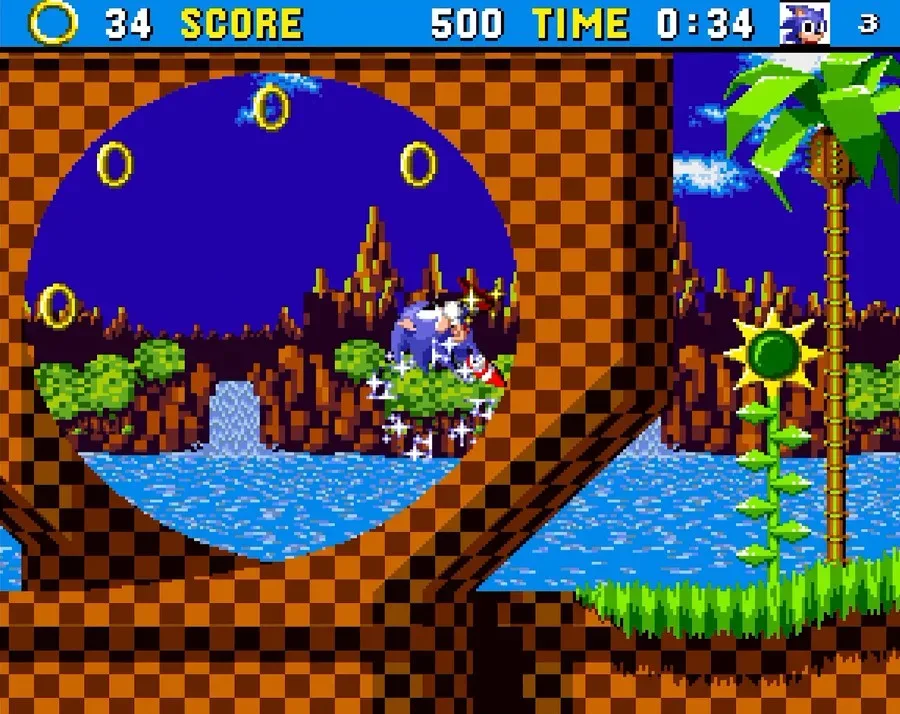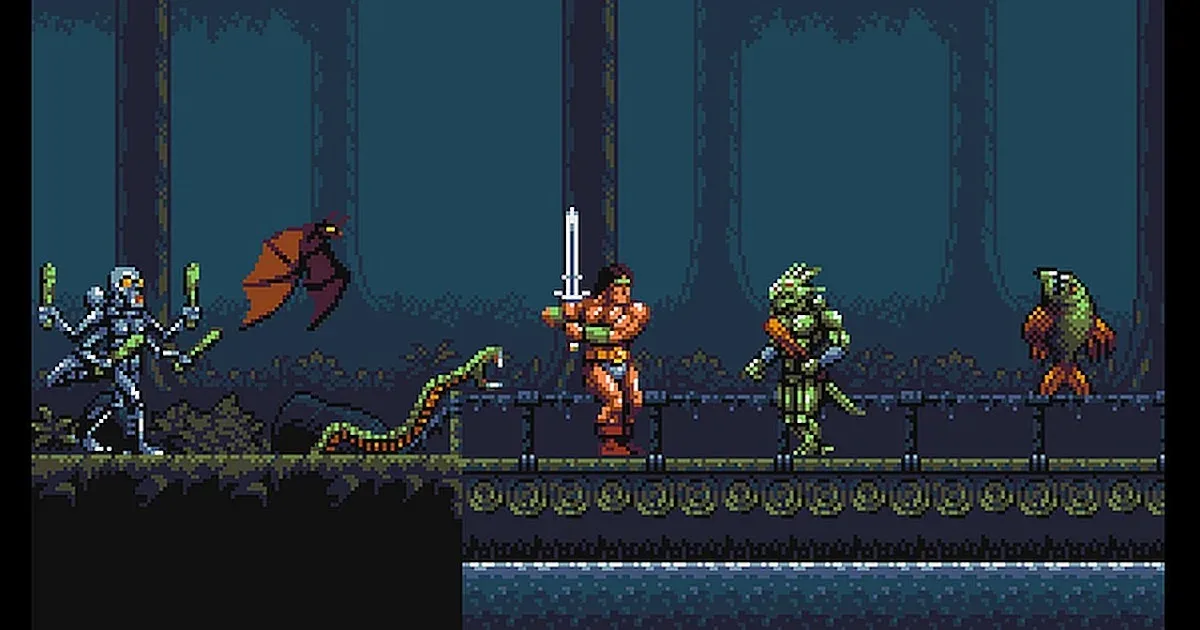
Sonic the Hedgehog has sprinted across an astonishing number of machines over the years, but a new fan project gives the blue mascot a particularly unlikely detour: the Commodore Amiga. Called Aonic, the playable work-in-progress from Reassembler recreates Green Hill Zone Act 1 on Amiga A1200 hardware, aiming to carry over the layout, foes, pace and movement feel of the 1991 Sega Mega Drive original.
This is not a finished, full-scale conversion of the first Sonic game. At present, Aonic is a demo focused on one of retro gaming’s most immediately recognizable stages. But it is an eye-catching technical experiment precisely because it tackles a game built around momentum, rapid scrolling and split-second reactions. Those are the sort of qualities that can make a familiar level look right in still images yet feel entirely different once a player gets hold of the controller. Aonic’s stated mission is much more ambitious than putting a hedgehog sprite over a checkerboard landscape: it seeks to preserve the character of the original level on markedly different hardware.
Green Hill Zone, rebuilt for the A1200
Reassembler’s project uses A1200 technology and is described as having been adapted directly from original Mega Drive code. The current build centers on Green Hill Zone Act 1, complete with the rolling hills, loops, platforms and Badnik opposition that helped make Sonic’s opening stage an enduring piece of video game iconography.
That starting point makes sense. Green Hill Zone is both an instantly legible Sonic showcase and a stern test for a recreation. Its palm trees, totems, water, bridges and checkerboard slopes establish the visual identity, but the level’s reputation comes from how those elements work together. A run can move from cautious platforming to a high-speed downhill dash, then abruptly ask the player to judge a jump or control a bounce. Getting the scenery onto an Amiga screen is one challenge. Making those curves, collisions and changes of direction read like Sonic is another.
The original Sonic the Hedgehog was released in 1991 and became Sega’s best-selling game. It also helped turn Sonic into a character whose reach went far beyond one console generation. That legacy raises the bar for any attempt to revisit the game, even a non-commercial demo concentrating on a single act. Green Hill Zone is not obscure material where a small discrepancy can vanish into the historical fog. Many players know its rhythms well enough to notice when an incline, enemy placement or acceleration behavior feels unusual.
A close visual match, with one practical HUD change
A comparison presentation places the Mega Drive original alongside Aonic, and the early result appears strikingly close visually. The project’s color work draws on a separate Amiga Sonic-related demo released by RetroRic earlier in 2026. RetroRic’s palette-focused work, combined with Reassembler’s adaptation effort, has helped Aonic arrive at a look that closely resembles the Mega Drive version.
There is, however, one obvious presentation compromise. The original game’s heads-up display uses transparency, whereas Aonic cannot present that feature in the same way. As a result, the demo positions its HUD outside the active gameplay area. It is the kind of adjustment that reveals why a faithful project does not always mean an identical project. Hardware differences impose their own rules, and a practical solution can be preferable to an imitation that undermines readability or performance.
That distinction is worth keeping in mind when watching any side-by-side comparison. Aonic’s purpose is not to pretend the Amiga A1200 and Mega Drive are interchangeable. Rather, it demonstrates what careful adaptation can accomplish while still exposing the places where a different machine requires a different approach. For retro hardware enthusiasts, those visible seams are part of the attraction. They provide a glimpse at the decisions behind the result instead of hiding every constraint behind a glossy claim of perfection.
No Green Hill music yet
The demo’s largest omission is sound. Aonic includes the familiar opening Sega jingle, but it does not currently include the Green Hill Zone music or the famous ring-collection effect. That means an important part of Sonic’s sensory identity is absent for now: the cheerful stage theme that can lodge itself in a player’s head for days, along with the tiny audio confirmation that makes every ring feel valuable.
Reassembler has indicated that sound could be added at this point, but the preference is to wait until the audio can be recreated with the same degree of care as the visual side. It is a sensible caution for a project whose appeal rests on fidelity. Sonic’s sound design is not decoration pasted onto a platform game after the fact. The music shapes the stage’s energy, while the ring sound, springs and enemy interactions contribute constant feedback during play. Adding rough placeholder audio may make a build seem more complete, but it would not necessarily make it more representative of the goal.
For now, the silence also makes Aonic’s state especially clear: this is a developing technical showcase rather than a definitive replacement for the Mega Drive original. The visuals and gameplay systems may make a strong first impression, yet the missing soundtrack leaves room for the project to grow.
A level editor and a cheat with nowhere to go—yet
Aonic contains more than its Green Hill Zone run. The demo also includes a level editor, although it is currently unoptimized and slow when operating on Amiga hardware. The feature is still notable because it suggests an interest in the building blocks behind the stage, not solely in presenting a polished replay of a beloved act. As with the demo overall, the editor should be regarded as unfinished technology rather than a fully tuned creative suite.
There is also a Level Select cheat. The familiar command is Up, Down, Left, Right, A + Start. At this stage, it is mostly a nod to Sonic history, since the other stages have not yet been implemented. Still, its inclusion captures the affectionate, slightly mischievous spirit that often surrounds fan projects. A classic debug-adjacent ritual is present, even if the menu does not yet lead to Marble, Spring Yard, Labyrinth or Scrap Brain.
It also underscores how much work remains if Aonic is ever to expand beyond its current scope. One act can prove that a technique works. A full game would mean accounting for dramatically different environments, boss encounters, special systems, additional assets, more music and all the quirks that distinguish Sonic’s zones from one another. The demo does not promise that complete journey; it simply presents a compelling opening case for what the approach can achieve.
Compatibility and the appeal of real hardware
Aonic is compatible with multiple emulators as well as original Amiga A1200 hardware. That dual compatibility matters. Emulation offers a more accessible way for interested players to examine the demo, while original-hardware support gives Amiga fans an opportunity to see the project operate in the environment it targets.
Anyone planning to connect vintage systems to a modern display should remember that the machine is only one part of the setup. Inputs, cables, signal types and display behavior all affect the experience. Our guide on mapping the connection before buying a retro console HDMI adapter is a useful reminder to identify what a system actually outputs before adding new hardware to the chain.
The project is available from Reassembler’s itch.io page, which also includes technical notes about the adjustments and modifiers used to make the demo possible. Those details are likely to be as interesting as the download itself for programmers and hardware tinkerers. Fan recreations often invite attention because of nostalgia, but their long-term value can be in the methods they document: the choices made around rendering, palettes, code adaptation and machine-specific limitations.
Why Aonic is more than a novelty
There is an easy joke in the idea of Sonic making an Amiga appearance, especially given the platform’s own mascots and its long-standing place in home-computer history. But Aonic earns interest beyond the novelty of seeing a familiar character on unusual hardware. It is a demonstration of collaborative hobbyist work, with RetroRic’s earlier palette experimentation helping lay visual groundwork and Reassembler shaping a playable adaptation around it.
Most importantly, the demo treats its inspiration as a demanding design problem. Sonic is remembered for speed, but speed is only convincing when the game can sustain it: scrolling must keep up, collisions need to behave reliably, slopes need to communicate their effect, and the visual scene has to remain readable while everything rushes past. Aonic’s current build does not have every piece of the original package, especially on the audio front, but it takes on the parts that matter most to the sensation of navigating Green Hill Zone.
With one level, unfinished editor performance and no completed soundscape, Aonic remains a work in progress. Yet the present demo already offers an impressive look at how a landmark Mega Drive platformer can be carefully reinterpreted for the Amiga A1200—without losing sight of the fact that faithful adaptation is a series of clever compromises as much as it is a feat of nostalgia.