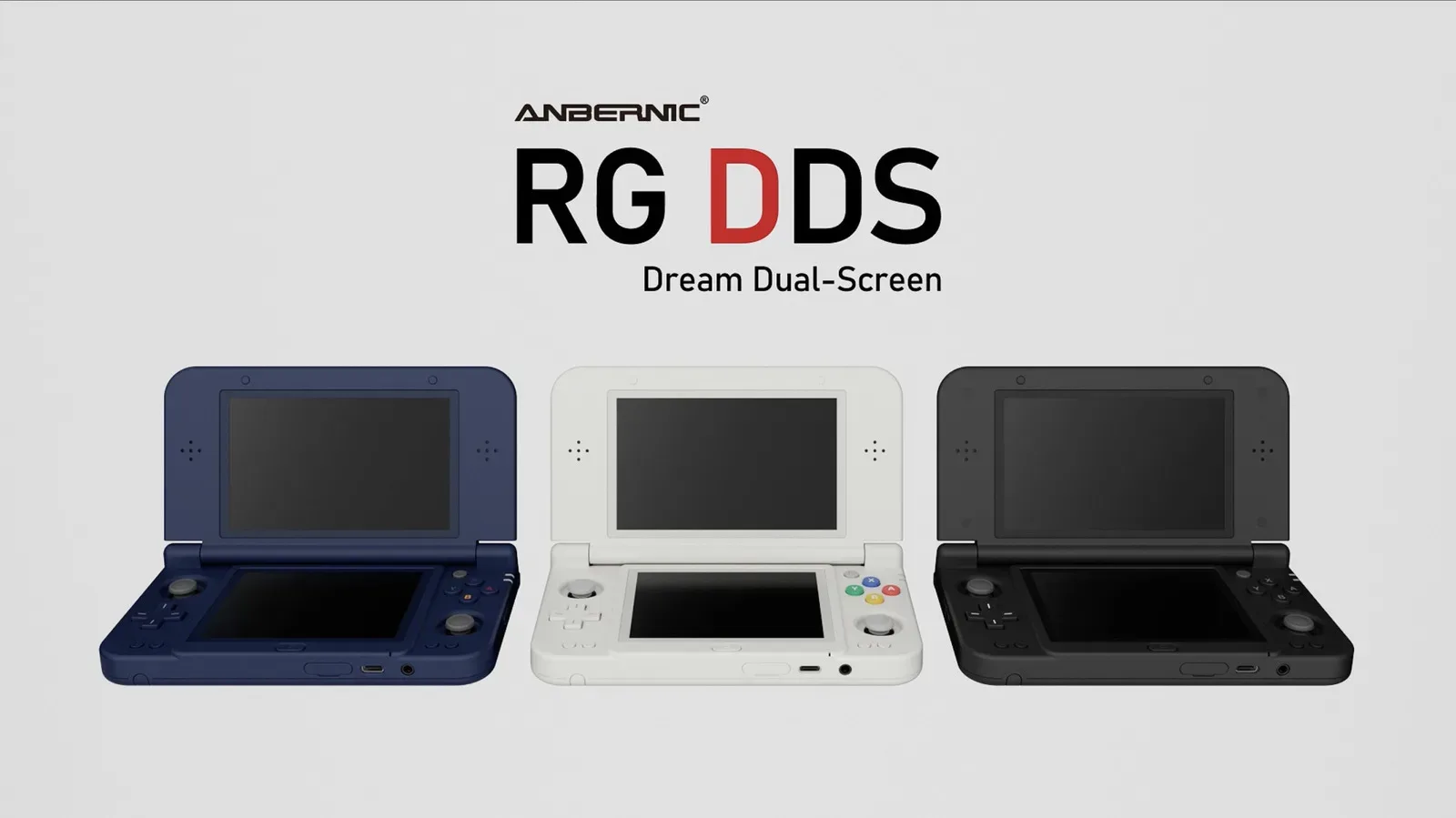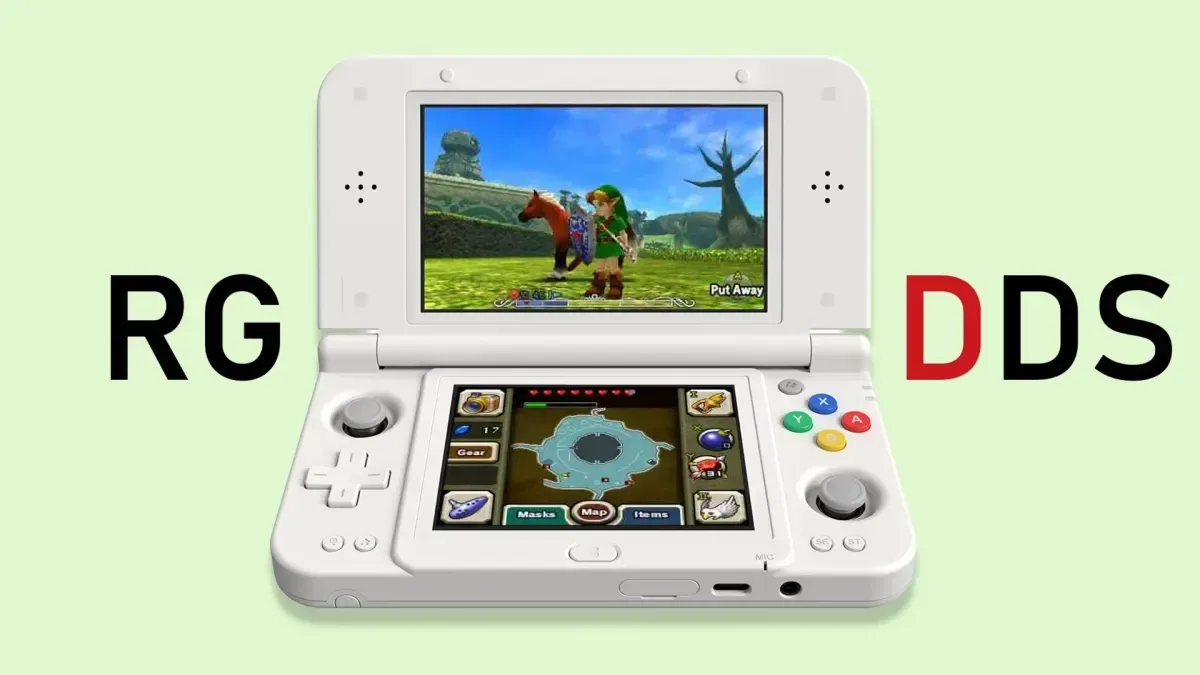
ANBERNIC has detailed the hardware, pricing and order schedule for the RG DDS, its upcoming Android handheld with two screens, a stylus and a clamshell layout that closely evokes the Nintendo 3DS. The device is positioned as a notably higher-end entry for the company: its listed Qualcomm Snapdragon G2 Gen 2 chip, 8GB or 12GB of RAM, and starting price near $300 put it well beyond the usual “small retro handheld for a weekend of tinkering” bracket.
The company has previously shown footage suggesting that the RG DDS can run 3DS emulation at up to five times native resolution, along with PS2, PS3 and Xbox emulation. Those performance demonstrations are promising, but they should be treated as examples rather than a guarantee that every game, emulator or settings combination will perform identically. Emulation performance can vary substantially by title and software configuration, particularly on more demanding systems.
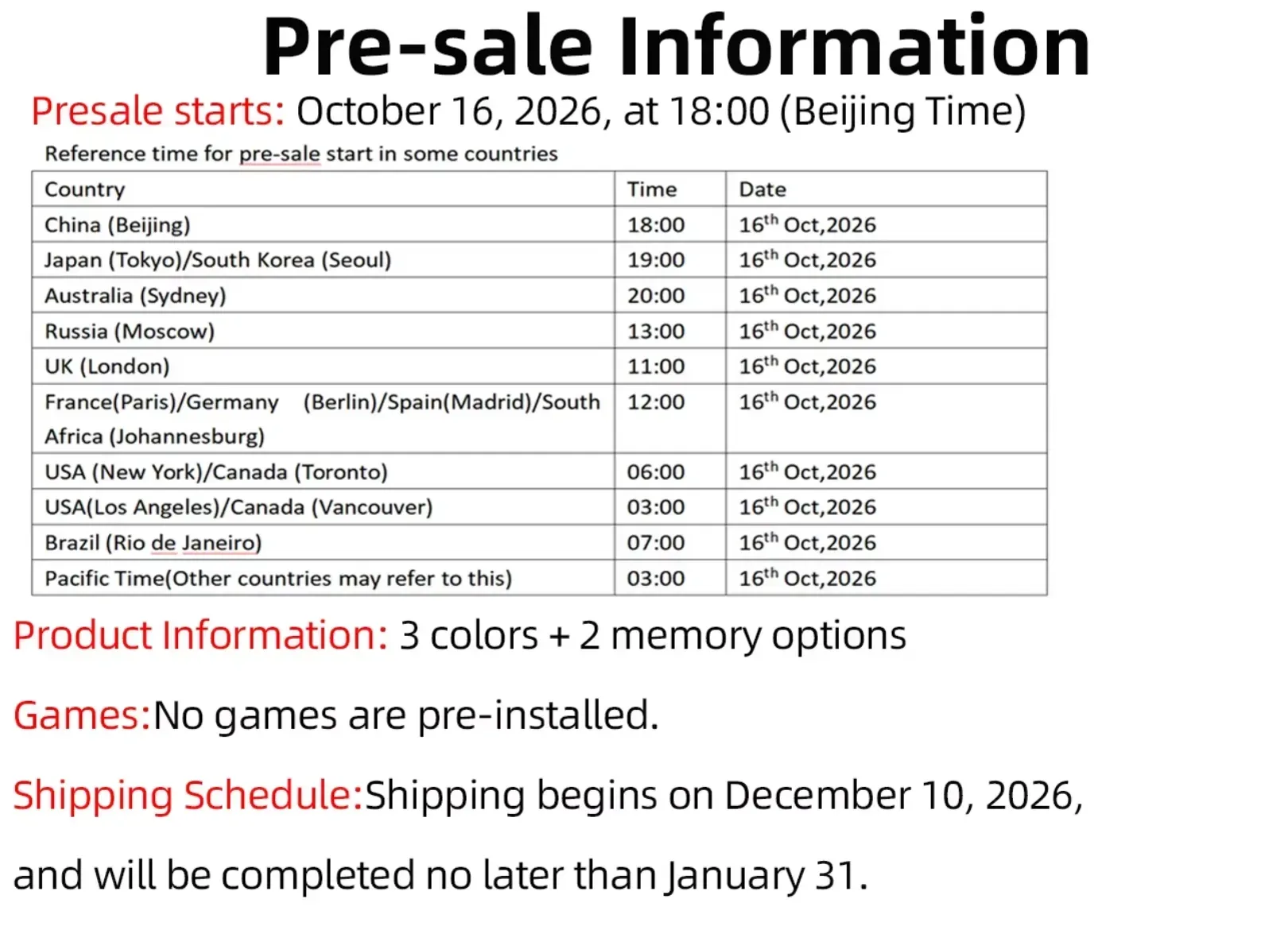
Pre-orders are due to begin at 18:00 Beijing time on October 16, 2026. Shipping is expected to start on December 10, while ANBERNIC’s stated target for completing pre-orders is January 31, 2027. That timetable is important for prospective buyers: an order placed in the opening period is not necessarily an arrival before the December holidays, especially for international delivery.
A dual-screen design built around higher-end Android hardware
The RG DDS’s central proposition is straightforward: it combines a dual-display handheld shape associated with Nintendo’s DS family with a far more contemporary Android platform. Dual screens are especially relevant to DS and 3DS software because those systems were designed around persistent information or interaction on a second panel. On a single-screen handheld, players commonly need to swap screens, use picture-in-picture arrangements or compromise on how the displays are presented. A physical two-screen layout can be a more natural fit for that category of emulation.
The listed screens are not identical, which reflects their intended roles:
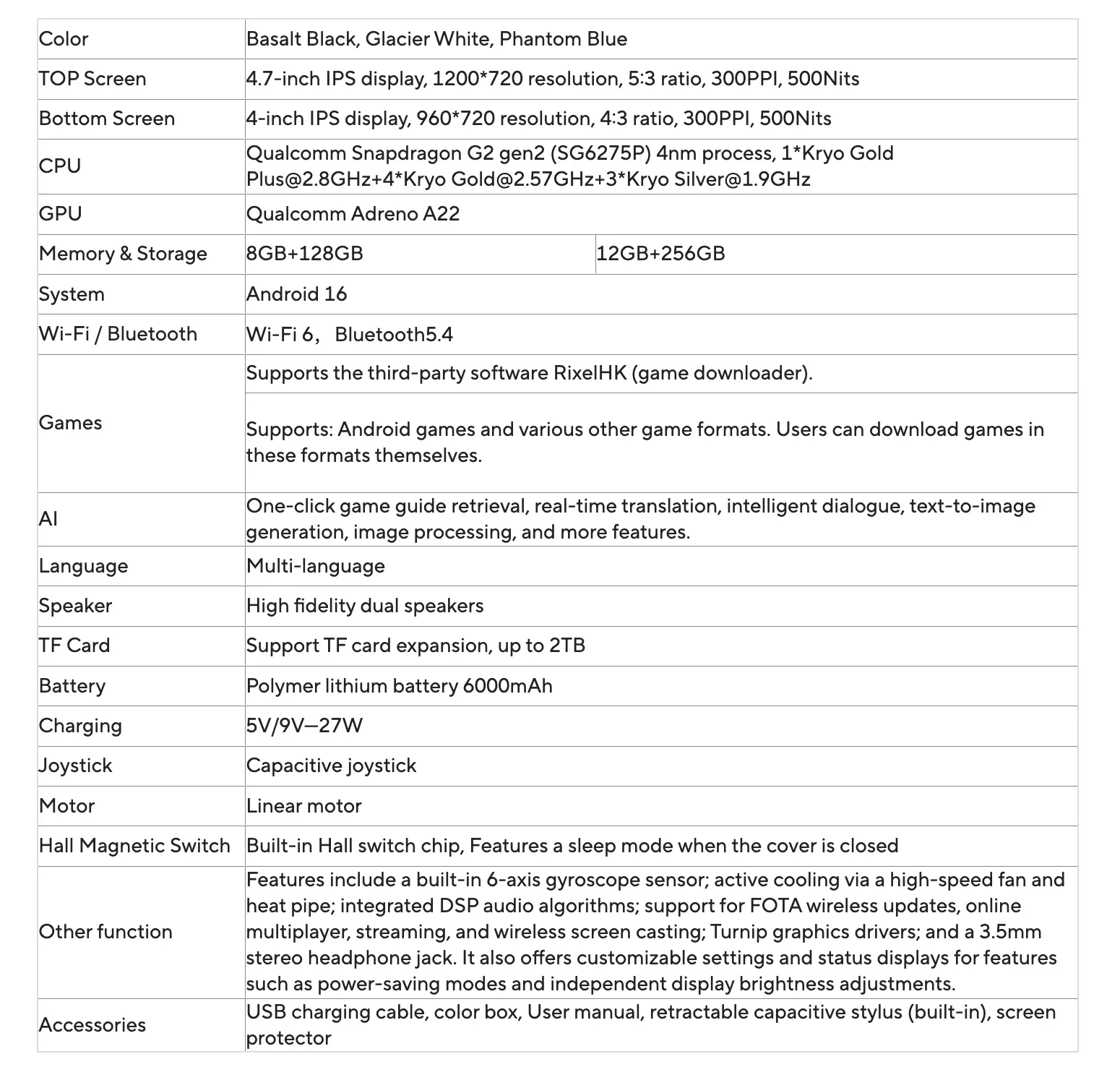
- Top display: 4.7-inch IPS panel, 1200 × 720 resolution, 5:3 aspect ratio, 300 PPI and 500 nits.
- Bottom display: 4-inch IPS panel, 960 × 720 resolution, 4:3 aspect ratio, 300 PPI and 500 nits.
IPS, or in-plane switching, is a display technology generally associated with broad viewing angles and consistent colour presentation. The specified 500 nits is a brightness measurement, while pixels per inch (PPI) describes pixel density. Higher pixel density can make fine interface elements and scaled images appear sharper, though perceived quality also depends on the emulator, scaling method and original game assets.
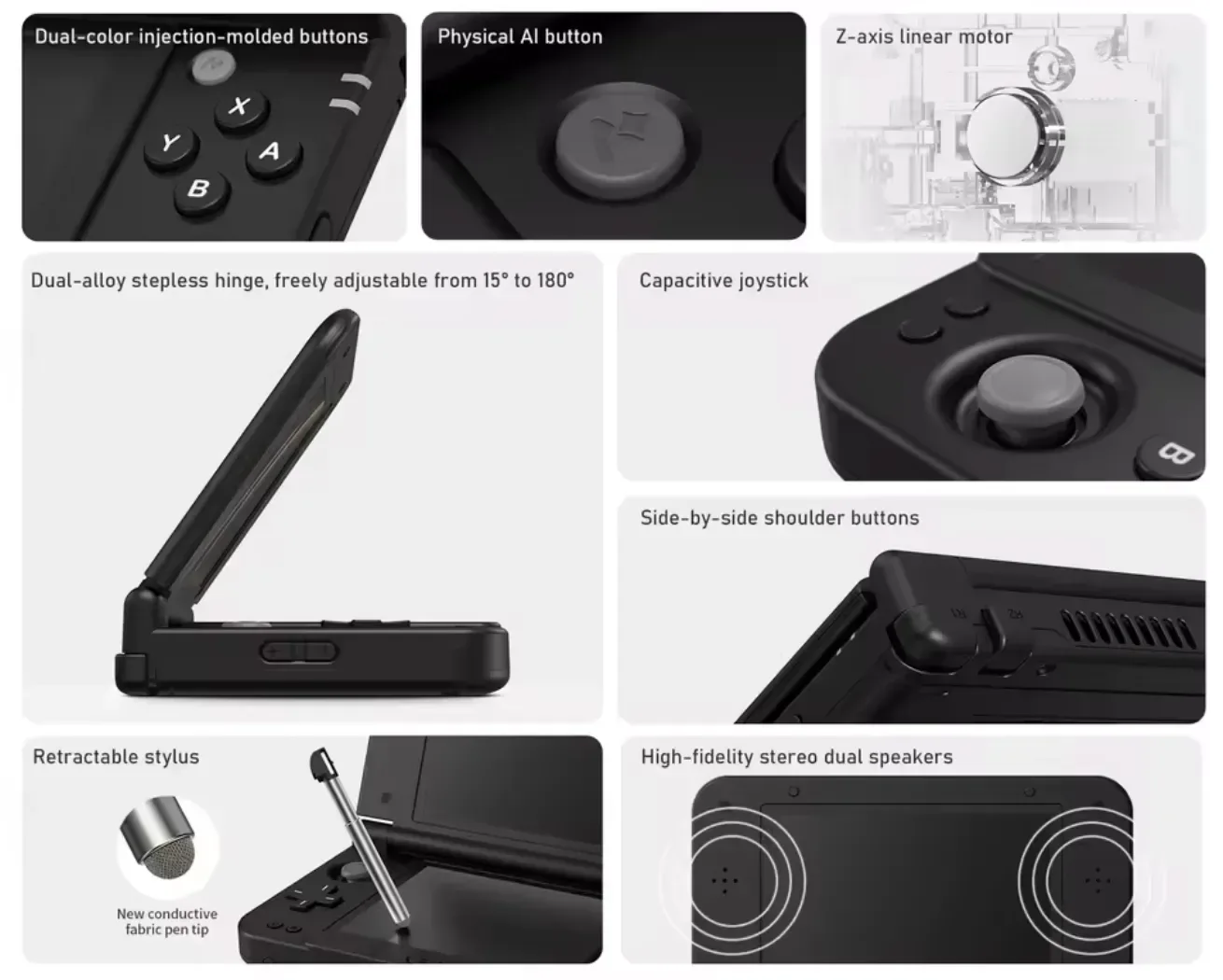
Aspect ratio matters perhaps more than it initially sounds. It is the relationship between a display’s width and height, and older games were made for particular screen shapes. The RG DDS’s 5:3 top screen and 4:3 lower screen are not literal reproductions of a 3DS display specification, but the two-panel arrangement offers flexibility for displaying separate game views and menus. The bottom screen is also paired with the included stylus, a significant practical detail for touch-led games rather than merely a visual nod to Nintendo hardware.
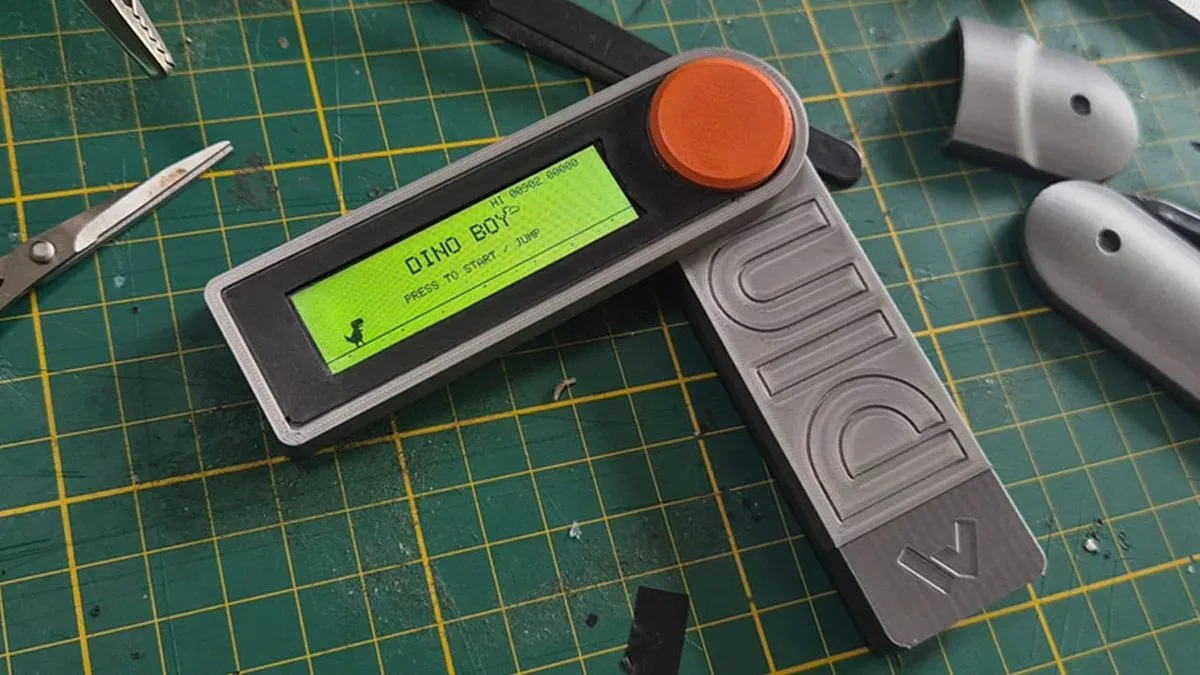
For a different take on the fold-out handheld idea, see Dino Boy’s one-button fold-out handheld design. The RG DDS is clearly aimed at a much broader and more powerful use case, but both devices show why a closing portable form factor remains appealing.
Related coverage includes Anbernic RG DDS Specs, Pricing and Pre-Order Details Revealed.
RG DDS specification list
ANBERNIC’s published configuration includes the following components and features:
- Processor: Qualcomm Snapdragon G2 Gen 2, model SG6275P, built on a 4nm process.
- Graphics: Qualcomm Adreno A22 GPU.
- Memory and storage: 8GB RAM with 128GB storage, or 12GB RAM with 256GB storage.
- Operating system: Android 16.
- Wireless: Wi-Fi 6 and Bluetooth 5.4.
- Battery: 6,000mAh, with charging support of up to 27W.
- Additional hardware: dual speakers, a 3.5mm headphone jack, a six-axis gyroscope and AI translation.
The 4nm figure refers to the chip manufacturing process named in the specifications. It does not, on its own, define real-world speed or battery life, but it is part of the underlying hardware picture. Likewise, extra RAM may give the 12GB model more breathing room for Android multitasking and demanding applications, but it should not be read as an automatic across-the-board emulation upgrade. The emulator being used, its development state and the game in question remain crucial variables.
Storage is likely to be the more immediately understandable dividing line between the two models. The 128GB option has half the listed capacity of the 256GB version. How meaningful that becomes will depend on the owner’s library and the size of the files they lawfully use. Buyers considering large disc-based games may want to weigh that capacity difference carefully rather than assuming RAM alone is the defining premium feature.
Android 16 makes the RG DDS an Android device first, which means its capabilities extend beyond one emulation front end. At the same time, Android’s openness can place more setup responsibility on the user than a traditional console. That can be a benefit for people who value configuration options, controller mapping and software choice; it can also mean that polish and ease of use need to be assessed after the hardware reaches customers.
What the performance claims do—and do not—establish
The most attention-grabbing claim is 3DS emulation at up to 5× native resolution. In this context, internal resolution scaling means the emulator renders 3D graphics at a higher resolution than the original hardware target before presenting them on the handheld’s display. It can improve clarity and reduce visible jagged edges, but it raises the processing workload. “Up to” is the operative phrase: it signals a reported ceiling in selected circumstances, not a promise for every 3DS game.
There is also a display-related caveat. The supplied screens have fixed resolutions, so rendering at a higher internal resolution is not identical to every pixel being shown one-for-one on the panel. The result still may look cleaner after downscaling, but the visual payoff varies. ANBERNIC’s own display specifications make 3× scaling a more directly intuitive reference point for the panels than a blanket five-times claim.
The mentions of PS2, PS3 and Xbox emulation similarly demonstrate ambition, but they do not yet establish a comprehensive compatibility list, a stable frame-rate standard or a universal recommended setting. PS3 in particular is the sort of platform claim that merits patient scrutiny once independent software configuration and game-by-game results are available. A buyer looking specifically for one game or one system should wait for confirmation centred on that need rather than buying solely on broad footage.
The six-axis gyroscope could also be relevant for motion-controlled input where supported by software. “Six-axis” generally describes motion sensing across three rotational and three directional axes. Its usefulness will depend on how Android applications and emulators implement it. The listed AI translation feature is another item that needs fuller detail before its practical scope can be judged; ANBERNIC has named the function, but the available information does not explain the languages, apps or workflows involved.
Price, configurations and colours
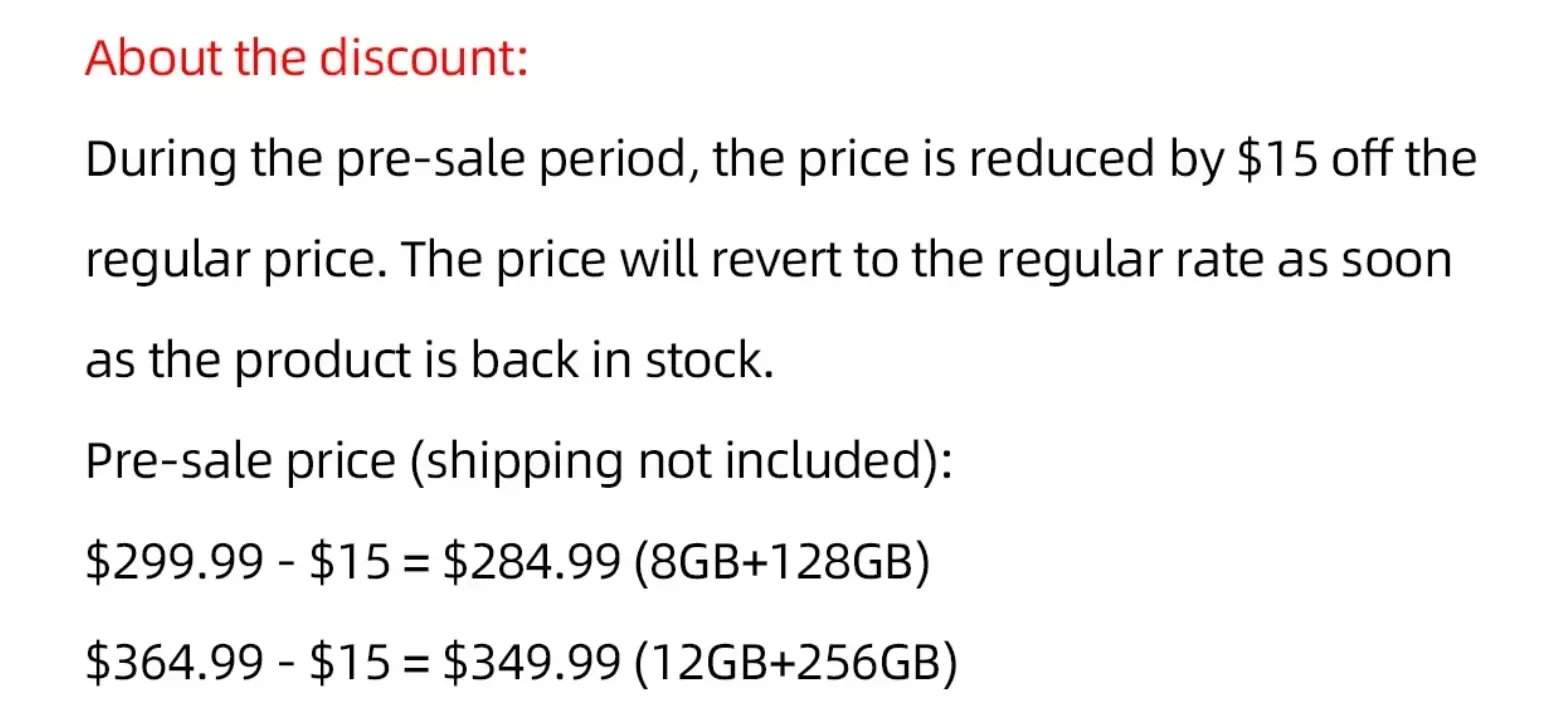
The RG DDS is listed at $299.99 for the 8GB RAM/128GB storage model and $364.99 for the 12GB RAM/256GB option. An early-bird discount of $15 is planned, bringing those figures to $284.99 and $349.99, respectively.
That price structure makes this one of ANBERNIC’s costlier devices and places substantial pressure on the machine to justify its specification sheet, dual-screen implementation and overall software experience. It also places the RG DDS in direct competition with other higher-priced dual-screen Android handhelds, including the Retroid Pocket Duo and AYN Thor. The important question is not simply whether the chip is powerful; it is whether the entire package—controls, screen behaviour, thermals, software and sustained performance—holds together at this price.
No conclusion about cooling noise, battery endurance or long-session comfort can be drawn from the provided specifications. A 6,000mAh battery and up to 27W charging describe capacity and charging capability, not a measured runtime. Demanding emulation, screen brightness, wireless use and internal resolution choices can all affect how long a charge lasts.
All configurations will be available in Basalt Black, Glacier White and Phantom Blue. The RAM and storage choice therefore does not limit colour selection.
Who should consider waiting
The RG DDS makes the strongest early case for enthusiasts who specifically want a modern, dual-screen Android handheld and understand that emulation is a software-dependent experience. Its form factor, stylus and unequal displays address needs that a conventional single-panel device cannot solve as elegantly. Wi-Fi 6, Bluetooth 5.4, a headphone jack and dual speakers round out a feature set that is clearly meant to function as more than a narrowly focused 3DS machine.
However, the premium price and lengthy fulfilment window make waiting for detailed independent coverage a sensible option for many buyers. Prospective owners should look for evidence around the games they care about, display and touch behaviour, control ergonomics, software setup, heat and fan characteristics, and the difference in practice between the two memory configurations. They should also plan around the stated shipping period rather than treating December 10 as an assured delivery date.
For now, the RG DDS is a compelling specification-led proposition with an unusually clear target: bring a two-screen portable format into the high-performance Android handheld tier. Its eventual standing will depend on execution, not just the impressive list of components.